
TL;DR:
- Service estimates in California are written, itemized, and required for repairs over $500.
- Homeowners should get multiple licensed, detailed estimates before approving repair work.
- Diagnostic fees are common, often credited toward repairs, but always confirm in writing.
Many homeowners in Orange County and Los Angeles County are caught off guard the first time they call a repair company and learn they owe money before a single wrench turns. Diagnostic fees in California typically range from $75 to $150 just for a technician to show up and assess the problem. That surprise alone leads thousands of residents to make rushed decisions, overpay, or hire unlicensed contractors to avoid the upfront cost. This guide cuts through the confusion, explains exactly how service estimates work in OC and LA County, what the law requires, and how to use that knowledge to protect your wallet and your home.
Table of Contents
- What is a service estimate?
- The service estimate process in Orange and LA counties
- What should a legal estimate include in California?
- How to evaluate and compare service estimates
- Expert insights: What most homeowners miss about service estimates
- Why relying on expert-written service estimates saves you more than money
- Connect with trustworthy local repair experts
- Frequently asked questions
Key Takeaways
| Point | Details |
|---|---|
| Service estimates explained | A service estimate is a written breakdown of expected costs and terms for repairs after a technician assesses your appliance or HVAC system. |
| Fee and process clarity | Most service calls in Orange and LA counties charge $75–$150, often credited toward the final bill when you proceed with repairs. |
| California legal requirements | Any repair estimate over $500 must follow state laws for itemization, contractor info, and disclosures to protect homeowners. |
| Smart estimate comparison | Always get multiple quotes, look out for suspiciously low offers, and understand ‘flat-rate’ vs. ‘hourly’ pricing. |
| Local expert edge | In Southern California, regional codes and premium appliance brands can affect estimate accuracy and final cost—expert guidance makes a difference. |
What is a service estimate?
Now that you see why so many people misunderstand estimate fees, let’s start by defining what a service estimate actually is and why it’s useful.
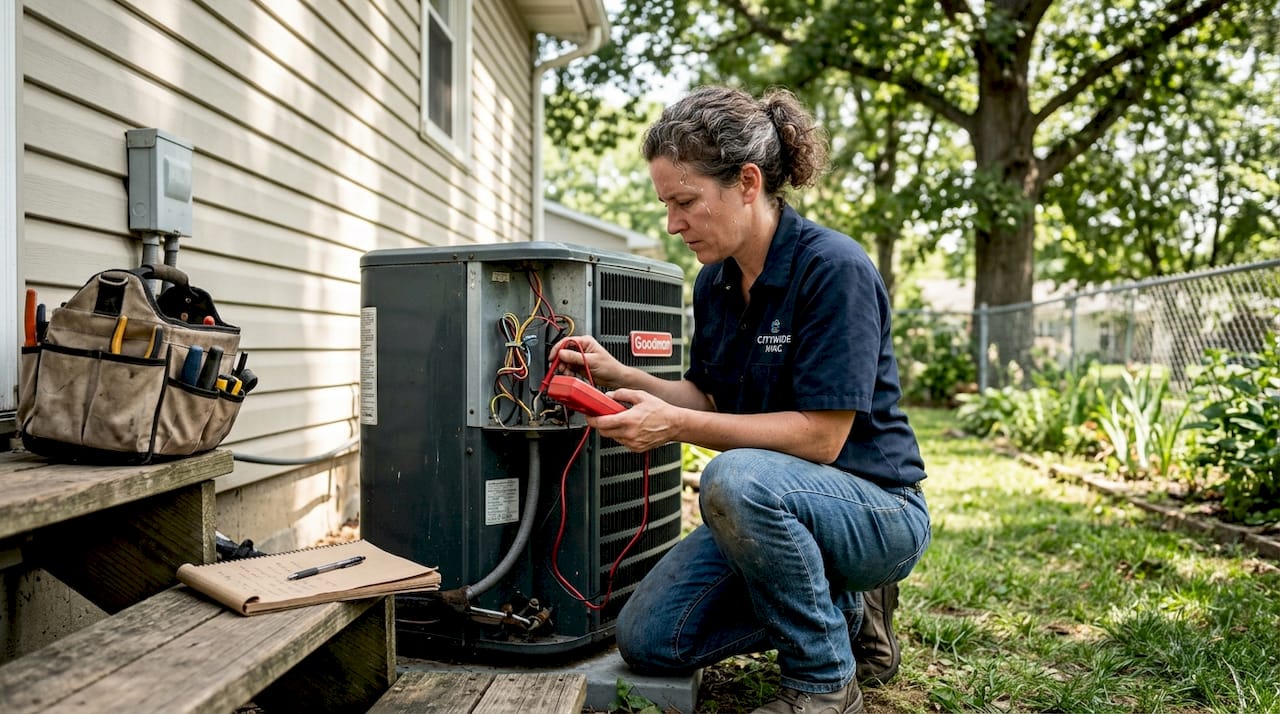
A service estimate is a written assessment that tells you the expected cost of repair work after a technician has diagnosed the problem in person. It is not a guess over the phone and it is not the final invoice you sign at the end. It sits squarely in the middle, giving both you and the technician a shared understanding of what needs to happen and what it will cost before any work begins.
The standard process involves booking a service call, having the technician diagnose the issue on-site, and receiving a written repair estimate before you give approval. That sequence matters because it protects you from unexpected charges and gives you the chance to walk away if the price does not work for you.
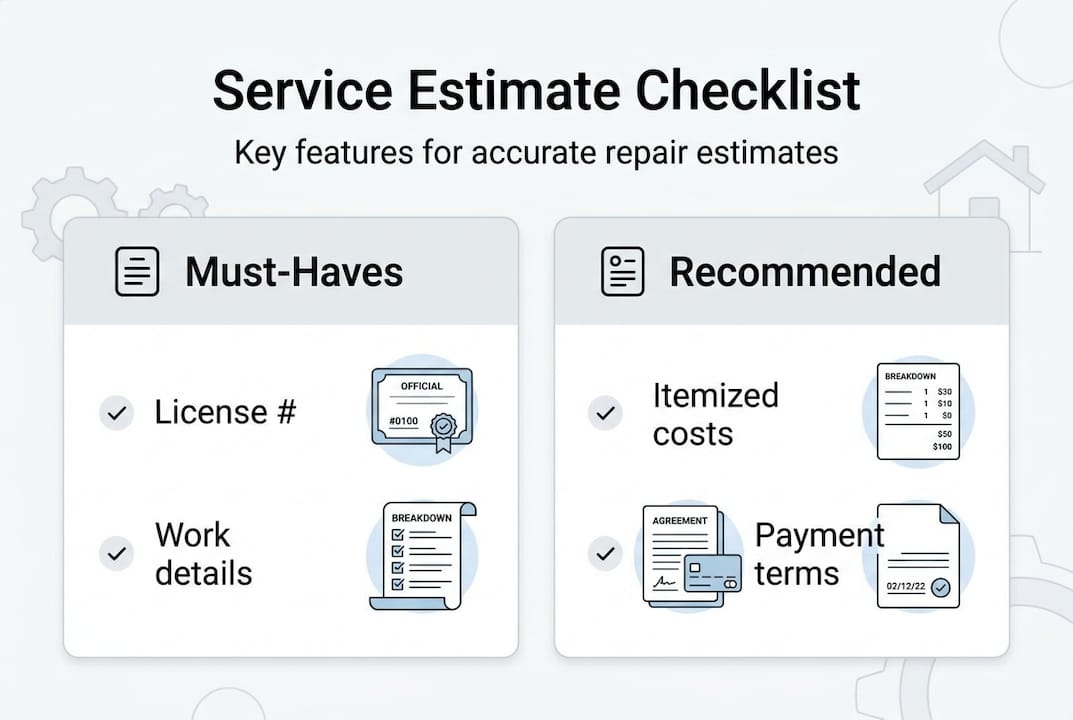
A solid estimate should include:
- Itemized parts list with individual pricing
- Labor hours and hourly or flat rate
- Diagnostic or service call fee
- Estimated completion time
- Payment terms and accepted methods
- Warranty on parts and labor
“A written estimate is your first line of defense. Without it, you have no legal leverage if the final bill looks nothing like what was discussed.”
Understanding residential HVAC basics also helps here, because HVAC estimates tend to be longer and more technical than appliance repair quotes. The on-site estimate process is similar across service types, but the line items will differ depending on whether you are dealing with a dryer or a full HVAC system.
In California, any home improvement job over $500 requires a written, itemized contract. That rule applies directly to most major appliance and HVAC repairs, so always insist on documentation before approving work.
The service estimate process in Orange and LA counties
With the definition in place, let’s break down the practical steps you’ll go through when getting a repair estimate in Orange or LA County.
The process follows a predictable pattern once you know it. Here is what to expect from start to finish:
- Call or book online. You schedule a service call and pay or agree to a diagnostic fee.
- Technician arrives. They inspect the appliance or HVAC unit and identify the root cause.
- Written estimate is delivered. You receive itemized pricing before any repair begins.
- You approve or decline. If you approve, the diagnostic fee is often credited toward the total.
- Work is completed and invoiced. The final bill should match the approved estimate closely.
On the cost side, booking incurs a diagnostic fee of $75 to $150 in California, and that fee is frequently credited toward the repair if you choose to proceed. Always ask before you book whether the fee is credited, because not every company does this automatically.
| Service type | Typical price range (OC/LA) |
|---|---|
| Diagnostic/service call fee | $75 to $150 |
| Minor appliance repair | $150 to $450 |
| Major appliance repair | $300 to $700 |
| California HVAC repair average | Around $575 |
| After-hours or emergency surcharge | Add $50 to $150+ |
| Luxury appliance premium | Add 25 to 50% |
For HVAC repair services in OC, prices can climb further depending on the complexity of the system. And if you ever need emergency HVAC service on a weekend or holiday, expect a surcharge on top of the base estimate. Review HVAC estimate methods to understand what drives those numbers.
Pro Tip: Before booking any service call, ask specifically: “Will the diagnostic fee be credited toward my repair cost if I approve the work?” Get the answer in writing or via email.
What should a legal estimate include in California?
Having covered the steps and costs, it’s crucial to understand your rights and what’s required by law for home service estimates.
California takes home improvement contracting seriously. CSLB rules require itemized written contracts for any home improvement job over $500. That threshold catches most appliance repairs involving parts replacements and virtually all HVAC work.
A legally compliant estimate or contract must include:
- Contractor’s full name, address, and license number
- Detailed description of the work to be done
- List of materials and parts with individual prices
- Start and estimated completion dates
- Total price and payment schedule
- Notice of the homeowner’s three-day right to cancel
- Any mandatory disclosures required by state law
Here is a quick comparison so you can spot the difference between a minimal quote and a proper legal contract:
| Element | Bare-minimum quote | Full legal contract |
|---|---|---|
| Contractor license number | Often missing | Required |
| Itemized parts and labor | Lump sum only | Full breakdown |
| Cancellation rights notice | Rarely included | Legally required |
| Payment schedule | Vague | Specific and written |
| Scope of work description | General | Detailed and binding |
Review the full contract requirements to know exactly what you are entitled to receive. Skipping this step is how homeowners end up paying for work they never approved or getting billed for parts that were never installed. Understanding HVAC maintenance in California also gives you context for what should realistically appear in an HVAC service estimate.
How to evaluate and compare service estimates
Once you have estimates in hand, here’s how to make a truly informed choice and avoid costly pitfalls.
Getting one estimate and immediately approving it is one of the most common and expensive mistakes homeowners make. Collect two to three itemized quotes from licensed contractors before making any decision. Here is what to check in each one:
- Are parts and labor priced separately?
- Is the scope of work clearly described?
- Are exclusions spelled out?
- What warranty is offered on parts and labor?
- Are brand-specific part markups disclosed?
- What happens if additional problems are found mid-repair?
When comparing estimates, you will often see two pricing structures. Flat-rate pricing is common in Southern California and offers transparency because you know the total upfront. Hourly pricing can be more economical for quick fixes but can escalate fast on complex repairs. Here is how to choose:
- Choose flat-rate pricing for well-defined repairs where the scope is clear.
- Choose hourly pricing only when the problem is unusual and you trust the technician’s experience.
- Ask for a not-to-exceed cap if hourly is the only option offered.
Also, flag any estimate that offers a free service call with no explanation of how the company covers that cost. Prices too good to be true usually come with upsells baked in.
Use the repair vs replace guide to weigh your options when repair costs are significant. And for more on repair vs replacement, the difference is often clearer than people think once you apply a simple formula.
Pro Tip: Apply the 5,000 Rule before approving a major repair. Multiply the repair cost by the appliance’s age in years. If the result exceeds $5,000, replacement is often the smarter financial move.
Expert insights: What most homeowners miss about service estimates
The basics covered, let’s wrap up with expert-level insights that could save you time, money, and risk.
For HVAC systems specifically, an accurate estimate should be based on a Manual J load calculation, which is an industry-standard method for determining how much heating or cooling a home actually needs. Without this step, a technician is essentially guessing at system sizing, and an oversized or undersized repair recommendation will cost you more in energy bills and future breakdowns.
Beyond load calculations, several regional factors directly shape what you pay in OC and LA:
- Title 24 compliance. California’s energy efficiency standards affect which replacement parts or systems are permitted.
- Permit requirements. Many HVAC repairs and replacements require permits, adding cost and time.
- Disposal fees. Removing old refrigerants or appliance units legally has a cost that should appear in your estimate.
- Luxury appliance premium. Brands like Sub-Zero, Miele, or Viking can add 25 to 50% to labor and parts costs simply because of part availability and specialized training requirements.
Key statistic: Local codes and Title 24 efficiency standards can affect the entire scope and price of your estimate in OC and LA County, making multiple quotes essential rather than optional.
Working with insured technicians is especially important when permits or code-compliance work is involved. If something goes wrong with an uninsured contractor on a permitted job, you could be financially liable. Review accurate HVAC estimate details to understand how proper estimates account for all these layers.
Pro Tip: A “free” service call is almost never actually free. Companies recoup that cost somewhere, often through inflated part prices, unnecessary repairs, or high-pressure upsells once they are inside your home.
Why relying on expert-written service estimates saves you more than money
After taking in the expert insights, here is a frank perspective you will not often hear from low-cost firms.
The cheapest estimate in your inbox is almost always the riskiest one to accept. Experienced technicians who write thorough, itemized estimates are factoring in things that amateur operators skip entirely: regional code compliance, manufacturer warranty conditions, proper disposal of refrigerants, and what happens if the repair uncovers a secondary problem. That knowledge has real dollar value attached to it.
We have seen it play out many times. A homeowner accepts a lowball quote, the technician skips the permit, and six months later a home insurance claim gets denied because the repair was not code compliant. The “savings” from that cheap estimate ended up costing three times more.
Investing in a well-documented estimate from a licensed, experienced contractor means you are buying predictability, not just labor. You know what will be done, when it will be done, and what recourse you have if something goes wrong. That is what long-term appliance value really looks like in practice. Peace of mind has a price, and it is almost always lower than the cost of a botched repair.
Connect with trustworthy local repair experts
Ready to get a reliable estimate you can trust for your next repair? Take action with proven professionals.
Knowing what a legally compliant, accurate estimate looks like is only half the job. The other half is finding a licensed, local contractor who delivers one without prompting. For homeowners across Orange County and Los Angeles County, that means working with technicians who know California’s Title 24 rules, carry proper insurance, and credit diagnostic fees toward approved repairs.
At Appliances Repair MD Tech, we provide transparent, itemized estimates on appliance and reliable HVAC repair services across OC and LA County. Every quote meets California legal standards and is backed by licensed, insured technicians. Explore our repair vs replacement insights to make smarter decisions, and learn how warranty importance plays into your total cost of ownership. Book online today and get an estimate you can actually rely on.
Frequently asked questions
Do I have to pay for a service estimate in Orange or LA County?
Most reputable companies charge a diagnostic fee of $75 to $150 in California, and that fee is often credited toward your repair total if you choose to proceed with the work.
What details must be included in a California estimate?
Written contracts over $500 must include contractor details, a full description of the work, itemized pricing, a payment schedule, estimated dates, and mandatory cancellation disclosures.
Is a ‘free’ service call really free?
No. Free service calls are typically a lead generation tactic, and the cost is usually recovered through inflated part prices, unnecessary upsells, or pressure to approve expensive repairs on the spot.
Should I get more than one service estimate?
Yes. Getting multiple itemized estimates from licensed contractors is best practice in OC and LA County because it confirms fair pricing and ensures the work scope is complete and code-compliant.
How does the 5,000 Rule work for appliances?
Multiply the repair cost by the appliance’s age in years. If the result exceeds $5,000, the 5,000 Rule suggests replacement is typically the more cost-effective choice over continuing to repair an aging unit.