
Sudden appliance failures can upend daily routines in Orange and Los Angeles Counties, leaving homeowners frustrated over repair costs and warranty confusion. With warranties often shaped by complex terms, exclusions, and fine print, making the wrong assumption can mean paying out of pocket for issues you thought were covered. By understanding the differences between express and implied warranties, and knowing which red flags to watch for, you can better protect your investment and make smarter choices during both urgent and planned repairs.
Table of Contents
- Understanding Appliance Repair Warranties
- Types of Warranties and Key Differences
- What Repair Warranties Typically Cover
- Homeowner Responsibilities and Claim Process
- Common Warranty Exclusions to Watch For
Key Takeaways
| Point | Details |
|---|---|
| Understanding Warranty Types | Homeowners should familiarize themselves with the different types of warranties, including manufacturer, extended, and service contracts to ensure adequate appliance protection. |
| Reviewing Warranty Exclusions | It’s essential to read warranty documents carefully to understand common exclusions, such as user-related damage or improper installation, which can void claims. |
| Maintaining Detailed Records | Keeping organized records of purchase receipts, service logs, and maintenance activities is crucial for successful warranty claims. |
| Following Manufacturer Guidelines | Adhering to recommended maintenance and usage practices can help avoid warranty voiding and ensure coverage remains valid. |
Understanding Appliance Repair Warranties
Appliance repair warranties offer homeowners critical protection against unexpected breakdowns and costly repairs. These legal agreements provide a safety net that can save significant money and frustration when household devices malfunction. Consumer warranties vary extensively in terms of coverage, duration, and specific conditions.
Most manufacturer warranties include protection against defects in materials and workmanship, but they frequently come with specific limitations. Typical exclusions include damage from improper use, accidents, or normal wear and tear. Homeowners should carefully review warranty documents to understand exactly what is and is not covered. Some warranties might require professional installation or routine maintenance to remain valid, making it crucial to follow manufacturer guidelines precisely.
There are generally three primary types of appliance warranties: manufacturer warranties, extended warranties, and service contracts. Manufacturer warranties typically come standard with new appliance purchases and provide basic coverage for a limited time. Extended warranties can be purchased separately and often offer more comprehensive protection. Service contracts, usually offered by retailers, provide additional repair or replacement options beyond the standard manufacturer coverage.
Key Components of a Strong Warranty:
- Clear definition of covered components
- Specific repair or replacement terms
- Duration of coverage
- Maintenance requirements
- Process for filing claims
Pro tip: Always keep your original purchase receipt and warranty documentation in a safe, organized location to streamline potential future repair claims.
Types of Warranties and Key Differences
Warranties represent complex legal protections that shield homeowners from unexpected repair expenses. Warranty classifications involve intricate legal distinctions between express and implied coverage types. Understanding these nuanced differences can help consumers make informed decisions about appliance protection and potential repair options.
Two primary warranty categories dominate the appliance protection landscape: express warranties and implied warranties. Express warranties are explicitly stated in writing or verbally during the sales process, typically outlining specific conditions of coverage. These warranties clearly define what components are protected, the duration of coverage, and the manufacturer’s responsibilities for repair or replacement. Manufacturers often provide detailed documentation specifying exact terms, repair procedures, and potential exclusions.
Implied warranties operate differently, representing legal guarantees automatically provided with product purchases. These warranties do not require explicit written documentation and instead stem from standard consumer protection laws. They typically include two critical protections: warranty of merchantability (ensuring the product functions as expected) and warranty of fitness for a particular purpose (confirming the product meets specific consumer needs). While less specific than express warranties, implied warranties provide an additional layer of consumer protection.
Types of Warranty Coverage:
- Manufacturer warranties
- Extended warranties
- Implied warranties
- Service contracts
- Specialized repair agreements
Warranty Coverage Comparison:
| Warranty Type | Duration | Coverage Scope | Cost |
|---|---|---|---|
| Manufacturer | 1-2 years | Basic components | Included |
| Extended | 2-5 years | Comprehensive | Additional fee |
| Service Contract | Varies | Specific services | Separate purchase |
Here’s a quick overview of how warranty types differ in legal protections and claim flexibility:
| Warranty Type | Legal Basis | Claim Flexibility |
|---|---|---|
| Express | Written or verbal contract | Strict, follows contract |
| Implied | Consumer protection laws | Flexible, case-by-case |
| Service Contract | Separate service agreement | Depends on contract |
| Extended Warranty | Add-on extending manufacturer terms | Moderate, contract sets limits |
Pro tip: Request and carefully review the complete warranty documentation before finalizing any appliance purchase to understand exactly what protections are included.
What Repair Warranties Typically Cover
Appliance repair warranties serve as crucial protective mechanisms for homeowners, ensuring financial security against unexpected mechanical failures. Warranty coverage typically addresses manufacturing defects that prevent an appliance from functioning as intended. Understanding the specific parameters of these warranties helps consumers make informed decisions about repair and replacement options.
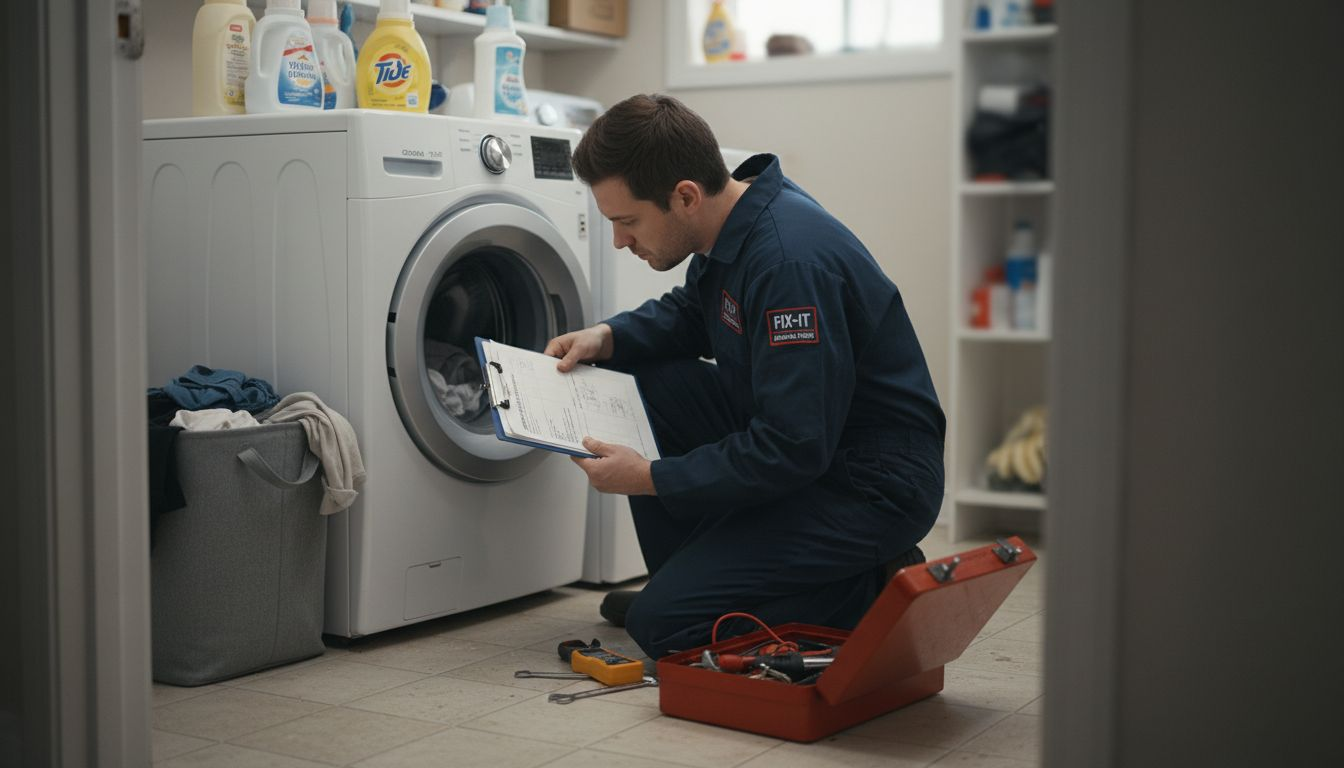
Most repair warranties focus on mechanical and electrical component failures that occur under normal usage conditions. These typically include issues with internal components like motors, circuit boards, heating elements, and compressors. Warranties generally cover repairs or replacements when the malfunction stems directly from manufacturing defects or workmanship problems. However, they explicitly exclude damages resulting from external factors such as user misuse, accidents, improper installation, or lack of routine maintenance.
The scope of warranty coverage can vary significantly between manufacturers and specific appliance types. Some warranties provide comprehensive protection covering nearly all internal components, while others might limit coverage to specific critical parts. Homeowners should carefully review warranty documents to understand exact coverage limits, potential deductibles, and specific conditions that might void the warranty. Common exclusions often include cosmetic damage, accessories, consumable parts, and issues arising from environmental factors or improper usage.
Typical Warranty Coverage Includes:
- Internal mechanical components
- Electrical system failures
- Manufacturing defects
- Original parts replacement
Typical Warranty Exclusions:
- Cosmetic damage
- User-caused accidents
- Improper installation
- Normal wear and tear
- Unauthorized repairs
Pro tip: Take photos and maintain detailed maintenance records for each appliance to strengthen your warranty claim process and document proper usage.
Homeowner Responsibilities and Claim Process
Homeowners play a critical role in maintaining warranty coverage and successfully navigating repair claims. Understanding consumer repair rights is essential for protecting your investment and ensuring proper appliance maintenance. The warranty claim process requires careful documentation, proactive communication, and adherence to specific manufacturer guidelines.
To maintain valid warranty coverage, homeowners must fulfill several key responsibilities. This includes following manufacturer-recommended maintenance schedules, keeping detailed service records, and using the appliance according to specified guidelines. Any unauthorized repairs or modifications can potentially void the warranty, leaving homeowners responsible for future repair costs. Manufacturers typically require proof of proper maintenance, so retaining original purchase receipts, installation documentation, and service records becomes crucial for successful warranty claims.
The typical warranty claim process involves several systematic steps. Homeowners should first contact the manufacturer or authorized service provider directly, providing detailed information about the appliance, including model number, serial number, and a comprehensive description of the malfunction. Warranty claim documentation requirements often include proof of purchase, maintenance records, and photographic evidence of the issue. Many manufacturers offer multiple claim submission methods, including online portals, phone support, and email communication.
Warranty Claim Preparation Checklist:
- Locate original purchase receipt
- Gather appliance model and serial numbers
- Collect maintenance documentation
- Take clear photographs of the issue
- Document specific malfunction details
Claim Submission Channels:
- Manufacturer website
- Customer service phone line
- Email support
- Authorized repair center
Pro tip: Create a dedicated digital folder for each appliance, storing all warranty, purchase, and maintenance documents to streamline future repair claims.
Compare how different maintenance and usage practices affect the likelihood of successful warranty claims:
| Practice | Impact on Claim Success | Risk of Warranty Voiding |
|---|---|---|
| Routine professional care | Increases approval chance | Very low |
| DIY repairs | Often leads to denial | High |
| Missing documentation | Reduces approval odds | Moderate |
| Non-original replacement | May violate terms | High |
Common Warranty Exclusions to Watch For
Homeowners must understand the potential pitfalls that can compromise their appliance warranty protection. Warranty exclusions represent critical limitations that can unexpectedly leave consumers responsible for expensive repairs. Recognizing these exclusions in advance helps prevent financial surprises and ensures more informed appliance ownership.
Most warranties explicitly exclude damages resulting from user-related issues and environmental factors. Common exclusions include damage from improper installation, accidental damage, unauthorized repairs, and modifications that deviate from manufacturer specifications. Normal wear and tear typically falls outside warranty coverage, meaning components that naturally degrade through regular use will not be replaced. Homeowners must carefully document proper appliance usage and maintain detailed maintenance records to protect their warranty claims.
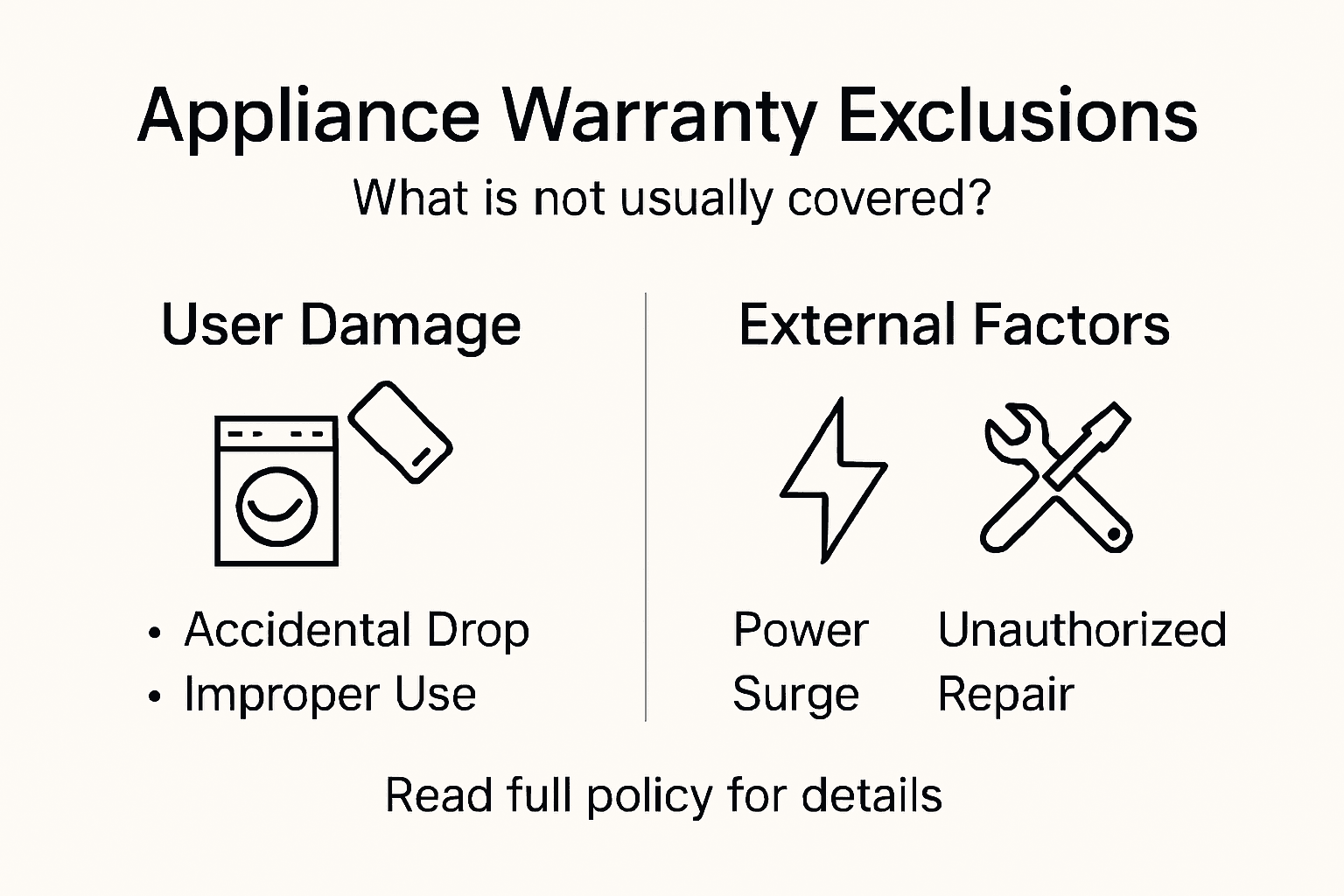
Environmental and operational factors frequently trigger warranty exclusions that catch many homeowners off guard. Issues such as power surges, water damage, extreme temperatures, or using the appliance outside recommended parameters can invalidate warranty protection. Some manufacturers have specific requirements about installation, maintenance, and usage that, if not precisely followed, can result in complete warranty cancellation. This makes it crucial for homeowners to thoroughly read and understand all warranty documentation before and after purchasing an appliance.
Major Warranty Exclusion Categories:
- Accidental damage
- Improper installation
- Unauthorized modifications
- Normal wear and tear
- Environmental damage
- Cosmetic imperfections
Red Flags That Void Warranties:
- Unapproved repair attempts
- Missing maintenance records
- Using non-original replacement parts
- Operating outside manufacturer guidelines
- Neglecting routine maintenance
Pro tip: Take photographs of your appliance during installation and keep a detailed log of all maintenance activities to provide clear evidence of proper usage if warranty claims are challenged.
Protect Your Appliances with Expert Repair and Trusted Warranty Support
Understanding the role of warranties in appliance repairs can be overwhelming especially when unexpected breakdowns occur and warranty coverage questions arise. The article highlights how critical it is to know your warranty details and maintain proper documentation to avoid costly surprises. If you are facing a malfunction or want to ensure your appliance repairs comply with warranty requirements, professional service is the key to protecting your investment. Avoid the frustration of denied claims caused by improper repairs or missing paperwork by connecting with licensed technicians who understand warranty terms and conditions.
Take control of your appliance repairs today by visiting Appliance Repair MD Tech. Serving Orange County and Los Angeles County with fast, reliable repair and installation services for refrigerators, washers, dryers, ovens, and more, our team provides the expert care you need to keep your warranties intact. Don’t wait until small issues turn into expensive losses. Book your service online now or call to speak with a certified technician who can diagnose problems right away and guide you through the warranty claim process smoothly. Protect your home appliances the smart way with trusted local professionals at Appliance Repair MD Tech.
Frequently Asked Questions
What does an appliance repair warranty typically cover?
Appliance repair warranties generally cover mechanical and electrical component failures that occur under normal usage conditions, including internal issues related to motors, circuit boards, and manufacturing defects.
What are common exclusions in appliance warranties?
Common exclusions in appliance warranties include accidental damage, improper installation, unauthorized repairs, normal wear and tear, and environmental damage.
How can homeowners ensure their warranty remains valid?
Homeowners can maintain valid warranty coverage by following manufacturer-recommended maintenance schedules, keeping detailed service records, and using appliances according to specified guidelines.
What steps should I take to file a warranty claim?
To file a warranty claim, contact the manufacturer or authorized service provider with your appliance model number, serial number, and a detailed description of the malfunction. Ensure you have proof of purchase and maintenance records ready to support your claim.
Recommended
- Broan repair In Irvine Orange CA
- Hood Installation & Repair: Expert Fixes for Home Essentials
- Plumbing Drain Repair – Orange County, California – MDTECH APPLIANCE REPAIR
- Kitchen Faucet Repair – Orange County, California – MDTECH APPLIANCE REPAIR
- Golf Cart Windshields: Should You Repair or Replace? — GOLFCARTSTUFF.COM™