
Keeping your home cool during a Southern California summer and warm on a chilly winter evening starts with the right HVAC system. In Orange and Los Angeles Counties, homeowners often juggle comfort, rising energy costs, and ever-changing efficiency standards. Understanding residential HVAC systems and how features like heat pumps or programmable thermostats work can help you find a solution that fits your needs, your budget, and the region’s specific climate challenges.
Table of Contents
- Residential HVAC Systems Defined Clearly
- Popular Types For Southern California Homes
- How Residential HVAC Components Work
- Efficiency, Rebates, And Local Requirements
- Repair Versus Replacement: Key Factors
- Costs, Mistakes, And Choosing Providers
Key Takeaways
| Point | Details |
|---|---|
| Importance of HVAC Systems | Residential HVAC systems are essential for maintaining indoor temperature, humidity, and air quality, promoting overall comfort. |
| Selection Criticality in Southern California | Homeowners should carefully evaluate HVAC system types based on specific climate needs and home configurations for optimal efficiency. |
| Financial Incentives for Upgrades | California offers various energy efficiency rebates and tax credits that can significantly reduce the cost of HVAC upgrades. |
| Professional Consultation Recommended | Engaging with licensed HVAC professionals ensures compliance with local regulations, enhancing system efficiency and longevity. |
Residential HVAC Systems Defined Clearly
Residential HVAC systems are sophisticated home comfort technologies designed to regulate indoor temperature, humidity, and air quality. These integrated systems combine multiple components that work together to create a comfortable living environment. Heating, ventilation, and air conditioning technologies play a critical role in maintaining optimal indoor conditions throughout the year.
Typical residential HVAC systems include several key components:
- Air Conditioners: Responsible for cooling indoor spaces during warm months
- Heat Pumps: Provide both heating and cooling functions
- Furnaces: Generate warmth during colder seasons
- Ventilation Fans: Circulate and exchange indoor air
- Programmable Thermostats: Enable precise temperature control and energy management
The primary objectives of residential HVAC systems extend beyond simple temperature control. According to ASHRAE standards, these systems aim to deliver thermal comfort and maintain acceptable indoor air quality through advanced engineering principles.
Modern HVAC technologies have evolved to prioritize energy efficiency and smart home integration. Homeowners can now access systems that not only regulate temperature but also monitor air quality, humidity levels, and overall system performance. These advanced features help reduce energy consumption and provide more personalized comfort experiences.
Pro tip: Consider a professional HVAC assessment to determine the most appropriate system configuration for your specific home layout and climate needs.
Popular Types for Southern California Homes
Southern California’s unique climate demands specialized residential HVAC solutions that balance energy efficiency with cooling performance. Home cooling systems in this region must address the challenges of hot summers and mild winters while maintaining optimal indoor comfort.
The most popular HVAC types for Southern California homes include:
- Central Air Conditioning Systems: Ideal for larger homes with existing ductwork
- Heat Pump Systems: Provide both heating and cooling with exceptional energy efficiency
- Ductless Mini-Split Systems: Perfect for homes without traditional duct infrastructure
- Hybrid Systems: Combine multiple technologies for maximum flexibility
- Evaporative Coolers: Particularly effective in dry, arid regions
When selecting an HVAC system, homeowners must consider several critical factors. Proper system selection involves evaluating home size, insulation quality, sun exposure, and specific cooling requirements unique to Southern California’s microclimates.
Modern HVAC technologies have advanced to offer smart features that enhance comfort and energy management. These systems can now integrate with home automation platforms, providing real-time temperature monitoring, remote control capabilities, and adaptive cooling strategies that respond to changing environmental conditions.
Here’s a comparison of key residential HVAC system types for Southern California homes:
| System Type | Best For | Energy Efficiency | Unique Benefit |
|---|---|---|---|
| Central Air Conditioning | Large homes with ductwork | Moderate to high | Even, whole-home cooling |
| Heat Pump | Year-round climate control | Very high | Effective in mild climates |
| Ductless Mini-Split | Homes without ducts | High | Zoned comfort flexibility |
| Hybrid | Homes needing customization | High | Combines multiple functions |
| Evaporative Cooler | Dry, arid regions | Very high (if applicable) | Low operational costs |
Pro tip: Consult with a local HVAC professional who understands Southern California’s specific climate challenges to determine the most appropriate system for your home.
How Residential HVAC Components Work
Residential HVAC systems operate through a complex network of interconnected components that work seamlessly to maintain indoor comfort. Air conditioning systems utilize sophisticated technologies to transfer heat and regulate temperature effectively, ensuring a comfortable living environment.
Key HVAC system components include:
- Air Handler: Circulates conditioned air throughout the home
- Compressor: Pressurizes and moves refrigerant through the system
- Evaporator Coil: Absorbs heat from indoor air
- Condenser Coil: Releases absorbed heat to the outside environment
- Thermostat: Controls system operations and temperature settings
- Refrigerant Lines: Facilitate heat transfer between indoor and outdoor units
HVAC system mechanics involve a precise process of heat exchange and air circulation. The system begins by drawing indoor air through return vents, filtering out dust and particles, and then passing the air over cooling or heating elements. Refrigerant plays a crucial role in this process, absorbing heat from indoor air and transferring it outside, effectively cooling the interior space.
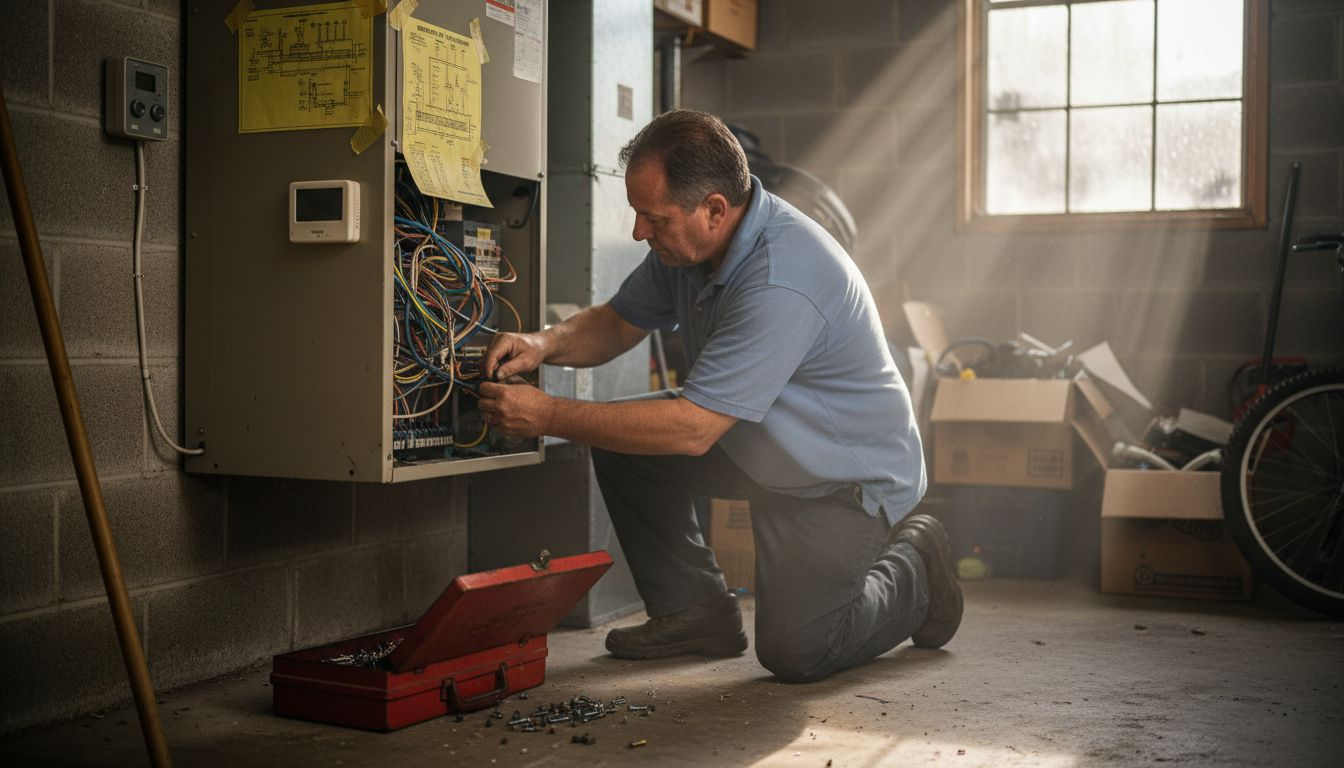
Modern HVAC technologies have evolved to incorporate smart features that enhance efficiency and user control. Advanced systems now include variable-speed motors, multi-stage cooling capabilities, and integration with home automation platforms. These innovations allow for more precise temperature management, reduced energy consumption, and improved overall system performance.
This summary highlights what each main HVAC component accomplishes:
| Component | Primary Role | Impact on Home Comfort |
|---|---|---|
| Air Handler | Circulates conditioned air | Uniform temperature |
| Compressor | Moves refrigerant through the system | Enables effective cooling |
| Evaporator Coil | Absorbs indoor heat | Lowers indoor temperature |
| Condenser Coil | Releases heat outside | Maintains cooling process |
| Thermostat | Controls system operation | Personalized comfort control |
| Refrigerant Lines | Transfers heat between units | Efficient heat exchange |
Pro tip: Schedule annual professional maintenance to ensure your HVAC system operates at peak efficiency and catches potential issues before they become costly repairs.
Efficiency, Rebates, and Local Requirements
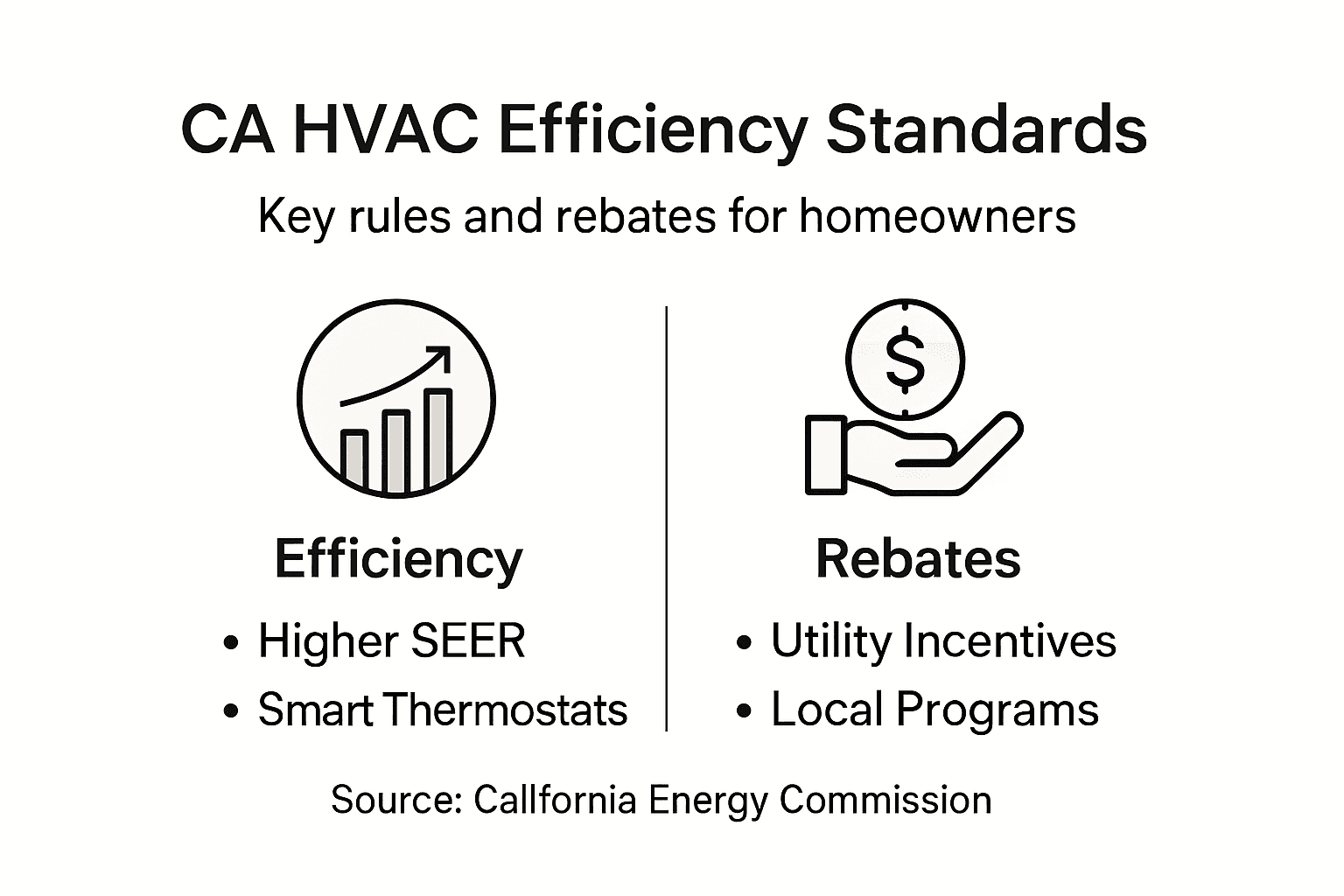
California’s residential HVAC landscape is transforming, driven by aggressive energy efficiency standards and attractive financial incentives. Energy efficiency rebates are revolutionizing how homeowners approach HVAC system upgrades, making sustainable technologies more accessible and affordable.
Key financial incentives and rebate opportunities include:
- Federal Tax Credits: Significant reductions for energy-efficient HVAC installations
- State Rebate Programs: Direct financial incentives for heat pump and ENERGY STAR equipment
- Home Electrification Rebates: Special programs for income-qualified households
- Local Utility Incentives: Additional savings through regional energy providers
- Green Building Incentives: Rewards for meeting advanced efficiency standards
Building energy efficiency standards in California are becoming increasingly stringent. The 2025 regulations mandate higher efficiency requirements, pushing homeowners towards more sustainable and electrified HVAC solutions. These standards not only reduce energy consumption but also align with broader environmental goals of reducing carbon emissions.
Navigating these complex requirements demands a strategic approach. Homeowners must stay informed about evolving local codes, potential rebates, and technological advancements. Working with licensed HVAC professionals who understand local regulations can help maximize financial incentives and ensure full compliance with California’s progressive energy standards.
Pro tip: Consult with a local HVAC specialist to conduct a comprehensive energy audit and identify the most cost-effective efficiency upgrades for your specific home.
Repair Versus Replacement: Key Factors
Homeowners face challenging decisions when their HVAC system begins showing signs of wear. HVAC design considerations play a crucial role in determining whether repair or complete replacement makes the most financial and practical sense.
Critical factors to evaluate include:
- System Age: Units over 10-15 years typically become less efficient
- Repair Costs: Potential expenses compared to replacement investment
- Energy Efficiency: Newer models offer significantly improved performance
- Frequency of Breakdowns: Recurring issues signal potential system failure
- Current System Performance: Reduced cooling or heating capacity
Repair versus replacement guidelines suggest using the ‘50 percent rule’ as a financial benchmark. If repair costs exceed 50-65 percent of a new system’s price, replacement becomes the more economical choice. This calculation involves comparing current repair expenses against long-term energy savings and potential maintenance costs of a new, more efficient system.
Modern HVAC technologies offer substantial improvements in energy efficiency and smart home integration. Newer systems provide enhanced temperature control, better air quality management, and significantly reduced energy consumption. These advancements can lead to meaningful long-term savings, making replacement an attractive option for homeowners looking to optimize their home’s comfort and efficiency.
Pro tip: Consult a professional HVAC technician to perform a comprehensive system assessment, providing an expert perspective on whether repair or replacement offers the best value for your specific situation.
Costs, Mistakes, and Choosing Providers
Navigating the complex world of HVAC installations requires careful financial planning and strategic decision-making. Central air conditioning systems represent a significant investment, with costs varying dramatically based on home size, system complexity, and efficiency ratings.
Common mistakes homeowners should avoid include:
- Improper System Sizing: Installing units too large or small for the space
- Ignoring Credentials: Selecting unqualified installation professionals
- Overlooking Energy Efficiency: Focusing solely on upfront costs
- Skipping Load Calculations: Neglecting precise home-specific requirements
- Avoiding Maintenance Contracts: Failing to plan for long-term system care
Professional HVAC selection guidelines emphasize the importance of thorough vetting and comprehensive evaluation. Homeowners should request detailed proposals, verify professional certifications, check extensive customer references, and confirm the contractor’s understanding of local building codes and energy efficiency standards.
Cost management extends beyond the initial installation. Smart homeowners consider long-term expenses, including potential energy savings, maintenance requirements, and system longevity. Understanding the total cost of ownership helps make more informed decisions, balancing immediate financial constraints with future performance and efficiency expectations.
Pro tip: Request detailed written estimates from at least three licensed HVAC professionals, comparing not just price but also warranty coverage, installation expertise, and long-term service commitments.
Trusted HVAC Solutions for Southern California Home Comfort
Understanding your residential HVAC system is the first step toward achieving year-round comfort while managing energy costs effectively. Whether you are facing a heating breakdown during a chilly night or your air conditioning struggles in the summer heat, the challenges of system repairs, replacements, or upgrades can feel overwhelming. Important terms like heat pumps, programmable thermostats, and energy efficiency rebates are familiar from your research, but putting that knowledge into action requires expert help.
At Appliances Repair MD Tech, we know how crucial reliable HVAC service is for homeowners throughout Orange County and Los Angeles County. Our team of licensed technicians specializes in fast and professional HVAC repair, installation, and maintenance tailored to your unique climate needs. We understand the local challenges of Southern California living and offer smart, energy-saving solutions to keep you comfortable.
Explore our expert HVAC services and book your appointment today to prevent costly breakdowns or to upgrade your system for maximum efficiency. Contact us now to experience trusted residential HVAC care from professionals who prioritize your comfort and budget.
Find your solution at Appliances Repair MD Tech and make your home a haven all year long.
Frequently Asked Questions
What are the main components of a residential HVAC system?
Typical components of a residential HVAC system include air conditioners, heat pumps, furnaces, ventilation fans, and programmable thermostats that work together to control temperature and air quality.
How do I know if I should repair or replace my HVAC system?
Consider factors like your system’s age, repair costs, frequency of breakdowns, and energy efficiency. If repair costs exceed 50-65% of a new system’s price, replacement may be the better option.
What types of HVAC systems are most suitable for homes in California?
Popular HVAC systems for California homes include central air conditioning systems, heat pump systems, ductless mini-split systems, hybrid systems, and evaporative coolers, offering solutions for various climate conditions.
How can I improve the energy efficiency of my HVAC system?
Regular maintenance, proper system sizing, using programmable thermostats, and upgrading to energy-efficient models can significantly enhance the efficiency of your HVAC system.
Recommended
- Why Upgrade Old Appliances: Lower Energy Costs, Safer Homes
- Appliance Lifespan: What It Means for Homeowners
- Plumbing Drain Repair – Orange County, California – MDTECH APPLIANCE REPAIR
- Hood Installation & Repair: Expert Fixes for Home Essentials
- Heat Pump Zoning – Maximizing Comfort and Savings – CoolFix Appliance & HVAC Service