
A single night without heating or cooling can put any American home in Orange or Los Angeles County at risk, especially when temperatures hit dangerous extremes. When an HVAC system fails, comfort and safety can disappear quickly. Industry experts report that nearly 40 percent of emergency repair calls happen after hours or during severe weather conditions, forcing homeowners to depend on fast and reliable local technicians. Understanding how emergency HVAC service works helps protect your home against sudden breakdowns and costly long-term damage.
Table of Contents
- What Is Emergency HVAC Service
- Types of HVAC Emergencies Explained
- How Rapid Response Services Work
- Common Risks With Delayed Repairs
- Costs and Choosing the Right Technician
Key Takeaways
| Point | Details |
|---|---|
| Importance of Emergency HVAC Service | Emergency HVAC services provide rapid response to critical heating and cooling failures, helping restore safety and comfort quickly. |
| Types of HVAC Emergencies | Common emergencies include complete system shutdowns, refrigerant leaks, electrical malfunctions, and water leaks. |
| Risks of Delayed Repairs | Ignoring urgent HVAC issues can increase repair costs, damage property, and create indoor air quality concerns. |
| Choosing the Right Technician | Hiring licensed and certified HVAC technicians helps ensure safe, reliable, and long-lasting repairs. |
What Is Emergency HVAC Service
Emergency HVAC service refers to urgent heating and cooling repair solutions designed to restore indoor comfort and safety after unexpected system failures. These services are especially important for homeowners in Orange County and Los Angeles County, where extreme summer heat or cold winter nights can quickly create unsafe indoor conditions. Professional emergency technicians respond rapidly to diagnose and repair major HVAC problems before they lead to more severe damage.
According to the Centers for Disease Control, emergency HVAC interventions involve urgent repairs that address heating and cooling failures capable of affecting health and safety. These services focus on fast response times, advanced diagnostics, and immediate solutions that restore system performance while minimizing disruption to homeowners.
Emergency HVAC services often become necessary when a system completely stops working during extreme temperatures. Other common situations include refrigerant leaks, electrical failures, damaged compressors, frozen coils, gas furnace ignition problems, and thermostat malfunctions. Any of these issues can reduce indoor comfort quickly while potentially creating safety hazards for families and pets.
The American Society of Heating, Refrigerating and Air-Conditioning Engineers emphasizes that emergency HVAC repairs should prioritize occupant safety, system reliability, and indoor air quality. Experienced technicians use specialized diagnostic equipment to locate the exact source of the issue and restore proper operation as efficiently as possible.
Why Emergency HVAC Services Matter
Emergency HVAC repairs are not only about comfort. A failed heating or cooling system can affect health, property value, and energy efficiency. During hot Southern California summers, indoor temperatures can rise dangerously fast without proper cooling. During winter, heating system failures may create unsafe living conditions for children, elderly residents, and individuals with medical concerns.
- Protects indoor comfort during severe weather
- Prevents system damage from worsening
- Helps maintain healthy indoor air quality
- Reduces risk of electrical or gas-related hazards
- Minimizes long-term repair expenses
Pro tip: Save the contact information of a trusted emergency HVAC company in your phone before problems happen so you can act quickly during unexpected breakdowns.
Types of HVAC Emergencies Explained
HVAC emergencies can happen without warning and often require immediate professional attention. Homeowners in Orange County and Los Angeles County should understand the most common emergency scenarios so they can recognize problems early and avoid additional property damage.
According to the National Apartment Association, critical HVAC emergencies include complete system shutdowns, electrical malfunctions, water leaks, gas-related issues, and failures affecting occupant safety. Each of these situations can rapidly escalate if repairs are delayed.
ASHRAE also identifies refrigerant leaks, compressor failures, ventilation problems, frozen evaporator coils, and malfunctioning control systems as major HVAC emergencies. These issues not only impact heating and cooling performance but can also damage surrounding components throughout the system.
Common Warning Signs
Many HVAC emergencies begin with smaller warning signs that homeowners often overlook. Identifying these symptoms early can help prevent major system failures.
- Sudden loss of heating or cooling
- Burning smells or electrical odors
- Loud banging, grinding, or screeching noises
- Constant cycling on and off
- Water pooling near indoor units
- Frozen coils or restricted airflow
- Unusually high energy bills
Ignoring these warning signs can allow minor mechanical problems to grow into expensive emergency repairs.
Major Types of HVAC Emergencies
| Emergency Type | Likely Cause | Immediate Risk | Professional Solution |
|---|---|---|---|
| Complete system shutdown | Mechanical or electrical failure | Unsafe indoor temperatures | Restore power and repair failed components |
| Electrical malfunction | Faulty wiring or overheating | Fire or shock hazard | Inspect and repair electrical systems |
| Refrigerant leak | Damaged refrigerant lines | Poor cooling and system damage | Locate leak and recharge refrigerant |
| Water leak | Blocked drain line or frozen coil | Mold and property damage | Clear drainage and repair affected parts |
Pro tip: Create a digital folder containing your HVAC warranty information, service history, and equipment model numbers to simplify emergency service visits.
How Rapid Response Services Work
Rapid response HVAC companies operate using organized systems designed to provide immediate assistance during emergency situations. These services help homeowners restore heating and cooling quickly while reducing the risk of long-term damage.
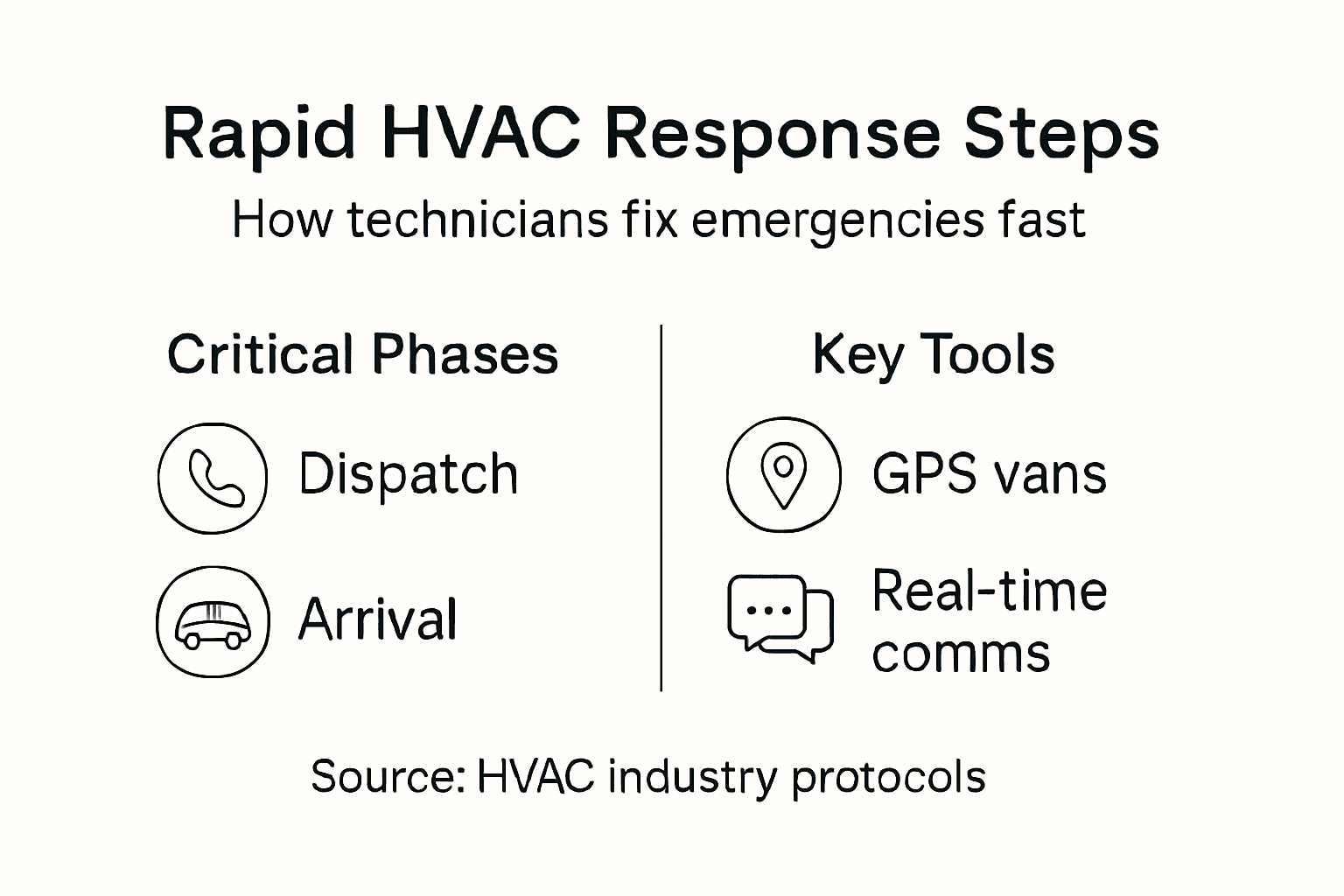
Rapid response systems generally begin with a 24/7 dispatch center that collects information about the emergency. Once the issue is identified, the company sends a trained technician equipped with diagnostic tools and replacement parts needed for common repairs.
Professional HVAC emergency services typically follow four key stages:
- Assessment – Technicians identify the immediate safety or operational issue.
- Diagnosis – Specialized equipment pinpoints the exact system failure.
- Repair – Damaged components are repaired or replaced.
- System testing – The HVAC system is fully tested to confirm safe and efficient operation.
Modern emergency HVAC teams often use GPS-equipped service vehicles, digital communication systems, and mobile inventory management tools to improve response times. These technologies allow technicians to arrive prepared for many common repair situations during the first visit.
Benefits of Rapid Response Service
Fast emergency HVAC service provides several advantages for homeowners:
- Reduces risk of complete system failure
- Prevents expensive secondary damage
- Restores comfort quickly during extreme weather
- Improves indoor air quality and airflow
- Helps maintain energy efficiency
Pro tip: Keep photos of your HVAC equipment labels and serial numbers stored on your phone so technicians can identify compatible parts faster during emergency calls.
Common Risks With Delayed Repairs
Postponing HVAC repairs can turn small problems into major emergencies. Many homeowners wait too long before scheduling service, allowing damage to spread throughout the system. Delayed repairs often lead to higher utility bills, reduced equipment lifespan, and expensive replacement costs.
ASHRAE research shows that neglected HVAC systems can increase monthly energy consumption significantly due to reduced operating efficiency. Dirty coils, failing motors, clogged filters, and refrigerant leaks force systems to work harder while producing less heating or cooling.
Moisture buildup is another serious concern. Water leaks and condensation problems can create conditions that encourage mold growth and indoor air contamination. Poor indoor air quality may contribute to allergies, respiratory irritation, and unpleasant odors throughout the home.
Financial and Safety Risks
Delaying repairs may also increase the risk of safety hazards and property damage. Problems that begin as minor electrical failures or refrigerant leaks can eventually result in complete system breakdowns.
- Higher monthly energy costs
- Damage to compressors and major components
- Reduced indoor air quality
- Mold growth from excess moisture
- Electrical hazards and overheating risks
- Unexpected full system replacement costs
In severe cases, delayed furnace or electrical repairs may create fire hazards or unsafe carbon monoxide conditions. Fast professional intervention helps reduce these risks significantly.
Preventing Emergency Breakdowns
Routine maintenance remains one of the most effective ways to avoid emergency HVAC repairs. Preventive inspections help identify worn components before they fail completely.
| Maintenance Task | Recommended Frequency | Main Benefit |
|---|---|---|
| Replace air filters | Every 1–3 months | Improves airflow and efficiency |
| Clean condenser coils | Annually | Prevents overheating |
| Inspect refrigerant levels | Annually | Maintains cooling performance |
| Check electrical connections | Twice yearly | Reduces fire and system risks |
Pro tip: Schedule HVAC maintenance visits before peak summer and winter seasons to catch potential issues before extreme weather increases system strain.
Costs and Choosing the Right Technician
Emergency HVAC repair costs vary depending on the complexity of the issue, the time of service, and the equipment involved. Homeowners in Orange County and Los Angeles County should understand what influences pricing while also learning how to identify trustworthy HVAC professionals.
Industry research on HVAC technician qualifications highlights the importance of hiring licensed professionals with EPA Section 608 certification and advanced industry training such as NATE certification. These credentials help verify that technicians understand refrigerant handling, system diagnostics, and safe repair procedures.
Emergency HVAC repairs can range from relatively affordable thermostat replacements to expensive compressor or electrical repairs. After-hours service and holiday calls typically increase pricing due to urgent response requirements.
Typical Emergency HVAC Cost Factors
- Time of day and emergency response fees
- Complexity of the repair
- Replacement parts required
- System age and condition
- Brand-specific component availability
Although emergency repairs can seem expensive initially, delaying service often increases long-term costs due to additional system damage.
How to Choose the Right HVAC Technician
| Credential | Why It Matters | What to Verify |
|---|---|---|
| EPA Section 608 Certification | Required for refrigerant handling | Valid certification documentation |
| NATE Certification | Shows technical expertise | Current certification status |
| Insurance and licensing | Protects homeowners legally | Active state license and insurance |
| Experience with HVAC systems | Improves repair quality | Customer reviews and references |
Reliable HVAC companies also provide transparent pricing, written estimates, warranty coverage, and clear communication about repair recommendations. Reading customer reviews and checking response times can help homeowners choose dependable emergency service providers.
Pro tip: Compare itemized estimates from multiple HVAC companies when possible and focus on technician credentials, warranty protection, and response reliability instead of choosing solely based on the lowest price.
Fast and Reliable Emergency HVAC Service When You Need It Most
Unexpected HVAC breakdowns can quickly create stressful and uncomfortable conditions inside your home. From complete system shutdowns to refrigerant leaks and electrical issues, emergency HVAC problems require immediate professional attention to prevent additional damage and restore safe indoor temperatures.
Appliances Repair MD Tech provides trusted emergency HVAC services for homeowners across Orange County and Los Angeles County. Our experienced technicians respond quickly to diagnose and repair heating and cooling systems while prioritizing safety, comfort, and long-term reliability.
Whether you need urgent AC repair during a summer heat wave or immediate heating service on a cold night, our team is prepared to deliver dependable solutions with professional care. We service residential HVAC systems, furnaces, air conditioners, heat pumps, and more.
Do not let an HVAC emergency disrupt your comfort or place your home at risk. Contact Appliances Repair MD Tech today to schedule fast and reliable emergency HVAC repair services from trusted local professionals.
Frequently Asked Questions
What qualifies as an HVAC emergency?
An HVAC emergency includes complete system failures, refrigerant leaks, electrical problems, gas-related issues, or situations where indoor temperatures become unsafe for occupants.
How quickly can emergency HVAC services respond?
Most emergency HVAC companies aim to dispatch technicians within a few hours, depending on weather conditions, service demand, and location.
What are the risks of delaying HVAC repairs?
Delaying repairs can increase energy bills, worsen system damage, reduce indoor air quality, and create potential safety hazards such as electrical failures or water damage.
How can I prepare for an HVAC emergency?
Keep emergency HVAC contact information available, maintain service records, schedule routine maintenance, and monitor your system for unusual noises, leaks, or performance changes.