
Nearly 75% of homeowner repair disputes stem from hiring uninsured technicians, a staggering figure that reveals hidden dangers. Modern appliances and HVAC systems are no longer simple machines but complex assemblies of electronics, refrigerants, and gas lines. When things go wrong, the financial and safety consequences can be severe. This guide shows you how insured technicians protect your home, wallet, and family while delivering superior repair outcomes that reduce long-term appliance safety risks.
Table of Contents
- Introduction: The Stakes Of Appliance And HVAC Repairs
- Ensuring Safety And Compliance With Insured Technicians
- Liability Protection And Financial Security For Homeowners
- Warranty Protection And Legal Compliance
- Verifying Technician Credentials: What Every Homeowner Should Know
- Cost-Benefit Analysis: Long-Term Savings Of Hiring Insured Technicians
- Protect Your Home With Professional Appliance And HVAC Repair
- Frequently Asked Questions
Key takeaways
| Point | Details |
|---|---|
| Dispute reduction | Hiring insured technicians reduces repair disputes by up to 75%. |
| Liability coverage | Liability insurance protects homeowners from costly accident-related bills averaging $10,000 to $50,000. |
| Compliance assurance | Licensed professionals ensure repairs comply with warranty and legal standards. |
| Easy verification | Verifying licenses and insurance is simple and crucial before hiring. |
| Long-term savings | Insured technicians reduce future repair costs by 20-30% through quality work. |
Introduction: the stakes of appliance and HVAC repairs
Your refrigerator, HVAC unit, and washer are no longer simple mechanical devices. Modern appliances and HVAC systems integrate complex electronics and gas components needing expert care, requiring specialized knowledge and tools to service safely. These systems contain high-voltage wiring, pressurized refrigerant lines, natural gas connections, and intricate circuit boards that demand technical precision.
When repairs go wrong, the consequences escalate quickly. Unlicensed repairs can lead to costly damage and safety hazards including electrical fires, carbon monoxide leaks, and flooding. DIY enthusiasts and uninsured technicians often lack the diagnostic equipment and training to identify root causes, leading to repeated failures.
Homeowners face multiple risks when cutting corners on repair services:
- Voided manufacturer warranties requiring expensive out-of-pocket replacements
- Personal liability for injuries if an uninsured worker gets hurt on your property
- Code violations that complicate future home sales or renovations
- Incomplete repairs that cause secondary damage to walls, floors, or adjacent appliances
The decision to hire qualified licensed technicians isn’t just about fixing a broken appliance. It’s about protecting your largest investment, your home, from cascading failures that start with a simple repair gone wrong.
Ensuring safety and compliance with insured technicians
Licensed professionals operate under strict regulatory frameworks that prioritize your safety. State licensing boards require technicians to complete extensive training on electrical codes, refrigerant handling, gas line safety, and hazardous material disposal. This isn’t optional knowledge; it’s mandated expertise that reduces accident risks by over 50% compared to unlicensed workers.
Insurance coverage creates accountability that uninsured technicians lack. When a professional carries liability insurance, they’re financially motivated to follow best practices and complete work correctly the first time. Their insurance company audits their work history and safety record, creating an external quality control mechanism.
Compliance with local building and safety codes protects you from legal headaches:
- Gas line modifications require permits and inspections in most jurisdictions
- Electrical work must meet National Electrical Code standards to prevent fires
- Refrigerant handling follows EPA regulations with severe penalties for violations
- Proper disposal of old appliances and components protects environmental health
When you choose licensed technicians, you’re hiring someone who understands these requirements intimately. They pull necessary permits, arrange inspections, and document work for future reference. This paper trail becomes invaluable if you sell your home or file an insurance claim.
Pro Tip: Request copies of all technician certifications and credentials before work begins. Legitimate professionals proudly share their qualifications and explain what each certification means for your specific repair.
Liability protection and financial security for homeowners
Liability insurance shifts catastrophic financial risk away from you. When an insured technician accidentally damages your property or causes an injury, their insurance policy responds first. Without this protection, you might sue the technician personally, but most individuals lack assets to cover major claims.
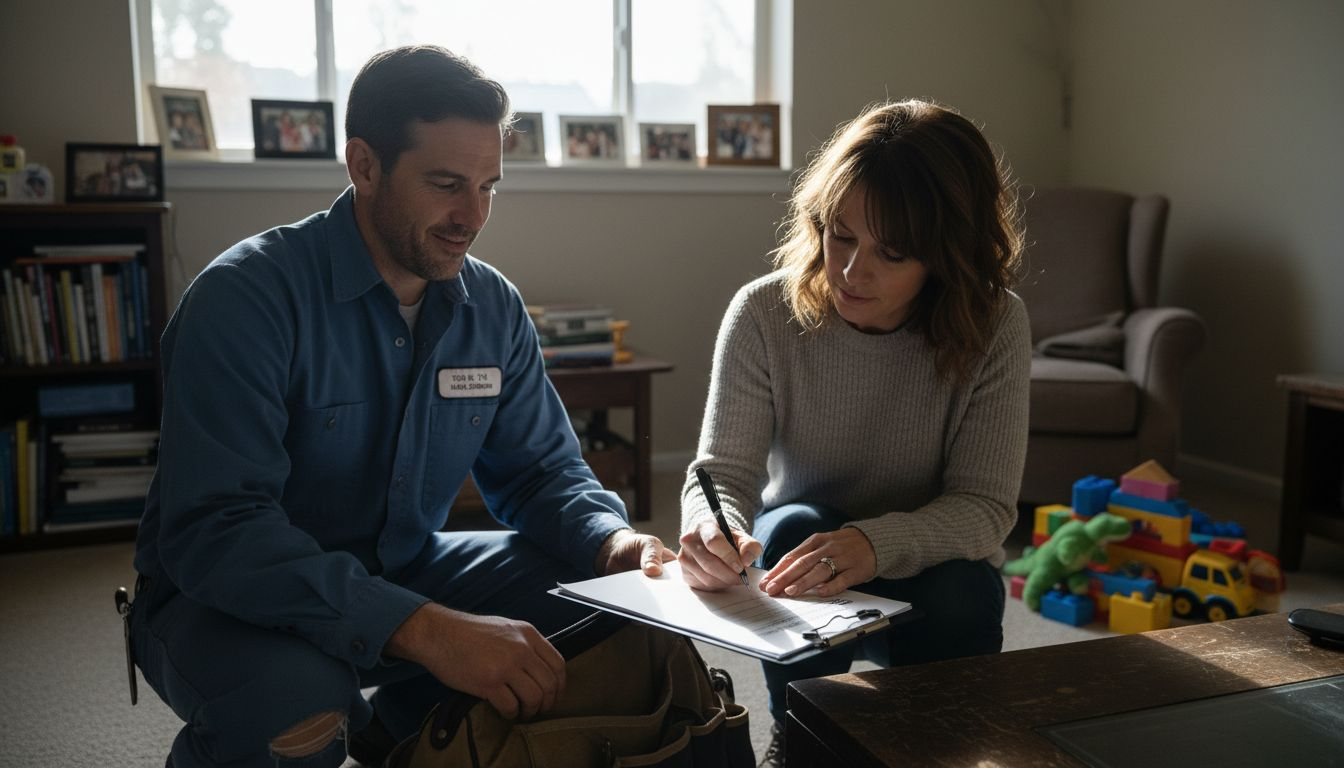
The financial exposure is substantial. Contractor liability insurance covers claims averaging $10,000 to $50,000 per incident, protecting homeowners from devastating out-of-pocket costs. Common scenarios include water damage from a disconnected washer line flooding your basement, electrical shorts causing fire damage, or technicians injuring themselves and suing the property owner.
Consider what happens when things go wrong:
- A refrigerant leak during AC repair causes toxic exposure requiring medical treatment
- Improper gas line work leads to an explosion damaging your home and neighbors’ properties
- A technician falls from a ladder and suffers permanent disability
- Faulty electrical work sparks a fire that destroys irreplaceable family possessions
With licensed technicians providing liability protection, the insurance company handles claims, legal defense, and compensation. You avoid becoming personally entangled in lawsuits or scrambling to cover repair costs. The policy limits typically run into millions of dollars, far exceeding what most homeowners could pay.
Peace of mind has real value. Knowing you’re protected against unforeseen incidents lets you focus on your daily life rather than worrying about worst-case scenarios. Insurance transforms unpredictable risks into manageable costs covered by the technician’s business expenses.
Warranty protection and legal compliance
Manufacturer warranties contain strict repair requirements that many homeowners overlook. Major appliance warranties require repairs by licensed and insured professionals to remain valid, a clause buried in fine print that becomes critical when your refrigerator fails two months after purchase. Using an uninsured handyman voids coverage instantly, leaving you responsible for a $2,000 replacement.
Warranty administrators investigate repair histories before approving claims. They request service records, technician credentials, and proof of professional installation. If your documentation shows unlicensed work, they deny the claim regardless of the actual failure cause. This saves manufacturers billions annually while exposing homeowners to unnecessary financial risk.
Local building codes often mandate licensed professionals for specific repairs:
- Gas appliance connections require licensed plumbers or HVAC technicians
- Electrical modifications above certain voltage thresholds need licensed electricians
- Refrigerant recovery and recharging must be performed by EPA-certified technicians
- Structural modifications for appliance installation require engineering approval
Violating these requirements creates liability exposure that extends beyond the immediate repair. If you later sell your home, undisclosed unpermitted work can derail the transaction or reduce your sale price. Home inspectors flag these issues, and buyers demand either professional correction or price concessions covering the repair cost plus penalties.
Proper compliance with appliance warranty requirements protects your investment from day one. Premium appliances represent significant household expenses, often $1,500 to $3,000 per unit. Maintaining warranty coverage through insured professional repairs ensures you get the full value from these purchases.
Verifying technician credentials: what every homeowner should know
Protecting yourself starts with due diligence before any technician enters your home. Homeowners can verify technician insurance via state boards or insurance certificates; 99% of licensed contractors provide valid proof at request. This verification process takes 10 minutes but prevents years of regret.
Follow these steps to confirm you’re hiring a legitimate professional:
- Check your state’s contractor licensing board website for active license status and disciplinary history.
- Request a copy of the technician’s liability insurance certificate directly from their insurance company.
- Verify workers’ compensation coverage if the technician has employees who might work on your property.
- Ask for recent customer references and follow up with phone calls to verify satisfaction.
- Confirm any brand-specific certifications required for your appliance manufacturer’s warranty.
- Review the technician’s Better Business Bureau rating and complaint history.
- Obtain a detailed written estimate before authorizing any work.
Red flags should end the conversation immediately. Technicians who refuse to provide insurance documentation, pressure you to pay cash to avoid taxes, or claim licenses aren’t necessary for simple repairs are putting your home at risk. Walk away and find someone who operates transparently.
Pro Tip: Photograph all technician credentials and certifications, then save copies in a dedicated folder labeled with the appliance and service date. This documentation becomes essential for warranty claims, insurance disputes, or home sale disclosures.
Online verification tools make the process straightforward. Most state licensing boards maintain searchable databases showing current status, license issue and expiration dates, and any disciplinary actions. Insurance companies provide phone numbers for certificate verification, allowing you to confirm coverage independently rather than trusting potentially forged documents.
Cost-benefit analysis: long-term savings of hiring insured technicians
Upfront cost differences between insured and uninsured technicians often seem significant. An insured professional might charge $120 per hour while an unlicensed handyman quotes $70. This $50 gap misleads homeowners into false economy thinking, ignoring hidden costs that emerge later.
Insured technician rates reduce future repair costs by 20-30% by preventing accidents, rework, and warranty voids. When you factor in these long-term savings, the math reverses dramatically. A $400 repair from an insured professional becomes cheaper than a $280 repair from an uninsured worker if the latter requires a $500 callback or voids your $2,000 warranty.
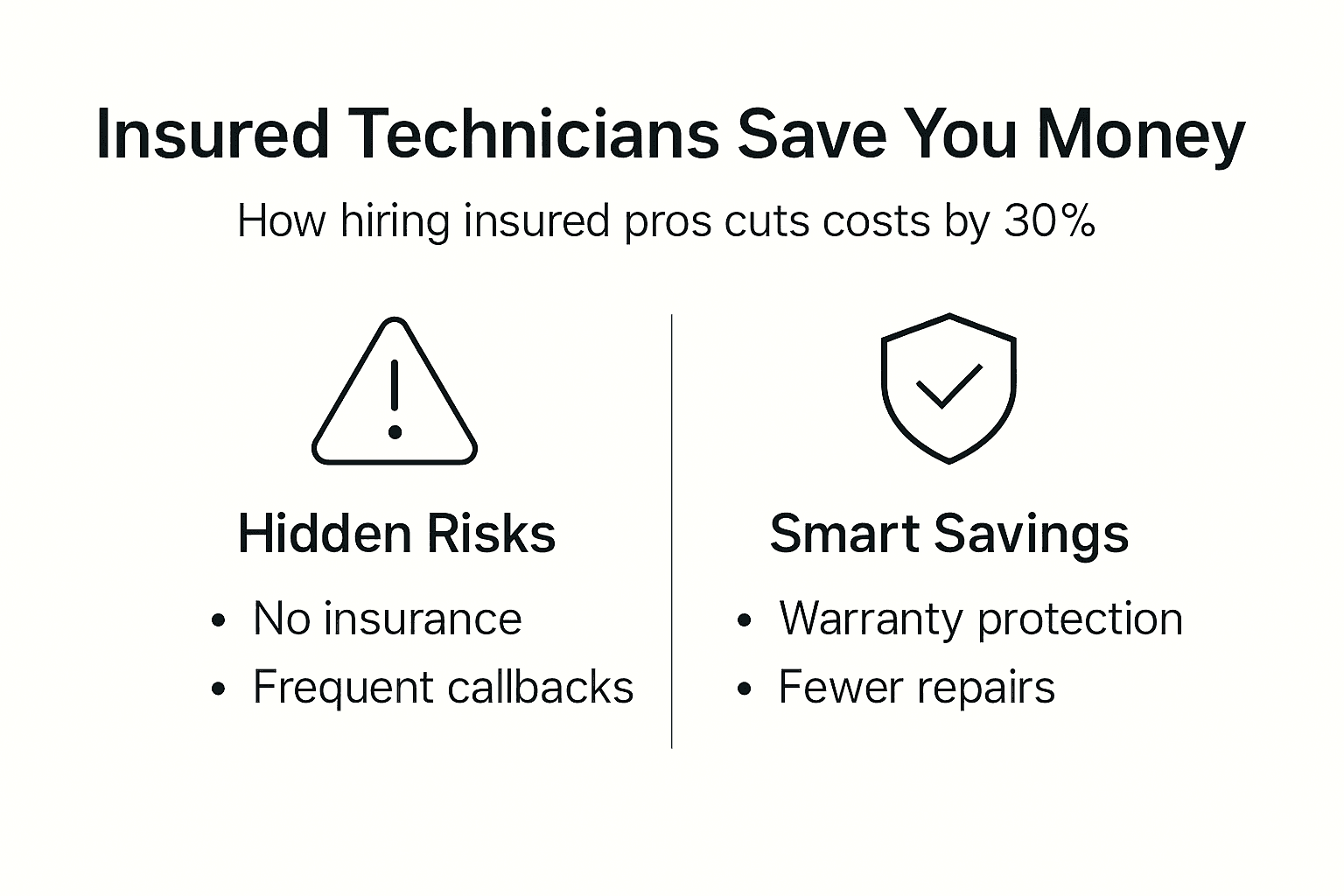
Consider the total cost of ownership across key factors:
| Factor | Uninsured Technician | Insured Technician |
|---|---|---|
| Hourly rate | $70-90 | $110-140 |
| Liability coverage | None (homeowner liable) | $1-2M policy protects homeowner |
| Warranty preservation | Often voids coverage | Maintains full warranty |
| Callback rate | 35-40% require rework | 5-10% require rework |
| Code compliance | Often non-compliant | Guaranteed compliant |
| Permit handling | Usually ignored | Obtained and documented |
The callback rate difference alone justifies the higher hourly rate. Insured professionals fix problems correctly the first time because their reputation and insurance premiums depend on quality work. Uninsured workers face no consequences for shoddy repairs beyond losing one customer, encouraging cut corners and temporary fixes.
Warranty preservation delivers massive value. A refrigerator compressor replacement costs $800 to $1,200 out of pocket if your warranty is void. That single repair eliminates any savings from hiring cheaper uninsured help for the original service call. Premium appliances with 5-10 year warranties multiply this benefit across multiple potential claims.
Comparing repair versus replacement costs reveals how proper initial repairs extend appliance lifespan by years. Insured technicians identify underlying issues that uninsured workers miss, preventing premature failures that force expensive replacements. A $150 diagnostic fee that catches a failing capacitor saves you from a $3,500 HVAC system replacement next year.
Financial planning becomes predictable with insured technicians. Their written estimates, warranty guarantees, and insurance backing create budget certainty. You know exactly what you’ll pay and what protections you’re receiving. Uninsured workers leave you exposed to unlimited financial risk from poor workmanship or accidents.
Protect your home with professional appliance and HVAC repair
Your appliances and HVAC systems represent substantial investments requiring expert care. The risks of uninsured technicians extend far beyond immediate repair costs, threatening your home’s safety, your warranty coverage, and your financial security. Every homeowner in Orange and Los Angeles Counties deserves reliable service from professionals who stand behind their work.
At Appliances Repair MD Tech, our licensed and insured technicians bring decades of combined experience to every service call. We maintain comprehensive liability coverage, hold current certifications from major appliance manufacturers, and guarantee code-compliant work on every project. Our team understands the unique challenges of Southern California homes, from older electrical systems in historic properties to modern smart appliances requiring specialized diagnostics. We serve communities throughout Orange County and Los Angeles County with same-day emergency service and flexible scheduling for routine maintenance. When you need refrigerator repair, washer service, HVAC maintenance, or any appliance work, our insured professionals protect your home and preserve your warranties. Contact us today for a free estimate and experience the peace of mind that comes from working with fully insured, locally trusted technicians.
Frequently asked questions
How do I verify if an appliance technician is properly insured?
Request a certificate of insurance directly from the technician and call the insurance company’s verification number to confirm active coverage. State licensing boards also maintain databases showing current license and insurance status for all registered contractors.
What happens if an uninsured technician damages my property?
You must pursue compensation through small claims court or personal lawsuit, but most uninsured technicians lack assets to cover significant damages. Without liability insurance, you’ll likely absorb repair costs yourself or file a claim against your homeowner’s policy, increasing your premiums.
Do manufacturer warranties really require licensed technicians?
Yes, most major appliance manufacturers explicitly require repairs by licensed and insured professionals to maintain warranty coverage. Review your warranty documentation carefully, as using unlicensed help typically voids all remaining coverage immediately.
Are insured technicians worth the higher hourly rates?
Insured technicians reduce total repair costs by 20-30% through quality work, fewer callbacks, and warranty preservation. The slightly higher hourly rate pays for comprehensive liability protection, code compliance, and professional accountability that uninsured workers cannot provide.
How often should I request updated insurance certificates from my technician?
Request current certificates before each service visit, as insurance can lapse between appointments. Policies typically renew annually, so documentation from a previous visit may no longer be valid when you schedule new work.