
Many homeowners wait until their HVAC system breaks down before calling a technician, a costly mistake that leads to emergency repairs and discomfort. Understanding the role of HVAC maintenance reveals that regular service prevents breakdowns and extends system life by up to 25%. Annual maintenance improves energy efficiency, reduces utility bills, and ensures your home stays comfortable year-round in Orange and Los Angeles Counties.
Table of Contents
- Introduction: Why Annual HVAC Service Matters
- Understanding the Optimal Frequency and Timing for HVAC Service
- Key Maintenance Tasks in Annual HVAC Service
- Climate Challenges Unique to Orange and Los Angeles Counties
- Common Misconceptions About Annual HVAC Maintenance
- Benefits of Regular HVAC Maintenance for Homeowners
- Recognizing Signs Your HVAC Needs Immediate Service
- Schedule Your Professional HVAC Service with MDTECH Appliance Repair
- FAQ
Key Takeaways
| Point | Details |
|---|---|
| Extended Lifespan | Annual HVAC service extends equipment lifespan by up to 25%, delaying costly replacements. |
| Energy Savings | Proper maintenance improves energy efficiency up to 20%, directly reducing monthly utility bills. |
| Optimal Timing | Biannual visits in spring and fall prepare systems for peak cooling and heating seasons. |
| Coastal Protection | Local salt air accelerates corrosion, requiring specialized attention to prevent premature failure. |
| Peace of Mind | Professional maintenance plans prevent emergency breakdowns and offer predictable costs. |
Introduction: Why Annual HVAC Service Matters
Annual HVAC service prevents unexpected system failures that leave you sweating through summer or shivering in winter. When you skip maintenance, small issues like clogged filters or refrigerant leaks grow into expensive emergency repairs. Maintenance improves efficiency, reduces utility bills, and prevents major breakdowns.
Southern California’s year-round climate means your HVAC system works harder than systems in regions with distinct off-seasons. This constant use accelerates wear on components, making regular tune-ups essential. Understanding the importance of HVAC maintenance helps you appreciate how professional service protects your investment.
The benefits extend beyond avoiding breakdowns. Regular maintenance directly impacts your home’s air quality and comfort levels. Technicians clean components that accumulate dust, pollen, and debris, ensuring the air circulating through your home stays fresh. This attention to HVAC’s role in home comfort makes annual service a health investment.
Common preventable problems include:
- Clogged air filters restricting airflow and forcing the system to work harder
- Refrigerant leaks reducing cooling capacity and efficiency
- Electrical faults creating safety hazards and system failures
- Dirty coils reducing heat transfer and increasing energy consumption
- Worn belts and bearings causing noisy operation and component damage
Many homeowners overlook how scheduling appliance maintenance extends equipment lifespan. Your HVAC system represents a significant investment, often costing thousands to replace. Regular service protects this investment by catching problems early, before they cause cascading failures.
Pro Tip: Schedule your annual service before seasonal peaks in spring or fall. You’ll avoid the rush when technicians are booked solid, and your system will be ready when you need it most.
Understanding the Optimal Frequency and Timing for HVAC Service
Experts recommend biannual service visits in spring and fall to prepare systems for cooling and heating seasons respectively. This timing ensures your air conditioning works efficiently before summer heat arrives and your heating system operates safely before cooler weather begins. Strategic scheduling maximizes system readiness when demand peaks.
Spring tune-ups focus on air conditioning components. Technicians inspect refrigerant levels, clean condenser coils, and verify electrical connections before you rely on cooling during warm months. This preventive approach catches problems before they strand you in uncomfortable heat.
Fall maintenance prioritizes heating system safety and efficiency. Technicians inspect heat exchangers for cracks, test ignition systems, and verify proper combustion. These checks prevent dangerous situations like carbon monoxide leaks while ensuring efficient operation.
Coastal homes or older systems may require additional inspections beyond the standard biannual schedule. Salt air accelerates corrosion on outdoor units, and aging components need closer monitoring. Understanding HVAC maintenance frequency for your specific situation helps you make informed decisions.
Follow this recommended maintenance schedule:
- Schedule professional service in early spring (March or April) for cooling system preparation
- Replace air filters every 30 to 60 days throughout the year
- Schedule fall service in October or November for heating system inspection
- Arrange additional inspections if you live within two miles of the coast
- Keep records of all maintenance visits to track system health over time
Regular filter replacement between professional visits maintains airflow and prevents strain on your system. This simple task complements professional maintenance but never replaces comprehensive tune-ups. Review this maintenance checklist to understand what professionals cover during service visits.
Key Maintenance Tasks in Annual HVAC Service
Understanding what happens during professional service helps you appreciate the value you receive. Typical tasks include filter changes, refrigerant level checks, coil cleaning, electrical safety tests, and airflow verification. Each task addresses specific components that affect efficiency, safety, and longevity.
Technicians perform these essential maintenance activities:
- Filter inspection and replacement to maintain proper airflow and prevent system strain
- Electrical system tests ensuring safe operation and catching loose connections before they fail
- Refrigerant pressure checks and refills to optimal levels for maximum cooling efficiency
- Coil cleaning removing debris that reduces heat transfer and forces the system to work harder
- Airflow verification detecting duct issues or blockages that create uneven temperatures
- Thermostat calibration ensuring accurate temperature control and efficient cycling
- Condensate drain clearing preventing water damage and humidity problems
These comprehensive HVAC maintenance tasks address the most common failure points. Technicians use specialized tools to measure system performance, comparing readings against manufacturer specifications. This data-driven approach identifies problems you cannot detect through casual observation.
| Maintenance Task | Impact on System | Frequency Needed |
|---|---|---|
| Filter Replacement | Improves airflow, reduces strain | Every 30-60 days |
| Coil Cleaning | Enhances heat transfer efficiency | Biannually |
| Refrigerant Check | Maintains cooling capacity | Biannually |
| Electrical Inspection | Prevents safety hazards | Biannually |
| Condensate Drain Clearing | Prevents water damage | Biannually |
Pro Tip: Ask your technician to show you the condition of major components during service. Understanding what clean coils or proper refrigerant levels look like helps you recognize when something seems wrong between scheduled visits.
Professional service goes far beyond what homeowners can accomplish with DIY efforts. Technicians have training, experience, and equipment to spot subtle problems before they become obvious failures. This expertise justifies the investment in regular professional maintenance.
Climate Challenges Unique to Orange and Los Angeles Counties
Southern California’s coastal and urban environment creates specific challenges for HVAC systems. Coastal salt air accelerates corrosion, increasing the need for frequent inspections and preventive care. Understanding these regional factors helps you protect your system from premature failure.

The mild year-round climate means your HVAC system experiences more consistent usage compared to regions with extreme seasonal variations. While you might think this gentler operation reduces wear, the reality is different. Constant cycling without extended rest periods actually increases component stress over time.
Environmental factors affecting local HVAC systems:
- Salt air from ocean proximity causes accelerated corrosion on outdoor units and metal components
- Dust and urban pollutants increase filter clogging rates, requiring more frequent changes
- Mild winters mean less heating system use, but components still need inspection for safety
- Consistent cooling demands during long warm seasons stress air conditioning components
- Coastal humidity creates condensation issues requiring proper drain maintenance
Homeowners within two miles of the coast should consider quarterly inspections rather than just biannual service. The corrosive environment significantly shortens component life without proper protection and cleaning. Some technicians recommend applying protective coatings to outdoor units in these locations.
Understanding Southern California climate impacts on your HVAC system helps you adapt your maintenance schedule to local conditions. What works in other regions may not provide adequate protection here.
Dust from nearby construction, urban air quality, and seasonal Santa Ana winds all contribute to faster filter saturation. You might need to change filters every 30 days instead of the typical 60-day interval. Check filters monthly and replace them when they appear dirty, regardless of calendar schedules.
Common Misconceptions About Annual HVAC Maintenance
Several myths discourage homeowners from scheduling regular HVAC service, leading to preventable breakdowns and expenses. Understanding the truth behind these misconceptions helps you make informed decisions about system care.
Myth: HVAC systems only need service when they stop working or show obvious problems.
Fact: Routine maintenance is necessary even if systems seem fine; professional tune-ups prevent breakdowns before they occur. Small issues invisible to homeowners grow into expensive failures without intervention.
Myth: Changing filters occasionally provides sufficient maintenance for your HVAC system.
Fact: While filter changes are important, DIY efforts cannot replace professional service that includes comprehensive system checks. Technicians inspect components you cannot access and measure performance parameters requiring specialized equipment.
Myth: Skipping annual maintenance saves money by avoiding service call costs.
Fact: Neglecting maintenance leads to more expensive repairs, reduced efficiency, and shortened equipment life. The cost of annual service is far less than emergency repairs or premature replacement.
Myth: All HVAC maintenance tasks can be handled by homeowners following online guides.
Fact: Some tasks require professional training, specialized tools, and licensing. Refrigerant handling, electrical work, and combustion safety checks must be performed by qualified technicians.
These misconceptions often stem from confusion about the difference between simple homeowner tasks and professional service. Understanding the importance of regular maintenance helps you distinguish what you can handle versus what requires expertise. Review proven maintenance tips to maximize your system’s performance between professional visits.
Benefits of Regular HVAC Maintenance for Homeowners
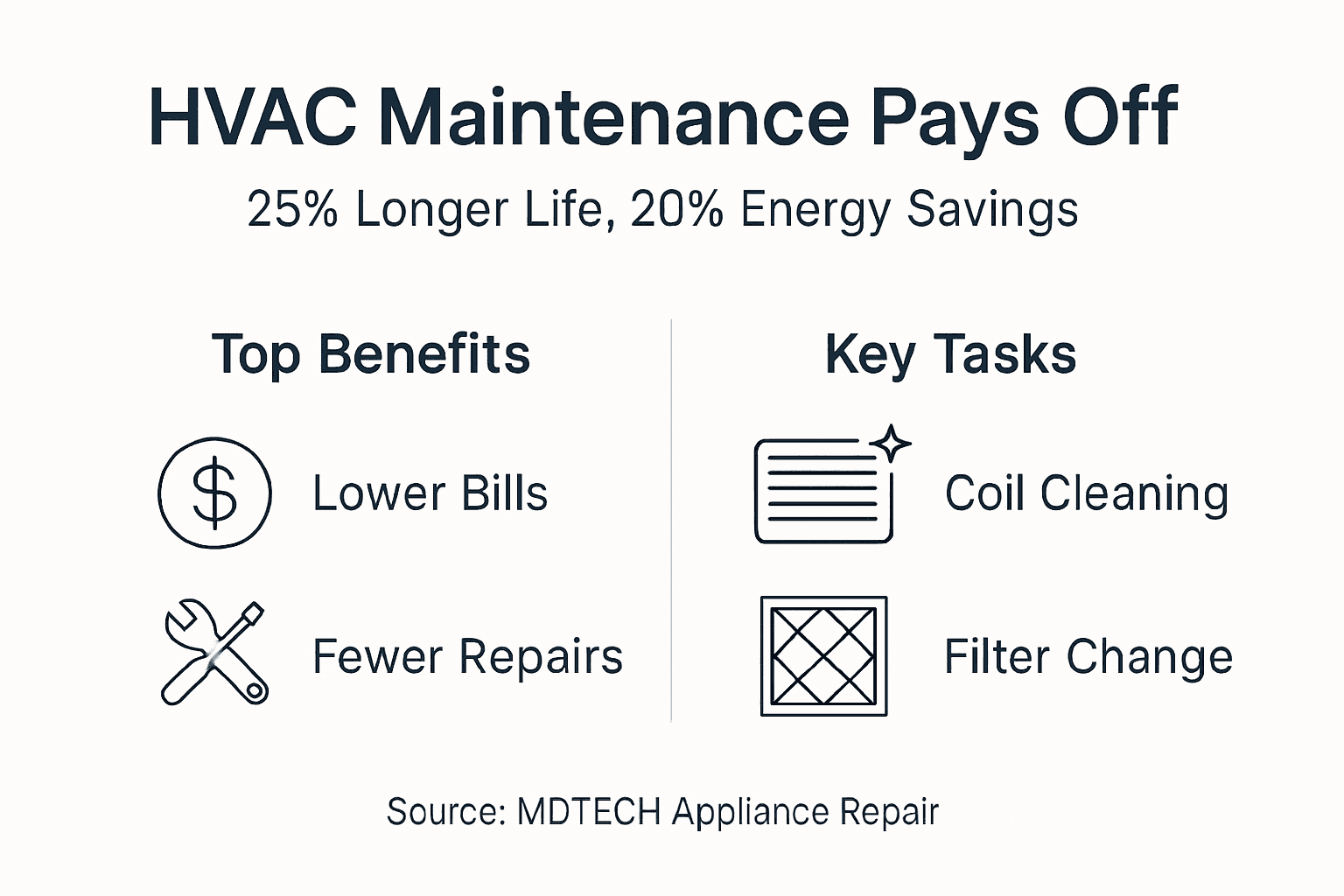
The measurable advantages of annual HVAC service extend beyond avoiding breakdowns. Regular service improves energy efficiency by up to 20%, extends equipment lifespan by 25%, and reduces emergency repairs. These benefits translate directly into financial savings and improved home comfort.
Maintenance reduces energy consumption by keeping components clean and properly adjusted. Dirty coils, low refrigerant, and clogged filters force your system to work harder, consuming more electricity to deliver the same cooling or heating. Clean, well-maintained systems operate at peak efficiency, lowering monthly utility bills.
Equipment lasting 25% longer means delaying a replacement that costs $5,000 to $10,000 or more. If a typical system lasts 12 years without maintenance, proper care extends that to 15 years. This three-year extension saves thousands while providing reliable performance.
| Maintenance Approach | Annual Cost | System Lifespan | Emergency Repairs | Energy Efficiency |
|---|---|---|---|---|
| No Maintenance | $0 | 10-12 years | Frequent, costly | Decreases 5% yearly |
| DIY Filter Changes Only | $100-150 | 12-14 years | Occasional | Decreases 3% yearly |
| Professional Biannual Service | $200-400 | 15-18 years | Rare | Maintained at peak |
Key benefits homeowners experience:
- Lower monthly utility bills from improved efficiency
- Extended equipment life delaying expensive replacements
- Fewer emergency breakdowns and service calls
- Improved indoor air quality and comfort
- Maintained manufacturer warranty coverage
- Peace of mind knowing systems operate safely
Proactive care prevents the stress and expense of emergency breakdowns. Nothing disrupts your day like an HVAC failure during extreme weather. Regular maintenance dramatically reduces this risk, keeping your home comfortable year-round.
Pro Tip: Investing in a professional maintenance plan improves scheduling and accountability. Many companies offer plans with priority service, discounted repairs, and automatic scheduling reminders.
Regular professional service can extend your HVAC equipment lifespan by 25% while reducing energy costs up to 20%, making maintenance one of the smartest investments you can make in your home.
When deciding between repair versus replacement, well-maintained systems often qualify for cost-effective repairs instead of premature replacement. This flexibility provides options when problems eventually occur.
Recognizing Signs Your HVAC Needs Immediate Service
Between scheduled maintenance visits, stay alert for warning signs indicating your system needs immediate professional attention. Noisy operation, odd smells, uneven airflow, and rising energy bills often signal system problems requiring prompt diagnosis.
Unusual noises like banging, rattling, or grinding during operation indicate loose or damaged components. These sounds rarely resolve themselves and typically worsen over time. Ignoring them leads to more extensive damage and expensive repairs.
Musty or burning odors emanating from vents signal potential safety hazards or mold growth. Burning smells might indicate electrical problems or overheating components. Musty odors suggest moisture accumulation and possible mold in ductwork. Both situations require immediate professional evaluation.
Warning signs requiring prompt attention:
- Loud banging, rattling, or grinding noises during system operation
- Burning, musty, or unusual odors from vents
- Weak or uneven airflow in different rooms
- System cycling on and off more frequently than normal
- Unexpected spikes in energy bills without increased usage
- Visible water leaks or moisture around the unit
- System running constantly without reaching set temperature
Weakened airflow or temperature differences between rooms indicate duct problems, damper issues, or failing components. Your system should deliver consistent comfort throughout your home. Noticeable variations mean something needs professional attention.
Energy bill increases without corresponding usage changes suggest declining efficiency. Compare current bills to the same period last year. Significant increases often indicate your system is working harder due to developing problems.
Understanding emergency HVAC signs helps you know when to call for service between scheduled maintenance visits. Don’t wait for complete failure when warning signs appear. Early intervention prevents minor issues from becoming major problems.
Schedule Your Professional HVAC Service with MDTECH Appliance Repair
Protecting your HVAC investment requires partnering with qualified local professionals who understand Southern California’s unique climate challenges. Your system deserves the attention that prevents costly failures and ensures year-round comfort.
MDTECH offers licensed and insured expert HVAC repair services tailored for Orange and Los Angeles County homes. Our technicians understand how coastal salt air, urban pollutants, and year-round operation affect local systems. Flexible professional HVAC maintenance plans are designed to save money and extend equipment life through proactive care.
Schedule service online or by phone to connect with trusted local technicians who prioritize your comfort and budget. Our comprehensive HVAC repair services include emergency response when you need it most. Don’t wait for breakdowns to disrupt your comfort. Take control with regular professional maintenance.
FAQ
What does an annual HVAC service include?
Annual service includes filter replacement, coil cleaning, refrigerant level checks, electrical safety inspections, airflow verification, and thermostat calibration. Technicians measure system performance against manufacturer specifications to identify developing problems.
How does maintenance save money on energy bills?
Clean components and proper adjustments allow your system to operate at peak efficiency, using less electricity to deliver the same comfort. Dirty coils and low refrigerant force the system to work harder, consuming significantly more energy.
When should I replace my HVAC system instead of repairing?
Consider replacement when repair costs exceed 50% of replacement cost, your system is over 15 years old, or efficiency has declined significantly despite maintenance. Well-maintained systems often qualify for cost-effective repairs longer than neglected equipment.
Can I rely only on DIY maintenance for my HVAC?
DIY filter changes help but cannot replace professional service. Technicians access components you cannot reach, use specialized diagnostic equipment, and have training to spot subtle problems. Some tasks like refrigerant handling require licensing.
How often should I replace air filters in a coastal home?
Coastal homes should check filters monthly and replace them every 30 days if visibly dirty. Salt air and humidity increase debris accumulation faster than inland locations. More frequent changes protect your system from unnecessary strain.