
TL;DR:
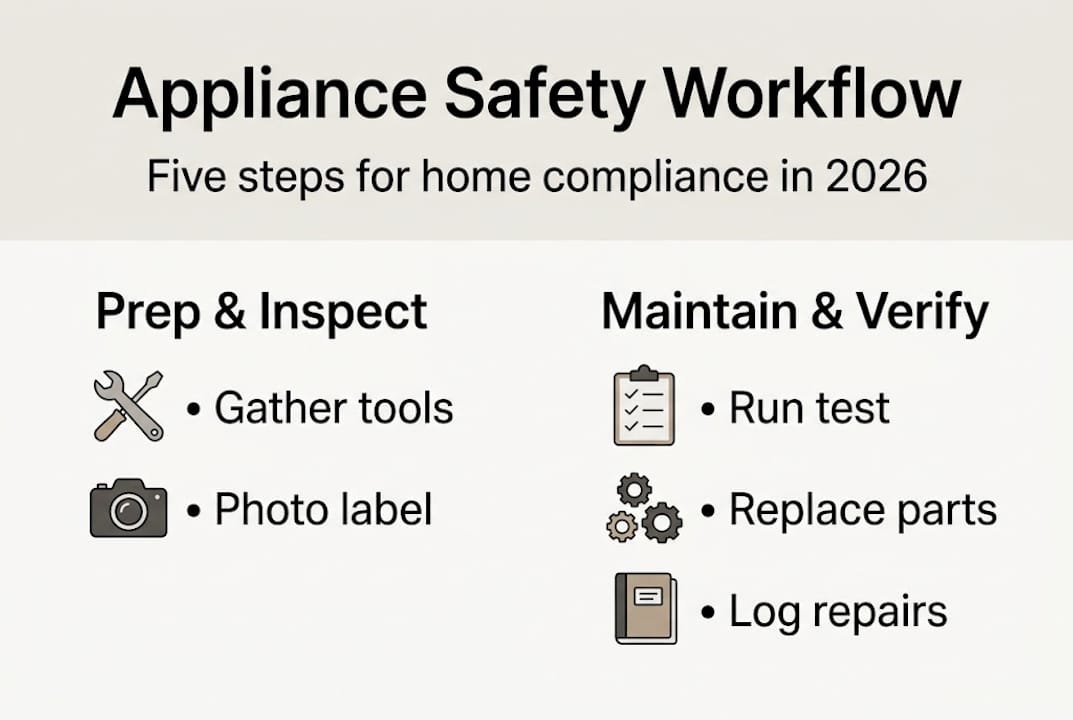
- California’s new law mandates repairs or replacements of stoves and refrigerators within 30 days from 2026.
- Regular appliance inspection, maintenance, and documentation are essential for safety and legal compliance.
- A structured workflow reduces fire risks and ensures proper record-keeping for property management.
Cooking equipment is the leading cause of home fires, and California just raised the stakes for homeowners and property managers with new legal requirements taking effect in 2026. Whether you own a single-family home in Anaheim or manage a rental portfolio across Los Angeles County, keeping your appliances safe is no longer just common sense. It is now a legal obligation with real deadlines and consequences. This guide walks you through a practical, repeatable workflow that covers inspection, maintenance, repair, and documentation so you can protect your property, your tenants, and your peace of mind.
Table of Contents
- Understanding new appliance safety standards in California
- Prepping your appliance safety workflow: Tools, materials, and baseline checks
- Step-by-step appliance safety workflow: Inspection, maintenance, and repair
- Verifying safety: Final checks, documentation, and ongoing workflow management
- Our expert perspective: Why workflow beats piecemeal maintenance for appliance safety
- Get help with appliance safety and workflow management
- Frequently asked questions
Key Takeaways
| Point | Details |
|---|---|
| Legal standards updated | California AB 628 now requires timely stove and refrigerator repairs for most rentals starting in 2026. |
| Smoke detectors save lives | Operational smoke and CO detectors significantly reduce fire-related deaths and injuries. |
| Workflow prevents hazards | Structured workflows and baseline checks help prevent fire risks and meet legal requirements. |
| Documentation is essential | Detailed repair and maintenance records are vital for compliance and peace of mind. |
Understanding new appliance safety standards in California
California has long required landlords to maintain habitable rental properties under Civil Code 1941.1, which covers plumbing, gas lines, electrical systems, heating, and sanitary conditions. If any of these systems fail, landlords are legally required to address the issue promptly. Ignoring these obligations can result in rent withholding, repair-and-deduct remedies by tenants, or even legal action.
What changed in 2026 is more specific. AB 628 mandates repairs or replacements within 30 days for stoves and refrigerators in most California rentals. This applies to leases that are signed, amended, or extended from 2026 onward. So if you renew a lease this year, the clock starts ticking the moment a stove or refrigerator breaks down.
Here is a quick look at how the key requirements stack up:
| Requirement | Civil Code 1941.1 | AB 628 (2026) |
|---|---|---|
| Applies to | All rentals | Rentals with signed/amended leases from 2026 |
| Covered systems | Plumbing, gas, electrical, heating | Stoves and refrigerators |
| Repair deadline | Reasonable time | 30 days |
| Tenant remedy | Repair and deduct, rent withholding | Same, plus stronger enforcement |
Key obligations under California habitability law include:
- Functional heating capable of maintaining 70°F in living areas
- Gas lines and connections free of leaks and properly maintained
- Electrical systems with no exposed wiring or overloaded circuits
- Plumbing that delivers hot and cold running water
- Appliances provided by the landlord kept in safe working order
“A landlord who fails to maintain appliances covered under AB 628 risks legal liability, withheld rent, and potential fines. Proactive maintenance is not optional. It is the law.”
Building regular appliance maintenance into your property management routine is the most reliable way to stay ahead of these requirements. Using an essential maintenance checklist helps you track what has been done and what is coming due.
With clear legal obligations outlined, let’s see what you’ll need to set up a safe appliance workflow in your home or rental.
Prepping your appliance safety workflow: Tools, materials, and baseline checks
Before you inspect or repair anything, you need the right tools and a clear starting point. Skipping this step is one of the most common mistakes homeowners make. They jump straight into a repair without checking whether the environment is safe or whether the appliance is even worth fixing.
Here is a comparison of the essential tools and their roles in your workflow:
| Tool or material | Purpose |
|---|---|
| Multimeter | Tests electrical continuity and voltage |
| Flashlight or headlamp | Illuminates tight spaces behind and under appliances |
| Smoke and CO detector tester | Verifies detector function before and after work |
| Manufacturer recall lookup | Confirms appliance is not under active safety recall |
| Ventilation clearance guide | Ensures proper airflow around refrigerators, dryers, and ovens |
| Appliance logbook or app | Records inspection dates, repairs, and part replacements |
Smoke and CO detectors are not just a nice addition. Proper ventilation clearance prevents a significant share of recall-linked fires, and working detectors dramatically reduce fire death rates. Test them every month and replace batteries at least once a year.
Baseline checks to complete before any repair or maintenance session:
- Visually inspect all accessible connections, cords, and hoses for wear or damage
- Check the CPSC recall database at cpsc.gov for your appliance model number
- Confirm all ventilation clearances match the manufacturer’s specifications
- Verify that gas shutoff valves are accessible and functional
- Ensure the circuit breaker for the appliance is clearly labeled
Pro Tip: Take a photo of each appliance’s model and serial number plate before you start. Store these in a shared folder so any technician or property manager can pull them up instantly during a service call.
Good appliance maintenance tips always start with preparation, not the repair itself. Understanding the full appliance care process helps you avoid costly mistakes before they happen.
Step-by-step appliance safety workflow: Inspection, maintenance, and repair
With everything in place, let’s walk through the workflow that keeps your appliances safe, reliable, and compliant.
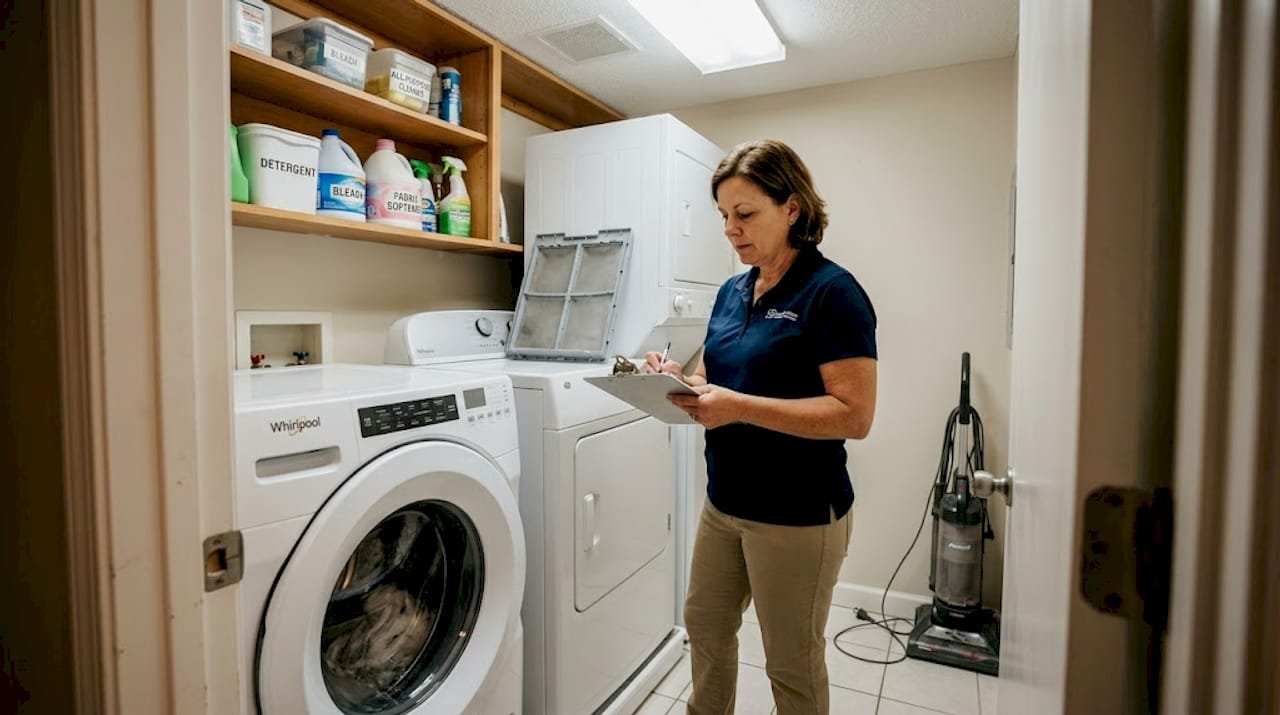
Step 1: Visual inspection
Look for frayed cords, cracked hoses, rust, burn marks, or unusual buildup around any appliance. These are early warning signs that something is wrong before a breakdown occurs.
Step 2: Recall check
Search the CPSC database using the model number you photographed earlier. If there is an active recall, stop and contact the manufacturer before doing anything else.
Step 3: Functionality test
Run each appliance through a normal cycle. Listen for unusual sounds, check for error codes, and note any performance drop such as a refrigerator not reaching temperature or a dryer taking two cycles to dry a load.
Step 4: Cleaning and filter maintenance
Clean dryer lint traps, refrigerator coils, oven interiors, and dishwasher filters. Buildup in these areas is a direct fire and efficiency risk. Follow the appliance cleaning tips specific to each appliance type.
Step 5: Part replacement
Replace worn gaskets, filters, belts, or igniters based on manufacturer schedules. Do not wait for a part to fail completely. Scheduled replacement is cheaper and safer.
Step 6: Repair execution
For anything beyond basic maintenance, follow a structured diagnosis process. Identify the symptom, isolate the cause, order the correct part, and complete the repair according to the preventive maintenance guide.
Step 7: Post-repair test
Run the appliance again after any repair. Confirm the issue is resolved and no new symptoms appear.
Key stat: Cooking equipment accounts for 18% of residential fires, with heating and electrical appliances adding significantly to that total. A structured workflow is your best defense.
Common mistakes to avoid: skipping the recall check, reusing old parts during a repair, and failing to test after the fix. Also, never ignore appliance installation best practices when a unit is moved or replaced.
Pro Tip: Always shut off power and gas before opening any appliance for inspection or repair. This takes 30 seconds and prevents the majority of DIY-related injuries.
Verifying safety: Final checks, documentation, and ongoing workflow management
Once repairs are complete, it is crucial to verify everything is safe and documented. This step is where most homeowners and property managers fall short. They finish the repair and move on without confirming the fix held or recording what was done.
Final safety and performance checks to complete after every repair:
- Run a full functional test under normal operating conditions
- Confirm no error codes or warning lights are active
- Check that all panels, covers, and connections are secure
- Test smoke and CO detectors in the immediate area
- Verify ventilation clearances were not disturbed during the repair
Documentation is not just a good habit. Proper documentation is critical for compliance with California habitability standards. If a tenant disputes a repair or an inspector reviews your property, your records are your protection.
| Document type | What to record | Why it matters |
|---|---|---|
| Repair log | Date, appliance, issue, fix performed | Proves timely response under AB 628 |
| Inspection checklist | Date, findings, technician name | Shows ongoing due diligence |
| Part receipts | Part name, model, cost, supplier | Confirms correct parts were used |
| Recall confirmation | Model checked, date, result | Demonstrates safety awareness |
“Keeping organized records is the single most underrated part of appliance management. It turns a reactive situation into a defensible, professional process.”
For ongoing workflow management, schedule checks seasonally. Spring and fall are natural times to inspect HVAC-adjacent appliances, while summer and winter are peak stress periods for refrigerators and heating equipment. Setting up maintenance schedules tailored to Orange County and LA County conditions helps you stay ahead of the heat and humidity cycles that accelerate wear.
Spot issues early by watching for rising energy bills, longer cycle times, unusual odors, or water pooling near appliances. These are signals that something is changing before it becomes an emergency.
Our expert perspective: Why workflow beats piecemeal maintenance for appliance safety
We have seen it repeatedly in Orange County and Los Angeles County properties. A landlord fixes the stove when it breaks, replaces the refrigerator when it stops cooling, and calls a technician only when a tenant complains. That reactive approach feels efficient in the moment. It is not.
Reactive fixes address symptoms, not patterns. They leave the underlying risk in place and create gaps in documentation that become serious problems during inspections or tenant disputes. The appliance maintenance checklist insights we have built over years of local service calls show that properties with structured workflows have fewer emergency repairs, lower annual maintenance costs, and stronger compliance records.
The NFPA data makes this concrete. 72% of fire deaths occur from operating equipment and open flames, meaning the hazard is almost always present before the incident. A workflow catches those hazards during inspection, not after a fire. That is the difference between a proactive system and a regrettable outcome.
Get help with appliance safety and workflow management
Managing appliance safety across a home or rental property in Orange County or Los Angeles County does not have to be overwhelming. MDTECH connects you with licensed technicians who understand both the technical side of repairs and the compliance requirements that matter in California.
Whether you need help reading the appliance parts repair guide, figuring out the right call using our repair vs replacement guide, or scheduling a certified technician for Samsung appliance repair, we have the resources and local expertise to keep your workflow running smoothly. Book online or reach out today to get your appliances inspected, documented, and compliant.
Frequently asked questions
What are the new appliance safety requirements for California rentals in 2026?
AB 628 requires landlords to repair or replace stoves and refrigerators within 30 days in most rentals signed or modified from 2026 onward. This applies to new leases, renewals, and amendments.
Which appliances are most likely to cause home fires?
Cooking equipment leads home fires, followed by heating and electrical appliances, based on 2019 to 2023 NFPA data. Keeping these appliances well-maintained is your most direct line of defense.
How can I reduce fire risk from appliances in my home?
Test smoke and CO detectors monthly, maintain proper ventilation clearances, and follow a seasonal maintenance routine. Working detectors and ventilation cut fire risk significantly when combined with regular appliance checks.
What documentation do I need for appliance repairs to meet compliance?
Track repair dates, the issue identified, the fix performed, parts used, and technician details. Proper documentation is critical for demonstrating compliance with California habitability standards during inspections or disputes.
How often should appliance safety checks be completed?
Perform checks seasonally, after any major repair, and immediately after a recall notice or tenant-reported issue. Seasonal scheduling aligns with the peak stress periods for most household appliances in Southern California.
Recommended
- Step by Step Appliance Repair: Easy Home Fixes
- Expert kitchen appliance cleaning tips for a lasting home
- Step by Step Washer Repair: Easy Troubleshooting Tips
- Washer installation workflow: step-by-step guide 2026
- Annual Boiler Service Workflow: Step-by-Step Guide for Homes – Skan Plumbing & Heating