
Most homeowners in Orange and Los Angeles Counties are quietly losing money every year without realizing it. Neglected appliances quietly drain your wallet, and households lose over $500 annually to avoidable repairs that a simple maintenance schedule could have prevented. The good news is that consistent, structured upkeep is not complicated. This guide walks you through exactly what to do, when to do it, and how to make smarter decisions about repairs, replacements, and professional help so your appliances work harder and last longer.
Table of Contents
- Why maintenance schedules matter for homeowners
- Essential maintenance tasks by frequency
- How maintenance affects energy efficiency and lifespan
- Repair vs maintenance vs replacement: decision guidelines
- What most guides miss about appliance maintenance schedules
- Optimize your appliances with expert help
- Frequently asked questions
Key Takeaways
| Point | Details |
|---|---|
| Routine saves money | Consistent maintenance schedules prevent costly breakdowns and boost appliance efficiency. |
| Frequency matters | Monthly, quarterly, biannual, and annual tasks each play a unique role in maximizing your appliance lifespan. |
| Logs improve outcomes | Tracking maintenance and repairs can optimize warranty coverage and resale value. |
| Professional help is key | Certified technicians reduce risk and can catch issues early that DIY often misses. |
Why maintenance schedules matter for homeowners
A maintenance schedule is simply a written plan that tells you which appliance tasks to perform and when. Think of it like a calendar for your home’s most expensive equipment. Instead of waiting for your refrigerator to stop cooling or your dryer to overheat, you stay ahead of problems before they become emergencies.
The evidence is clear. Regular maintenance prevents costly breakdowns by catching issues early, extending appliance lifespan, improving energy efficiency, and enhancing household safety. That is not a minor benefit. For families in Orange and LA Counties, where summer heat pushes appliances harder and local hard water accelerates wear, a proactive schedule is especially valuable.
Here is what neglect typically costs you:
- Refrigerators with dirty coils run 15 to 25 percent less efficiently, inflating your electric bill every month.
- Dryer vents clogged with lint are one of the leading causes of home fires in California.
- Dishwashers with uncleaned filters leave residue on dishes and strain the pump motor over time.
- Water heaters with sediment buildup lose heating efficiency and can fail years ahead of schedule.
“Preventive maintenance is not about spending more money. It is about protecting the money you have already spent on your appliances.”
Orange and LA Counties have specific conditions that accelerate appliance wear. Hard water deposits build inside dishwashers, washing machines, and water heaters faster than in most other regions. Summer temperatures regularly push air conditioners and refrigerators to work overtime. Coastal humidity near areas like Long Beach or Santa Monica can affect electrical components and seals. Understanding appliance maintenance importance in this local context helps you prioritize the right tasks at the right time.
The payoff for staying consistent is real. Appliances that receive regular care last significantly longer, perform better, and cost less to operate. Reviewing maintenance tips for longevity gives you a practical starting point for building your own schedule.
Essential maintenance tasks by frequency
Now that you understand the why, let’s break down what to do and when. Structuring your efforts by frequency makes the whole process manageable instead of overwhelming.
| Frequency | Task | Appliance |
|---|---|---|
| Monthly | Check door seals, inspect cords | Refrigerator, oven |
| Monthly | Clean dishwasher filter | Dishwasher |
| Quarterly | Clean dryer lint trap and vent | Dryer |
| Biannual | Clean refrigerator coils | Refrigerator |
| Biannual | Flush water heater sediment | Water heater |
| Annual | Professional safety inspection | All major appliances |
Key maintenance methods include monthly visual checks, quarterly cleaning, biannual coil cleaning, and annual professional inspections and safety tests. These are not arbitrary intervals. They reflect how quickly components degrade under normal household use.
Here is a simple numbered routine to follow each season:
- January and July: Clean refrigerator coils and check the door gasket for cracks or gaps.
- April and October: Flush your water heater, clean the dishwasher filter, and inspect washing machine hoses.
- Every three months: Pull out the dryer and clean the full vent line, not just the lint screen.
- Once a year: Schedule a professional inspection for gas appliances, HVAC units, and any appliance over five years old.
For California homes specifically, vent cleaning deserves extra attention. Dust and debris accumulate faster in warmer, drier climates, which means quarterly dryer vent checks are more important here than in cooler regions. Hard water also means your dishwasher and washing machine filters need cleaning more often than the manufacturer’s standard recommendation.

Reviewing a maintenance scheduling guide can help you build a custom calendar based on your specific appliances and home size. You should also keep a printed or digital appliance safety checklist on hand for each major unit.
Pro Tip: Start a simple maintenance log in a notebook or a free app. Record every task, date, and any unusual sounds or performance changes. This log becomes gold when you need to make a warranty claim or sell your home.
For a broader view of which appliances need the most attention, check this cleaning appliance schedule from home improvement experts.
How maintenance affects energy efficiency and lifespan
After mapping out your ideal routine, let’s look at the real payoffs for your energy bill, safety, and how long your appliances actually last.
The numbers are striking. Cleaning fridge coils saves up to 25% energy, dryer vent cleaning improves efficiency by 30 percent and significantly reduces fire risk, and switching from an old refrigerator to a new energy-efficient model can save between $83 and $500 or more over ten years. That is real money staying in your pocket.
| Appliance | Maintained unit | Neglected unit |
|---|---|---|
| Refrigerator | Runs at full efficiency, lasts 15 to 17 years | 15 to 25% energy loss, fails at 10 to 12 years |
| Dryer | Efficient drying cycles, low fire risk | 30% efficiency drop, elevated fire hazard |
| Dishwasher | Clean wash cycles, motor protected | Pump strain, premature failure |
| Water heater | Consistent heating, 12 to 15 year lifespan | Sediment buildup, 8 to 10 year lifespan |
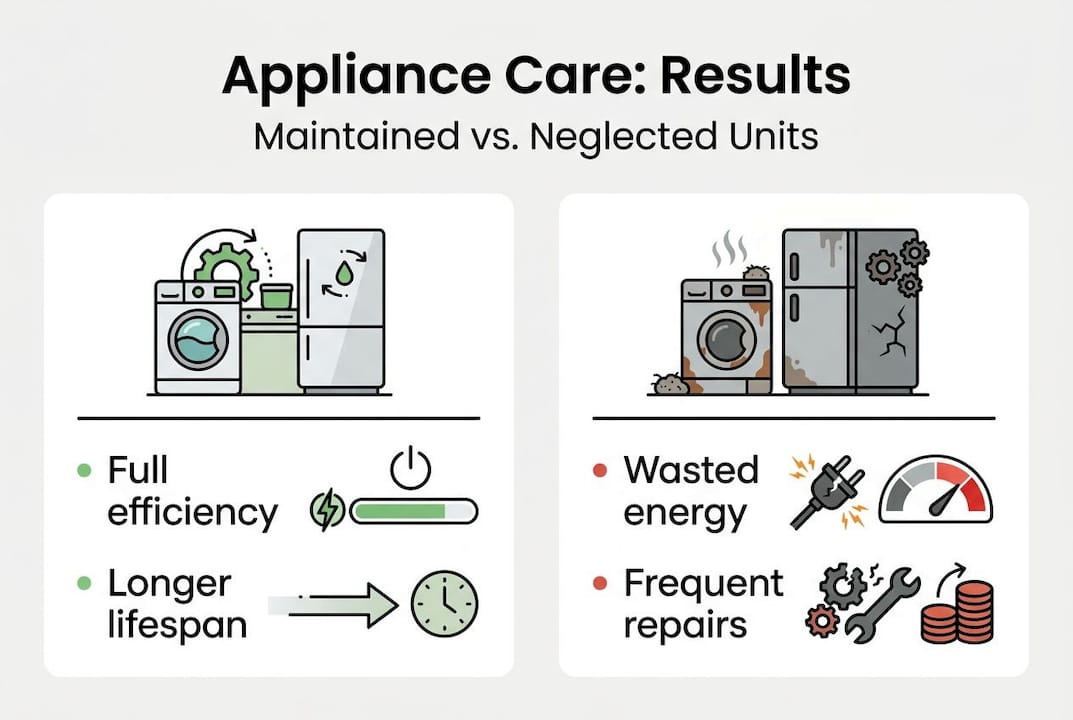
Beyond energy savings, maintenance directly reduces safety risks. Clogged dryer vents are responsible for thousands of house fires each year nationally. Gas appliance leaks that go undetected due to skipped annual checks can put your entire household at risk. These are not hypothetical dangers.
Here is where local conditions matter again. In Orange and LA Counties, refrigerators and air conditioners run harder during summer heat waves, which means coils and filters accumulate debris faster. Staying on a biannual cleaning schedule rather than annual is a smart adjustment for Southern California homes.
Tracking these habits through a clear appliance care process helps you connect routine tasks to measurable outcomes. You will start to notice lower utility bills, fewer service calls, and appliances that simply perform better year over year.
For more on preventing appliance mishap prevention, Consumer Reports offers detailed guidance on the most common failure points in kitchen appliances.
Repair vs maintenance vs replacement: decision guidelines
Once maintenance routines are established, homeowners inevitably face tough repair or replace decisions. Here is how to approach them with confidence.
The core rule is straightforward. Repair if costs are under 50% of the replacement price and the appliance has less than half its expected lifespan remaining. If both conditions are not met, replacement usually makes more financial sense, especially when newer models offer significant energy savings.
| Situation | Recommended action |
|---|---|
| Appliance under 5 years old, minor issue | Repair |
| Repair cost over 50% of new unit price | Replace |
| Appliance over 10 years old, major failure | Replace |
| Safety risk identified (gas leak, wiring) | Professional repair or replace immediately |
Here is a practical decision checklist:
- How old is the appliance compared to its expected lifespan?
- What is the repair cost versus the cost of a comparable new unit?
- Has this appliance needed multiple repairs in the last two years?
- Are newer models significantly more energy efficient?
- Does the appliance have an active warranty or service contract?
Professional technicians should always handle gas appliances, electrical faults, and refrigerant issues. DIY repairs on these systems can void warranties and create serious safety hazards. Keeping detailed records of every service call and repair supports warranty claims and adds real value when you sell your home.
Reviewing repair vs replace appliances guidance helps you frame the decision clearly. You can also use a fix vs replace cost breakdown to run the numbers before committing.
For additional context on appliance mishap prevention, understanding which failures are preventable versus age-related helps you make smarter long-term decisions.
Pro Tip: Keep a dedicated folder, physical or digital, for every appliance in your home. Store receipts, warranty documents, and service records together. This single habit saves hours of frustration and can directly support a higher resale price for your home.
What most guides miss about appliance maintenance schedules
Most maintenance articles give you a checklist and call it done. What they miss is the pattern recognition that comes from years of working on real appliances in real Southern California homes.
Consistency beats intensity every time. A homeowner who does a quick monthly check and logs the results will outperform someone who does one thorough annual deep clean and forgets about it for twelve months. Schedules optimize performance by catching wear early, but only if you stay consistent. In California heat, your vents and coils deserve extra attention because they are working harder than the manufacturer’s baseline assumptions.
The biggest mistake we see is homeowners relying entirely on reactive repairs. They call a technician when something breaks rather than building a relationship with a local technician who can spot developing problems before they become emergencies. Logs matter here too. When a technician can review two years of maintenance notes, they can identify patterns that predict the next failure point. That is predictive maintenance, and it is what separates a well-run home from one that always seems to have something breaking.
Optimize your appliances with expert help
You now have the knowledge to build a real maintenance schedule that protects your appliances, lowers your energy bills, and avoids expensive surprises. The next step is putting it into practice with professional support.
At Appliances Repair MD Tech, our licensed technicians serve homeowners across Orange and Los Angeles Counties with repair, installation, and scheduled maintenance services. Whether you need Samsung appliance repairs, guidance on repair vs replacement services, or help sourcing the right appliance parts replacement, we bring the expertise to your door. Book your appointment online today and let us help you get the most out of every appliance in your home.
Frequently asked questions
What is the ideal maintenance schedule for refrigerators?
Clean refrigerator coils twice a year and check door seals monthly to maintain optimal energy efficiency and extend the unit’s lifespan. In Southern California’s warmer climate, sticking to the biannual coil cleaning is especially important.
How much money can regular appliance maintenance save annually?
Routine schedules prevent over $500 in avoidable repairs each year and can reduce dryer energy use by up to 30 percent through consistent vent cleaning alone.
Should I repair or replace an old appliance?
Repair if the cost is under half the price of a new unit and the appliance has less than half its expected lifespan remaining. Otherwise, replacing for efficiency gains usually makes better financial sense.
Does hard water impact appliance maintenance in Orange and LA counties?
Yes. Hard water in Southern California accelerates mineral scaling inside dishwashers and washers, which means you should descale and clean filters more frequently than standard manufacturer guidelines suggest.