
TL;DR:
- Common HVAC issues include thermostat malfunctions, unit failure to turn on, ductwork problems, and refrigerant leaks.
- Proper diagnosis often requires professional testing like static pressure measurement and coil inspection to avoid unnecessary repairs.
- Regular maintenance and accurate troubleshooting can prevent costly component replacements and extend system lifespan.
Your HVAC system picks the worst possible moments to fail. It’s 95 degrees in Anaheim, you’ve got guests coming over, and suddenly the air stops blowing cold. Is it a $30 fix or a $3,000 compressor replacement? That uncertainty is what makes HVAC breakdowns so stressful for homeowners and property managers alike. Knowing the most common repair scenarios gives you a real advantage. You can spot trouble early, avoid costly misdiagnoses, and make smarter decisions about when to grab a screwdriver versus when to call a licensed technician. This article walks you through the four most common HVAC repair categories, what causes them, and exactly what to do next.
Table of Contents
- Diagnosing thermostat issues
- Unit won’t turn on or short cycling
- Ductwork and airflow problems
- Refrigerant leaks and coil issues
- Why expert diagnosis matters more than DIY guesses
- Get expert HVAC repairs in Orange and LA Counties
- Frequently asked questions
Key Takeaways
| Point | Details |
|---|---|
| Thermostat errors common | Improper location and malfunctioning thermostats cause major comfort and efficiency issues. |
| Electrical and coil faults | Short cycling or no power are often due to electrical problems or frozen coils—need expert diagnosis. |
| Ducts undermine airflow | Leaks or blockages in ductwork lead to hot and cold spots and higher energy bills. |
| Refrigerant leaks are urgent | Low refrigerant damages the compressor and must be handled by certified professionals. |
| Expert testing beats guessing | Accurate diagnostics like static pressure measurements prevent repeated breakdowns and wasted money. |
Diagnosing thermostat issues
The thermostat is the brain of your HVAC system. It reads indoor temperature, compares it to your set point, and tells the system when to run. When that brain gets confused, the whole system suffers, even if the unit itself is perfectly fine.
Common symptoms of thermostat malfunction include:
- The system won’t start even when the temperature clearly calls for it
- Rooms cycle through temperature swings without settling
- The unit runs constantly without reaching the target temperature
- The display is blank or unresponsive
- Heating kicks on when you’ve set it to cool
One of the most overlooked causes is poor thermostat placement. A thermostat mounted near a drafty window, a sunny wall, or directly above a lamp reads the wrong temperature. It thinks the room is hotter or cooler than it actually is, so it signals the system incorrectly. Thermostat placement near drafts or sun causes uneven cooling and often requires relocation or the addition of remote sensors to get accurate readings.
For DIY checks, start simple. Replace the batteries. Check that the thermostat is set to the correct mode (heat vs. cool) and that the fan is set to “auto” not “on.” Look at the circuit breaker for the HVAC system. These basic steps resolve a surprising number of calls.
If the unit still won’t respond, the thermostat may have a faulty sensor, corroded wiring, or a calibration drift that only a technician can address. Reviewing thermostat placement tips can help you understand whether relocation is the right move before spending money on a full replacement.
“A thermostat that reads the wrong temperature doesn’t just cause discomfort. It forces your system to work harder than necessary, shortening the lifespan of expensive components.”
Pro Tip: If your home has rooms that are consistently warmer or cooler than the rest, ask your technician about wireless remote sensors. They average temperatures across multiple zones and give the thermostat a far more accurate picture of your home’s actual comfort level.
Unit won’t turn on or short cycling
Once you’ve ruled out the thermostat, persistent failures usually live inside the unit itself. Two of the most common complaints we hear are: the system won’t turn on at all, or it turns on and off every few minutes. That second pattern is called short cycling, and it’s harder on your equipment than running continuously.
Here’s what to check step by step:
- Check the circuit breaker and reset it if tripped
- Inspect the air filter and replace it if clogged
- Look at the outdoor unit for ice buildup or debris blocking airflow
- Listen for clicking sounds at startup without the unit running
- Check that all vents in the home are open and unblocked
If none of those steps resolve the issue, you’re likely dealing with something more serious. Short cycling and startup failures are frequently caused by electrical faults, frozen evaporator coils, or refrigerant problems. An oversized unit is another common culprit. When a system is too large for the space, it cools the area too quickly, shuts off before completing a full cycle, and then restarts minutes later. Over time, this destroys the compressor.
What does a professional check first? Static pressure measurement comes before any blower or duct repair to avoid misdiagnosis. Static pressure tells a technician how hard the system is working to push air through the ducts. Without that baseline, a tech might replace the wrong part entirely.
For expert HVAC diagnosis in complex cases, a licensed technician will also check refrigerant charge, capacitor health, and relay function. These are not DIY tasks. Refrigerant handling requires EPA certification, and capacitors store enough charge to cause serious injury if handled incorrectly. Understanding refrigerant issues before your appointment helps you ask the right questions and understand the repair quote.
“Short cycling is one of the fastest ways to destroy a compressor. A $200 diagnosis can prevent a $2,500 replacement.”
Ductwork and airflow problems
Your HVAC unit can be in perfect working order and still leave half your home uncomfortable. When that happens, the ductwork is almost always the reason. Ducts are the delivery system for conditioned air, and even small gaps or blockages can significantly reduce efficiency.
Signs that your ductwork may be the problem:
- One or two rooms are noticeably hotter or colder than the rest
- Airflow at certain registers feels weak even when the system is running full blast
- You notice dust or debris blowing out of vents
- Your energy bills have climbed without any change in usage habits
- You hear rattling or whistling sounds from inside the walls
| Issue | DIY fix possible? | Needs a pro? |
|---|---|---|
| Blocked vent registers | Yes | No |
| Dirty air filter | Yes | No |
| Visible duct tape gaps at accessible joints | Sometimes | Recommended |
| Collapsed duct sections | No | Yes |
| Undersized duct branches | No | Yes |
| Leaks inside walls or attic | No | Yes |
For accessible areas, you can check register airflow by holding a tissue near each vent while the system runs. Weak airflow in specific rooms points to a restriction or leak in that branch of the duct system. Sealing visible gaps with mastic sealant (not standard duct tape, which fails over time) is a reasonable DIY step for exposed joints.
However, static pressure testing must come before any duct repairs to confirm the diagnosis. Skipping this step is one of the most common reasons homeowners spend money on duct sealing and still see no improvement. Understanding HVAC system types also matters here, since different systems have different duct requirements.
Pro Tip: Schedule a duct assessment every three to five years, especially in older homes. Duct systems in houses built before 1990 often have undersized branches that were never designed for modern high-efficiency equipment.
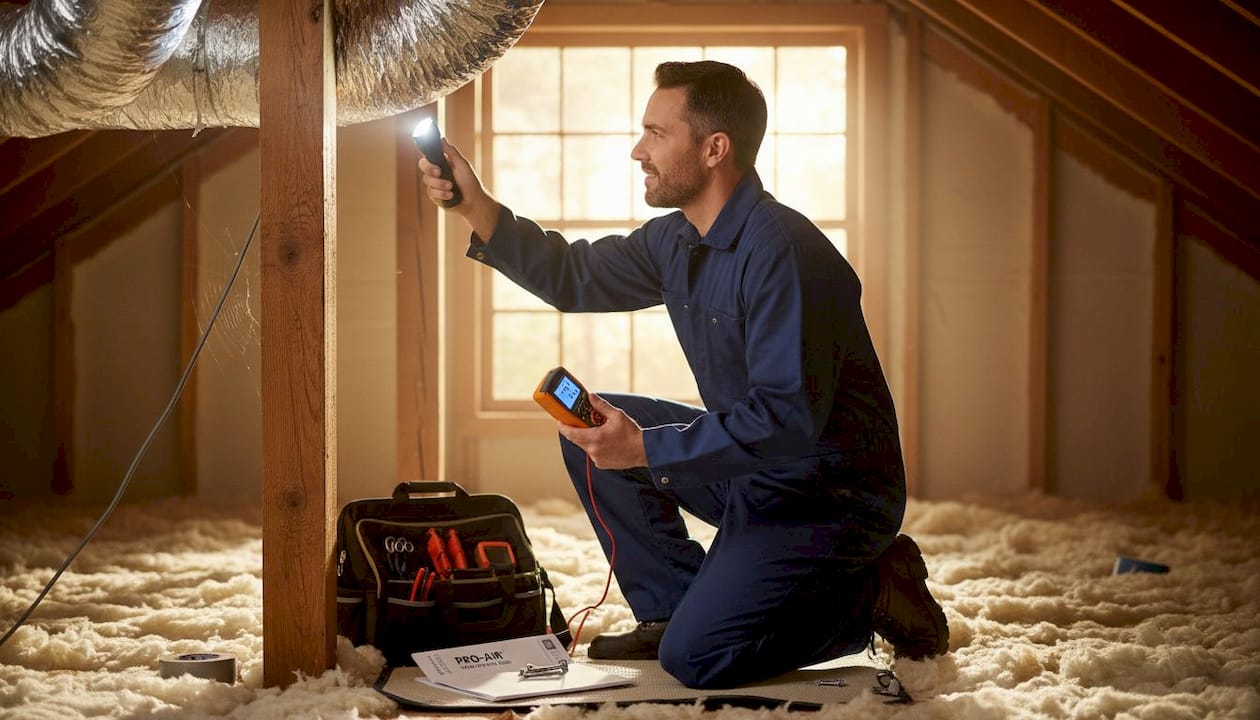
For a full review of airflow problem solutions, a technician can perform a blower door test combined with duct leakage testing to pinpoint exactly where your system is losing conditioned air.
Refrigerant leaks and coil issues
Refrigerant is the substance that actually moves heat out of your home. It travels in a sealed loop between the indoor evaporator coil and the outdoor condenser coil, absorbing heat inside and releasing it outside. It should never need to be “refilled” under normal conditions. If your system is low on refrigerant, there is a leak somewhere.
Symptoms of refrigerant or coil problems:
- A hissing or bubbling sound near the indoor or outdoor unit
- Ice forming on the refrigerant lines or evaporator coil
- Warm air blowing from the vents despite the system running
- Higher-than-usual electric bills with reduced cooling output
- A sweet or chemical smell near the unit
| Symptom | Likely cause | Action |
|---|---|---|
| Ice on coil | Low refrigerant or dirty coil | Turn off system, call a pro |
| Hissing sound | Active refrigerant leak | Call a pro immediately |
| Warm air output | Low charge or failed compressor | Professional diagnosis needed |
| High energy bills | Dirty coil reducing efficiency | Schedule coil cleaning |
A dirty evaporator coil is actually more common than a leak and often causes the same symptoms. When the coil is coated in dust and debris, it can’t absorb heat efficiently. The refrigerant stays too cold, the coil freezes, and airflow drops sharply. Frozen coils and short cycling are closely linked, which is why a technician addresses both during the same visit.
At home, you can turn the system off and let the coil thaw (usually 2 to 4 hours), then replace the air filter and restart. If the coil freezes again within a day, the problem is refrigerant charge or a deeper coil issue. Understanding refrigerant function helps clarify why a recharge without fixing the leak is only a temporary solution. For long-term protection, review the importance of HVAC maintenance to prevent coil buildup before it becomes a crisis.
Why expert diagnosis matters more than DIY guesses
Here’s the honest truth most repair articles won’t tell you: the order in which repairs are performed matters as much as the repairs themselves. We’ve seen homeowners replace thermostats, clean coils, and seal ducts, only to find the root cause was static pressure imbalance the whole time. Every fix they made was reasonable in isolation. But without a proper baseline measurement, they were guessing.
Professionals use tools and testing sequences that simply aren’t available at a hardware store. Measuring static pressure before touching the blower or ducts is a perfect example. That single step prevents misdiagnosis and protects you from paying for parts you don’t need.
The smart approach isn’t to skip DIY entirely. Basic awareness, like checking filters, clearing vents, and resetting breakers, is genuinely useful. But when those steps don’t resolve the issue, the cost of continued guessing adds up fast. A professional evaluation at that point isn’t a luxury. It’s the more economical choice. Booking a scheduled tune-up before problems escalate is the single best investment you can make in your system’s lifespan.
Get expert HVAC repairs in Orange and LA Counties
Now that you know what to look for, the next step is getting a professional set of eyes on your system before a minor issue becomes a major expense.
Our team at Appliances Repair MD Tech serves homeowners and property managers across Orange County and Los Angeles County with fast, licensed HVAC service. Whether you need local HVAC repair for a unit that won’t start, a full ductwork assessment, or a refrigerant recharge, we handle it all. We also offer HVAC appliance repair services covering parts replacement and system diagnostics. For preventive care, our HVAC tune-up services keep your system running efficiently year-round. Book your appointment online today and stop guessing what’s wrong with your system.
Frequently asked questions
What are the warning signs that my HVAC needs professional service?
Unusual noises, frequent cycling, weak airflow, or temperature swings all signal it’s time to call a pro. Short cycling and startup failures in particular point to electrical or refrigerant issues that require expert tools to diagnose correctly.
Can I fix a refrigerant leak myself?
No. Refrigerant leaks require EPA-certified technicians and specialized equipment for both safety and legal compliance. Attempting to recharge a system without fixing the leak first only delays the inevitable and risks compressor damage.
How does thermostat location affect my HVAC system?
A thermostat placed near drafts or direct sunlight gives inaccurate temperature readings, causing the system to run inefficiently. Poor thermostat placement leads to uneven cooling and unnecessary wear on your equipment.
Why does my HVAC unit keep turning on and off?
Short cycling is usually caused by electrical faults, dirty or frozen coils, low refrigerant, or an oversized unit. Frozen coils and electrical issues are among the top reasons technicians get called out for systems that won’t stay running.