
Keeping household appliances in top shape can feel like a never-ending challenge for busy families in Orange and Los Angeles Counties. When you know how to prep and care for your devices, you protect your investment and avoid sudden breakdowns. By following smart DIY tips like regular cleaning, inspecting key components, and testing performance, you can achieve extended appliance lifespan and safer everyday use for every corner of your home.
Table of Contents
- Step 1: Prepare Your Appliances For Maintenance
- Step 2: Clean And Inspect Key Components
- Step 3: Test Functionality After Upkeep
- Step 4: Schedule Routine Checks For Future Care
Quick Summary
| Key Point | Explanation |
|---|---|
| 1. Disconnect appliances before maintenance | Always unplug or disconnect appliances to ensure safety during any maintenance work. This prevents electrical hazards and potential injuries. |
| 2. Regular cleaning extends appliance life | Systematically clean key components like filters and hoses to reduce breakdown risks, maintaining efficiency and extending the lifespan of your appliances. |
| 3. Test functionality post-maintenance | After maintenance, run appliances through complete cycles to ensure all functions are working properly and identify any remaining issues. |
| 4. Schedule routine checks for prevention | Implement a maintenance calendar tailored to each appliance’s needs to catch potential problems early and reduce repair costs. |
| 5. Maintain a record of all maintenance | Keep a log of maintenance dates and observations for each appliance, helping track performance and potential future issues. |
Step 1: Prepare your appliances for maintenance
Maintaining your home appliances begins with strategic preparation that protects both your investment and your safety. Understanding the right approach to prepping your equipment can significantly extend their operational lifespan and prevent potential hazards.
Before diving into maintenance, you’ll want to take several critical preparatory steps. Safe appliance preparation involves a systematic approach that covers electrical safety, cleaning, and inspection. Start by following these essential guidelines:
- Disconnect electrical appliances before any maintenance work
- Inspect power cords for visible damage or fraying
- Clear the workspace around each appliance
- Gather necessary cleaning supplies specific to each device
Specific safety considerations depend on the type of appliance. Kitchen equipment like ovens and ranges require special attention. Ensure all cooking surfaces are cool, remove any loose items, and check that surrounding areas are clear of flammable materials. For larger appliances like refrigerators or washers, create a clean, accessible workspace that allows complete access for thorough inspection and potential repairs.
The routine home maintenance process also involves seasonal checks. This means preparing your heating and cooling systems before extreme weather, inspecting air filters, and ensuring exterior venting systems remain clear and functional.
Proactive preparation can prevent 70% of potential appliance failures before they occur.
Pro tip: Keep a dedicated maintenance log for each appliance, recording dates of cleaning, repairs, and professional inspections to track long-term performance and potential issues.

Here’s a summary of appliance maintenance impacts and benefits:
| Maintenance Step | Typical Result | Long-Term Benefit |
|---|---|---|
| Initial preparation | Improved safety | Fewer electrical hazards |
| Cleaning and inspection | Reduced dust, fewer breakdowns | Extended appliance lifespan |
| Functionality testing | Early issue detection | Lower repair costs |
| Routine scheduling | Consistent performance | Reliable home environment |
Step 2: Clean and inspect key components
Cleaning and inspecting your home appliances is a critical maintenance strategy that prevents potential breakdowns and extends equipment lifespan. By systematically examining and maintaining key components, you can catch small issues before they escalate into costly repairs.
The home maintenance checklist recommends a comprehensive approach to component inspection. Focus your efforts on these critical areas:
- Examine washing machine hoses for signs of wear or potential leaks
- Clean refrigerator drip pans to prevent moisture buildup
- Inspect water heater for rust or potential corrosion
- Check dryer vents for lint accumulation
Each appliance requires specific attention. For kitchen appliances, start by thoroughly cleaning surfaces and checking seals and gaskets. Refrigerator coils should be vacuumed to maintain efficient cooling, while oven heating elements need careful visual inspection for signs of damage.
The routine home maintenance process emphasizes proactive cleaning to reduce mechanical failure risks. Pay special attention to areas prone to dust and debris accumulation, such as air filters in HVAC systems and vents in major appliances.
Regular cleaning and inspection can extend an appliance’s functional life by up to 50 percent.
Pro tip: Use a bright flashlight and magnifying glass during inspections to spot small cracks, wear patterns, or potential issues that might be invisible to the naked eye.
Step 3: Test functionality after upkeep
After completing maintenance, thoroughly testing your appliances ensures that your hard work has paid off and everything operates correctly. This crucial step validates the effectiveness of your maintenance efforts and helps identify any potential lingering issues before they become serious problems.
Appliance testing standards recommend a systematic approach to functionality verification. Here are key steps to comprehensively test your appliances:
- Run each appliance through a complete cycle
- Check electrical connections for secure attachment
- Listen for unusual noises during operation
- Verify temperature and performance settings
- Monitor energy consumption during test run
For specific appliances like washers and dryers, pay close attention to startup sequences, water fill levels, spin cycles, and heating elements. Kitchen appliances require careful observation of heating, cooling, and mechanical components.
The home appliance repair manual emphasizes that persistent problems after maintenance indicate the need for professional intervention. Document any irregularities you observe during testing, as these might signal deeper mechanical issues requiring expert attention.
Comprehensive functionality testing can prevent 80% of potential future breakdowns.
Pro tip: Keep a dedicated notebook or digital log to track each appliance’s performance during testing, recording specific observations that might help diagnose future maintenance needs.
Step 4: Schedule routine checks for future care
Establishing a systematic maintenance schedule is the key to preventing unexpected breakdowns and extending the life of your home appliances. By creating a proactive approach to equipment care, you can catch potential issues before they become costly repairs.
The routine home maintenance guide recommends developing a comprehensive checklist tailored to different appliances and seasonal requirements. Here are essential scheduling guidelines:
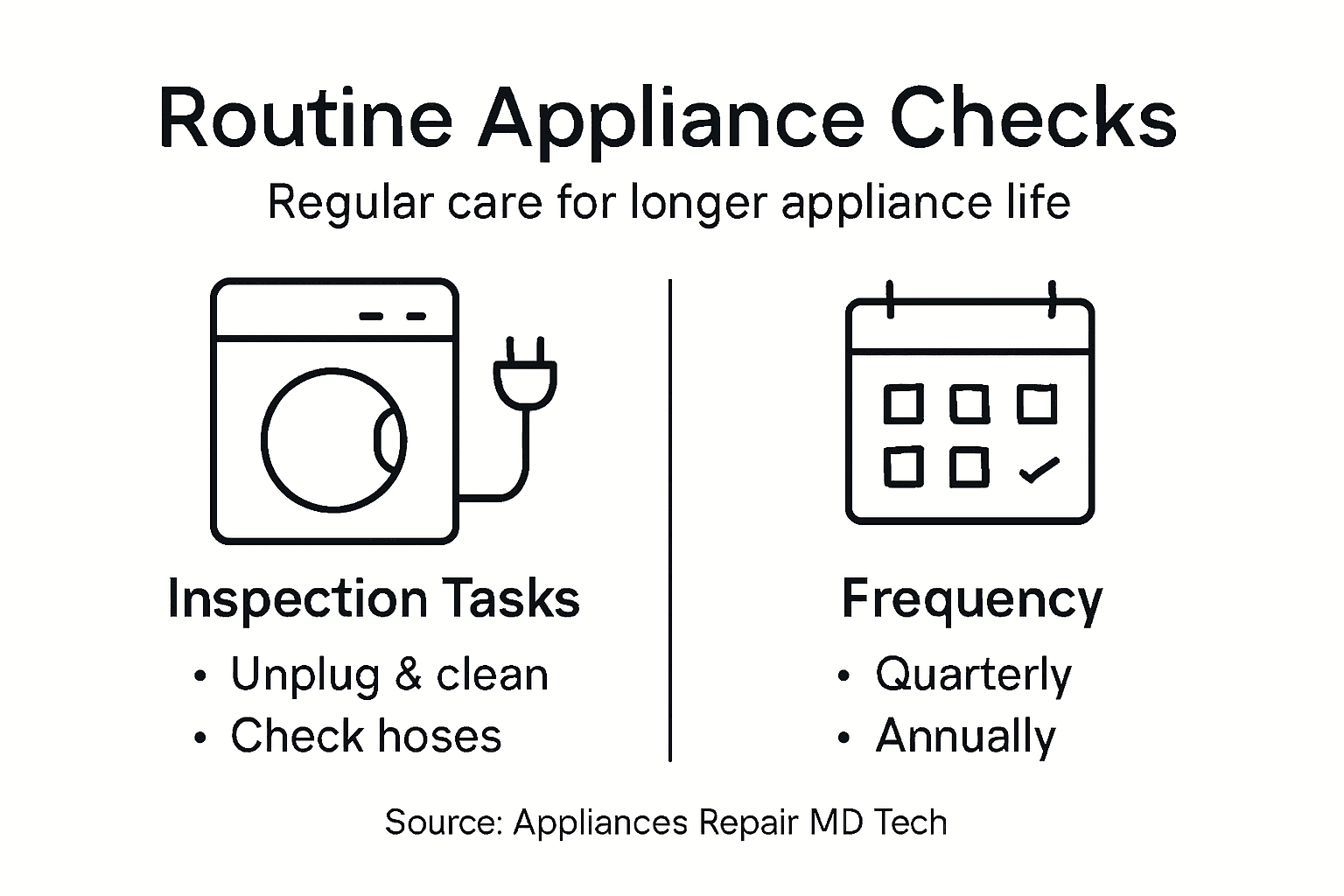
- Quarterly checks for air filters and refrigerator coils
- Semi-annual inspections of major kitchen appliances
- Annual comprehensive reviews for HVAC systems
- Seasonal maintenance for washers, dryers, and outdoor equipment
Different appliances require varying maintenance frequencies. Refrigerators might need quarterly cleaning of condenser coils, while water heaters typically require annual flushing to remove sediment buildup. Your maintenance calendar should account for manufacturer recommendations and the specific usage patterns of each appliance.
The healthy homes maintenance checklist emphasizes creating a structured approach that integrates regular inspections with preventative care. Consider using digital calendar reminders or a dedicated maintenance tracking app to ensure you never miss a critical check.
Consistent maintenance can reduce appliance repair costs by up to 40 percent annually.
Pro tip: Create a digital or physical maintenance binder with a dedicated section for each appliance, including manufacturer manuals, repair history, and a personalized maintenance schedule.
Compare routine appliance checks by frequency and estimated impact:
| Appliance Type | Frequency | Main Inspection Focus | Impact of Regular Checks |
|---|---|---|---|
| Refrigerator | Quarterly | Coils, seals, drip pan | Saves energy, avoids leaks |
| Washer/Dryer | Seasonal | Hoses, vents, lint trap | Prevents water/lint damage |
| HVAC System | Annual | Filters, vents, controls | Improves air, lowers bills |
| Kitchen Oven | Semi-annual | Burners, surfaces, gasket | Boosts safety, longevity |
Keep Your Home Appliances Running Smoothly With Professional Care
Mastering the home appliance care process involves careful preparation, regular cleaning and inspection, thorough functionality testing, and setting up routine checks. If you find yourself facing unexpected breakdowns or want to avoid costly repairs despite your best maintenance efforts, you are not alone. Many homeowners struggle with keeping washers, dryers, refrigerators, and ovens operating at peak performance over the long term.
At Appliances Repair MD Tech, we understand how critical these steps are and offer expert repair and maintenance services tailored to Orange County and Los Angeles County residents. Our licensed technicians specialize in addressing common pain points such as appliance wear, electrical hazards, and performance inconsistencies, helping you extend your appliances’ lifespan while avoiding the frustration that comes with unexpected failures. We provide quick, reliable service, easy online appointment booking, and trusted solutions for appliances across your home.
Don’t wait until a minor issue becomes a costly problem. Take control of your appliance care today by scheduling an expert inspection or repair appointment through Appliances Repair MD Tech. Trust our team to support your proactive maintenance routine and deliver the peace of mind every homeowner deserves. Visit us now and experience dependable local expertise dedicated to keeping your home running smoothly.
Frequently Asked Questions
How can I prepare my appliances for maintenance?
To prepare your appliances for maintenance, start by disconnecting them from their electrical sources and inspecting power cords for damage. Clear the workspace around each appliance, and gather the specific cleaning supplies needed for each device.
What key components should I inspect during appliance maintenance?
Focus on critical areas like the washing machine hoses, refrigerator drip pans, and dryer vents when inspecting your appliances. Look for signs of wear or potential issues that could lead to breakdowns, and clean everything thoroughly to prevent future problems.
How can I test the functionality of my appliances after maintenance?
After maintenance, run each appliance through a complete cycle, checking for unusual noises and verifying temperature settings. Document any irregularities you notice, as this can help diagnose issues earlier and prevent future breakdowns.
What is the best way to schedule routine checks for my appliances?
Establish a maintenance schedule by setting quarterly, semi-annual, and annual checks for different appliances. Use reminders to keep track of these inspections, ensuring consistent care that can reduce repair costs by up to 40% annually.
How does regular cleaning and inspection extend appliance life?
Regular cleaning and inspection can extend an appliance’s functional life by up to 50%. Focus on preventive maintenance to catch small issues early, helping to maintain efficiency and avoid costly repairs down the road.
What should I include in my appliance maintenance log?
In your appliance maintenance log, record the dates of cleaning, repairs, and inspections for each appliance. Include specific observations during functionality testing to help track performance trends and identify potential future issues.
Recommended
- Broan repair In Irvine Orange CA
- Hood Installation & Repair: Expert Fixes for Home Essentials
- Plumbing Drain Repair – Orange County, California – MDTECH APPLIANCE REPAIR
- Kitchen Faucet Repair – Orange County, California – MDTECH APPLIANCE REPAIR
- Älykkäät kaihdinjärjestelmät – Tehoa ja mukavuutta Helsinkiin – Tiimixi