
TL;DR:
- Preventive maintenance involves scheduled, proactive servicing to extend HVAC system lifespan and save energy. Regular tasks like filter replacements and professional tune-ups reduce breakdowns and repair costs. Coastal homes and older systems require tailored schedules to combat environmental wear and aging components.
Most homeowners only think about their HVAC system or appliances the moment something stops working. That moment almost always comes at the worst possible time, a sweltering August afternoon in Anaheim or a cold January morning in Long Beach, and the repair bill is never small. Preventive maintenance is the scheduled, proactive approach to servicing your home systems before they fail, and it changes everything about how you experience homeownership. This guide walks you through what preventive maintenance actually means, why the numbers behind it are hard to ignore, and exactly how to apply it to your home in Orange or Los Angeles County.
Table of Contents
- What is preventive maintenance?
- Core benefits of preventive maintenance
- HVAC preventive maintenance tasks: schedules and priorities
- Edge cases: pets, coastal homes, and older systems
- Why smart maintenance beats waiting for breakdowns and how to stay balanced
- Ready to protect your comfort? Let the experts help
- Frequently asked questions
Key Takeaways
| Point | Details |
|---|---|
| Prevention saves money | Regular preventive maintenance cuts costly repairs and lowers energy bills. |
| Longer system lifespan | Well-maintained HVAC and appliances last years longer than neglected ones. |
| Routine is key | Sticking to a schedule for tasks like filter changes and tune-ups ensures maximum benefit. |
| Local factors influence timing | Pets, age of system, and coastal location all change how often maintenance is needed. |
| DIY and pro roles | Handling simple tasks yourself is smart, but pros are a must for complex jobs. |
What is preventive maintenance?
Let’s get the definition straight before anything else. Preventive maintenance is scheduled, proactive servicing of your home systems and appliances to stop problems before they start. You pick a date, you perform a task, and your equipment keeps running smoothly. That’s it.
This is different from two other approaches you might hear about. Reactive maintenance means you wait until something breaks, then you fix it. It feels simpler in the short term, but it costs more, causes more stress, and shortens the life of your equipment. Predictive maintenance uses sensors and data to detect wear before failure, which is a great concept but better suited for commercial settings than the average home in Irvine or Pasadena.
For homeowners, preventive maintenance comes in three practical forms:
- Time-based: Tasks done on a set schedule, like changing your air filter every month
- Usage-based: Tasks triggered by how long a system has run, like servicing a unit after a heavy cooling season
- Inspection-based: Tasks prompted by a visual check, like noticing dust buildup on coils
| Type | When it happens | Who initiates it | Cost level |
|---|---|---|---|
| Preventive | On a schedule | Homeowner or tech | Low to moderate |
| Reactive | After a failure | Forced by breakdown | High |
| Predictive | When sensors detect wear | Automated systems | High upfront |
“The biggest mistake homeowners make is treating their HVAC like a car they never service, then wondering why it dies at 10 years instead of 20.”
Learning about preventative HVAC care and the role of HVAC maintenance in your home’s overall health gives you a much clearer picture of where your money should go. The short version: a little attention now prevents a lot of pain later.
Core benefits of preventive maintenance
Now that we understand the definition, let’s explore why preventive maintenance is not just recommended, it’s essential for homeowners.
The numbers are striking. Well-maintained HVAC systems can last 15 to 25 years, deliver 5 to 20% energy savings, experience 25 to 50% fewer breakdowns, and generate up to a 545% return on investment compared to reactive maintenance. Read that last number again. That’s not a typo.
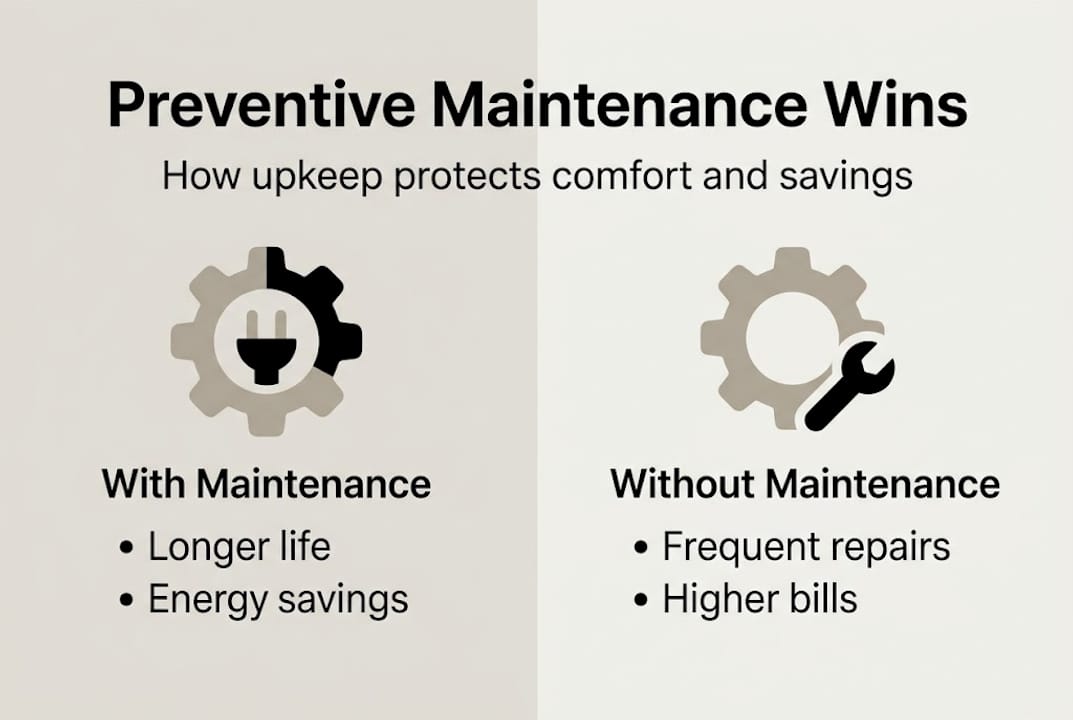
Here’s what those benefits look like broken down:
| Benefit area | With preventive maintenance | Without it |
|---|---|---|
| System lifespan | 15 to 25 years | 10 to 12 years |
| Energy costs | 5 to 20% lower | Standard or rising |
| Repair frequency | 25 to 50% fewer calls | Frequent breakdowns |
| Emergency repair costs | Significantly reduced | Often $500 to $2,000+ |
For homeowners in Orange and LA Counties, the financial case gets even stronger. Southern California utility rates are among the highest in the nation, so a 10% drop in energy use adds up fast. Local utility providers also offer rebates for efficient systems, which rewards homeowners who keep their equipment in good shape.
Beyond money, there’s comfort. A well-serviced system keeps indoor air cleaner, maintains consistent temperatures, and simply runs quieter. You stop dreading summer because you know your system can handle it.

The preventive maintenance cost savings available to the average homeowner are real and measurable. Whether you want to extend appliance lifespan or simply save money long term, the strategy is the same: act before something breaks.
Pro Tip: Set aside $15 to $30 per month for filters and minor supplies. That small budget, applied consistently, can save you thousands over the life of your system.
HVAC preventive maintenance tasks: schedules and priorities
With the benefits clear, let’s break down exactly what you should be doing and when to see those results.
According to HVAC maintenance guidance, you should replace filters every 1 to 3 months, clean coils and ducts every 3 to 5 years, and schedule professional tune-ups twice per year. In Orange and LA Counties, spring and fall are ideal windows for those professional visits, before the heat of summer and before the cooler months set in.
Here’s a numbered list of the core tasks every homeowner should follow:
- Replace or inspect air filters every 1 to 3 months
- Clear debris from around your outdoor unit monthly
- Check electrical connections and thermostat settings quarterly
- Inspect coils for dust and buildup every quarter
- Test refrigerant levels annually with a licensed technician
- Schedule a full HVAC tune-up twice per year, spring and fall
- Clean condensate drain lines annually to prevent water damage
Not every task on that list is a DIY job. Here’s how to split responsibilities:
- DIY friendly: Filter changes, clearing debris, visual inspections, thermostat checks
- Call a professional: Refrigerant handling, electrical components, coil cleaning, full system diagnostics
An annual HVAC inspection catches small issues before they become expensive ones. Booking HVAC tune-ups twice a year is one of the highest-value actions you can take as a homeowner. Don’t overlook your outdoor unit maintenance either, especially if your unit sits in a dusty or landscaped area.
Pro Tip: Set two recurring phone reminders right now, one in March and one in October. Label them “Book HVAC tune-up.” That single habit protects thousands of dollars in equipment.
Edge cases: pets, coastal homes, and older systems
Standard schedules cover most homes, but special situations need extra attention. Let’s address them.
If you have pets, your filters are working harder than average. Pet hair and dander clog filters faster, which forces your system to strain and use more energy. In homes with dogs or cats, monthly filter changes are not optional. They’re the baseline. Homes with multiple pets or allergy sufferers should check filters every two to three weeks.
Older systems, those 10 years or more in age, need a different mindset. Parts wear, tolerances shrink, and small inefficiencies compound. A system that needed one annual visit at age 5 may need two or three at age 12. More frequent servicing keeps aging equipment running longer and gives you advance warning before a full replacement becomes necessary.
Coastal homes face a threat most homeowners don’t think about: salt air. If you live near the ocean in cities like Huntington Beach, Redondo Beach, or Santa Monica, the salt in the air accelerates corrosion on your outdoor unit’s metal components. Coastal salt exposure can degrade coils, fins, and electrical connections faster than inland environments, sometimes cutting years off your equipment’s life.
Here’s a quick summary of adjustments for these situations:
- Pets in home: Change filters monthly, inspect every 2 to 3 weeks
- System age 10+ years: Schedule professional visits 2 to 3 times per year
- Coastal location: Rinse outdoor unit exterior quarterly, apply corrosion-resistant coatings annually
- High dust areas: Inspect filters bi-weekly, seal duct connections more frequently
“Ignoring your environment when setting a maintenance schedule is like following a generic diet plan without accounting for your own health conditions. It might work for someone, just not necessarily for you.”
If your home fits any of these categories, customized maintenance schedules built around your specific situation will always outperform a one-size-fits-all approach.
Why smart maintenance beats waiting for breakdowns and how to stay balanced
Here’s an uncomfortable truth: most homeowners know they should maintain their systems. They just don’t do it consistently. Reactive habits feel easier in the moment, but they compound into frustration, expense, and shortened equipment life over time.
That said, the opposite extreme is also a problem. Over-maintenance can waste up to 30% of effort, meaning servicing things that don’t need it yet. The goal isn’t to do everything as often as possible. It’s to do the right things at the right intervals.
Checklists solve this. A written or digital maintenance checklist removes guesswork, prevents you from doubling up on tasks, and ensures nothing gets missed. It turns maintenance from a vague intention into a concrete habit. The homeowners who get the most value from their systems aren’t the ones who worry the most. They’re the ones who plan the most.
We’ve seen this pattern repeatedly in Orange and LA Counties: homes with a simple maintenance routine outlast and outperform homes where the owner waited for problems. The payoff isn’t just financial. It’s the confidence of knowing your home is under control. Explore how save money with appliance maintenance becomes a reality when intention replaces guesswork.
Ready to protect your comfort? Let the experts help
If you’re ready to make preventive maintenance pay off, here’s how to get started with expert support.
Reading about maintenance is one thing. Actually getting it done by a licensed technician is where the real results happen.
Our HVAC repair experts serve homeowners across Orange and Los Angeles Counties, handling everything from urgent repairs to scheduled inspections. Book HVAC tune-up services to keep your system running at peak efficiency before the next season hits. We also cover major appliance brands, including Samsung appliance service, so your full home is protected under one trusted team. Don’t wait for a breakdown to take action. A single scheduled visit can prevent months of headaches and hundreds in emergency repair costs.
Frequently asked questions
What is the difference between reactive and preventive maintenance?
Reactive maintenance addresses issues only after they occur, while preventive maintenance involves regular, scheduled upkeep to avoid breakdowns in the first place. Preventive is almost always cheaper and less disruptive.
How often should I replace my HVAC filter?
Replace your HVAC filters every 1 to 3 months, or more often if you have pets, allergies, or live in a dusty environment. Monthly changes are the safest default for most Southern California homes.
Does preventive maintenance really save money on energy bills?
Yes. 5 to 20% energy savings are common with consistent preventive maintenance, and fewer breakdowns mean lower repair costs throughout the year. The savings compound over time.
Can I do preventive maintenance myself or should I hire a pro?
Basic tasks like filter swaps and visual checks are easy DIY work, but refrigerant and electrical components require a certified technician. Mixing those up can void warranties and create safety risks.
How does living near the coast affect maintenance needs?
Coastal salt air speeds up corrosion on outdoor units, so coastal homeowners need more frequent checks, rinse-downs, and protective coatings to keep their equipment from degrading ahead of schedule.