
TL;DR:
- Regular appliance maintenance reduces costly repairs and extends lifespan.
- Coastal salt air and hard water accelerate appliance corrosion and buildup.
- Consistent checkups and cleaning save money and prevent emergencies.
Skipping appliance maintenance in Orange or Los Angeles County is one of the most expensive habits a homeowner can develop. Between the coastal salt air, notoriously hard water, and the heavy daily use that comes with larger households, your appliances face stress that most manufacturers never anticipated. Reactive repairs cost 4x more than preventive measures, which means every skipped filter cleaning or ignored dryer vent is quietly adding to your next repair bill. This guide walks you through exactly how to assess your appliances, gather the right tools, and follow a clear maintenance routine that protects your investment for years.
Table of Contents
- Assessing your appliances and common risk factors
- Essential tools and materials for preventive maintenance
- Step-by-step guide to core appliance preventive tasks
- Troubleshooting, common mistakes, and when to call a pro
- The real key to lower costs: consistency beats perfection
- Need expert help or advanced repairs? We’re here for you
- Frequently asked questions
Key Takeaways
| Point | Details |
|---|---|
| Prioritize high-risk appliances | Focus on water heaters and dryers since they’re most vulnerable to costly failures. |
| Adapt maintenance for local climate | Salt air and hard water in Orange and LA counties require yearly anti-corrosive steps. |
| Simple steps prevent major costs | Regularly flushing, cleaning, and inspecting appliances can extend their lifespan and lower repair bills. |
| Consistency is crucial | Routine care, even if imperfect, is the most effective way to avoid expensive breakdowns. |
| Know when to call a pro | Recognize warning signs and seek expert help for complex or hazardous repairs. |
Assessing your appliances and common risk factors
Before you grab a screwdriver, you need to know which appliances deserve your attention first. Not all appliances carry the same failure risk, and in Orange and LA counties, a few local factors push certain machines toward the top of the priority list.
Water heaters, dryers, and refrigerators are statistically the most failure-prone appliances in any home. Add in the fact that salt air accelerates corrosion in coastal areas like Orange and LA counties, and you have a recipe for premature breakdowns if you are not paying attention. Homes within a few miles of the coast should treat annual anti-corrosive treatment as non-negotiable, not optional.
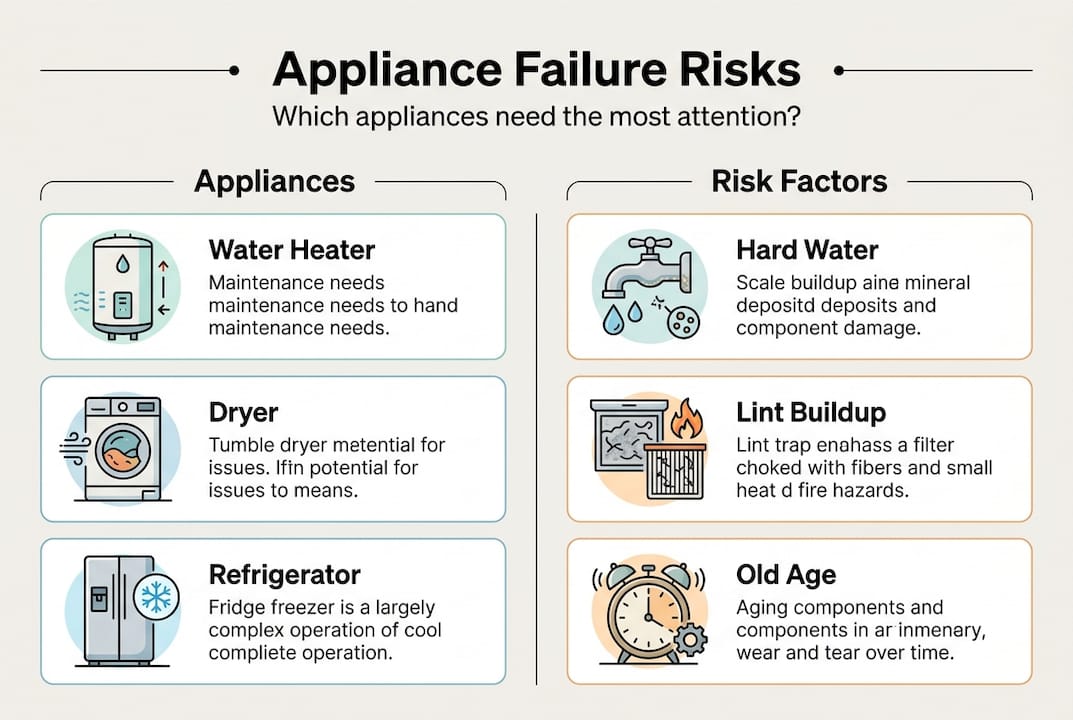
Hard water is another local reality. The mineral buildup it leaves inside water heaters, dishwashers, and washing machines quietly reduces efficiency and shortens lifespan. You may not notice it until the machine stops working entirely.
Appliances by failure risk and local vulnerability:
| Appliance | Common failure cause | Local risk factor |
|---|---|---|
| Water heater | Sediment buildup | Hard water mineral scale |
| Dryer | Clogged vents | Heavy use, overloading |
| Refrigerator | Dirty condenser coils | Dust, pet hair, coastal humidity |
| Dishwasher | Clogged filters, gasket wear | Hard water deposits |
| Washing machine | Overloading, drum wear | Heavy use patterns |
Usage habits matter more than most people realize. Impact of usage patterns can literally cut appliance lifespan in half, meaning a washer rated for 10 years might fail at five if it is consistently overloaded or run with unbalanced loads.
Here is a quick checklist to assess where you stand right now:
- Check for rust or discoloration on the exterior of water heaters and dryers
- Look for lint buildup around the dryer exhaust vent on the outside of your home
- Pull the refrigerator away from the wall and inspect the condenser coils
- Run your dishwasher and check for pooling water at the bottom after the cycle
- Inspect washing machine door gaskets for mold, cracks, or residue
Understanding why regular maintenance matters becomes a lot more concrete once you see the actual condition of your appliances. Use an appliance maintenance checklist to track what you have inspected and when.
Pro Tip: Take photos of each appliance during your assessment. Comparing them six months later is one of the fastest ways to spot deterioration you might otherwise miss.
Essential tools and materials for preventive maintenance
Having the right supplies on hand before you start saves time and prevents half-finished jobs. You do not need a professional toolkit, but a few targeted items make a real difference.
Basic tools every homeowner should keep ready:
- Flathead and Phillips screwdrivers (various sizes)
- A coil cleaning brush for refrigerator condenser coils
- A dryer vent cleaning kit with a long flexible brush
- Anti-corrosive spray (look for products rated for appliances and metal surfaces)
- Rubber gloves and an N95 mask for vent and coil cleaning
- A garden hose with a pressure nozzle for water heater flushing
- White vinegar and baking soda for natural descaling
Tool investment guide by task:
| Task | DIY tool needed | When to hire a pro |
|---|---|---|
| Dryer vent cleaning | Flexible vent brush kit | Vents longer than 15 feet or with bends |
| Water heater flush | Garden hose, bucket | Anode rod replacement, gas line issues |
| Refrigerator coil cleaning | Coil brush, vacuum | Refrigerant leaks, compressor issues |
| Dishwasher descaling | Vinegar, soft brush | Pump or motor failure |
| Anti-corrosive treatment | Spray can, cloth | Structural rust or interior corrosion |
For water heaters specifically, annual flushing removes sediment and helps the unit last 12 or more years. A simple garden hose connection to the drain valve is all you need for this task.
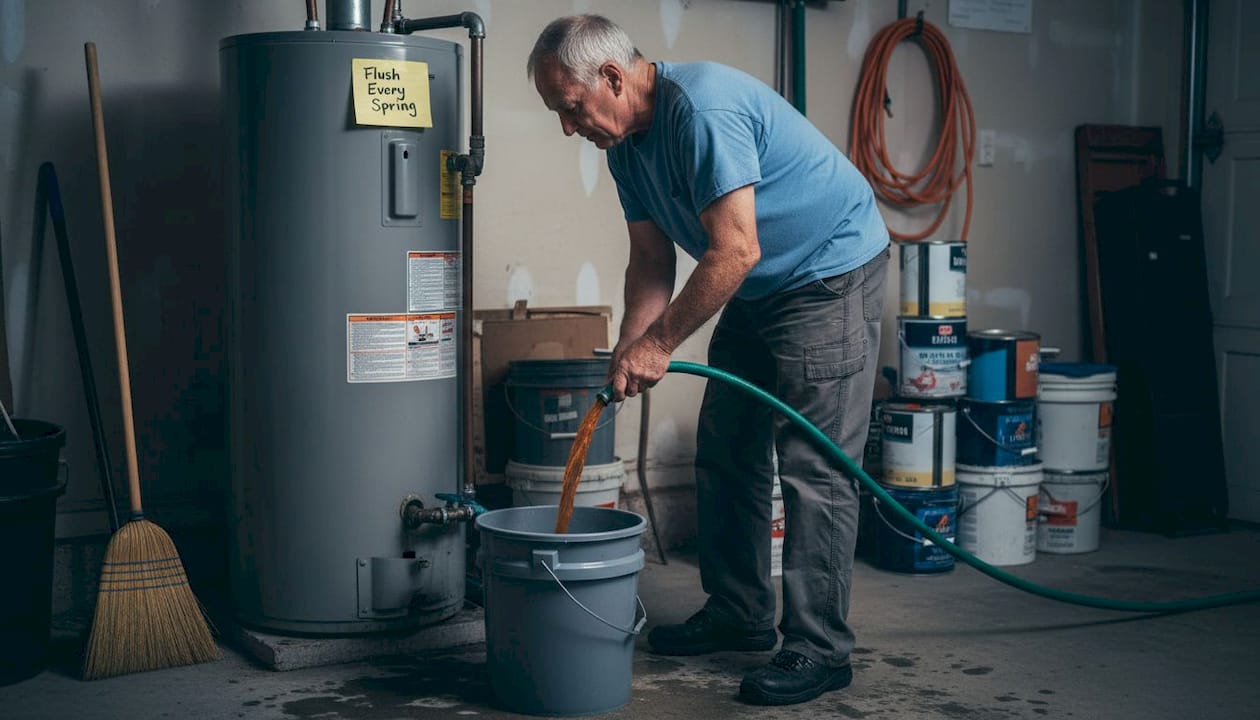
The line between DIY and professional help is usually drawn at anything involving gas lines, refrigerant, or electrical panels. Anti-corrosive sprays and coil brushes are safe and effective for most homeowners. Anything that requires opening a sealed system or working near a gas connection is a job for a licensed technician.
Good maintenance tips for homeowners will always emphasize safety first. Wear gloves when cleaning coils, use your mask when clearing dryer vents, and always unplug an appliance before working on it. Appliance efficiency and stress are closely linked, so keeping components clean directly translates to lower energy bills and longer life.
Pro Tip: Buy a second set of brushes and keep them in a labeled bin near your water heater. When everything is in one place, you are far more likely to actually do the maintenance.
Step-by-step guide to core appliance preventive tasks
With your toolkit ready, it is time to put preventive maintenance into action on your home’s key appliances. Follow these steps in order and set a calendar reminder for each one.
Water heater flush (once a year):
- Turn the thermostat to the lowest setting or “vacation” mode
- Connect a garden hose to the drain valve at the base of the tank
- Run the other end of the hose to a floor drain or outside
- Open the drain valve and let the tank empty fully
- Briefly open the cold water supply to flush remaining sediment
- Close the valve, disconnect the hose, and refill the tank before restoring power
Flushing water heaters can add years to their lifespan, and in hard water areas like much of Orange County, annual flushing is especially important.
Dryer maintenance:
Cleaning dryer lint traps after every load and vents annually reduces fire risk significantly. This is not optional. A clogged dryer vent is one of the leading causes of house fires in California.
Clean the lint trap before or after every single load. Once a year, use a flexible brush kit to clear the full length of the vent duct from the dryer to the exterior exhaust.
Refrigerator coil cleaning (every 6 months):
Pull the unit away from the wall, locate the condenser coils (usually at the back or bottom), and use a coil brush followed by a vacuum to remove dust and debris. Dirty coils force the compressor to work harder, which shortens its life.
Dishwasher and range care (monthly):
Remove and rinse the dishwasher filter, check the door gasket for cracks, and run an empty cycle with white vinegar to break down mineral deposits. For your range, clean burner grates and check that oven door seals are intact.
Refer to maintenance schedules for Orange and LA homes to build a calendar that fits your household. If you want to master appliance care across all your machines, a structured approach by season is the most reliable method.
Pro Tip: Set a recurring phone reminder for the first weekend of every month. Assign one appliance task per month so you never feel overwhelmed.
Troubleshooting, common mistakes, and when to call a pro
Even with diligent work, things do not always go to plan. Here is how to check your progress and know when to ask for help.
After completing any maintenance task, always run the appliance through a full cycle and observe it closely. Listen for unusual sounds, check for leaks under or around the unit, and confirm that error codes have cleared from the display panel.
Common maintenance mistakes and how to avoid them:
- Skipping vent cleaning: This is the most dangerous oversight. Even if the lint trap looks clean, the duct itself builds up over time.
- Forgetting to reset power: Always unplug before working, and always restore power correctly after. Partial resets can trigger false error codes.
- Using the wrong coatings: Not all anti-corrosive sprays are safe for appliances. Use products specifically labeled for household use.
- Ignoring small leaks: A slow drip under a dishwasher or washing machine often signals a gasket or hose issue that will worsen quickly.
Warning signs that need professional attention:
| Warning sign | Likely cause | Action |
|---|---|---|
| Burning smell from dryer | Vent blockage or motor issue | Stop use, call a technician |
| Water pooling under refrigerator | Defrost drain or water line | Professional inspection |
| Persistent error codes | Sensor or control board failure | Do not reset repeatedly; call for service |
| Gas smell near range or water heater | Gas line issue | Leave the home, call the gas company |
Some repairs should always be handled by professionals due to safety risks, especially HVAC and complex electric appliances. Attempting these yourself can void warranties and create serious hazards.
If your washing machine is giving you trouble after maintenance, detailed washing machine troubleshooting steps can help you narrow down whether it is a DIY fix or a service call.
Pro Tip: Keep a simple log of every maintenance task you complete, including the date and any observations. This record is invaluable when a technician needs to diagnose a problem quickly.
The real key to lower costs: consistency beats perfection
Here is something most maintenance guides will not tell you: doing a decent job every month beats doing a perfect job once a year. The homeowners who spend the least on appliance repairs are not the ones with the most technical knowledge. They are the ones who show up consistently.
Missing one maintenance cycle is not a disaster. Abandoning the habit entirely is. When you stay consistent, you catch small problems early, before they become expensive emergencies. A slightly worn door gasket costs almost nothing to replace. The same gasket, ignored for two years, can cause water damage that costs thousands.
Reactive repairs cost 4x more than preventive action, and that gap adds up fast across a household with five or six major appliances. The math strongly favors the person who spends 20 minutes a month on upkeep.
The other thing consistency does is build familiarity. When you regularly check your appliances, you start to notice what normal looks and sounds like. That makes it much easier to spot something off before it becomes a breakdown. Scheduling regular maintenance is not about being a perfect homeowner. It is about removing the guesswork and the emergency calls.
Need expert help or advanced repairs? We’re here for you
Sometimes preventive maintenance reveals a problem that goes beyond what a brush kit or a vinegar rinse can fix. That is completely normal, and it is exactly why local professional help matters.
At Appliances Repair MD Tech, we serve homeowners and property managers across Orange County and Los Angeles County with fast, licensed repair and installation services. Whether you need to replace appliance parts after a DIY inspection or you are weighing the repair vs replacement decision on an older unit, our technicians can walk you through the options clearly. We also provide guidance on your appliance warranty so you never pay for something that should be covered. Book online or call us directly for same-week appointments throughout both counties.
Frequently asked questions
How often should I flush my water heater in Orange or LA county?
Flush your water heater at least once a year to remove sediment and prevent early failure. Homes with harder water may benefit from flushing every six months.
What’s the simplest way to reduce dryer fire risk?
Clean the lint trap after every load and have your dryer vent professionally cleaned once a year. Annual dryer vent cleaning is one of the most overlooked fire prevention steps in California homes.
How does salt air affect my appliances in coastal California?
Salt air accelerates corrosion, so annual inspection and anti-corrosive treatment are recommended for all major appliances, especially those in garages or near exterior walls.
Can high-efficiency appliances wear out faster?
Yes. High-efficiency models can fail sooner under heavy use and thermal stress, so it is worth balancing how often you run them against their rated capacity.
Does preventive maintenance really save money?
Absolutely. Preventive action costs four times less than reactive repairs, making consistent upkeep one of the smartest financial decisions a homeowner can make.