
TL;DR:
- HVAC zoning allows independent temperature control for different home areas, improving comfort and efficiency.
- Proper zoning reduces energy bills, extends equipment lifespan, and ensures compliance with standards.
- Correct installation and ongoing maintenance are essential to maximize zoning benefits and avoid common issues.
If your living room feels like a sauna while the upstairs bedroom stays freezing, you’re not alone. Millions of Southern California homeowners and property managers face this exact frustration every summer and winter. The root cause is often the same: a single thermostat trying to control temperatures across an entire property. HVAC zoning solves this by dividing your home into independently controlled areas, letting you heat or cool only where you need it. The result is better comfort, lower energy bills, and less strain on your equipment. This article breaks down exactly how zones work and how to decide if zoning is right for your property.
Table of Contents
- What is an HVAC zone?
- How does HVAC zoning work?
- Benefits of HVAC zoning for Southern California homes
- Common challenges and mistakes with HVAC zoning
- Is HVAC zoning right for your property?
- Our take: What most homeowners miss about HVAC zoning
- Upgrade your comfort with expert HVAC zoning
- Frequently asked questions
Key Takeaways
| Point | Details |
|---|---|
| Zoning customizes comfort | HVAC zones let you control the temperature in different areas of your home for maximum comfort and efficiency. |
| Boosts efficiency, saves money | A zoning system can reduce energy costs by up to 30% by heating and cooling only occupied areas. |
| Extends system lifespan | Less cycling and targeted usage means your HVAC equipment lasts longer with fewer repairs. |
| Best for complex homes | Multi-story, large, or irregularly used homes benefit most from zoning solutions. |
| Professional assessment vital | Proper design and installation by experts is key to making the most of an HVAC zoning system. |
What is an HVAC zone?
An HVAC zone is any area of a property that has its own independent temperature control. Think of it as giving each part of your home its own thermostat and its own set of rules. Instead of one blower pushing conditioned air through every room at once, a zoned system directs airflow where it’s actually needed.
The simplest setup is a single-zone system: one thermostat, one set point, one temperature for the whole house. It works fine for small, open-floor-plan homes, but it struggles with larger properties. A multi-zone system breaks the property into sections, each managed by a dedicated thermostat. Common zone divisions include:
- Upstairs vs. downstairs
- Bedrooms vs. living areas
- Garage or converted spaces
- Sun-exposed south-facing rooms vs. shaded areas
- Separate rental units or office suites
Zoning works through a combination of motorized dampers inside the ductwork, zone-specific thermostats, and a central zone controller. Each thermostat sends a signal to the controller, which then opens or closes the correct dampers to direct airflow. You can learn more about how controls fit into the bigger picture in our guide to thermostats and in our overview of HVAC and home comfort.
For property managers specifically, the advantages go well beyond personal preference. Zoning enables tenant-specific control in multi-unit properties, aids code compliance with IMC and ASHRAE 62.2 standards, and extends equipment life by reducing unnecessary cycling. That means fewer service calls, happier tenants, and a more defensible maintenance record.
Pro Tip: If you manage a multi-story rental property in Orange County or Los Angeles County, zoning each floor or unit separately can dramatically cut disputes over temperature and reduce your overall energy overhead. Pair it with a solid strategy for lowering energy use to maximize your return.
Understanding the types of California HVAC options available in your area also matters, since not all systems support zoning retrofits equally.
How does HVAC zoning work?
Understanding the definition is just the start. Let’s see how zoning systems actually operate inside your home.
At the core of any zoned system is the zone controller, a small panel that receives signals from every thermostat in the building and coordinates damper movement accordingly. Here’s the basic sequence:
- A zone thermostat detects that the bedroom is 5 degrees warmer than the set point.
- The thermostat sends a call-for-cooling signal to the zone controller.
- The controller opens the damper serving only that zone.
- The air handler pushes cooled air through the open damper into the bedroom.
- Once the bedroom reaches the target temperature, the thermostat signals the controller to close the damper.
Zoning systems use electronic dampers and multiple thermostats to direct heating or cooling precisely where needed, reducing over-conditioning of unused spaces.
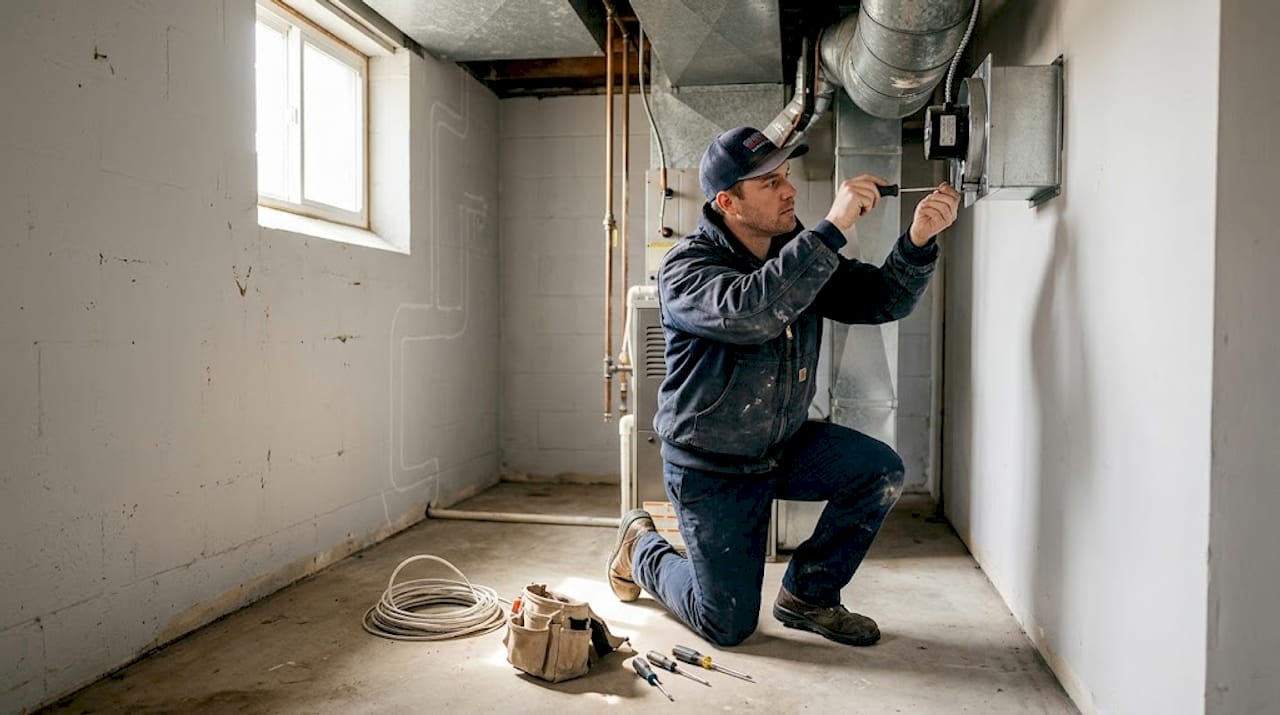
Dampers come in two main types. Manual dampers are adjusted by hand and stay fixed until someone physically moves them. They’re cheap but inflexible. Electronic dampers are motorized and respond instantly to thermostat signals. They’re the standard choice for any modern zoning installation.
Pro Tip: Smart thermostats like ecobee or Nest can integrate with electronic dampers, letting you schedule temperature changes by zone from your phone. This is especially useful for property managers overseeing multiple units remotely.
| Feature | Single-zone | Multi-zone | Smart zoning |
|---|---|---|---|
| Number of thermostats | 1 | 2 or more | 2 or more |
| Damper type | None or manual | Electronic | Electronic |
| Remote control | No | Limited | Yes, via app |
| Energy savings potential | Low | Moderate | High |
| Best suited for | Small homes | Larger homes | Any size |
In a typical two-story home in Anaheim or Pasadena, the upstairs often absorbs more heat during the day due to roof exposure. A two-zone setup lets you run cooling upstairs during afternoon hours while reducing output downstairs, where temperatures are naturally cooler. The result: your system runs less overall, and every room stays comfortable.
Benefits of HVAC zoning for Southern California homes
After understanding how the technology works, it’s important to see what real improvements zoning can bring to your property.
Southern California’s climate creates a unique challenge. Coastal cities like Long Beach or Santa Monica can be mild year-round, while inland areas like Riverside or the San Gabriel Valley swing between intense summer heat and cool winters. A single-zone system can’t adapt to these patterns effectively. Zoning can.
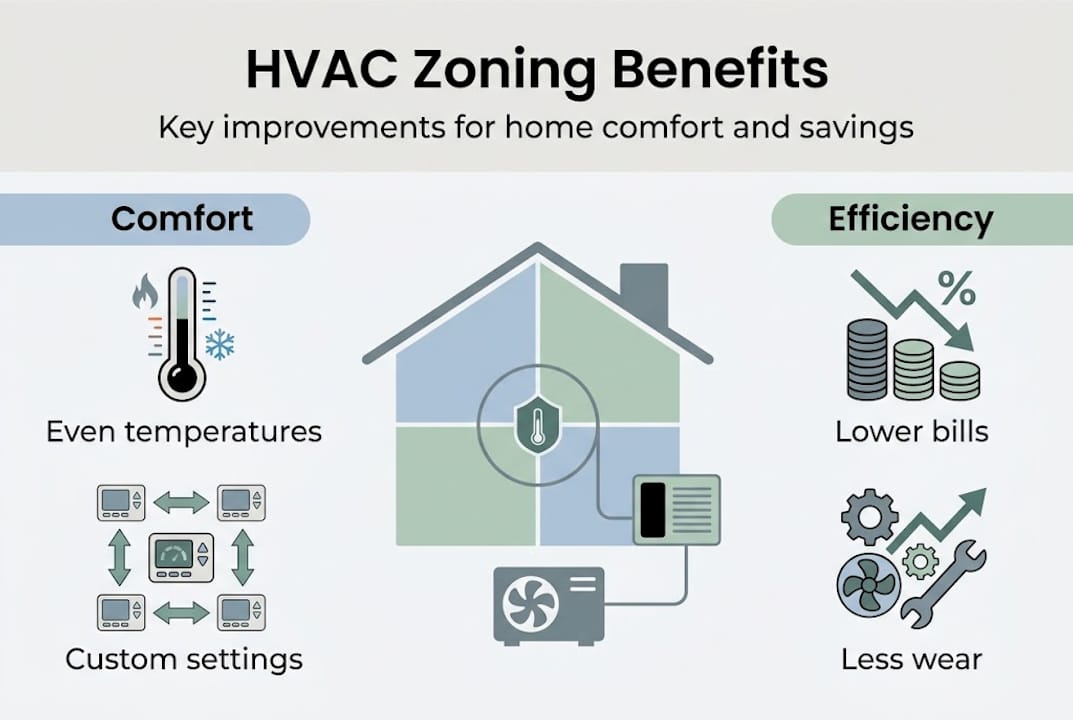
Key benefits include:
- Customizable comfort for different occupants or usage patterns
- Potential energy bill reductions of up to 30%
- Longer equipment lifespan from reduced cycling
- Better compliance with California Title 24 and ASHRAE requirements
- Fewer temperature complaints in rental or commercial properties
Zoning can extend equipment life and help comply with IMC and ASHRAE 62.2 standards, two of the most relevant benchmarks for multi-unit properties in California.
| Benefit area | Without zoning | With zoning |
|---|---|---|
| Monthly energy cost (avg. 2,000 sq ft) | $180 to $220 | $130 to $160 |
| System cycling frequency | High | Moderate to low |
| Occupant comfort complaints | Frequent | Rare |
| Equipment service intervals | 1 to 2 years | 2 to 3 years |
Proactive HVAC maintenance becomes even more effective when paired with zoning, because the system runs fewer total hours. Fewer hours mean fewer wear cycles on motors, compressors, and heat exchangers. Combine that with regular improving HVAC efficiency practices and you get a system that lasts significantly longer. For a deeper look at cost savings, our article on saving on HVAC costs shows how inspections and upgrades compound over time.
Stat to know: Homeowners who switch to properly designed multi-zone systems can see energy savings of up to 30%, according to industry benchmarks for residential HVAC.
Common challenges and mistakes with HVAC zoning
While zoning brings many advantages, avoiding common pitfalls is what determines whether you actually see those benefits.
Improper zoning setup can lead to comfort issues and unnecessary HVAC strain, effectively canceling out the gains you were hoping for. Here are the mistakes we see most often:
- Too many small zones: Dividing a home into six or seven tiny zones creates pressure imbalances and forces the system to short cycle, turning on and off rapidly.
- Poor damper placement: Dampers installed too close to the air handler don’t modulate airflow smoothly, causing noise and uneven distribution.
- Mismatched thermostats: Using different brands or generations of thermostats across zones can create communication errors in the zone controller.
- Skipping the bypass damper: Without a bypass damper to relieve pressure when multiple zones are closed simultaneously, static pressure spikes and damages the blower motor.
If you’ve already noticed problems with your existing setup, check out our overview of trending HVAC solutions and review common HVAC repairs to understand what symptoms to watch for.
“The biggest mistake homeowners make is assuming installation alone is enough. Zoning is a system that needs tuning, not just setup.”
Best practices checklist for zoning design and upkeep:
- Have a professional perform a load calculation before deciding on zone count.
- Install a bypass damper to protect the blower during low-demand periods.
- Use a single-brand thermostat family to avoid compatibility gaps.
- Test each zone independently after installation to confirm proper airflow.
- Schedule a damper inspection every 12 to 18 months to catch mechanical wear early.
- Keep zone boundaries aligned with actual usage patterns, not just physical walls.
Is HVAC zoning right for your property?
Finally, let’s help you figure out whether zoning makes sense for your specific situation.
Zoning brings the greatest benefits to multi-story homes, larger properties, and buildings with inconsistent occupancy patterns. That description fits a lot of Orange County and Los Angeles County properties. But not every home needs it.
Properties that benefit most from zoning:
- Homes with two or more floors
- Split-level or hillside homes with varying sun exposure
- Large single-story homes over 2,000 square feet
- Multi-unit rental buildings where tenants control their own units
- Homes with frequently unused rooms like guest bedrooms or home offices
- Properties with additions or converted garages that aren’t well connected to the main duct system
If you’re unsure what system type your property currently uses, our comparison of types of residential HVAC can help you identify your starting point.
Quick self-assessment: Do you notice any of these?
- Some rooms are always warmer or cooler than the rest of the house
- Your system runs almost constantly but comfort is still uneven
- Energy bills seem high relative to the square footage you’re heating or cooling
- You have tenants or family members who constantly disagree on temperature settings
If two or more of those apply, zoning is worth a serious evaluation. The next step is a professional site visit where a technician assesses your ductwork, existing equipment, and load requirements.
Pro Tip: Don’t skip the ductwork assessment. Even a perfectly designed zoning plan will underperform if the ducts leak or are undersized for the airflow demands of each zone.
Our take: What most homeowners miss about HVAC zoning
Here’s what we’ve seen working with homeowners and property managers across Orange County and Los Angeles County: most people think zoning is mainly about comfort. It is, but that framing causes them to undervalue the other half of the equation.
Code compliance, equipment longevity, and tenant retention are just as compelling as temperature control. A property manager who zones a duplex isn’t just improving comfort; they’re reducing liability, extending equipment life, and making the units easier to rent. Those outcomes have real dollar values that comfort alone doesn’t capture.
We also see people treat zoning as a one-time fix. Install it and forget it. That’s a mistake. Dampers wear out. Thermostat batteries die. Zone controllers can lose calibration. The homeowners who get the most value from their zoning investment are the ones who treat it as a living system, not a completed project. Understanding why comfort matters is a starting point, but sustaining it requires ongoing attention. Professional consultation at the design stage, and periodic check-ins afterward, is what separates a zoning system that pays for itself from one that just adds complexity.
Upgrade your comfort with expert HVAC zoning
If your home has hot spots, cold rooms, or energy bills that don’t match your actual usage, a professional zoning evaluation could change the equation entirely. Our licensed technicians serve homeowners and property managers across Orange County and Los Angeles County, from initial diagnosis to full multi-zone installation.
We make the process straightforward: one visit to assess your current system and layout, a clear recommendation, and a team that handles the installation with minimal disruption. Explore our HVAC repair services to see the full range of what we offer, or read about the long-term value of our HVAC tune-up benefits to understand how ongoing care compounds your zoning investment. Book a consultation online and start experiencing consistent comfort in every room.
Frequently asked questions
Can I add HVAC zoning to an existing system?
Yes, retrofitting is feasible but requires a professional evaluation of your existing ductwork and equipment capacity before any work begins.
How many zones should my home have?
Most homes work well with two to four zones, but zoning needs depend on your property’s size, layout, and how you actually use each space.
What are the signs my home needs zoning?
Persistent comfort issues like hot or cold spots, rooms that never settle at the right temperature, and utility bills that seem too high for your square footage are all strong indicators.
Does HVAC zoning increase system maintenance needs?
A properly installed zoning system does not add significant maintenance, but dampers and thermostats should be inspected every one to two years to stay reliable.
Are zoning systems compatible with smart home controls?
Yes, most modern zoning systems integrate with smart thermostats and popular home automation platforms, giving you app-based control over every zone from anywhere.