
Many homeowners believe skipping annual HVAC inspections won’t significantly impact their energy bills or system longevity. This misconception costs thousands in preventable repairs and wasted energy each year. Regular inspections improve efficiency by up to 20%, extend equipment lifespan, and prevent dangerous safety hazards. For Orange County and Los Angeles residents facing high energy costs and year-round system use, understanding why annual HVAC checks matter in 2026 is essential for maintaining comfort while controlling expenses.
Table of Contents
- How Annual HVAC Inspections Improve Energy Efficiency
- Preventing Repairs And Extending HVAC Lifespan With Annual Inspections
- Enhancing Indoor Air Quality And Safety Through Yearly HVAC Checks
- When To Schedule Your Annual HVAC Inspection For Best Results
- Schedule Your Annual HVAC Inspection Today For Comfort And Savings
- FAQ
Key takeaways
| Point | Details |
|---|---|
| Energy efficiency | Annual inspections improve efficiency by up to 20%, directly reducing monthly utility costs. |
| Breakdown prevention | Regular maintenance cuts HVAC breakdowns in half and extends system life by years. |
| Air quality improvement | Clean components reduce allergens and pollutants by 30%, protecting respiratory health. |
| Early issue detection | Inspections catch minor problems before they become expensive repairs or safety hazards. |
| Optimal timing | Scheduling before peak seasons ensures maximum system readiness and prevents costly downtime. |
How annual HVAC inspections improve energy efficiency
Your HVAC system works harder than almost any appliance in your home, running thousands of hours annually in Southern California’s climate. Without regular attention, even the best systems gradually lose performance. Annual HVAC inspections significantly improve energy efficiency by ensuring optimal system performance while lowering monthly utility costs.
Why HVAC systems lose efficiency over time
The numbers tell a compelling story. Systems without regular maintenance lose up to 5% efficiency yearly, compounding over time into substantial waste. A system that’s three years overdue for inspection could be operating at only 85% capacity while consuming the same electricity. That 15% difference translates directly into higher energy bills every month.
During inspections, technicians address multiple efficiency factors simultaneously. They clean coils that have accumulated dust and debris, restricting heat transfer. Technicians also check refrigerant levels, ensuring your AC doesn’t work overtime compensating for leaks. In addition, they calibrate thermostats, verify electrical connections, and measure airflow throughout your ductwork. Every adjustment helps recover lost performance.
How inspections reduce monthly utility bills
Consider this comparison of annual energy costs:
| System Status | Annual Energy Cost | Efficiency Loss |
|---|---|---|
| Regular maintenance | $1,200 | 0% baseline |
| 2 years without service | $1,380 | 15% higher |
| 5 years without service | $1,680 | 40% higher |
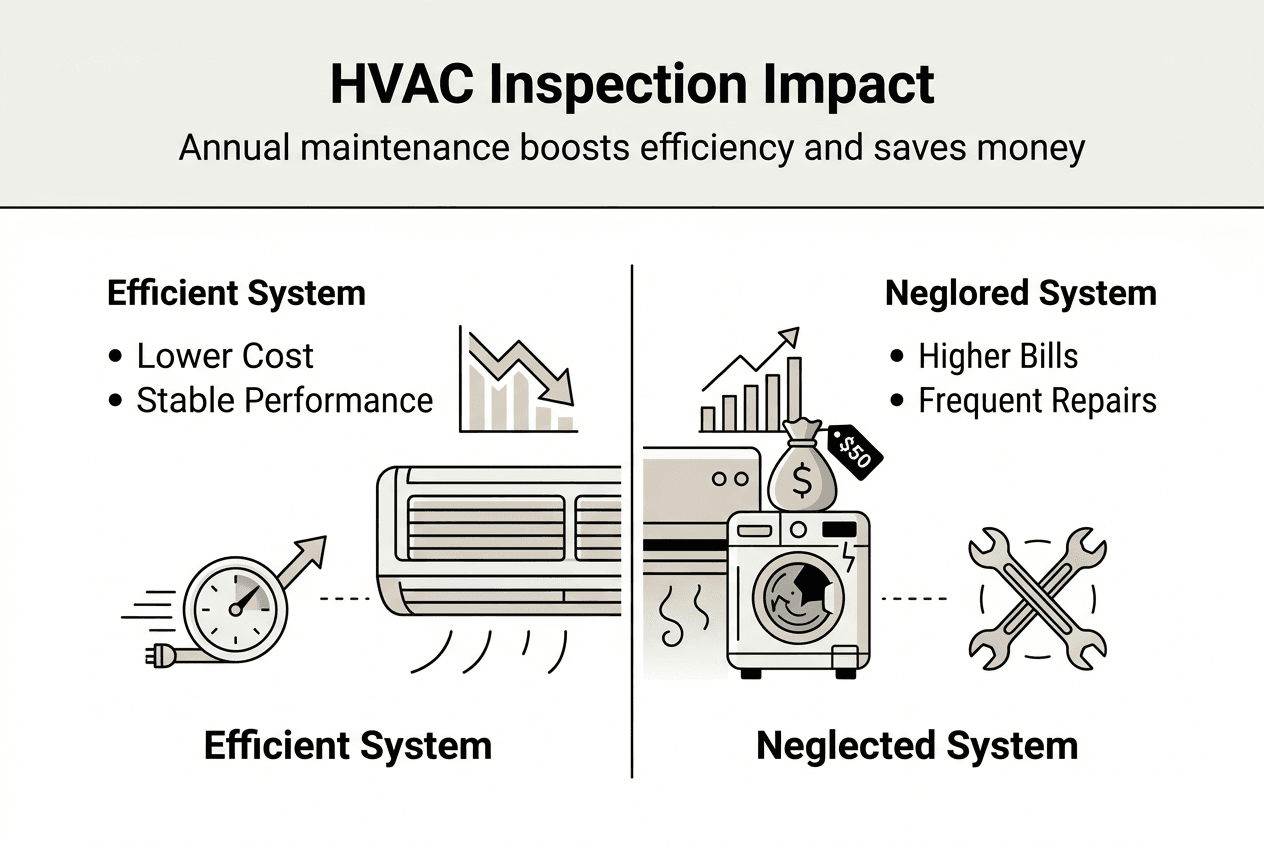
These figures assume average Southern California usage patterns. Actual costs depend on system size, home insulation, and household usage habits, but the overall pattern remains consistent. Neglect increases expenses.
Best seasonal timing for efficiency gains
Timing matters significantly for maximizing efficiency improvements. Spring inspections prepare your cooling system before summer heat arrives, while fall tune-ups ensure your heating system operates efficiently through winter. This seasonal strategy aligns maintenance with peak demand periods and prevents performance losses when you need your system most.
Pro Tip: Combine your HVAC inspection with other energy efficient HVAC upgrades and improved insulation for even greater savings. These complementary improvements often reduce overall energy consumption by 30% or more.
Beyond immediate efficiency gains, regular inspections establish baseline performance metrics. Technicians document system behavior and create a maintenance history that helps identify developing problems before they lead to breakdowns. This proactive approach prevents the gradual efficiency decline many homeowners overlook until utility bills spike dramatically.
Understanding the role of HVAC in reducing home energy use helps explain why annual maintenance delivers such meaningful returns. HVAC systems account for nearly half of home energy consumption in California. Even modest improvements in this major energy consumer create noticeable long-term savings. When you schedule annual HVAC service, you’re investing in one of the most effective energy-saving measures available to homeowners.
Preventing repairs and extending HVAC lifespan with annual inspections
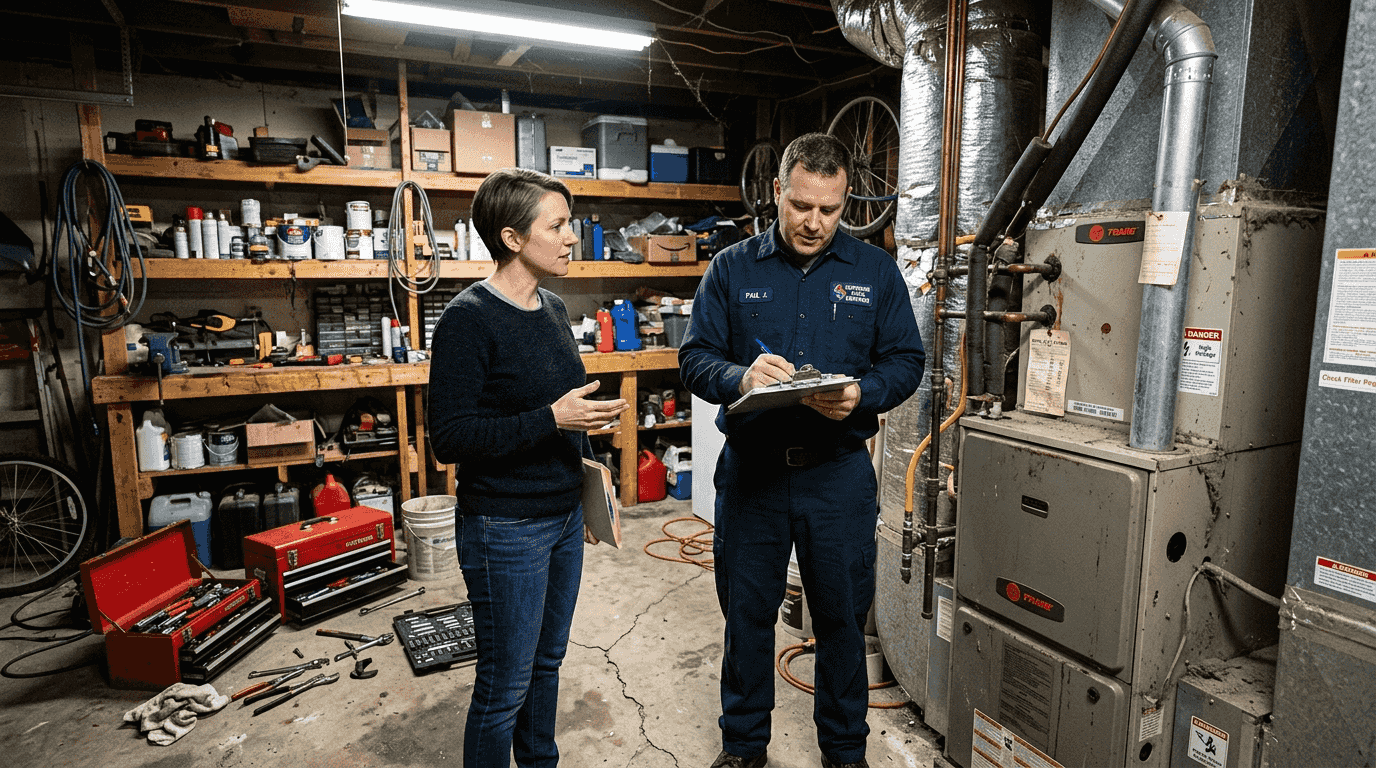
Emergency HVAC repairs usually happen during extreme weather when you need your system the most. The financial impact extends beyond repair costs to include emergency service fees, temporary cooling or heating solutions, and potential property damage caused by system failures. Annual inspections help eliminate many of these problems by identifying issues early.
How annual inspections prevent major breakdowns
The data strongly supports preventative maintenance. HVAC systems receiving regular maintenance experience 50% fewer breakdowns compared to neglected equipment. This dramatic reduction means more reliable comfort and fewer costly disruptions. Repair costs also drop by up to 30% because small issues are fixed before they trigger larger failures.
During routine inspections, technicians commonly discover:
- Refrigerant leaks that could eventually destroy the compressor
- Worn belts close to snapping during peak usage
- Electrical connections showing early signs of corrosion or arcing
- Duct separations leaking conditioned air into attics or crawlspaces
- Condensate drain clogs capable of causing water damage
Most of these issues cost between $50 and $200 to repair during maintenance visits. If ignored, the same problems often grow into emergency repairs costing $500 to $3,000.
Why preventative maintenance extends HVAC lifespan
Furnace maintenance deserves special attention. Annual furnace maintenance prevents 85% of furnace repairs, according to industry tracking. Gas furnaces especially benefit from yearly inspections because combustion efficiency affects both performance and household safety.
Here’s a realistic cost comparison over a typical 15-year HVAC system lifespan:
| Maintenance Approach | Total Investment | Major Repairs | System Replacement |
|---|---|---|---|
| Annual inspections | $2,250 | 1-2 incidents | Year 18-20 |
| Reactive repairs only | $8,500+ | 5-8 incidents | Year 12-15 |
The numbers above assume $150 annual inspections compared to averaging $1,200 per emergency repair. Systems that receive regular maintenance often last 5 to 10 years longer than neglected equipment.
Pro Tip: Schedule inspections during shoulder seasons, such as April-May or September-October, rather than waiting for extreme temperatures. You’ll typically receive better appointment availability and more thorough service.
Extending system lifespan provides additional value beyond avoiding replacement costs. HVAC systems are expensive investments, often costing thousands of dollars to install. Every additional year of operation delays a major replacement expense and keeps more money in your budget for other priorities.
Understanding the difference between repair and replacement helps homeowners make smarter financial decisions. Annual inspections provide valuable system history and performance data that support informed choices when repairs become necessary.
For Southern California homeowners, where HVAC systems operate year-round, preventative care matters even more. Constant use accelerates wear and tear, making annual inspections essential for maximizing equipment lifespan. Combining professional inspections with trusted HVAC repair services helps ensure long-term performance and reliability.
Enhancing indoor air quality and safety through yearly HVAC checks
Your HVAC system does more than regulate temperature. It also serves as your home’s primary air circulation and filtration system, processing thousands of cubic feet of air every day. When maintenance is ignored, indoor air quality gradually declines and may begin affecting your family’s health.
How HVAC inspections improve indoor air quality
HVAC maintenance reduces indoor allergens and pollutants by up to 30%, according to EPA research. This improvement happens because technicians replace dirty filters, clean evaporator coils, and inspect ductwork for dust buildup and contamination.
Routine inspections address important air quality factors, including:
- Proper filter sizing and replacement schedules
- Evaporator and condenser coil cleanliness
- Ductwork integrity and airflow efficiency
- Ventilation system operation and fresh air intake
- Humidity control and condensate drainage
- Biological growth prevention inside HVAC components
Better indoor air quality benefits everyone in the household, especially children, seniors, and anyone with allergies or respiratory conditions. Cleaner air often leads to reduced allergy symptoms, less dust accumulation, and improved overall comfort.
Critical HVAC safety inspections homeowners should never skip
Beyond comfort, HVAC inspections protect household safety. Heating equipment causes 1 in 7 home fires, and neglected maintenance is frequently a contributing factor.
Annual inspections include these critical safety checks:
- Inspecting heat exchangers for cracks or corrosion
- Testing burner flame quality and combustion efficiency
- Checking flue pipe integrity and venting performance
- Inspecting gas lines for leaks
- Examining electrical wiring and grounding connections
- Testing carbon monoxide safety systems
- Verifying emergency shutoff operation
These inspections take relatively little time but can prevent catastrophic failures. Carbon monoxide leaks, electrical hazards, and overheating components often develop silently, making professional inspections essential.
Pro Tip: Replace air filters every three months between professional inspections to maintain air quality and system efficiency. Setting calendar reminders helps homeowners stay consistent with this simple but highly effective task.
The relationship between ventilation and appliance safety extends beyond HVAC systems. Proper airflow and venting also affect water heaters, fireplaces, and other fuel-burning appliances throughout your home.
Property owners and landlords benefit greatly from consistent HVAC maintenance because tenant comfort and safety depend on properly functioning systems. Understanding the role of HVAC maintenance helps homeowners and property managers avoid liability risks while protecting long-term equipment performance.
When to schedule your annual HVAC inspection for best results
Strategic scheduling helps maximize the benefits of annual HVAC maintenance. Experts recommend scheduling inspections before peak heating or cooling seasons to ensure your system is fully prepared for heavy demand.
Best times of year for HVAC inspections
Most homeowners benefit from the following schedule:
- Spring inspections (March-May): Prepare cooling systems before summer temperatures rise.
- Fall inspections (September-November): Ensure heating systems are ready before colder weather arrives.
- Dual-system homes: Schedule separate spring and fall maintenance visits.
- Heat pump systems: Consider twice-yearly inspections due to year-round operation.
This proactive approach helps prevent breakdowns during periods of peak demand. Waiting until temperatures spike often means longer wait times, higher repair costs, and unnecessary discomfort.
Common HVAC maintenance scheduling mistakes
Homeowners should avoid these common maintenance mistakes:
- Waiting until systems stop working before scheduling service
- Ignoring warning signs like unusual noises or weak airflow
- Attempting complicated DIY repairs that create safety risks
- Postponing inspections to avoid short-term costs
- Scheduling during peak demand when technicians are overloaded
Pro Tip: Pair annual inspections with thermostat calibration and complete filter replacement for the best overall system performance. Many HVAC companies offer bundled tune-up packages that provide additional value.
For Orange County and Los Angeles homeowners, consistent yearly scheduling matters more than exact timing because HVAC systems run almost continuously throughout the year. Southern California’s climate creates constant wear on heating and cooling equipment, making routine inspections especially important.
Creating a recurring inspection schedule helps prevent forgotten maintenance. Many service providers offer automatic reminders or maintenance agreements that simplify the process and ensure consistency.
When you schedule annual HVAC service, ask about maintenance plans that include priority scheduling, discounted repair rates, and automatic annual reminders. These programs help homeowners stay organized while reducing long-term maintenance costs.
Consistent maintenance scheduling also builds stronger relationships with trusted HVAC technicians. Familiarity with your system allows technicians to identify changes more quickly and provide more personalized recommendations over time.
Schedule your annual HVAC inspection today for comfort and savings
Now that you understand how annual HVAC inspections protect your investment, improve efficiency, and support home safety, taking action becomes the logical next step. Southern California homeowners rely heavily on HVAC systems year-round, making consistent maintenance essential for long-term comfort and cost control.
Local professionals understand Orange County and Los Angeles climate conditions, regional building standards, and the common HVAC issues homeowners face throughout Southern California. When you schedule annual HVAC service with experienced technicians, you gain expert care tailored to your home’s specific needs.
Our expert HVAC repair services combine detailed inspections, preventative maintenance, and prompt support to keep systems operating efficiently throughout every season. Understanding HVAC maintenance benefits for homeowners helps explain why annual inspections consistently deliver value far beyond their modest cost.
Schedule your inspection today and enjoy the peace of mind that comes from maintaining an efficient, reliable, and safe home comfort system.
FAQ
How often should I schedule HVAC inspections?
Experts recommend annual inspections as the minimum standard for maintaining HVAC efficiency and reliability. Ideally, cooling systems should be serviced in spring and heating systems in fall. Heat pump systems or homes with heavy year-round HVAC use may benefit from twice-yearly inspections.
What are the signs my HVAC system needs an inspection?
Common warning signs include unusual noises, rising energy bills, inconsistent room temperatures, weak airflow, excessive dust, or musty odors coming from vents. Frequent cycling or poor cooling and heating performance also indicate the need for professional service.
Can I perform HVAC maintenance myself?
Homeowners can handle basic maintenance tasks such as replacing filters, cleaning around outdoor units, and ensuring vents remain unobstructed. However, professional inspections are still necessary for refrigerant handling, electrical diagnostics, combustion testing, and other advanced maintenance procedures.
How do annual HVAC inspections affect home safety?
Annual inspections help prevent carbon monoxide leaks, reduce fire hazards, and improve indoor air quality. Technicians inspect heat exchangers, electrical systems, gas connections, and ventilation components to ensure safe operation throughout the year.