
Every homeowner in Orange and Los Angeles Counties knows how unpredictable Southern California weather can feel. Balancing summer heat, coastal humidity, and chilly winter evenings takes more than adjusting a thermostat. Understanding the basics of HVAC and home comfort helps create a living space that feels comfortable every day. This guide explains how HVAC systems work, how they improve temperature and air quality, and what homeowners can do to boost efficiency while protecting their investment.
Table of Contents
- Defining HVAC and Home Comfort Basics
- Residential HVAC Types and Their Functions
- HVAC’s Impact on Temperature and Air Quality
- Energy Efficiency and Cost Implications
- Maintenance, Common Issues, and Local Considerations
Key Takeaways
| Point | Details |
|---|---|
| Understanding HVAC | HVAC systems maintain home comfort through temperature control, ventilation, and improved air quality. Proper operation supports both physical comfort and indoor wellness. |
| System Maintenance | Routine maintenance improves efficiency and prevents costly breakdowns. Regular filter replacement and annual inspections are essential. |
| Energy Efficiency | Modern energy-efficient systems reduce utility costs while improving comfort. Smart thermostats and variable-speed technology offer major savings. |
| Local Climate Impact | Southern California’s coastal moisture, dust, and seasonal heat require targeted HVAC maintenance strategies for long-term performance. |
Defining HVAC and Home Comfort Basics
HVAC stands for Heating, Ventilation, and Air Conditioning. This system controls indoor temperature, airflow, humidity, and air cleanliness throughout your home. In many ways, HVAC acts as the climate control center of the entire house.
Home comfort involves much more than simply staying warm or cool. A truly comfortable home maintains balanced temperatures, healthy humidity levels, proper airflow, and clean indoor air. Thermal comfort depends on several environmental factors, not just thermostat settings alone.
Key Elements That Affect Indoor Comfort
Several conditions work together to create a comfortable indoor environment:
- Consistent indoor temperatures throughout the house
- Balanced humidity that avoids dryness or excess moisture
- Steady circulation of fresh air
- Reduced dust, allergens, and odors
- Minimal drafts and uneven hot or cold spots
Your HVAC system manages nearly all of these comfort factors automatically. According to ASHRAE comfort standards, most people feel best when indoor temperatures stay between 68°F and 78°F with humidity levels around 40% to 60%.
Southern California homeowners rely heavily on HVAC systems because local temperatures fluctuate throughout the year. Inland cities often experience intense summer heat, while coastal communities deal with higher humidity and cooler nights.
A properly functioning HVAC system turns a house into a consistently comfortable living space.
Why Ventilation Matters
Ventilation often receives less attention than heating or cooling, yet it plays a major role in indoor health. Fresh air exchange removes stale air, airborne contaminants, odors, and excess moisture that build up indoors over time.
Without proper ventilation, indoor air can quickly become uncomfortable and unhealthy. Cooking fumes, dust, pet dander, and airborne particles continue circulating unless the HVAC system filters and replaces indoor air properly.
Pro tip: Review your thermostat settings each season to maintain ideal comfort levels while reducing unnecessary energy usage.
Residential HVAC Types and Their Functions
Different homes require different HVAC solutions. The ideal system depends on your home’s size, insulation, layout, and comfort goals.
Residential HVAC systems generally fall into two categories: self-contained systems and central systems. Self-contained units operate independently in one area, while central systems distribute conditioned air throughout the entire house.
Common Residential HVAC System Types
- Split Systems: The most common setup with an outdoor condenser and indoor evaporator coil.
- Packaged Units: All HVAC components are housed in one cabinet, often installed on rooftops.
- Ductless Mini-Splits: Wall-mounted units that provide room-by-room temperature control without ductwork.
- Heat Pumps: Energy-efficient systems that provide both heating and cooling using refrigerant technology.
Direct expansion systems use refrigerant circulation to cool air efficiently, making them a common choice for Southern California homes.
How System Type Affects Maintenance
Each system design requires different maintenance routines. Split systems need outdoor coil cleaning, while ductless systems require frequent indoor filter cleaning. Packaged systems face constant outdoor exposure, increasing wear from weather conditions.
| System Type | Typical Use | Key Maintenance Task | Unique Challenge |
|---|---|---|---|
| Split System | Most homes | Outdoor compressor cleaning | Seasonal debris buildup |
| Packaged Unit | Large homes | Rooftop servicing | Weather exposure |
| Ductless Mini-Split | Additions | Indoor filter cleaning | Multiple indoor units |
| Heat Pump | Efficiency-focused homes | Coil and refrigerant checks | Year-round operation |
Pro tip: Locate your HVAC model number and system type before scheduling maintenance so technicians can prepare the correct parts and tools.
HVAC’s Impact on Temperature and Air Quality
Your HVAC system influences far more than temperature alone. It directly affects indoor air quality, humidity, and overall health inside your home.
Temperature regulation requires constant monitoring and adjustment. HVAC systems maintain stable indoor conditions even when outdoor temperatures fluctuate dramatically.
Humidity and Indoor Health
Humidity control plays a major role in comfort. Excess moisture encourages mold growth and dust mites, while overly dry air can irritate skin and respiratory systems.
HVAC systems improve indoor air exchange by replacing stale indoor air with fresh outdoor air.
Indoor pollutants commonly include:
- Dust and allergens
- Pet dander
- Cooking odors
- Mold spores
- Volatile organic compounds from furniture and paint
- Pollen trapped indoors
Air filters capture many of these contaminants before they circulate throughout your home. Replacing filters regularly improves both airflow and indoor air quality.
Clean indoor air improves sleep quality, comfort, and long-term respiratory health.
Southern California Air Challenges
Orange County coastal areas deal with salt air and higher moisture levels, while inland regions face heavy dust and extreme heat. HVAC systems must continuously adapt to these environmental conditions to maintain indoor comfort.
Pro tip: Replace HVAC air filters every 1 to 3 months to improve airflow efficiency and reduce indoor allergens.
Energy Efficiency and Cost Implications
HVAC systems account for a significant portion of household energy use. In many Southern California homes, heating and cooling consume nearly half of monthly utility costs.
Older systems often waste energy through outdated technology, dirty components, or poor airflow management. Modern high-efficiency systems dramatically reduce operating costs.
Features That Improve Efficiency
- Variable-speed compressors adjust output based on cooling demand.
- Smart thermostats automate schedules and reduce unnecessary runtime.
- Heat pumps provide efficient year-round comfort.
- Proper insulation minimizes heating and cooling loss.
- Sealed ductwork prevents conditioned air from escaping.
Modern HVAC systems can reduce annual energy consumption by 20% to 40% compared to older equipment.
Energy-efficient HVAC systems reduce both utility bills and long-term environmental impact.
Why Maintenance Protects Efficiency
Even efficient systems lose performance when maintenance is ignored. Dirty coils, clogged filters, and low refrigerant levels force equipment to work harder and consume more energy.
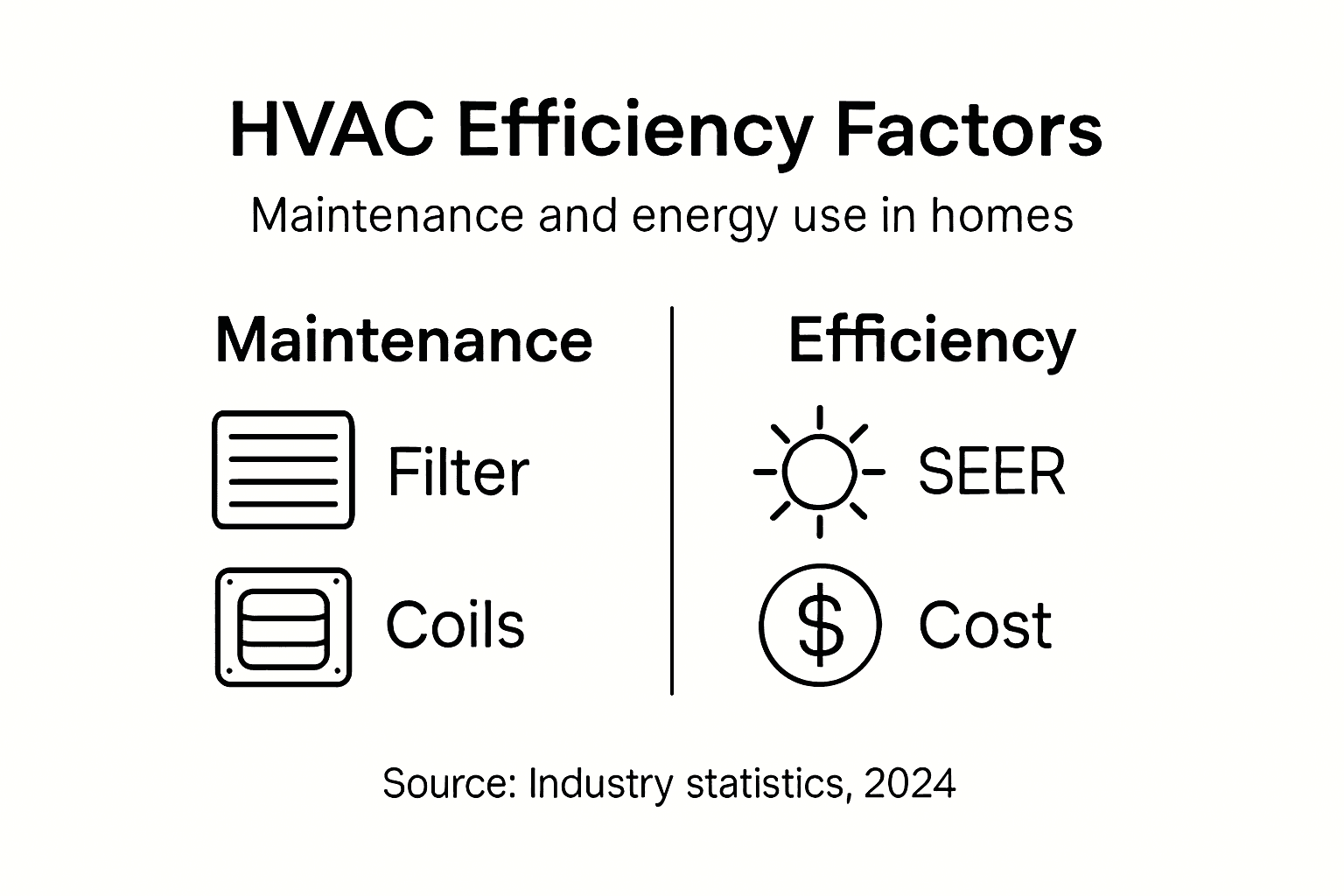
Checking the SEER (Seasonal Energy Efficiency Ratio) rating helps homeowners compare system performance. Higher SEER ratings indicate greater energy efficiency.
Pro tip: Schedule annual energy-efficiency inspections to identify airflow issues and hidden system inefficiencies before utility costs rise.
Maintenance, Common Issues, and Local Considerations
Routine HVAC maintenance keeps systems running efficiently while preventing expensive breakdowns. Ignoring maintenance often leads to emergency repairs and shortened equipment lifespan.
Regular maintenance improves reliability and energy performance throughout the year.
Important HVAC Maintenance Tasks
- Filter replacement every 1 to 3 months
- Professional coil cleaning annually
- Refrigerant inspections to detect leaks
- Electrical connection testing for safe operation
- Duct inspections to reduce airflow loss
Most Common HVAC Problems
Common HVAC issues include clogged filters, refrigerant leaks, and thermostat malfunctions. Small problems quickly become expensive repairs if left unresolved.
Southern California Climate Challenges
| Region | Primary Climate Issue | Impact on HVAC System | Suggested Maintenance Action |
|---|---|---|---|
| Coastal | Salt air and humidity | Corrosion and rust | Biannual inspections |
| Inland | Dust and heat | Compressor strain | Frequent filter changes |
| Desert Edge | Temperature swings | Accelerated wear | Pre-summer tune-ups |
Preventive HVAC maintenance costs far less than emergency system replacement.
Homeowners near the coast should pay close attention to corrosion caused by salt air. Inland homeowners face greater stress on compressors during extended summer heat waves.
Scheduling professional inspections before peak summer demand reduces the risk of unexpected breakdowns during the hottest months.
Pro tip: Create a yearly HVAC maintenance calendar with filter replacement reminders and seasonal inspection appointments.
Take Control of Your Home Comfort with Expert HVAC Solutions
Maintaining ideal indoor temperature, airflow, and air quality is essential for a comfortable and healthy home. If your system struggles with uneven temperatures, rising energy bills, or poor airflow, professional HVAC service can restore efficiency and reliability.
Visit Appliances Repair MD Tech for trusted HVAC repair and maintenance services in Orange County and Los Angeles County. Our experienced technicians provide professional diagnostics, repairs, and preventative maintenance to keep your home comfortable year-round.
Frequently Asked Questions
What does HVAC stand for, and why is it important for home comfort?
HVAC stands for Heating, Ventilation, and Air Conditioning. It maintains indoor comfort by controlling temperature, humidity, airflow, and indoor air quality throughout the year.
How does an HVAC system maintain indoor air quality?
HVAC systems circulate and filter indoor air while replacing stale air with fresh outdoor air. Air filters trap dust, allergens, and airborne particles that affect indoor health.
What are the different types of residential HVAC systems, and how do they function?
Common residential HVAC systems include split systems, packaged units, ductless mini-splits, and heat pumps. Each system manages indoor heating and cooling differently based on home design and efficiency goals.
How can I improve my HVAC system’s energy efficiency?
Improve HVAC efficiency by replacing filters regularly, scheduling maintenance inspections, upgrading insulation, sealing duct leaks, and using a programmable smart thermostat.