
Electrical fires in California homes cause millions of dollars in property damage every year, and many of those fires start with something as ordinary as a frayed cord or an overloaded outlet. Electrical equipment causes 31,647 home fires annually across the U.S., resulting in $1.6 billion in damage. For homeowners in Orange County and Los Angeles County, where older housing stock and year-round appliance use create added risk, a practical safety checklist is not optional. This article walks you through exactly what to inspect, how to install appliances correctly, and when to call a licensed technician before a small problem becomes a serious hazard.
Table of Contents
- Why appliance safety matters for Orange and LA homeowners
- The comprehensive appliance safety checklist: What to inspect
- Installation and placement: First line of defense
- Appliance safety for children, pets, and seniors
- Staying up to date: Recalls, standards, and professional help
- Need professional appliance safety or repairs?
- Frequently asked questions
Key Takeaways
| Point | Details |
|---|---|
| Visual checks are critical | Regularly inspect cords, plugs, and outlets to catch hazards early and prevent accidents. |
| Smart installation matters | Proper placement and setup of appliances drastically reduces fire and injury risks. |
| GFCI and AFCI save lives | Testing and using code-compliant outlets is among the most reliable safety steps for California homes. |
| Child safety needs extra steps | Installing locks, covers, and securing appliances keeps families safer, especially with kids or seniors. |
| Professional help for complex cases | Annual expert inspections are vital for gas, electrical, or code compliance that DIY cannot handle. |
Why appliance safety matters for Orange and LA homeowners
Southern California homes face a unique combination of risks. Older wiring in mid-century homes, high appliance usage due to warm weather, and dense neighborhoods mean that one electrical fault can quickly become a neighborhood emergency. Appliance-related fires are not just a statistic. They are a real and preventable threat.
One of the most overlooked dangers is the power cord. Cords or plugs cause 6% of home fire deaths despite being involved in only 1% of fires. That gap between fire frequency and fatality rate tells you something important: cord fires spread fast and often happen at night when people are asleep.
California electrical code requires arc fault circuit interrupters (AFCIs) and ground fault circuit interrupters (GFCIs) in kitchens, bathrooms, garages, and outdoor areas. These devices detect dangerous electrical conditions before they ignite. If your home does not have them, you are not just behind on safety. You are out of compliance.
“Proper appliance use, cord management, and circuit protection are the three pillars of home electrical safety.”
Here is what every Orange and LA homeowner should keep in mind:
- Follow a regular appliance maintenance checklist to catch wear before it becomes dangerous
- Use a thorough appliance installation checklist any time you add a new appliance
- Review safety steps for appliance repair before attempting any DIY fix
- Never ignore burn smells, warm outlets, or flickering lights
- Replace any cord that shows cracking, fraying, or discoloration immediately
The comprehensive appliance safety checklist: What to inspect
A good safety checklist is not a one-time task. It is a living habit. The NFPA recommends inspecting power cords, ensuring proper grounding, testing safety features, cleaning filters, checking for leaks, and unplugging appliances when not in use. That covers the basics, but let us break it down into a practical sequence.
Step-by-step appliance safety inspection:
- Visual cord check: Look for fraying, cracking, or scorch marks on every cord. Pay special attention to cords behind furniture where heat builds up unnoticed.
- Outlet and plug inspection: Wiggle plugs gently. Loose connections cause arcing, which is a leading ignition source. Check for discoloration around outlet faces.
- Filter cleaning and replacement: HVAC filters, dryer lint traps, and range hood filters should be cleaned monthly. A clogged dryer vent is one of the top causes of laundry room fires.
- GFCI outlet testing: Press the test button on every GFCI outlet monthly. If it does not trip and reset correctly, replace it. Use the home safety checklist as a reference for outlet locations.
- Smoke detector testing: Test every detector monthly and replace batteries annually. Detectors older than 10 years should be replaced entirely.
- Gas appliance check: Smell around your stove, dryer, and water heater connections. A rotten egg odor means a potential gas leak. Ventilate immediately and call your gas company.
- Unplug small appliances: Toasters, coffee makers, and countertop mixers should be unplugged when not in use. They draw standby power and can overheat.
For a deeper look at diagnosing appliance problems before they escalate, the appliance troubleshooting checklist and appliance repair tips are solid starting points.
Pro Tip: Build a seasonal schedule. Check cords and filters every spring and fall. Test GFCI outlets and smoke detectors every month. Schedule a professional inspection every year. Consistency is what makes a checklist actually work.
Annual professional inspections are recommended for both gas and electric appliances. A licensed technician can spot issues that are invisible to the untrained eye, including internal wiring faults and gas valve wear.
| Inspection task | Frequency | DIY or pro? |
|---|---|---|
| Cord and plug visual check | Monthly | DIY |
| GFCI outlet test | Monthly | DIY |
| Dryer lint trap cleaning | After every load | DIY |
| HVAC filter replacement | Every 1 to 3 months | DIY |
| Smoke detector test | Monthly | DIY |
| Gas line and valve inspection | Annually | Pro |
| Full electrical safety inspection | Annually | Pro |
| California electrical code compliance review | Every 3 to 5 years | Pro |
Installation and placement: First line of defense
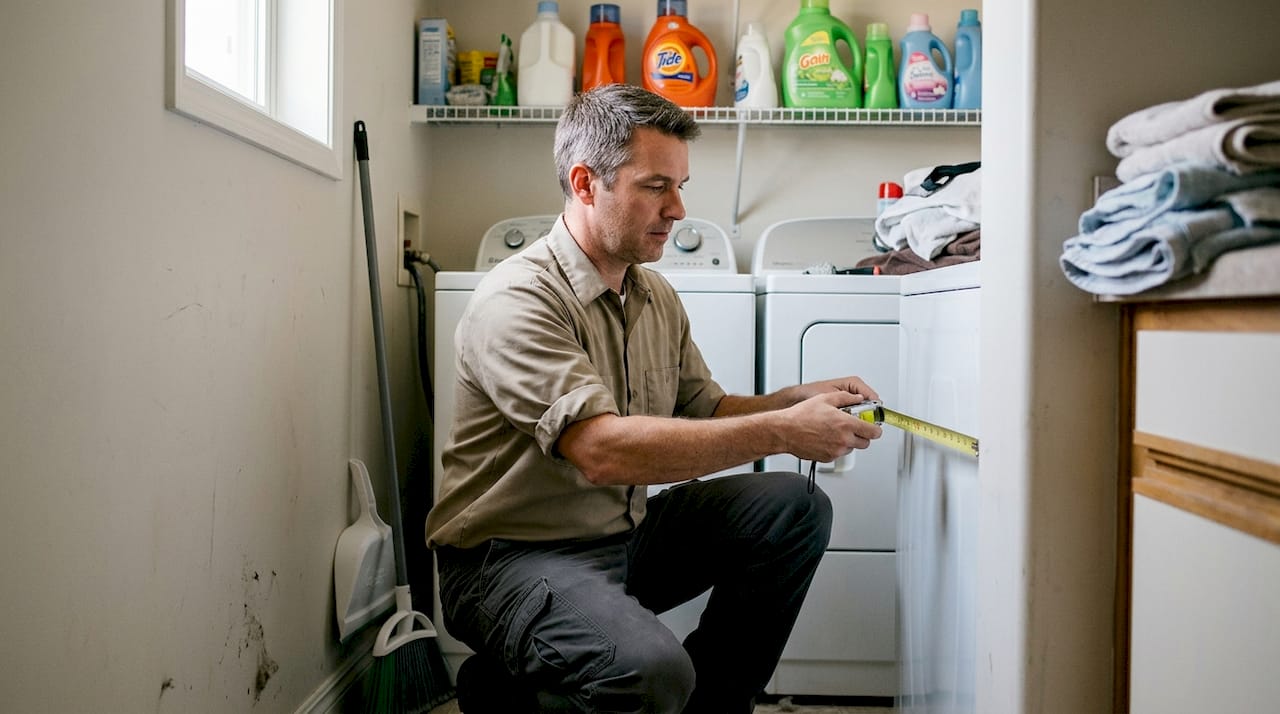
How and where you install an appliance matters just as much as how you maintain it. A washing machine placed too close to a water heater, or a refrigerator blocking a vent, creates conditions for both mechanical failure and fire risk.
AFCI protection is required for all kitchen circuits, and GFCI protection is mandatory for kitchens, bathrooms, garages, and outdoor areas under California code. If your home was built before these requirements took effect, upgrading is not just smart. It is the law during any permitted renovation.
Here are the core installation and placement rules every homeowner should follow:
- Keep appliances at least 12 inches from water sources unless they are specifically rated for wet locations
- Never plug two high-wattage appliances into the same outlet or power strip
- Only use appliances with a UL listing (Underwriters Laboratories), which confirms independent safety testing
- Match appliance voltage requirements to your outlet type. A 240-volt dryer on a 120-volt circuit is a fire waiting to happen
- Follow manufacturer clearance recommendations for ovens, dryers, and refrigerators to allow proper airflow
Pro Tip: Before installing any major appliance, check the best practices for installation guide. For washers specifically, the washer installation workflow covers every connection point that commonly fails.
| Scenario | Safe practice | Risk if ignored |
|---|---|---|
| Refrigerator near wall | Maintain 1 to 2 inch clearance | Overheating, compressor failure |
| Dryer vent length | Keep under 25 feet total | Lint buildup, fire risk |
| Microwave above range | Use proper ventilation hood | Grease fire spread |
| Dishwasher near cabinets | Insulate sides per manual | Water damage, mold |
Appliance safety for children, pets, and seniors
Homes with young children, curious pets, or elderly residents need an extra layer of protection. Standard safety practices are a baseline. Vulnerable household members require specific modifications.
Outlet covers, anti-tip brackets, stove knob covers, and recall checks are the four most impactful additions for child-safe homes. Anti-tip brackets on freestanding ranges prevent the appliance from tipping forward when a child pulls on the door, which is a surprisingly common accident.
“A recalled appliance in your home is not just a liability. It is an active hazard that manufacturers have already flagged as dangerous.”
Here is a focused list of modifications for households with children, pets, or seniors:
- Install child locks on appliances like ovens, dishwashers, and washing machines
- Use outlet covers or tamper-resistant outlets in every room accessible to children
- Secure countertop appliances like blenders and toasters so they cannot be pulled off by a cord
- Keep hot liquids away from blender lids. Pressure from hot steam can blow the lid off and cause burns
- Anchor heavy appliances like refrigerators and large microwaves to prevent tipping during earthquakes, which are a real concern in Southern California
- Check for recalled children’s products and appliances regularly using the CPSC database
Pro Tip: Set a calendar reminder every six months to search your appliance model numbers on the CPSC recall database. It takes five minutes and could prevent a serious injury.
Staying up to date: Recalls, standards, and professional help
Appliance recalls happen more often than most homeowners realize. A product can be in your home for years before a safety defect is identified and reported. Annual professional inspections and regular recall checks are the two habits that close this gap.
The CPSC recall site lets you search by brand, product type, or model number. Bookmark it. Check it twice a year at minimum. If your appliance is recalled, stop using it immediately and follow the manufacturer’s remedy instructions.
Here are the signs that tell you it is time to stop DIYing and call a licensed technician:
- Outlets feel warm to the touch or show scorch marks
- You feel a mild tingling or shock when touching an appliance
- Breakers trip repeatedly when a specific appliance runs
- You see sparks when plugging in or unplugging a device
- A gas appliance produces a yellow or orange flame instead of blue
For recall tracking specific to California residents, the appliance recall notices page and the what are appliance recalls guide explain exactly what your rights and next steps are.
Always use UL-listed appliances and avoid running major appliances on extension cords. A refrigerator or air conditioner on an extension cord draws more current than the cord is rated for, which creates heat buildup inside the cord insulation.
Need professional appliance safety or repairs?
Knowing what to check is half the battle. The other half is having a trusted local technician who can handle what you find. Whether you need a safety inspection, a repair, or a full installation, having a professional in your corner means you are not guessing.
Our team at appliancesrepairmdtech.com serves homeowners across Orange County and Los Angeles County with licensed, experienced technicians who know California code inside and out. From Samsung appliance repairs to full safety audits, we handle it all. Not sure whether to fix or replace? The repair vs replacement guide helps you make the right call before spending a dollar. Book your appointment online and get a same-day or next-day visit from a technician who treats your home like their own.
Frequently asked questions
What are the most common causes of appliance-related house fires?
The top causes are faulty wiring, damaged cords, overloaded outlets, and improper use of kitchen and laundry appliances. Electrical equipment causes 31,647 home fires per year in the U.S., making prevention a priority for every homeowner.
How often should I inspect my home appliances for safety?
Power cords and visible parts should be checked monthly, while annual professional inspections for gas and electrical safety are strongly recommended to catch hidden hazards.
What appliance features help prevent accidents in homes with children?
Key safety features include outlet covers, child locks, stove knob covers, and anti-tip brackets for large appliances. Outlet covers and anti-tip brackets are among the most effective and easiest to install.
Is it safe to use extension cords for appliances?
Extension cords should never be used for high-wattage or major appliances. Always plug such appliances directly into wall outlets, as extension cords for high-wattage appliances create serious overheating and fire risks.