
Every year, thousands of children suffer preventable injuries from household appliances. Research shows that appliance-related child injuries drop by up to 40% in homes where child locks are properly used. Understanding how these safety features work empowers you to protect your family while maintaining appliance functionality. This guide explains child lock mechanisms, common appliances equipped with them, and practical troubleshooting steps for Orange and Los Angeles County families.
Table of Contents
- Introduction To Child Lock Features In Appliances
- How Child Locks Work: Mechanisms And Activation
- Common Appliances Equipped With Child Locks
- Safety Benefits And Risk Reduction Through Child Locks
- Common Misconceptions About Child Locks
- How To Use And Troubleshoot Child Locks In Appliances
- Local Repair, Maintenance, And Support For Child Lock Features
- Conclusion: Enhancing Child Safety With Appliance Child Locks
- Keep Your Appliance Child Locks Reliable With MDTECH Repair Services
Key Takeaways
| Point | Details |
|---|---|
| Injury Reduction | Child locks reduce appliance-related injuries by up to 40% when properly engaged. |
| Mechanism Types | Systems use mechanical barriers or electronic controls to prevent unintended operation. |
| Common Appliances | Ovens, washers, dryers, dishwashers, and refrigerators typically feature child lock systems. |
| Safety Layer | Child locks improve safety but never replace active adult supervision. |
| Professional Support | Regular maintenance and timely repair keep child locks functioning reliably. |
Introduction to Child Lock Features in Appliances
Child locks are safety mechanisms built into household appliances to prevent children from operating them unsafely. These features create physical or electronic barriers that stop curious toddlers from starting wash cycles, opening hot ovens, or changing refrigerator settings. The primary purpose is reducing risks like burns, entrapment, poisoning from detergent access, and other serious accidents.
Statistics demonstrate their effectiveness. Studies reveal that child-related appliance burn injuries are reduced by up to 40% in households with properly functioning child locks. This significant decrease highlights why manufacturers now include these features as standard equipment rather than optional add-ons.
Common household accidents involving appliances include:
- Burns from ovens and stovetops accessed by children climbing or reaching
- Entrapment in front-loading washers or dryers during hide-and-seek games
- Poisoning from dishwasher detergent pods accessed through unlocked doors
- Flooding from children activating washing machine cycles
- Food spoilage and electrical issues from refrigerator setting changes
Child safety concerns drove appliance manufacturers to develop increasingly sophisticated locking systems. As awareness of preventable home injuries grew through emergency room data, the industry responded with mandatory safety standards. Today’s appliances integrate child locks as essential components, not afterthoughts.
Pro Tip: Document where child locks are located on each appliance in your home and test them monthly to ensure they engage properly.
How Child Locks Work: Mechanisms and Activation
Child lock systems fall into two categories: mechanical and electronic. Mechanical and electronic locks use distinct activation methods tailored to different appliance types and user needs.
Mechanical locks create physical barriers. Oven door locks slide metal bars into place, preventing the door from opening even when pulled. Refrigerator locks may use latches requiring adult hand strength or coordination to release. These systems work without electricity and remain engaged during power outages.
Electronic locks disable control panels through software. Pressing a specific button combination for three to five seconds triggers the lock mode. Visual indicators like illuminated lock symbols or flashing lights confirm activation. These systems prevent any button presses from registering until you enter the unlock sequence.
| Feature | Mechanical Locks | Electronic Locks |
|---|---|---|
| Power Requirement | None | Requires electricity |
| Activation Method | Physical latch or slide | Button combination |
| Visual Indicator | Physical position | LED or display symbol |
| Durability | High, fewer failure points | Can malfunction with electronic issues |
| Bypass Risk | Low if properly designed | Possible during power cycling |
Common activation steps for most appliances:
- Locate the child lock button, often marked with a key or padlock symbol.
- Press and hold the designated button for three to five seconds.
- Watch for a visual confirmation like a lit icon or beep sound.
- Test the lock by attempting to use normal controls.
- Repeat the process to deactivate when adult use is needed.
Electronic locks offer convenience but depend on functioning electronics. A control board failure may disable the lock along with other features. Mechanical systems provide reliability but may require more physical effort to engage consistently.
Pro Tip: Keep your appliance manual in a kitchen drawer and mark the child lock instructions with a sticky note for quick reference when teaching babysitters or family members.
Common Appliances Equipped with Child Locks
Modern households contain multiple appliances with integrated child safety features. Understanding which machines include locks helps you maximize protection across your home.
Ovens and ranges feature door locks and control panel locks. Door locks prevent children from opening hot ovens during or after cooking. Control panel locks stop kids from turning on burners or starting self-cleaning cycles. These prevent the most serious burn injuries in home kitchens.
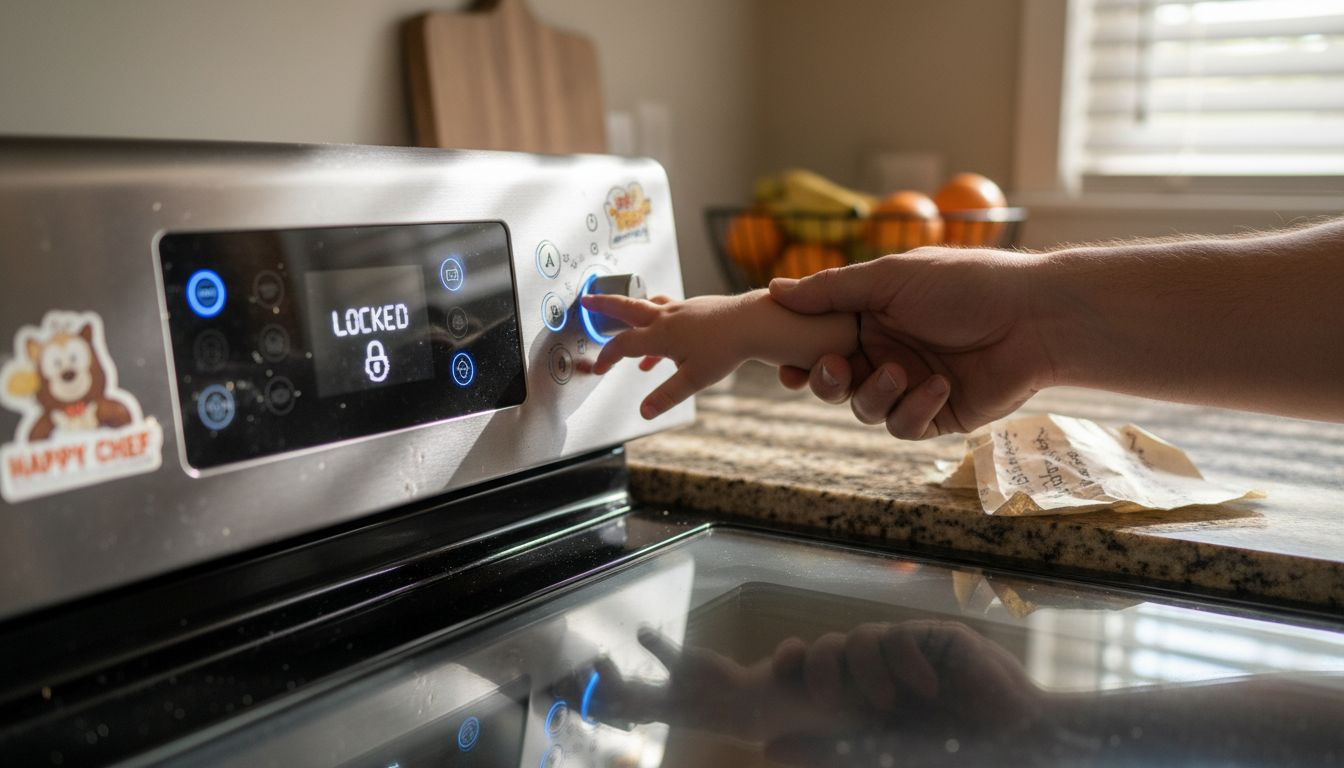
Washing machines and dryers typically offer control panel locks. Front-loading washers pose entrapment risks, making locks critical safety features. The lock prevents cycle starts and, on some models, keeps the door sealed during operation. Dryers use similar control locks to prevent accidental starts that could damage clothing or create fire hazards.
Dishwashers include door locks and control locks. Door locks prevent access to detergent pods, which cause thousands of poisoning cases annually. Control locks stop children from starting cycles that waste water and energy. Some models combine both features for comprehensive protection.
Refrigerators may have control panel locks, especially models with external water and ice dispensers. Locks prevent temperature changes that spoil food and stop excessive ice or water dispensing. High-end models include door locks, though these are less common due to food access needs.
Recognizing child lock indicators varies by brand:
- Look for key, padlock, or child figure symbols on control panels
- Check for dedicated lock buttons versus combination presses
- Note LED indicators that illuminate when locks engage
- Review door mechanisms for visible latch systems on ovens
Your appliance manual contains specific instructions for your model. Manuals explain activation sequences, indicator meanings, and troubleshooting steps. Download digital copies from manufacturer websites if you misplaced printed versions. When facing washer repair needs, technicians can verify child lock functionality during service calls.
Safety Benefits and Risk Reduction Through Child Locks
Data proves child locks deliver measurable safety improvements. Research confirms appliance child locks reduce injuries by up to 40%, significantly decreasing burns and entrapment incidents among children under five years old.
Child locks prevent specific accident types:
- Oven door locks stop burns from children opening doors during baking or roasting
- Washer control locks prevent entrapment when kids climb inside during play
- Dishwasher locks block access to caustic detergents and scalding water
- Dryer locks stop accidental starts that could trap small children
- Refrigerator locks maintain safe food storage temperatures
Key safety benefits extend beyond injury prevention. Parents report reduced anxiety when child locks are active, knowing curious toddlers cannot access dangerous appliances. Emergency room visits for appliance-related injuries decrease in communities with high child lock adoption rates. Insurance companies sometimes offer premium reductions for homes with comprehensive child safety features.
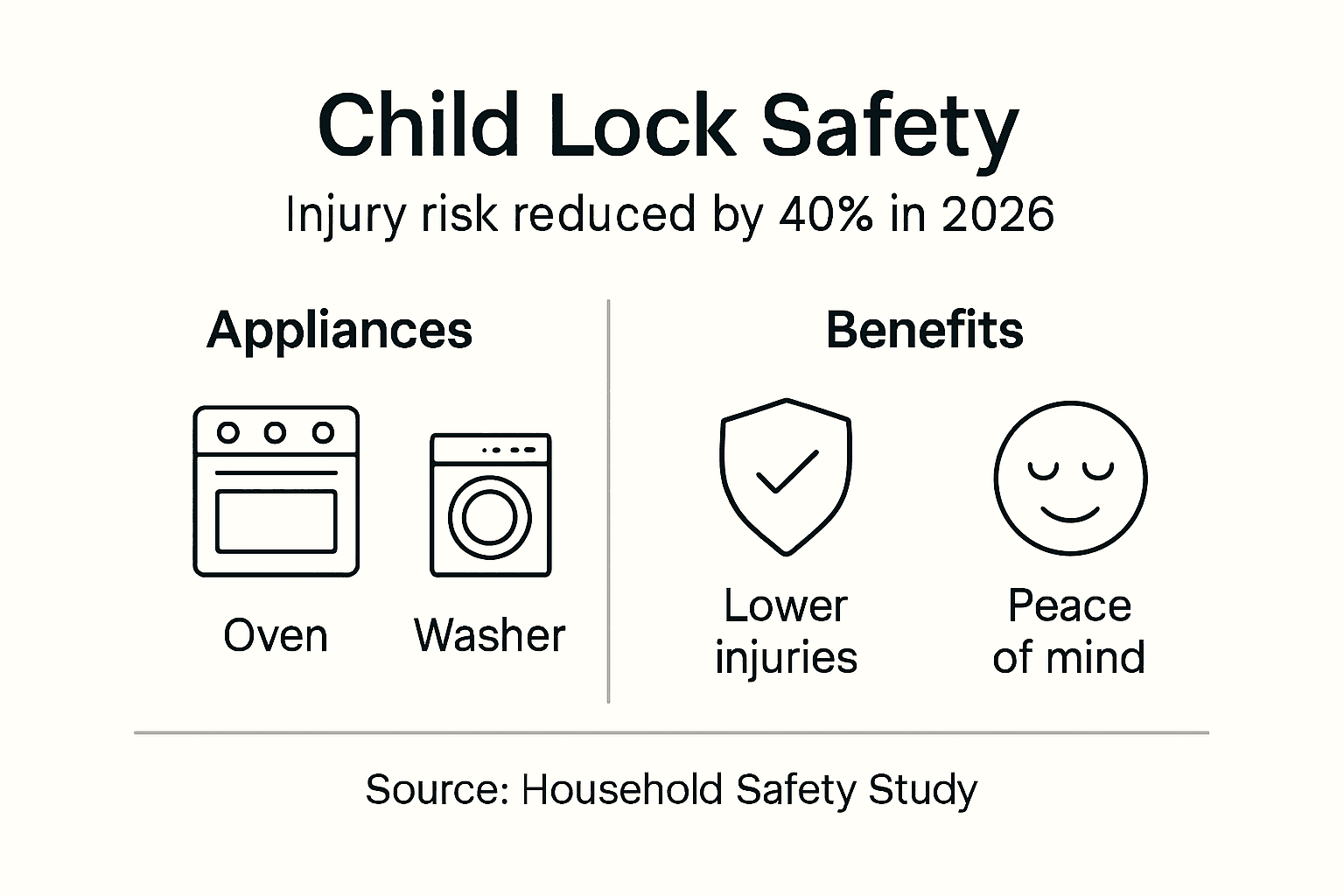
Peace of mind represents an undervalued benefit. You can focus on cooking, cleaning, or other tasks without constant appliance monitoring. This reduces parental stress and allows children appropriate independence in kitchens and laundry areas.
However, limitations exist. Child locks reduce but never eliminate risks entirely. Determined older children may discover deactivation sequences through observation or experimentation. Mechanical locks can wear over time, reducing effectiveness. Electronic locks may fail during power surges or control board malfunctions.
Supervision remains your primary safety strategy. Child locks function as backup protection, not replacements for watchful adults. Teach children appliance safety rules alongside using locks. Explain why appliances are dangerous rather than simply restricting access.
Proper maintenance maximizes benefits. Test locks monthly to confirm they engage and disengage correctly. Clean control panels to prevent button sticking that could disable electronic locks. Address any lock malfunctions immediately through professional repair rather than delaying service.
Common Misconceptions About Child Locks
Misunderstandings about child lock capabilities lead to either overreliance or underutilization. Correcting these misconceptions helps you use safety features effectively.
Misconception one: Child locks guarantee total safety. Reality shows locks provide one protective layer among several needed measures. A functioning child lock on your oven prevents door opening, but it cannot stop a child from touching hot exterior surfaces. Locks work best combined with supervision, safety education, and physical barriers like stove guards.
Misconception two: Child locks cannot be bypassed or accidentally disabled. Some older appliance models use simple lock sequences that observant children memorize. Power cycling an appliance by unplugging and replugging may reset electronic locks to the off position. Mechanical locks can fail if latch mechanisms wear or break. Regular testing catches these issues before they compromise safety.
Misconception three: All child locks work identically. Activation procedures vary significantly across brands and models. Samsung appliances might require a three-second hold on one button, while LG models need simultaneous presses of two buttons. Whirlpool ovens use different sequences than GE ranges. Assuming universal operation leads to frustration and potentially leaving locks disengaged.
Other common misunderstandings:
- Believing child locks never need maintenance or testing
- Assuming newer appliances always have more reliable locks than older models
- Thinking child locks work during power outages when they are electronic systems
- Expecting locks to prevent all unauthorized adult access, not just child access
Pro Tip: Create a home safety binder with child lock instructions for each appliance, activation photos, and emergency contact numbers for repair services, making information accessible to all caregivers.
How to Use and Troubleshoot Child Locks in Appliances
Mastering child lock operation ensures you can activate protection quickly and resolve issues without service calls for minor problems.
Standard activation procedure:
- Identify the child lock control, marked with a lock icon or “Child Lock” label.
- Press and hold the button for three to five seconds until an indicator appears.
- Verify activation by attempting normal appliance operation, which should be blocked.
- Document the specific sequence in your appliance manual for future reference.
- Test the lock weekly initially, then monthly once you confirm reliability.
Deactivation follows the same process. Press and hold the lock button until the indicator disappears. Some models require the same button combination used for activation.
Common troubleshooting issues and solutions:
- Lock will not engage: Clean the control panel with a damp cloth to remove residue blocking button contacts. Check if the appliance is mid-cycle, as some models prevent lock activation during operation. Verify power supply stability.
- Lock engages but does not prevent operation: This indicates a control board failure requiring professional diagnosis. Do not continue using the appliance with children present until repairs are complete.
- Cannot deactivate lock: Try unplugging the appliance for 30 seconds to reset the electronics. If this fails, consult your manual for alternative deactivation sequences. Some models offer emergency unlock procedures.
- Indicator light flashes or behaves erratically: This signals electronic issues. Power cycle the appliance and attempt reactivation. Persistent problems need technician evaluation.
Maintenance practices preserve lock functionality. Wipe control panels weekly to prevent buildup that interferes with button sensitivity. Avoid using harsh chemicals that damage electronic components. For mechanical locks, inspect latches for wear or damage during routine appliance cleaning.
Pro Tip: When troubleshooting fails to resolve child lock problems, contact professional repair services immediately to avoid safety gaps. Find helpful guidance through appliance repair resources specific to your area.
Local Repair, Maintenance, and Support for Child Lock Features
Professional appliance repair services in Orange and Los Angeles counties specialize in maintaining child lock systems alongside general appliance functionality. Local technicians understand the specific models common in Southern California homes and can quickly diagnose lock failures.
Repair calls related to child lock malfunctions occur regularly. Control board failures disable electronic locks, requiring component replacement. Mechanical latch systems break from repeated use, especially on oven doors. Worn buttons no longer register presses needed for activation sequences. These issues demand professional expertise to resolve safely.
Specialized repair services offer several advantages:
- Technicians carry replacement parts for common lock mechanisms
- Local experts understand regional building codes and safety standards
- Quick response times minimize the period when child locks are non-functional
- Comprehensive diagnostics identify related issues before they cause failures
- Professional repairs maintain manufacturer warranties on newer appliances
Timely repair of child locks protects your family. A malfunctioning lock creates a false sense of security if you believe it is engaged when it actually provides no protection. Delaying repairs increases the window of vulnerability when children could access dangerous appliances.
Professional maintenance extends beyond emergency repairs. Annual appliance inspections should include child lock testing and adjustment. Technicians can recalibrate electronic systems, lubricate mechanical components, and update software on smart appliances. These preventive measures catch problems before they compromise safety.
Choosing local experts familiar with child safety features ensures quality service. Look for repair companies that highlight safety feature maintenance in their service descriptions. Ask about technician training on child lock systems during initial consultations. Verify they stock parts for your appliance brands.
Orange and Los Angeles County residents benefit from established repair networks. Services offering oven repair and washer maintenance typically handle child lock issues as routine procedures. Access local repair guidance to connect with qualified technicians in your specific city or neighborhood.
Conclusion: Enhancing Child Safety with Appliance Child Locks
Child locks significantly reduce injury risks in homes with young children. These safety features work through mechanical or electronic systems that prevent unsupervised appliance operation. When properly maintained and used alongside active supervision, locks cut accident rates by up to 40%.
Remember that child locks represent one essential safety layer. They function best when combined with education, supervision, and regular testing. Learn the specific activation procedures for each appliance in your home. Test locks monthly to confirm functionality. Address malfunctions immediately through professional repair services.
Your knowledge and action create safer home environments. Take time today to locate child locks on your appliances, verify they engage properly, and document activation procedures for other caregivers. When issues arise, connect with qualified local technicians who understand the importance of maintaining these critical safety features.
Keep Your Appliance Child Locks Reliable with MDTECH Repair Services
Maintaining functional child locks requires professional expertise when DIY troubleshooting fails. MDTECH specializes in appliance repair throughout Orange and Los Angeles counties, with technicians trained in safety feature maintenance. Our team understands how child locks protect families and prioritizes repairs that restore these critical systems.

We service all major appliance brands, including comprehensive Samsung appliance repair for models common in Southern California homes. Our technicians carry parts for child lock mechanisms and can quickly diagnose control board failures, broken latches, or electronic malfunctions. Whether you need guidance on replacing appliance parts or require full-service repairs, we deliver reliable solutions. Contact us for washer repair in Orange County and surrounding areas to ensure your family’s safety features work when needed most.
FAQ
What is a child lock on appliances?
A child lock is a safety feature that prevents children from operating or opening appliances accidentally, reducing injury risks. It secures controls or doors until safely deactivated by an adult using a specific button sequence or key.
Which appliances commonly have child locks?
Common appliances include ovens, washers, dryers, dishwashers, and refrigerators. Each appliance’s child lock may function differently depending on its use and design, with ovens typically locking doors while washers disable control panels.
Can child locks malfunction or be bypassed?
Yes, some child locks can malfunction or be accidentally disabled, especially older models or those with worn components. Regular testing and professional repairs keep locks effective, but active adult supervision remains essential regardless of lock status.
How do I activate a child lock on my appliance?
Activation often involves holding a button marked with a lock symbol or pressing a combination of controls for three to five seconds. Procedures vary significantly by appliance brand and type, so always refer to your specific appliance manual for accurate instructions.
Where can I get help if my child lock stops working?
Contact local professional appliance repair services familiar with child lock systems, especially providers serving Orange and Los Angeles counties. Timely repair preserves safety and prevents accidents due to malfunctioning child locks that create false security.
Recommended
- Appliance Repair Trends 2025: Complete Guide – MDTECH APPLIANCE REPAIR
- Role of Ventilation in Appliance Safety
- 6 Key Reasons for Urgent Appliance Repair at Home
- Why Upgrade Old Appliances: Benefits & Efficiency Gains
- 7 avantaje aparat dentar 2025 pentru sănătatea copiilor | Lucilla Dental Clinic | cabinet stomatologic Bucuresti sector 4 | stomatologie Bucuresti