
Upgrading to an energy efficient HVAC system can slash your energy bills by up to 50% compared to older models, a game changer for Orange and Los Angeles County homeowners facing rising utility costs. This guide explains how energy efficient HVAC systems work, the technologies that power savings, and practical steps to choose and maintain systems tailored to Southern California’s unique climate.
Table of Contents
- Understanding Energy Efficient HVAC: Definitions And Basics
- How Energy Efficient HVAC Systems Work: Key Technologies And Mechanisms
- Common Misconceptions About Energy Efficient HVAC
- Comparing Energy Efficient HVAC Options For Southern California Homes
- Maximizing Energy Savings: Maintenance And Operational Best Practices
- Quantifying Energy And Cost Savings: What Homeowners Can Expect
- Explore Expert HVAC Repair And Upgrades In Orange And Los Angeles Counties
- Frequently Asked Questions
Key takeaways
| Point | Details |
|---|---|
| Definition | Energy efficient HVAC systems deliver heating and cooling using significantly less energy than older models, reducing monthly utility bills. |
| Core technologies | Variable speed compressors, heat pumps, and smart thermostats work together to optimize performance and cut energy waste. |
| Climate matters | Southern California’s mild winters and hot summers make certain HVAC technologies like heat pumps especially cost effective. |
| Maintenance impact | Regular filter changes, duct sealing, and annual tune-ups sustain efficiency gains and extend system lifespan. |
| Savings potential | Homeowners typically see 30% to 50% reductions in HVAC energy use, translating to hundreds of dollars saved annually. |
Understanding energy efficient HVAC: definitions and basics
Energy efficient HVAC systems are designed to deliver comfortable heating and cooling while consuming far less electricity or gas than traditional models. The primary metric for measuring air conditioning efficiency is SEER, or Seasonal Energy Efficiency Ratio, which quantifies how much cooling a system provides per unit of electricity used over an entire season. Higher SEER ratings mean greater efficiency and lower operating costs. Modern energy efficient units typically feature SEER ratings of 14 or higher, a significant jump from older systems often rated below 10.
For Orange and Los Angeles County homeowners, climate plays a critical role in HVAC efficiency. Southern California’s weather is characterized by mild, short winters and extended hot summers, which means your system works hardest during cooling season. This climate profile makes high SEER air conditioners and heat pumps particularly valuable investments. Unlike regions with harsh winters requiring heavy heating, our moderate conditions allow homeowners to prioritize cooling efficiency and select systems optimized for year round comfort without massive heating demands.
The role of HVAC in homes extends beyond temperature control. Energy efficient models reduce strain on California’s power grid, lower your carbon footprint, and qualify for utility rebates and tax incentives. Key local climate characteristics that influence HVAC selection include:
- Average summer temperatures ranging from the mid 70s to low 90s
- Minimal heating demand during brief, mild winter months
- Low humidity levels reducing the need for aggressive dehumidification
- Coastal versus inland temperature variations affecting cooling loads
Understanding these basics helps you make informed decisions when selecting or upgrading your HVAC system to match Southern California’s unique environment.
How energy efficient HVAC systems work: key technologies and mechanisms
Energy efficient HVAC systems leverage advanced technologies that precisely control temperature while minimizing energy waste. Variable speed compressors represent a major efficiency breakthrough. Unlike traditional single speed compressors that run at full capacity or shut off completely, variable speed models adjust their output in small increments to match your home’s exact cooling or heating needs. This prevents the energy spikes and temperature swings common with older systems, delivering consistent comfort and cutting electricity use by 20% to 30%.
Heat pumps are especially well suited to Southern California’s mild climate. These versatile systems both heat and cool your home by transferring heat rather than generating it through combustion. During summer, a heat pump extracts heat from indoor air and moves it outside. In winter, the process reverses, pulling warmth from outdoor air even on cooler days. Because they move heat instead of creating it, heat pumps achieve efficiency ratios far exceeding traditional furnaces and air conditioners, making them ideal for our region’s moderate temperature range.
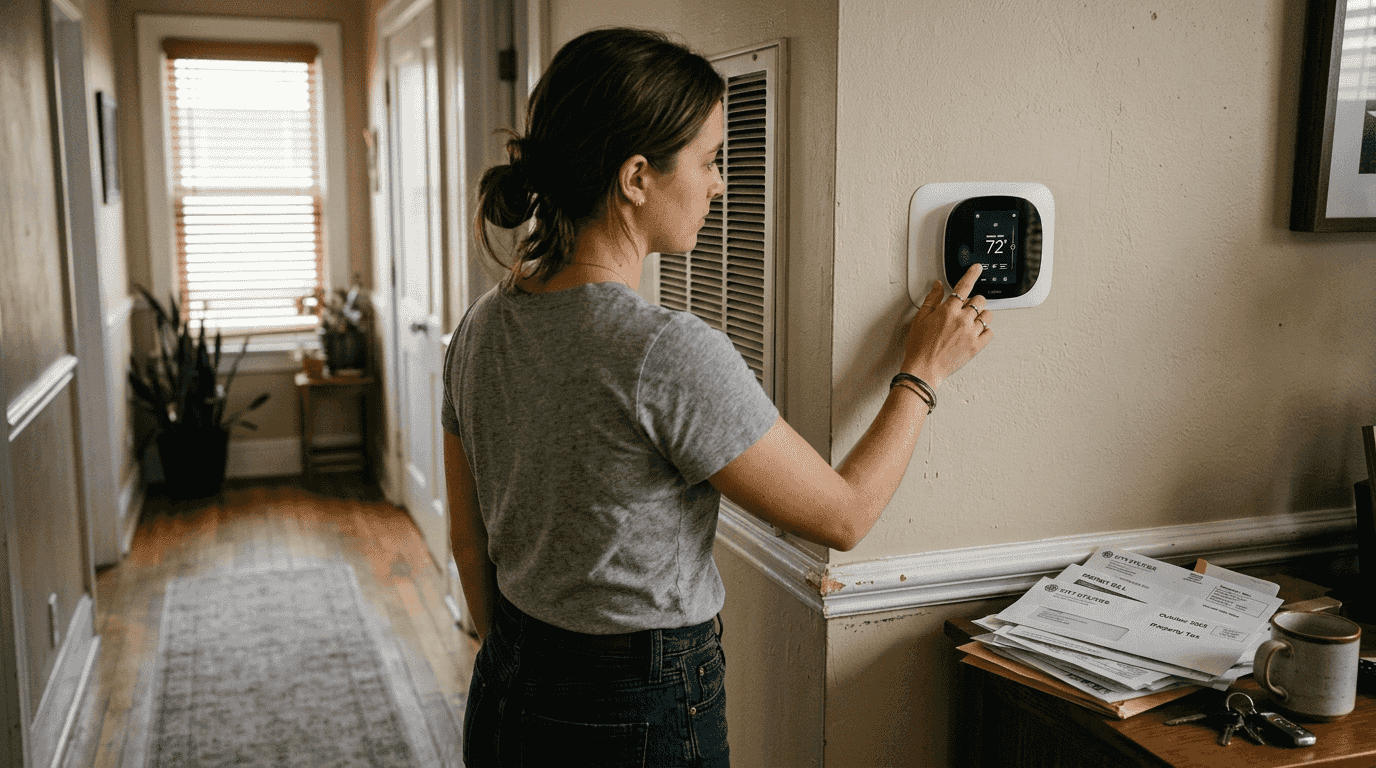
Smart thermostats add another layer of efficiency by learning your schedule and preferences to optimize temperature settings automatically. These devices reduce wasted energy by lowering heating or cooling when you’re away and preconditioning your home before you return. Studies show that smart thermostats can reduce energy consumption by up to 15% when paired with energy efficient HVAC equipment. Many models provide real time energy reports and remote control via smartphone apps, giving you visibility into usage patterns and opportunities for further savings.
The synergy among these technologies amplifies efficiency gains. A heat pump with a variable speed compressor controlled by a smart thermostat delivers precision comfort with minimal energy input. Each component compensates for the others’ limitations, creating a system that outperforms the sum of its parts. For homeowners committed to HVAC maintenance for homeowners, this integrated approach maximizes return on investment.
Pro Tip: Pairing a smart thermostat with a variable speed HVAC system unlocks the greatest savings potential. Program your thermostat to raise temperatures a few degrees when you’re away and lower them 30 minutes before you return, letting the variable speed compressor ramp up gradually for peak efficiency.
Common misconceptions about energy efficient HVAC
Many homeowners believe the most expensive HVAC system automatically delivers the best efficiency, but this oversimplification ignores total cost of ownership. A premium priced unit with excessive capacity for your home wastes energy and money through frequent cycling. True efficiency comes from matching system size and features to your home’s specific heating and cooling load. A moderately priced, properly sized energy efficient model often outperforms an oversized luxury unit in both comfort and long term savings.
Correct system sizing is critical yet frequently misunderstood. Bigger is not better when it comes to HVAC equipment. An oversized system cools or heats your space too quickly, shutting off before completing a full cycle. This short cycling prevents proper dehumidification, creates temperature inconsistencies, and increases wear on components. A qualified technician should perform a Manual J load calculation that accounts for your home’s square footage, insulation levels, window placement, and local climate to determine the right capacity.
SEER ratings cause confusion as well. While a higher SEER number indicates better efficiency, the difference between a 16 SEER and 18 SEER system may not justify the price premium in our mild climate. Focus on units rated 14 SEER or higher, then weigh the incremental cost of higher ratings against your projected energy savings over the system’s lifespan. A 16 SEER unit properly installed and maintained will vastly outperform a poorly installed 20 SEER model.
Poor maintenance erodes efficiency regardless of how advanced your system is. Clogged filters restrict airflow, forcing the system to work harder. Dirty coils reduce heat transfer. Refrigerant leaks diminish cooling capacity. Even the most efficient HVAC equipment loses 5% to 10% of its rated efficiency annually without regular upkeep. Homeowners should evaluate HVAC options based on climate appropriate technology, correct installation by certified professionals, and commitment to ongoing maintenance rather than brand prestige or initial price alone.
Comparing energy efficient HVAC options for Southern California homes
Choosing the right energy efficient HVAC system requires understanding how different technologies perform in Orange and Los Angeles Counties’ climate. Heat pumps excel in our region because they deliver both heating and cooling efficiently without the need for separate furnace and air conditioner units. Traditional gas furnaces paired with air conditioners still work, but they consume more energy overall since furnaces burn fuel to create heat rather than transferring it. For homes with moderate heating needs, a high efficiency heat pump often provides superior year round performance and lower operating costs.
Variable speed compressors offer measurable advantages over single speed models. Single speed units run at 100% capacity until reaching the thermostat setpoint, then cycle off completely. This on/off pattern wastes energy during startup and creates temperature fluctuations. Variable speed systems adjust output from 25% to 100% in precise increments, running longer at lower speeds to maintain steady temperatures. The result is 20% to 40% lower energy use, better humidity control, and quieter operation. While variable speed systems cost more upfront, the efficiency gains justify the investment for most homeowners.
ENERGY STAR certification matters when selecting equipment. ENERGY STAR labeled HVAC systems meet strict efficiency criteria set by the EPA and often qualify for utility rebates and tax credits. These incentives can offset 10% to 20% of equipment and installation costs. Check with your local utility provider about current programs before making a purchase decision.
| System Type | Efficiency Range | Best For | Typical Upfront Cost | Operating Cost |
|---|---|---|---|---|
| Heat Pump (Variable Speed) | 16-20 SEER | Year round efficiency in mild climates | $$$ | Low |
| Heat Pump (Single Speed) | 14-16 SEER | Budget conscious upgrades | $$ | Medium |
| AC + Gas Furnace (Variable Speed) | 16-18 SEER AC | Homes with existing gas lines | $$$ | Medium |
| AC + Gas Furnace (Single Speed) | 14-16 SEER AC | Lowest initial investment | $ | High |
When comparing options, consider these factors beyond efficiency ratings:
- Installation complexity and existing ductwork compatibility
- Expected system lifespan of 15 to 20 years with proper care
- Warranty coverage for parts and labor
- Availability of qualified service technicians in your area
- Noise levels during operation
Exploring residential HVAC choices California homeowners face reveals that no single solution fits every situation. A coastal home with minimal heating needs may benefit most from a high SEER heat pump, while an inland property with greater temperature extremes might prioritize a dual fuel system. Understanding energy efficient appliance benefits extends beyond HVAC to your entire home’s energy profile. The HVAC role in home comfort encompasses air quality, humidity control, and temperature stability, all enhanced by modern efficient equipment.
Pro Tip: Before purchasing a new system, research local utility rebates through Southern California Edison, SoCalGas, or your municipal provider. Rebates for high efficiency HVAC equipment can reduce costs by $500 to $2,000, significantly improving your return on investment.
Maximizing energy savings: maintenance and operational best practices
Proper maintenance transforms an energy efficient HVAC system from a good investment into an exceptional one. Air filter replacement stands as the simplest yet most impactful maintenance task you can perform. Dirty filters restrict airflow, forcing your system to consume 5% to 15% more energy while reducing comfort. Replace standard 1 inch filters every 30 to 60 days during heavy use seasons. Upgrade to pleated filters with MERV 8 to 11 ratings for better particle capture and longer service intervals of 90 days.
Duct sealing addresses a hidden source of energy waste in many homes. Leaky ductwork allows conditioned air to escape into attics, crawl spaces, and walls before reaching living areas. Research confirms that enhanced duct sealing can improve efficiency by 10-20%, making it one of the most cost effective upgrades available. Professional duct testing identifies leaks, and sealing with mastic or metal backed tape prevents future air loss. Insulating ducts running through unconditioned spaces provides additional efficiency gains.
Smart thermostat programming requires thoughtful setup to maximize savings. Create schedules that raise cooling setpoints by 7 to 10 degrees when you’re away for four hours or more, then return to comfortable levels 30 minutes before you arrive home. Avoid drastic temperature changes that force your system to work harder. Most smart thermostats learn your patterns over time and suggest optimizations, but manual fine tuning ensures settings match your lifestyle.
Annual professional tune-ups catch small problems before they become expensive failures. A qualified technician inspects refrigerant levels, cleans coils, checks electrical connections, and verifies proper airflow. These preventive visits maintain peak efficiency and extend equipment lifespan. Homeowners who schedule annual HVAC service report fewer emergency repairs and lower energy bills compared to those who skip routine maintenance.
Pro Tip: Track your monthly energy bills before and after implementing maintenance improvements. A sudden increase in consumption often signals an emerging problem like refrigerant loss or a failing component, allowing you to address issues before they escalate.
Additional operational best practices include:
- Keeping outdoor condenser units clear of debris, vegetation, and obstructions
- Closing blinds or curtains during peak sun hours to reduce cooling load
- Using ceiling fans to improve air circulation and perceived comfort
- Sealing air leaks around windows and doors to prevent conditioned air escape
The HVAC maintenance for homeowners responsibility extends beyond reactive repairs. Proactive care preserves the efficiency advantages you paid for when purchasing modern equipment.
Quantifying energy and cost savings: what homeowners can expect
Upgrading from an older HVAC system to a modern energy efficient model delivers measurable financial and environmental benefits. Efficiency improvements typically range from 30% to 50% depending on your existing equipment’s age and condition. A home replacing a 15 year old 10 SEER air conditioner with a new 16 SEER variable speed model can expect to cut cooling costs nearly in half. These savings compound over the system’s 15 to 20 year lifespan, often totaling $15,000 to $25,000 in avoided energy expenses.
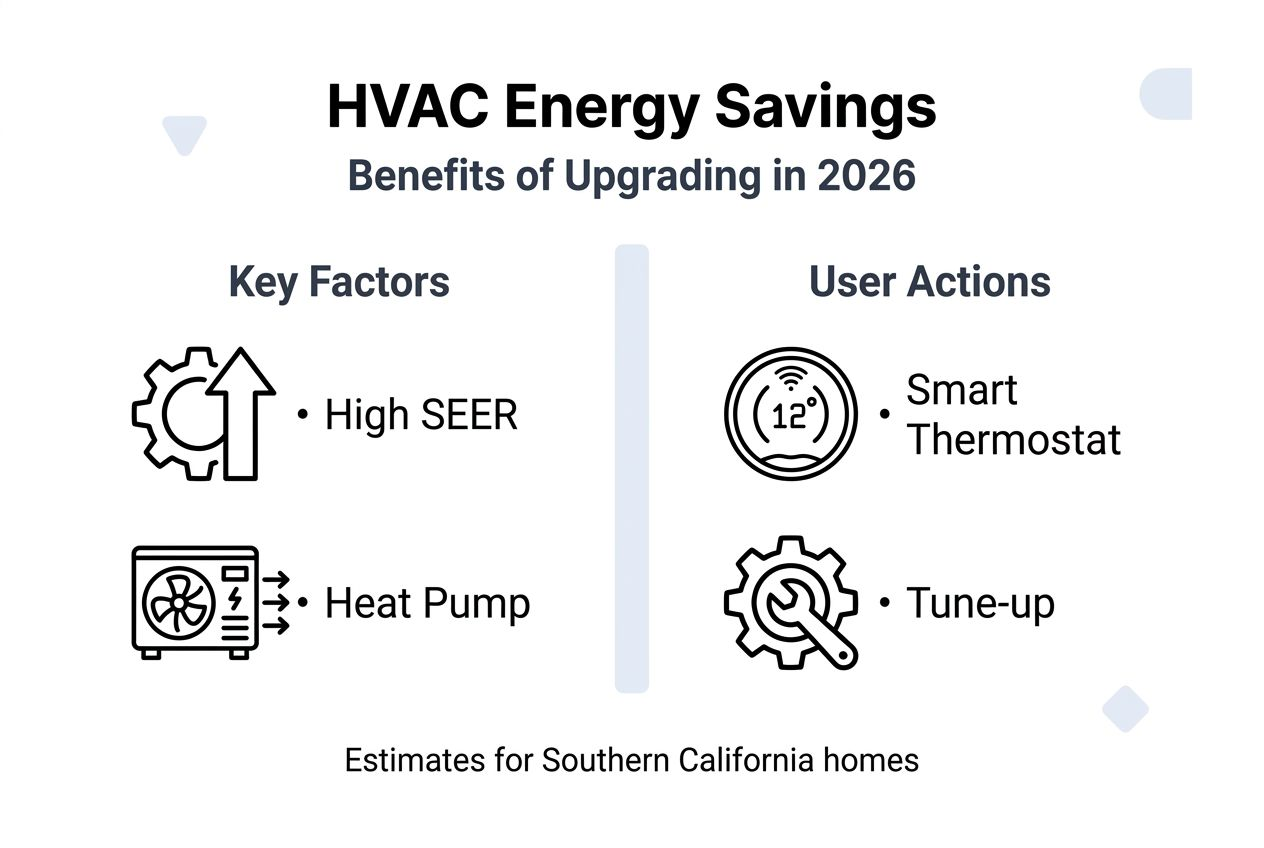
For Orange and Los Angeles County homeowners, average annual savings vary based on home size and usage patterns. A 1,500 square foot home might save $400 to $700 per year on cooling costs alone after upgrading to a high efficiency heat pump. Larger 2,500 square foot properties can see annual reductions of $800 to $1,200. These figures assume moderate electricity rates of $0.18 to $0.24 per kWh, typical for Southern California Edison customers. Homes with higher usage or peak rate plans may experience even greater savings.
Carbon footprint reduction represents another significant benefit. Energy efficient HVAC systems lower greenhouse gas emissions by reducing electricity demand from power plants. A typical upgrade prevents 2 to 4 tons of CO2 emissions annually, equivalent to planting 50 to 100 trees or taking a car off the road for several months. For environmentally conscious homeowners, this impact adds meaningful value beyond dollar savings.
| Scenario | Old System | New System | Annual Savings | Payback Period |
|---|---|---|---|---|
| 1,500 sq ft home | 10 SEER AC | 16 SEER Heat Pump | $500-$700 | 7-10 years |
| 2,500 sq ft home | 11 SEER AC | 18 SEER Variable Speed | $800-$1,200 | 6-9 years |
| 2,000 sq ft home | 12 SEER AC + Old Furnace | 17 SEER Dual Fuel System | $650-$900 | 7-11 years |
Beyond direct energy savings, homeowners benefit from:
- Increased home resale value from modern, efficient equipment
- Lower maintenance costs due to more reliable components
- Improved indoor air quality from better filtration and humidity control
- Enhanced comfort through more consistent temperatures and quieter operation
- Eligibility for utility rebates and federal tax credits reducing upfront costs
The HVAC energy savings 2026 landscape continues evolving as technology advances and energy costs rise. Investing in efficiency today protects against future rate increases and positions your home for decades of reduced operating expenses. If your current system requires frequent repairs, exploring HVAC repair services Irvine and surrounding areas can help determine whether repair or replacement offers better long term value.
Explore expert HVAC repair and upgrades in Orange and Los Angeles Counties
Transitioning from understanding energy efficient HVAC principles to implementing them in your home starts with connecting to qualified local professionals. Our team provides expert HVAC repair Irvine services and comprehensive support throughout Orange and Los Angeles Counties. Whether you need emergency repairs, system upgrades, or routine maintenance to preserve efficiency, our licensed technicians understand Southern California’s unique climate demands and deliver solutions tailored to your specific needs.
We specialize in energy efficient HVAC installations that maximize your savings while improving comfort. Our technicians assess your home’s heating and cooling requirements, recommend appropriately sized equipment, and ensure proper installation for peak performance. We also offer ongoing HVAC repair services Orange County residents trust to keep systems running efficiently year round. Regular tune-ups and prompt repairs prevent small issues from escalating into expensive failures, protecting your investment.
Scheduling service is simple and convenient. Our team works around your schedule to minimize disruption and delivers transparent pricing with no hidden fees. We recognize that understanding the HVAC maintenance role for homeowners means providing education alongside expert service. Let us help you achieve the energy savings and comfort improvements you deserve.
Frequently asked questions
What is the average lifespan of an energy efficient HVAC system?
Energy efficient HVAC systems typically last 15 to 20 years with proper maintenance and care. High quality variable speed models and heat pumps may reach the upper end of this range when serviced annually. Regular filter changes, professional tune-ups, and prompt repairs extend equipment life and preserve efficiency gains over time.
How do I know if my current HVAC system is energy efficient?
Check your system’s SEER rating, which should be 14 or higher for modern efficiency standards. Systems installed before 2006 likely fall below this threshold and consume significantly more energy. A professional assessment can measure actual performance and identify opportunities for improvement through upgrades or replacements.
What maintenance steps do energy efficient HVAC systems require?
Replace air filters every 1 to 3 months depending on usage and filter type. Schedule annual professional inspections to check refrigerant levels, clean coils, and verify proper operation. Seal and insulate ductwork to prevent air loss. Program your smart thermostat to optimize temperature schedules and reduce unnecessary runtime.
Can a smart thermostat significantly reduce HVAC energy costs?
Yes, smart thermostats can reduce energy consumption by up to 15% through automated scheduling and learning algorithms. They optimize temperature settings based on occupancy patterns and prevent energy waste when you’re away. Smart thermostats complement energy efficient HVAC equipment by ensuring the system runs only when necessary, maximizing overall savings.