
TL;DR:
- Water heaters consume 14 to 20% of household energy, making them the second-largest expense.
- Upgrading to heat pump or tankless models can save money through higher efficiency and rebates.
- Regular maintenance, including setting the temperature to 120°F and annual flushing, extends heater lifespan.
Your water heater is quietly working around the clock, and most homeowners in Orange and LA Counties have no idea it’s eating up 14 to 20% of their energy bill, making it the second-largest household energy expense after heating and cooling. Not your washer, not your oven. Your water heater. That misconception costs families real money every month, and the fix isn’t complicated once you understand what’s actually going on. This guide walks you through the main types of water heaters, what efficiency ratings actually mean, how to maintain your unit properly, and how to start saving money without sacrificing comfort.
Table of Contents
- Why water heaters matter in Southern California homes
- Types of water heaters and how they work
- Evaluating energy efficiency: what homeowners need to know
- Maintaining and setting your water heater for maximum performance
- Why efficient water heating starts with smarter choices
- Next steps: Get expert help upgrading or repairing your water heater
- Frequently asked questions
Key Takeaways
| Point | Details |
|---|---|
| Major energy impact | Water heaters typically use 14-20% of a home’s energy, making them a key area for savings. |
| Choose the right type | Tankless and heat pump heaters offer higher efficiency but require smart upfront choices. |
| Set it safely | Setting your heater to 120°F balances comfort, safety, and efficiency. |
| Maintain regularly | Annual maintenance prevents issues and can extend the life of your water heater. |
| Take advantage of incentives | Rebates and tax credits can substantially reduce the cost of upgrading to efficient models. |
Why water heaters matter in Southern California homes
Before diving into the types of heaters, let’s see just how important these appliances are in our region.
Hot water is involved in more of your daily routines than you probably realize. Showers, hand washing, running the dishwasher, doing laundry — all of it draws from your water heater. A typical household uses around 80 gallons of hot water per day, and that demand doesn’t take weekends off.
Here’s what surprises most people: water heaters account for 14 to 20% of a home’s total energy use, ranking second only to your HVAC system. Many homeowners assume their refrigerator or laundry appliances are the bigger culprits. They aren’t. Hot water is.
For Orange and LA County residents, this matters even more because of local energy rates. Southern California Edison and SoCalGas customers already pay some of the highest utility rates in the country. Even a moderately inefficient water heater can quietly add $20 to $40 extra to your monthly bill without any obvious sign that something is wrong.
Here’s what your water heater is doing every day:
- Heating water for 1 to 3 showers per person
- Supporting kitchen use including dishwashing and cooking
- Running your washing machine on warm or hot cycles
- Keeping stored water ready (if you have a tank model) even overnight
“Hot water demand in an average home doesn’t just spike in the morning — it runs in waves throughout the day, putting consistent pressure on your system’s efficiency.”
SoCal’s mild winters are actually a hidden advantage. Because your home doesn’t need to fight extreme cold, your water heater doesn’t work as hard to compensate for heat loss through pipes. But that also means wasted energy from an aging or poorly maintained unit is entirely avoidable, not a climate inevitability.
Proper water hose installation also plays a role in system performance. A loose or degraded connection can waste water and reduce pressure, which stresses your heater more than people expect.
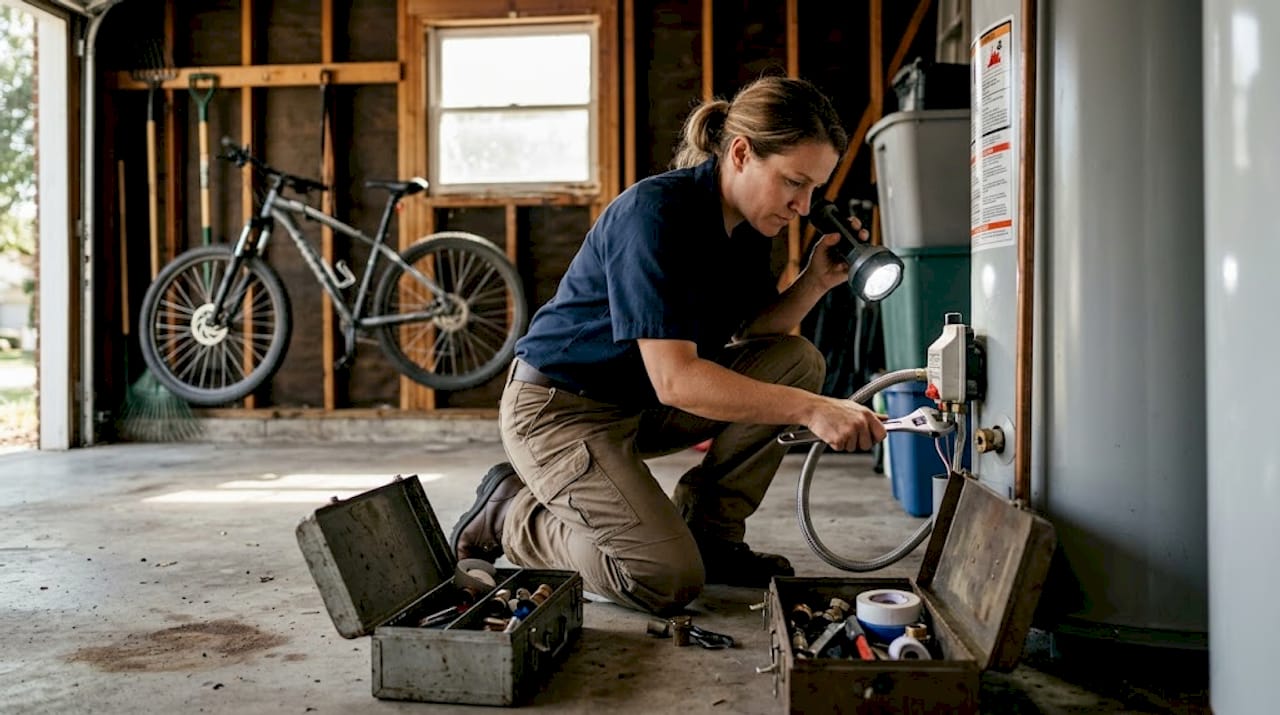
The bottom line is simple: paying attention to your water heater isn’t optional maintenance. In our region, it directly affects your comfort and what you pay every month.
Types of water heaters and how they work
With a sense of why water heaters are so important locally, let’s break down what options homeowners have.
Storage tank, tankless, and heat pump heaters each work differently and suit different households. Understanding how each type functions helps you make a better decision when it’s time to upgrade or replace.
1. Storage tank water heaters are the most common type in American homes. Cold water enters the bottom of an insulated tank and is heated by gas or electric elements. Hot water exits from the top when you turn on a faucet. They’re reliable and affordable upfront, but they lose heat even when you aren’t using them, a process called “standby loss.”
2. Tankless water heaters heat water on demand, only when you actually need it. There’s no storage tank, which eliminates standby loss entirely. They work well in smaller homes or for singles and couples. The tradeoff is a slightly lower flow rate during peak simultaneous use.
3. Heat pump water heaters pull heat from the surrounding air and transfer it to your water, similar to how a refrigerator works in reverse. They are far more efficient than standard electric models and perform especially well in California’s mild climate, where outdoor temperatures rarely drop low enough to reduce their effectiveness.
Here’s a quick comparison:
| Type | Upfront cost | Operating cost | Best for |
|---|---|---|---|
| Storage tank | Low | Moderate to high | Families, simple budgets |
| Tankless | Moderate | Low | Small homes, limited space |
| Heat pump | High | Very low | SoCal climate, long-term savings |
Choosing the right type isn’t just about price. It’s about matching the heater’s recovery speed, capacity, and efficiency to how your household actually uses hot water. If you’re unsure what to look for, reviewing water heater repair basics can give you a clearer picture of what different systems require.
For those with water hose repair needs in Orange County, fixing supporting infrastructure before upgrading your heater ensures you get the full benefit of any new unit.
Pro Tip: Families with high morning demand should prioritize recovery speed. A tank model with a fast recovery rate, or a gas tankless unit, will prevent those cold shower surprises when everyone’s getting ready at once.
Evaluating energy efficiency: what homeowners need to know
Now that you know your options, let’s compare how they stack up when it comes to efficiency and your wallet.
Efficiency isn’t just a marketing term. It’s measured using the Uniform Energy Factor (UEF), a standardized number that tells you how efficiently a water heater converts energy into usable hot water. The higher the UEF, the less energy wasted.
Here’s how the numbers break down across heater types:
| Type | UEF range | Energy waste |
|---|---|---|
| Standard storage (electric/gas) | 0.63 to 0.95 | Up to 40% waste |
| Gas tankless | 0.82 to 0.97 | Minimal waste |
| Heat pump | 3.3 to 4.1 | 70% less than standard electric |
A heat pump UEF of 3.3 to 4.1 means the unit delivers 330 to 410% efficiency by moving existing heat rather than generating it. That’s not a typo. For a family of four, switching from a standard electric tank to a heat pump model can save roughly $500 per year on energy costs alone.
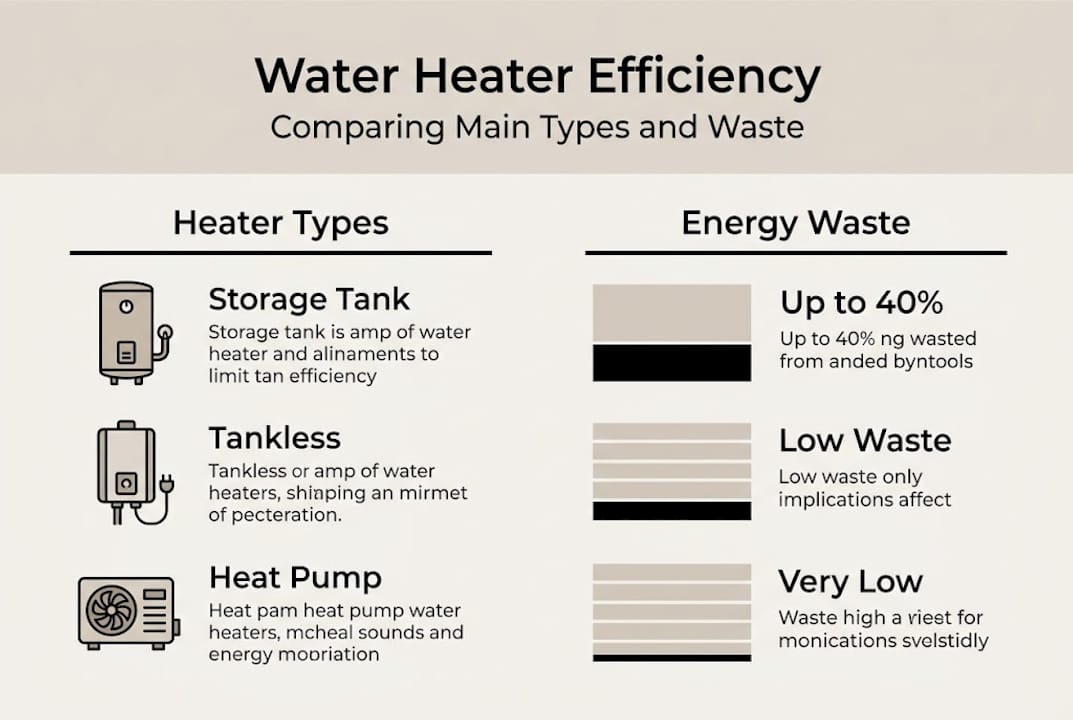
The upfront cost of a heat pump unit is higher, but the payback period in SoCal is typically 3 to 5 years. After that, you’re saving money every single month.
Ways to maximize your efficiency investment:
- Look for the Energy Star label when shopping
- Check for federal tax credits (up to $2,000 for heat pump water heaters in 2026)
- Ask your utility provider about local rebates before purchasing
- Compare the estimated annual operating cost listed on the EnergyGuide label
Pro Tip: Don’t skip the EnergyGuide label when shopping. It shows the estimated annual operating cost so you can compare models side by side on real cost, not just the sticker price. The water heater efficiency guide from Consumer Reports is a solid resource for making that comparison.
Maintaining and setting your water heater for maximum performance
With efficiency in mind, here’s how to keep your water heater in top shape for years.
The single most impactful setting on your water heater is temperature. Setting it to 120°F gives you water that’s hot enough for comfort and safety while keeping energy use in check. Every 10 degrees higher increases your energy cost by about 5% and raises the risk of scalding, especially for children and elderly family members. Many units come factory-set at 140°F, which is both wasteful and unnecessary for most homes.
Beyond temperature, here’s a simple annual maintenance routine:
- Flush the tank once a year to remove sediment buildup at the bottom. Sediment forces your heater to work harder and can shorten its life.
- Check the anode rod every two to three years. This metal rod prevents rust inside the tank. When it wears down, the tank corrodes.
- Inspect the pressure relief valve to make sure it releases properly. This is a safety component, not optional.
- Look for corrosion or moisture around fittings, the base, and connections.
- Check your drain hose connections as part of the inspection routine to catch leaks early. Guidance on drain hose maintenance tips can help you understand what to look for.
“A water heater that gets annual maintenance can last 12 to 15 years. One that gets ignored often fails by year eight.”
Pro Tip: If you hear popping or rumbling from your tank, that’s sediment cooking against the heating element. It’s not going to fix itself, and waiting will cost more in repairs or early replacement.
Warning signs that mean it’s time to call for service: lukewarm or inconsistent water temperature, visible rust in your hot water, unexplained spikes in your energy bill, or any water pooling near the base of the unit.
Why efficient water heating starts with smarter choices
Most homeowners only think about their water heater when it fails. That’s the most expensive time to act. Emergency replacements mean less time to research, no chance to shop for rebates, and no planning for installation logistics.
Here’s what we’ve seen repeatedly: the homeowners who save the most money are the ones who plan a replacement before they need one. They evaluate their current unit’s age, check the repair vs replacement math carefully, and time an upgrade to capture available tax credits or utility rebates.
SoCal’s mild climate makes heat pump and tankless models uniquely practical here. You’re not fighting brutal winters, so these systems operate near their peak efficiency year-round. That advantage doesn’t exist for homeowners in colder climates the same way it does for you.
The myth that efficient models cost too much ignores the five to ten year horizon. When you factor in federal credits, utility rebates, and lower monthly bills, the smarter choice is often the one that seemed expensive at first glance. Don’t wait for a failure to prompt that conversation.
Next steps: Get expert help upgrading or repairing your water heater
Ready to put these insights into practice in your home?
At Appliances Repair MD Tech, we serve Orange and LA County homeowners with water heater repair, installation, and maintenance services backed by licensed technicians who know these systems inside and out. Whether you’re weighing when to repair or replace your current unit, looking for guidance on how to replace appliance parts yourself, or want to understand what your appliance repair warranty covers before you commit, we’re here to help. Book an appointment online or call us to get a local expert on-site quickly.
Frequently asked questions
How much does a water heater affect my energy bill?
Water heaters account for 14 to 20% of a home’s total energy use, making them the second-largest expense after heating and cooling. Even modest efficiency improvements can lower your monthly bill noticeably.
What’s the best water heater temperature setting for efficiency and safety?
Set your thermostat to 120°F. At that level, every 10°F reduction saves roughly 5% in energy costs while also reducing the risk of scalding for your family.
Are heat pump or tankless water heaters worth it?
Yes, especially in Southern California. Heat pump and tankless models qualify for federal tax credits up to $2,000 and typically have lower operating costs that offset their higher purchase price within a few years.
How often should I maintain or replace my water heater?
Inspect your unit annually for sediment, corrosion, and pressure relief valve function. Storage tank models should be replaced every 8 to 12 years, while tankless and heat pump units often last longer with proper care.
What are the signs my water heater needs repair?
Lukewarm water, rumbling or popping noises, visible rust in hot water, leaks around the base, or a sudden jump in your energy bill are all warning signs that your unit needs professional attention soon.
Recommended
- How insulation boosts appliance efficiency by 25% in 2026
- What Is Water Heater Repair: Explained Clearly
- What is energy efficient HVAC: A 2026 homeowner’s guide
- What Is Energy Efficient Appliance and How It Reduces
- Fűtési rendszer vízkezelése: hatékonyság és hosszú élettartam – Kazán szerelő Kecskemét, Kazán szerviz Kecskemét, Kazáncsere Kecskemét