
TL;DR:
- Hiring certified HVAC professionals ensures legal compliance, safety, and warranty protection for homeowners dealing with systems in Orange County and Los Angeles. Proper calibration and maintenance by qualified technicians improve energy efficiency, prevent costly breakdowns, and extend system lifespan in local climate conditions. Engaging licensed, EPA-certified technicians provides peace of mind, reliable repairs, and long-term savings over DIY solutions.
When your air conditioner fails during a brutal Orange County heat wave, or your heater gives out on a cold January night in Los Angeles, the instinct to save money by searching YouTube for a fix is understandable. But that decision carries real risks. A single misstep with refrigerant lines, electrical wiring, or airflow calibration can turn a $300 repair into a $3,000 system replacement, void your warranty, or create safety hazards that your homeowner’s insurance won’t cover. This article breaks down exactly why certified professionals deliver better value, safer results, and long-term savings for homeowners across Orange County and LA County.
Table of Contents
- Why choose certified HVAC professionals?
- Comfort and energy efficiency: The homeowner advantage
- Preventing costly breakdowns and extending system life
- At-a-glance: Comparing DIY and professional HVAC repair
- The real long-term value of professional HVAC repair: What homeowners overlook
- Get expert HVAC repair you can trust in Orange County and LA
- Frequently asked questions
Key Takeaways
| Point | Details |
|---|---|
| Certified expertise matters | Hiring EPA and NATE-certified techs ensures safe, legal, and high-quality repairs every time. |
| Save on energy and bills | Professional HVAC repair optimizes your system for comfort and lower utility costs. |
| Prevent costly surprises | Skilled repairs minimize future breakdowns and extend the lifespan of your equipment. |
| Protect your home investment | Keeping repairs in expert hands helps maintain warranties and property value. |
Why choose certified HVAC professionals?
Not everyone who shows up with a toolbox is qualified to work on your HVAC system. In California, the difference between a certified technician and an uncredentialed one is not just about skill. It’s about legal compliance, safety, and your financial protection.
Two certifications stand out above all others in this industry. The first is EPA Section 608 certification, which is legally required for anyone who handles refrigerants like R-410A or R-22. The second is NATE certification (North American Technician Excellence), which goes beyond the legal minimum to verify advanced repair knowledge and hands-on competency. As the training standard confirms, EPA Section 608 certification is required for safe refrigerant handling, preventing environmental harm and ensuring legal compliance, while NATE certification validates advanced competency for better repairs.
Here’s what those certifications actually mean for you as a homeowner:
- Legal protection: California’s Air Resources Board enforces refrigerant regulations strictly. Hiring someone without EPA Section 608 certification exposes you to potential liability if illegal refrigerant venting occurs on your property.
- Safety assurance: Refrigerants under pressure are dangerous. Certified EPA certified HVAC techs know how to safely recover, recycle, and recharge refrigerant without risking injury or equipment damage.
- Warranty protection: Most manufacturers require licensed, certified technicians for covered repairs. A DIY repair or unlicensed service visit can immediately void your warranty, often costing thousands in uncovered future repairs.
- Accountability: Licensed professionals carry liability insurance. If something goes wrong during the repair, you’re covered. If an uncredentialed handyman causes damage, you’re on your own.
“Hiring a certified technician is not just a quality choice. It’s a legal one. In California, refrigerant handling without EPA Section 608 certification is a federal violation.”
Pro Tip: Before any technician starts work in your home, ask to see their EPA Section 608 card and any state contractor’s license. A legitimate pro will have these on hand and will not hesitate to show you. Understanding HVAC refrigerant safety can also help you ask better questions before booking service.
Comfort and energy efficiency: The homeowner advantage
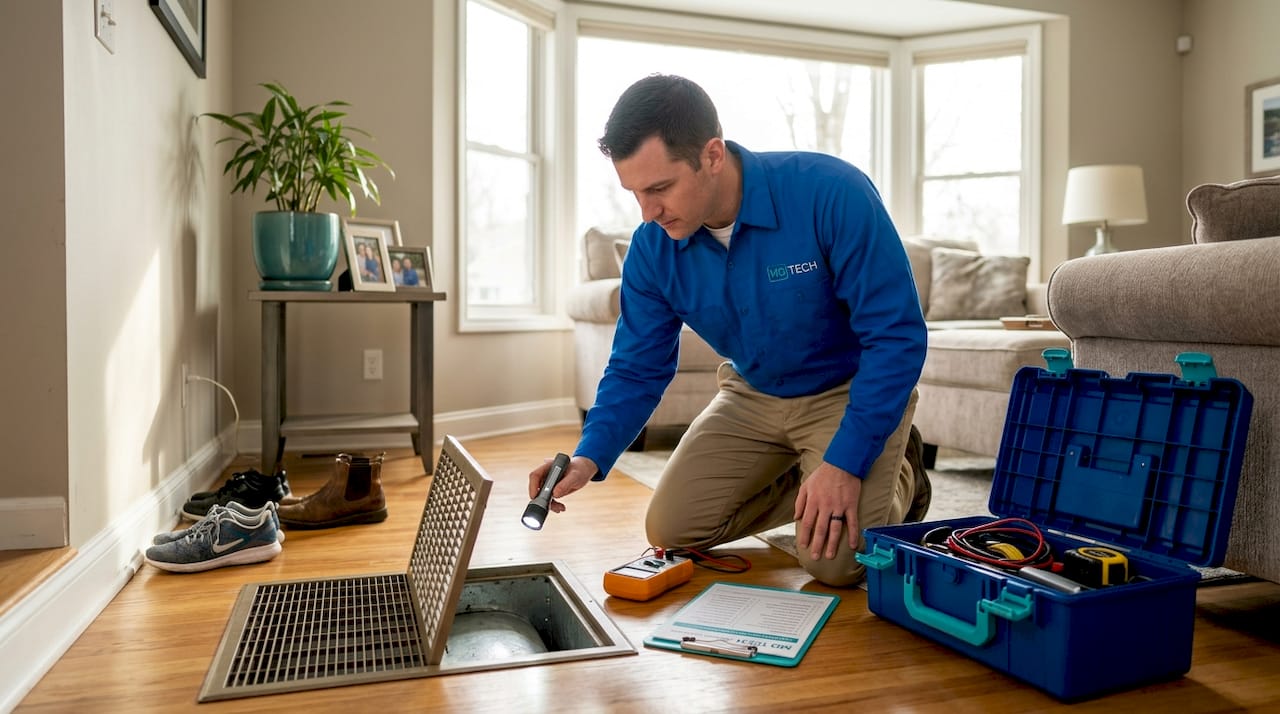
Here’s something most homeowners don’t realize: a poorly calibrated HVAC system can cost you hundreds of dollars a year in wasted energy while still leaving rooms too hot or too cold. The problem isn’t always a broken part. Sometimes it’s a system running out of balance, with incorrect refrigerant charge, dirty coils, or blocked airflow reducing performance by 20 to 30 percent.
Southern California’s climate creates unique pressure on home HVAC systems. Orange County and LA County homeowners deal with hot, dry summers, periods of high humidity near the coast, and surprisingly cold winter nights inland. These conditions demand a system that’s tuned specifically for local weather patterns, not just set to factory defaults.
Certified technicians understand the importance of HVAC for home comfort and adjust your system’s thermostat calibration, refrigerant levels, and airflow for your home’s specific layout and local climate. Certified technicians enhance system performance and efficiency in measurable ways that unlicensed repairs simply cannot match.
Here’s a numbered breakdown of the real savings you can expect after professional service:
- Immediate energy reduction: A properly charged and calibrated system uses 10 to 15 percent less electricity compared to a neglected one, starting with your first utility bill after service.
- Lower peak-hour costs: In Southern California, summer electricity rates spike during peak hours. An efficient system runs shorter cycles, keeping you out of the highest billing tiers.
- Fewer emergency calls: Systems that receive regular professional service are less likely to fail mid-summer when replacement parts are backordered and service windows are weeks out.
- Extended equipment life: Every year of added life on a $5,000 to $10,000 HVAC system is real money saved. Proper calibration reduces mechanical stress on the compressor, the most expensive single component in your system.
- Better indoor air quality: Certified techs check and clean evaporator coils, drain lines, and filters, reducing allergens and humidity issues that plague poorly maintained systems.
For Orange County and LA County homes specifically, scheduling annual HVAC inspections before the summer cooling season and again in the fall before heating season makes a measurable difference. These HVAC tune-ups catch small problems before they become expensive emergencies.
Pro Tip: Schedule your HVAC tune-up in March before summer heat arrives and again in October before temperatures drop. Booking outside peak season also means shorter wait times and often lower service rates.
Preventing costly breakdowns and extending system life
The biggest hidden cost of skipping professional HVAC repair isn’t the repair you avoid paying for today. It’s the cascading problems that follow when an issue is missed, misdiagnosed, or poorly fixed.
Homeowners who rely on DIY repairs or uncredentialed service often face a predictable set of problems:
- Repeated breakdowns: Fixing symptoms without diagnosing root causes leads to the same failure recurring within weeks or months.
- Voided warranties: Most HVAC manufacturers, including Carrier, Trane, and Lennox, require documented service by licensed professionals to maintain warranty coverage.
- Missed failure signs: A trained tech spots a failing capacitor, early compressor wear, or a cracked heat exchanger before these become full system failures. Untrained eyes simply won’t catch them.
- Insurance claim denials: If an HVAC-related incident such as a refrigerant leak, electrical fire, or water damage from a blocked condensate drain causes property damage, your insurer may deny the claim if an unlicensed technician was involved.
- Compounding repair costs: A $150 refrigerant recharge done incorrectly that overcharges the system can destroy a $1,200 compressor within a season.
NATE-certified professionals complete higher quality repairs, reducing repeat issues because their training is specifically designed to address root causes, not just surface symptoms.
Understanding common HVAC repair mistakes helps you see why credentials matter, but working with insured HVAC pros gives you financial protection if anything goes wrong during the service call.
| Factor | DIY repair | Professional repair |
|---|---|---|
| Average repair cost | $100 to $400 initially | $150 to $600 but comprehensive |
| Repeat breakdown risk | High (symptom-focused) | Low (root cause resolved) |
| Equipment lifespan | Shortened by 3 to 5 years | Extended by proper care |
| Warranty status | Often voided | Maintained with documentation |
| Insurance coverage | May be denied | Fully covered with licensed tech |
| Legal refrigerant handling | Non-compliant risk | EPA compliant |
Pro Tip: Keep a service log for your HVAC system. Document every inspection, repair, and part replacement with the technician’s name, certification number, and date. This protects your warranty and adds value if you ever sell your home.
At-a-glance: Comparing DIY and professional HVAC repair
For a quick reference before you make your decision, here’s a side-by-side look at the most critical factors separating DIY attempts from professional service.
| Category | DIY approach | Certified professional |
|---|---|---|
| Safety | High risk of injury or refrigerant exposure | Trained for safe handling and procedures |
| Cost (long-term) | Often higher due to repeat repairs | Lower due to comprehensive diagnosis |
| Energy efficiency | Rarely improved, often worsened | Optimized for Southern California conditions |
| Legal compliance | Typically non-compliant | Fully EPA and California compliant |
| Home comfort | Inconsistent results | Reliable, calibrated performance |
| Peace of mind | Uncertainty about fix quality | Confidence in certified workmanship |
The callout here is important: only EPA certified and licensed professionals can legally handle refrigerants, comply with warranty standards, and deliver the repair quality your system needs. EPA certification is required for safe refrigerant handling, and NATE certification means better repair outcomes, period.
No amount of online tutorials changes the legal exposure or the technical skill gap involved in modern HVAC systems. Today’s units are increasingly connected to smart home controls, variable-speed compressors, and multi-zone setups that require specialized diagnostic tools costing thousands of dollars. A professional brings not just knowledge, but the right equipment to do the job correctly the first time.
The real long-term value of professional HVAC repair: What homeowners overlook
Here’s an honest perspective from working with homeowners across Orange County and LA County: the biggest mistake we see is not skipping the repair entirely. It’s underestimating what a single bad repair can set in motion.
Most homeowners think of HVAC service as a one-time transaction. You call someone, they fix the thing making the noise, you pay, and you move on. But your HVAC system is more like a chain. When one link is repaired incorrectly, the stress shifts to the next weakest component. That’s why we often see homeowners who’ve had three or four “repairs” in two years still dealing with a broken system and no warranty left to protect them.
The DIY approach has another trap that rarely gets discussed: legal and insurance exposure. If an unlicensed person handles refrigerant on your property and there’s a leak that contaminates the environment, the property owner can face fines. If a poorly repaired system causes an electrical fire or a carbon monoxide event, and your insurer discovers the last service was not by a licensed contractor, the claim can be denied entirely.
There’s also the home value angle. Buyers in Southern California are increasingly asking for HVAC service documentation during escrow. A well-documented service history from licensed technicians adds measurable value to your home’s sale. A system with gaps in its service record, or worse, evidence of DIY work, raises red flags.
The peace of mind factor is real too. When a certified technician completes your repair, you’re not spending the next three months wondering if the fix held. You know the refrigerant charge is correct, the electrical connections are secure, and the system is running within manufacturer specifications. That certainty has genuine value.
Focusing on cutting HVAC energy use over time is only possible when your system is properly maintained by professionals who understand how Southern California’s climate demands interact with your specific equipment. The homeowners who see the biggest long-term savings are the ones who treat HVAC service as preventive maintenance, not emergency rescue.
Get expert HVAC repair you can trust in Orange County and LA
If the evidence in this article points to one conclusion, it’s this: professional HVAC repair isn’t just better in theory. It’s better for your wallet, your safety, your warranty, and your daily comfort.

Our team at Appliances Repair MD Tech serves homeowners across Orange County and Los Angeles County with licensed, EPA certified technicians who are ready to diagnose and repair your system correctly the first time. Whether you need a professional HVAC repair service after a sudden breakdown or want to schedule a preventive inspection before the next heat wave, we’re available and local. Homeowners throughout the region trust our Orange County HVAC repair team for fast response, transparent pricing, and certified workmanship that protects your home investment. Explore our HVAC maintenance tips and schedule your appointment today to lock in comfort and savings all year long.
Frequently asked questions
What certifications should my HVAC technician have?
Your technician should have EPA Section 608 and NATE certifications, which are required for safe refrigerant handling, legal compliance, and verified repair competency.
Will professional HVAC repair lower my energy bills?
Yes. Certified technicians enhance system performance and efficiency, which directly reduces how much electricity your system uses each month.
How often should I schedule professional HVAC maintenance?
Schedule professional inspections at least once a year, though twice a year (spring and fall) is ideal for homes in Southern California’s demanding climate.
Does professional repair protect my equipment warranty?
Yes. Most HVAC manufacturers require documented service by a licensed technician to keep your warranty valid, so skipping the pro can cost you far more later.