
TL;DR:
- Most homeowners in Southern California neglect preventative home care, leading to costly repairs and system failures. Regular inspections, cleaning, and scheduled maintenance of appliances and HVAC systems can extend their lifespan, improve efficiency, and save money. Developing a consistent routine and seeking professional help ensures your home systems operate reliably throughout every season.
Most homeowners in Orange and Los Angeles counties don’t think about their refrigerator until it stops cooling or their HVAC until it stops blowing cold air on a 95-degree August day. That reactive habit is expensive. Planned maintenance and inspections prevent breakdowns and reduce repair costs, rather than waiting for something to fail. This guide walks you through exactly what preventative home care looks like in practice, why Southern California conditions make it even more critical, and how to build a simple routine that protects every major system in your home.
Table of Contents
- What is preventative home care and why does it matter?
- Key preventative steps for major home appliances
- Preventative HVAC care: Keeping your cool (and warmth)
- How preventative care saves money, time, and stress
- What most homeowners get wrong about preventative care
- Your next step: Get expert help for preventative home care
- Frequently asked questions
Key Takeaways
| Point | Details |
|---|---|
| Proactive care saves money | Regular inspections and cleaning can prevent expensive, unexpected repair bills. |
| Filter replacement is crucial | Clogged or dirty filters are the leading cause of HVAC and appliance issues. |
| Seasonal maintenance is key | Plan professional and DIY upkeep before high-use periods to boost comfort and avoid breakdowns. |
| Local factors affect schedules | Pet hair, dust, and climate mean Orange and LA homeowners may need to check and clean more frequently. |
| Expert help adds value | Professional services spot hidden issues, optimize performance, and provide long-term peace of mind. |
What is preventative home care and why does it matter?
Preventative home care is the practice of regularly inspecting, cleaning, and servicing your appliances and home systems on a scheduled basis before anything goes wrong. It is systematic, not reactive. You are not waiting for the dryer to squeal or the AC to freeze up. You are checking on things while they still work well.
This approach applies to every major system in your home: refrigerators, washers, dryers, dishwashers, ovens, and HVAC. According to our preventive maintenance guide, most homeowners overlook the simplest tasks, such as cleaning refrigerator coils or checking door seals, until a breakdown makes them wish they had not.
For homes in Orange and LA counties specifically, local factors raise the stakes. Coastal salt air near Huntington Beach or Long Beach accelerates corrosion on metal components. Inland areas like Riverside or Pomona deal with heavy dust and dry air that clogs filters faster than average. Homes with pets add pet hair into the equation, which clogs coils and vents noticeably faster than homes without.
Core preventative actions include:
- Inspecting visible components for wear or damage
- Cleaning filters, coils, drains, and vents
- Replacing worn seals, hoses, or belts before they fail
- Scheduling professional tune-ups before peak-demand seasons
- Tracking maintenance dates to stay on schedule
The financial case for preventative care is strong. Emergency repairs almost always cost far more than routine upkeep, and you can save on costly repairs by simply staying ahead of the wear cycle. Treat your home systems the same way you treat your car: regular oil changes are cheaper than an engine replacement.
| Approach | Typical trigger | Average cost | Stress level |
|---|---|---|---|
| Reactive repair | System fails completely | $300 to $1,500+ | High |
| Preventative maintenance | Scheduled calendar date | $50 to $200 | Low |
| Replacement (ignored too long) | Irreparable damage | $800 to $3,000+ | Very high |
The table makes it clear. Staying proactive is not just about comfort. It is about keeping real money in your pocket year after year.
Key preventative steps for major home appliances
Once you understand why preventative care matters, the next step is building an appliance maintenance calendar. This does not need to be complicated. A simple reminder in your phone or a printed sheet on the fridge door can keep you on track across every major appliance.
Following proven appliance maintenance steps makes the whole process feel manageable rather than overwhelming. Think of it as a series of small, recurring tasks rather than one massive annual chore. Here is a practical starting framework for the most common appliances in Southern California homes.
Refrigerator: Clean condenser coils every 6 to 12 months. In dusty areas like the Inland Empire or near busy roads, clean them every 6 months. Inspect the door gaskets (the rubber seals) monthly. A simple test: close the door on a piece of paper and pull it out. If it slides out easily, the seal is failing and needs replacement. Check the water line and filter every 6 months if you have a water dispenser.
Washer and dryer: Inspect washer hoses every 6 months for bulging, cracking, or moisture at connections. Replace rubber hoses with braided steel hoses every 3 to 5 years regardless of how they look. Clean the dryer lint trap after every single load, no exceptions. Clean the dryer vent duct at least once a year. A clogged dryer vent is one of the leading causes of house fires in California.
Dishwasher: Clean the filter trap monthly. Run an empty hot cycle with a cup of white vinegar every 2 to 3 months to prevent mineral buildup, which is a real issue in areas with hard water like parts of Los Angeles and Orange counties. Inspect the spray arms for clogged holes quarterly.
Oven and range: Run the self-clean cycle 2 to 4 times a year. Inspect burner igniters and oven door seals every 6 months. Replace worn seals immediately because a loose oven seal wastes energy and affects cooking temperatures. These maintenance tips for longevity are small actions that add years to your appliances.
- Set up a recurring maintenance calendar (monthly, quarterly, and annual tasks)
- Start with the appliances you use most heavily every single day
- Do a quick visual check of hoses, seals, and filters each month
- Run deeper cleaning tasks quarterly
- Schedule a professional inspection annually for complex systems
Pro Tip: Set phone reminders for quarterly checks the same day you pay quarterly bills. Linking maintenance to an existing habit makes it much harder to forget.
For those looking to truly extend appliance lifespan, consistency is the key variable. Doing a task once does not protect your appliances. Doing it on schedule, every time, is what delivers results.
| Appliance | Task | Frequency | Extra note for OC/LA homes |
|---|---|---|---|
| Refrigerator | Clean condenser coils | Every 6 months | More often near dusty areas |
| Washer | Inspect water supply hoses | Every 6 months | Replace rubber hoses with steel braided |
| Dryer | Clean lint trap | After every load | Annual full duct cleaning required |
| Dishwasher | Clean filter trap | Monthly | Vinegar cycles for hard water areas |
| Oven | Inspect door seals | Every 6 months | Run self-clean cycle quarterly |
Preventative HVAC care: Keeping your cool (and warmth)
Appliance care is only half of the picture. In Southern California, your HVAC system works harder than almost anywhere else in the country. Sweltering summers in the San Fernando Valley, Santa Ana wind events, and dry winter spells all push your heating and cooling system to its limits. That makes preventative HVAC care one of the most important investments a homeowner in Orange or LA county can make.
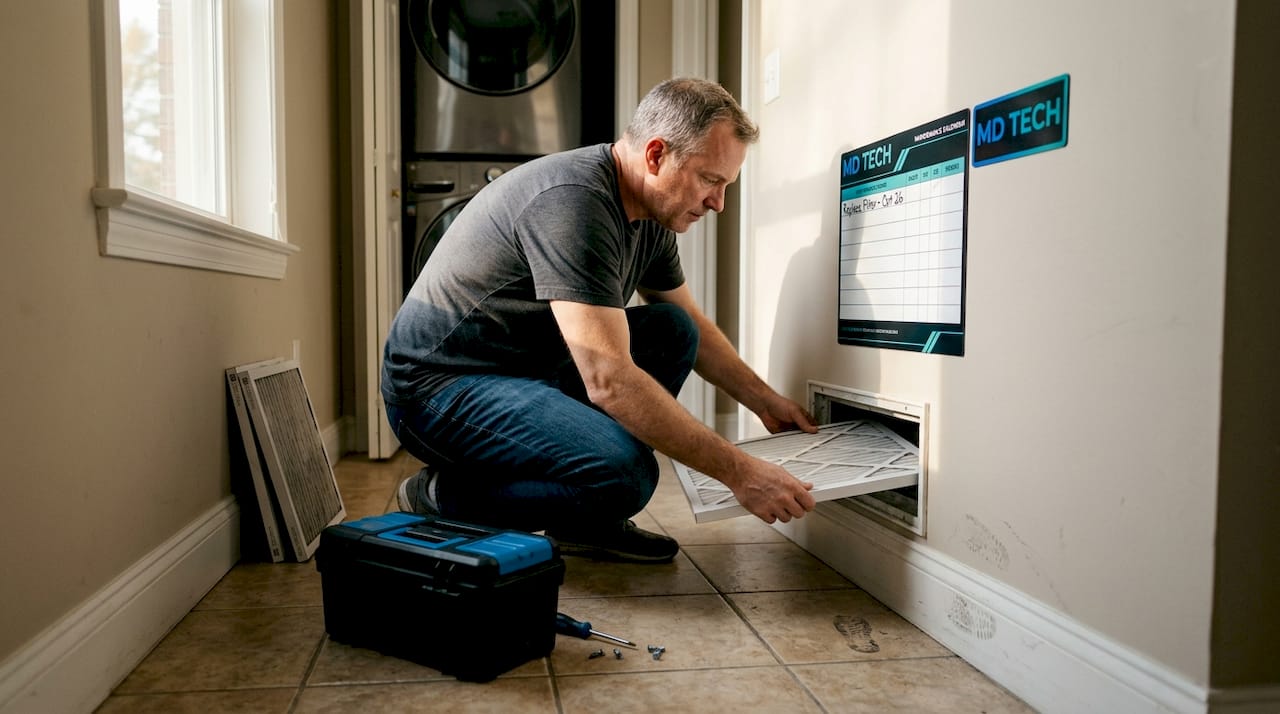
The single most impactful task is also the simplest: keep your filters clean. Dirty filters reduce airflow and efficiency and can lead to premature system failure. A clogged filter forces your HVAC motor to work harder, which burns more energy, raises your utility bill, and shortens the life of your system.
What good HVAC preventative care looks like:
- Replace or clean air filters every 1 to 3 months
- Inspect and clean evaporator and condenser coils annually
- Clear the condensate drain line to prevent moisture backups and mold
- Check refrigerant levels (professional task only)
- Inspect ductwork for leaks or disconnections every 2 to 3 years
- Clean vents and grilles quarterly to maintain airflow
- Test your thermostat accuracy seasonally
“Inspecting and cleaning filters and coils, checking condensate drains, and having a professional tune-up scheduled before peak heating and cooling demand are all core components of HVAC preventative care.” Department of Energy
Scheduling matters as much as the tasks themselves. Book your professional HVAC tune-up in March or April before summer cooling demand peaks, and again in September or October before winter heating begins. Technicians are far easier to schedule during shoulder months, and you will not be waiting days during a July heat wave for someone to show up.
Maintenance schedules for Orange and LA homes need to account for local conditions. Homes near the coast deal with higher humidity and salt exposure. Homes in the foothills deal with wildfire smoke seasons that clog filters at a dramatically accelerated pace. During fire season, inspect your HVAC filter weekly rather than monthly.
Filter replacement intervals depend on conditions such as pets, dust levels, and frequency of use. A single-person home with no pets in a low-dust area might get away with replacing filters every 3 months. A family home with two dogs in a high-dust neighborhood in the Inland Empire? Every 4 to 6 weeks is not overkill, it is smart.
Warning signs that your HVAC needs attention right now include: uneven cooling or heating across rooms, musty or burning smells from vents, weak airflow despite a clean filter, and unusual cycling patterns (shutting on and off more frequently than normal). Review top maintenance tips to learn how to address these signals before they escalate.
Pro Tip: Place a filter replacement date label directly on the filter frame each time you change it. One glance tells you exactly when it was last replaced without hunting for a calendar or a receipt.
How preventative care saves money, time, and stress
With the practical steps in place, it is worth stepping back and looking at the bigger financial and emotional rewards of this approach. The numbers are real, and they add up fast.
Emergency repairs almost always cost 3 to 5 times more than the equivalent preventative service. A $75 HVAC tune-up that catches a failing capacitor saves you a $400 to $600 emergency call during a July heat wave, when technicians charge premium rates for same-day service. That comparison alone makes the math obvious.
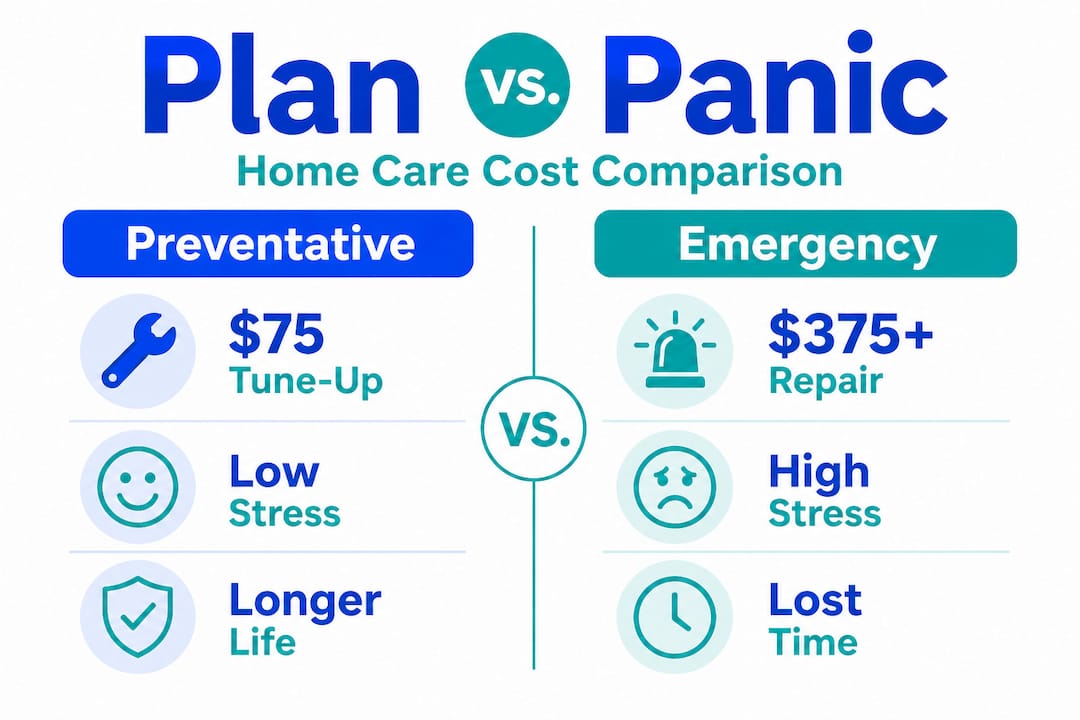
Planned maintenance and inspections reduce repair costs and protect the lifespan of major systems. Appliances that receive regular care routinely last 20 to 30 percent longer than neglected units. A refrigerator designed for 12 to 15 years of service may reach 18 or 20 years with consistent coil cleaning and seal maintenance. A well-maintained HVAC system can outlast a neglected one by 5 to 8 years.
The real benefits stack up across five categories:
- Lower repair bills: Small fixes are always cheaper than emergency replacements
- Reduced energy costs: Clean, well-tuned systems use significantly less electricity
- Extended equipment life: Every well-maintained system lasts longer than a neglected one
- Fewer disruptions: No breakdowns during holiday gatherings or summer heat waves
- Greater peace of mind: You know your systems are in good shape before they become a problem
Knowing how to schedule maintenance to extend appliance life is genuinely one of the most practical financial skills a homeowner can develop. It turns a stressful, unpredictable expense into a manageable, predictable line in your household budget.
Pro Tip: Track your maintenance tasks in a simple home binder or digital note. Include dates, parts replaced, and the technician’s name. This history increases resale value and helps new owners or technicians understand your home’s condition at a glance.
What most homeowners get wrong about preventative care
Here is an honest take from working with homeowners across Orange and LA counties: most people treat maintenance as a one-time checkbox rather than an ongoing relationship with their home. They clean the coils once, change a filter in January, and then consider themselves done for the year. That mindset is what leads to surprises in August.
Preventative care is not a single action. It is a rhythm. Your home’s needs shift with the seasons, with your lifestyle, and with the local environment. A checklist from a generic home improvement magazine was not written for a home near the coast in Laguna Beach or a property in the Antelope Valley where dust storms are a regular occurrence.
The why maintenance matters conversation is really about awareness, not just task completion. Homeowners who stay engaged with their systems notice things: a slightly longer cycle on the dryer, a refrigerator that runs longer at night, an HVAC that takes a few extra minutes to reach the set temperature. These subtle changes are your home telling you something is off. Most people tune them out.
Filter replacement intervals depend on your specific conditions, and even a well-intentioned homeowner following a standard schedule can fall behind during heavy-use periods or after a wildfire smoke event. The answer is not stricter adherence to a fixed calendar. It is developing the habit of actually looking at your filter, your coils, and your hoses every month, even if a full replacement is not yet due.
The homeowners who get this right treat their maintenance routine the way a good chef treats a kitchen: they inspect before they cook, they clean as they go, and they do not wait for a problem to tell them something needs attention. That adaptive mindset, matched with consistent scheduling, is the real secret to keeping Southern California homes running well year after year.
Your next step: Get expert help for preventative home care
Understanding what to do is step one. Having the right people to back you up is step two.
At Appliances Repair MD Tech, we work with homeowners across Orange and Los Angeles counties to take the guesswork out of preventative maintenance. Whether you need a professional tune-up for your HVAC system, expert care for your Samsung appliances, or guidance on building the right HVAC maintenance routine for California homeowners, our licensed technicians are ready to help. We serve dozens of cities across both counties, offer online booking, and bring real local expertise to every appointment. Don’t wait for a breakdown to call us. Schedule a preventative check today and keep your home running the way it should.
Frequently asked questions
How often should I replace my HVAC air filter in Southern California?
Generally, replace or clean HVAC filters every 1 to 3 months, but more often if you have pets, allergies, or heavy dust in your area. Dirty filters reduce airflow and efficiency and can accelerate wear on the entire system.
What’s the most common preventative step for appliances?
Cleaning or inspecting appliance filters, hoses, and seals on a regular schedule is the most critical routine step. Clean filters and inspected coils are the foundation of any effective appliance maintenance plan.
Can preventative maintenance really save me money?
Yes, significantly. Planned maintenance reduces repair costs and extends the effective life of both appliances and HVAC systems, keeping emergency service calls and full replacements off your bill.
What happens if I skip professional HVAC tune-ups?
Skipping tune-ups increases the chances of unexpected breakdowns and leads to less efficient operation. Professional tune-ups scheduled before peak demand seasons catch small problems before they become expensive failures.
Recommended
- Extend Your Appliance Lifespan: Proven Ways to Save
- Essential guide to preventive maintenance for homeowners
- Preventive maintenance saves homeowners up to 5x in costs
- Why schedule maintenance to save money and extend life
- 7 Key Benefits of HVAC Preventative Maintenance for Homeowners – Lucas Air Conditioning and Heating
- Understanding pipe leaks: Prevent costly home repairs