
TL;DR:
- Homeowners insurance does not cover appliance breakdowns caused by wear and tear. A home warranty plan helps pay for repairs or replacements of major home systems and appliances. Proper understanding of coverage, exclusions, costs, and maintenance is essential to maximize the plan’s value.
Your homeowners insurance policy covers a lot, but here’s what surprises most Orange and Los Angeles County residents: it won’t pay a dime when your refrigerator stops cooling or your washer floods mid-cycle. Those failures happen every day, and the repair bills can hit $400 to $1,500 without any warning. A home warranty plan fills that gap by covering repair and replacement costs for your major home systems and appliances. This guide breaks down exactly how these plans work, what they cover, what they don’t, what they cost, and how to decide if one makes sense for your household.
Table of Contents
- What is a home warranty plan and how does it work?
- What does a home warranty actually cover?
- What’s NOT covered: exclusions and limitations to watch for
- What does a home warranty cost? Understanding fees, premiums, and your real out-of-pocket expenses
- How do I decide if a home warranty plan is right for my home?
- What most homeowners miss about warranty plans
- Protect your appliances and keep repair costs low
- Frequently asked questions
Key Takeaways
| Point | Details |
|---|---|
| Covers wear-and-tear failures | Home warranty plans pay for repairs or replacements of covered systems and appliances when they break from normal use. |
| Limits and exclusions apply | Most plans do not cover pre-existing issues, improper maintenance, or every component of an appliance or system. |
| Out-of-pocket costs remain | Beyond the yearly or monthly premium, service call fees, deductibles, and caps may apply to every claim. |
| Best as a budgeting tool | Using a home warranty is most effective for planning repair costs, not as a total solution for household breakdowns. |
| Read policy details carefully | Always review what your plan covers and excludes to avoid claim surprises and maximize its value. |
What is a home warranty plan and how does it work?
Think of a home warranty plan as a subscription-based safety net for the mechanical parts of your home. Unlike homeowners insurance, which protects you from damage caused by fires, storms, or theft, a warranty plan focuses on everyday breakdowns. As Experian explains, a home warranty plan is a service contract that helps pay for repairing or replacing covered home systems and appliances when they fail due to normal wear and tear.
That distinction matters enormously. When your HVAC system quits on a 90-degree day in Anaheim, your insurance company isn’t going to help. A home warranty company will send a licensed technician and cover most of the repair cost, minus a small service fee.
How the claim process works:
- You notice a covered appliance or system has stopped working correctly.
- You contact your warranty provider by phone or through their online portal to file a claim.
- The provider dispatches one of their approved technicians to your home, usually within 24 to 72 hours.
- You pay a service fee (also called a trade call fee) directly to the technician when they arrive. This fee typically ranges from $75 to $125.
- The technician diagnoses the problem and documents the failure to the warranty company.
- The warranty company reviews the claim and approves or denies coverage based on plan terms, then pays the technician directly for covered repairs or replacements.
- If costs exceed your plan’s cap, you pay the difference out of pocket.
| Feature | Home warranty plan | Homeowners insurance |
|---|---|---|
| What it covers | Mechanical breakdowns from wear and tear | Damage from fire, theft, storms, or disasters |
| Trigger for coverage | Normal aging and use | Sudden and accidental damage or loss |
| Monthly cost | $30 to $70 average | $100 to $200+ average |
| Service fee per claim | $75 to $125 | Deductible, usually $500 to $2,000 |
| Covers appliances? | Yes | No |
One of the biggest misconceptions homeowners carry is that their insurance policy is a full safety net. It isn’t. Insurance is designed for disasters. A warranty plan handles the slow, predictable cost of things wearing out.
You can learn more about how a warranty in repairs actually protects you and how appliance warranties differ from manufacturer guarantees before you sign anything.
Pro Tip: Treat a home warranty plan as a budgeting tool, not a guarantee. It smooths out unpredictable repair costs into a known monthly expense, which makes financial planning much easier for homeowners on a fixed income or tight budget.
What does a home warranty actually cover?
Coverage depends almost entirely on which plan tier you choose and which provider you go with. Plans commonly split coverage into systems, appliances, or both, but the exact items and limits vary by provider and plan tier.
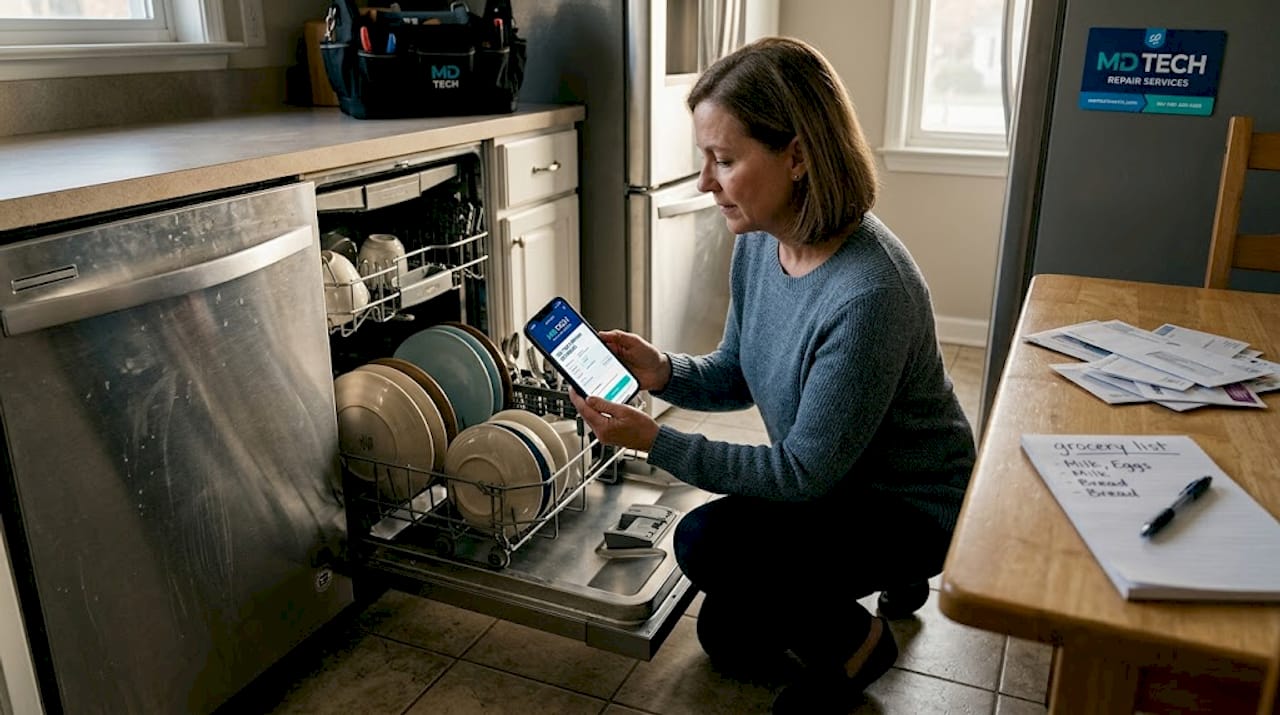
Most standard plans fall into three categories: systems-only plans (covering HVAC, plumbing, and electrical), appliance-only plans (covering kitchen and laundry appliances), and combination plans that bundle both. Combination plans cost more but give you the widest protection.
Typical covered items:
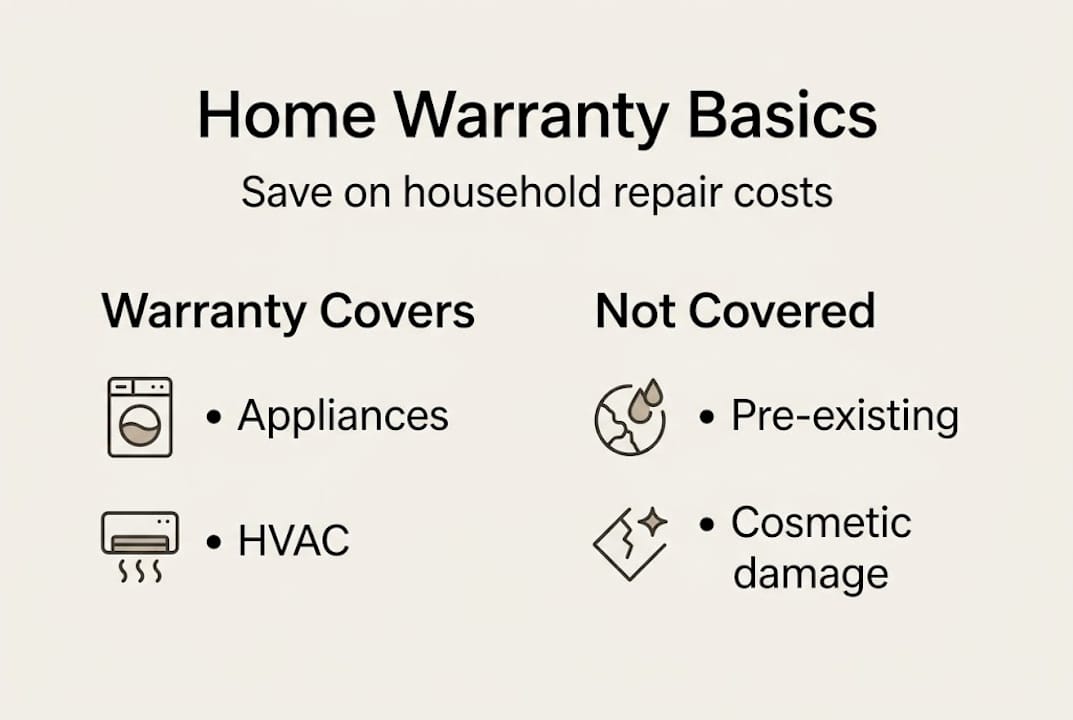
- Major systems: Heating and cooling (HVAC), ductwork, electrical panels and wiring, plumbing systems, water heaters
- Kitchen appliances: Built-in dishwashers, built-in microwaves, refrigerators, ovens and ranges, garbage disposals
- Laundry appliances: Washers and dryers
- Common add-ons: Pool and spa equipment, guest homes, additional refrigerators, well pumps, septic systems, roof leak repair
| Category | Usually included | Usually an add-on |
|---|---|---|
| HVAC | Central heat and air, ductwork | Mini-split systems |
| Plumbing | Interior supply lines, toilets, faucets | Outdoor plumbing, slab leaks |
| Electrical | Panels, switches, outlets | Solar systems |
| Kitchen | Refrigerator, oven, dishwasher | Ice maker (often excluded) |
| Laundry | Washer and dryer | Standalone freezers |
| Other | Water heater | Pool/spa, guest unit |
Important limitation: Even when your refrigerator is covered, specific components like the ice maker or water dispenser are frequently excluded from basic plans. Always read the item-level breakdown, not just the category listing, before you assume you’re protected.
Here’s a detail that catches homeowners off guard. Your plan might cover the refrigerator as a unit but exclude its ice maker because it’s listed separately in the fine print. This is why understanding service warranty basics before signing saves you real frustration later.
The same applies to HVAC. Some plans cover the central air unit but won’t touch the refrigerant recharge if the system was already low before you enrolled. Knowing how to check repair coverage for your specific appliances before a breakdown gives you a serious advantage.
It’s also worth remembering that warranty length doesn’t always tell the whole story about how strong your protection actually is. A three-year plan with narrow exclusions can leave you worse off than a one-year plan with broad coverage.
What’s NOT covered: exclusions and limitations to watch for
Understanding exclusions is just as important as knowing what’s covered. Consumer Reports notes that common limitations include pre-existing issues, improper maintenance, and exclusions or partial coverage that trip up homeowners expecting a clean payout.
Common exclusions found in most home warranty plans:
- Pre-existing conditions known before enrollment (or detectable by a visual inspection)
- Failures caused by improper installation or code violations
- Cosmetic defects like dents, scratches, or chipped enamel on appliances
- Secondary damage caused by a covered appliance failure (water damage from a leaking dishwasher, for example)
- Items not listed explicitly in the plan
- Repairs needed because of pest damage or physical abuse
- Outdoor plumbing or electrical systems
- Structural components like roofs, foundations, and walls
- Commercial-grade appliances in residential settings
Partial coverage is a trickier issue than a flat denial. Your warranty plan might approve a refrigerator repair but only cover the compressor replacement up to a $1,000 cap when the actual cost is $1,400. You owe the $400 difference. This kind of partial payout surprises homeowners who assumed full replacement was included.
A denied claim can also result from something as simple as not servicing your HVAC system annually. If the technician notes that dirty coils caused the compressor failure and your warranty requires evidence of regular maintenance, you could walk away empty-handed. Following your essential maintenance guide for all major appliances and systems is genuinely important, not just good housekeeping advice.
Pro Tip: Keep a simple folder, physical or digital, with receipts for every service call, filter change, or professional tune-up on your major systems. If a warranty claim is ever disputed, that paper trail is your strongest defense.
The age of an appliance also plays a role. Some providers won’t cover units older than 15 years, or they’ll apply lower caps to aging systems on the assumption that more failures are likely. Ask about age-related restrictions before enrolling if your home has older equipment.
What does a home warranty cost? Understanding fees, premiums, and your real out-of-pocket expenses
Home warranty costs involve more than just the monthly premium. NerdWallet points out that home warranties involve costs beyond the plan premium, including a service call fee when a technician is dispatched, and that homeowners may also pay costs if the repair or replacement exceeds the plan’s limits.
Typical cost breakdown:
- Annual premium: $400 to $900 per year, or $35 to $75 per month depending on coverage tier
- Service call fee: $75 to $125 per claim, paid directly to the technician at every visit
- Coverage caps: Per-item limits (e.g., $500 for a refrigerator, $1,500 for HVAC) vary by plan
- Out-of-pocket balance: Any repair or replacement cost above the cap is your responsibility
| Scenario | Plan premium (annual) | Service fee | Repair cost | Plan pays | You pay |
|---|---|---|---|---|---|
| Washer motor repair | $600 | $100 | $450 | $350 | $100 (service fee) |
| HVAC compressor replacement | $600 | $100 | $2,000 | $1,500 (cap) | $600 total |
| Refrigerator replacement | $600 | $100 | $1,200 | $1,000 (cap) | $300 total |
| Oven igniter replacement | $600 | $100 | $200 | $100 | $100 (service fee) |
Calculating your real savings in four steps:
- Add up your annual premium and any service fees you expect to pay based on your appliance ages and past repair history.
- Review the coverage caps for each appliance and system you care about most.
- Compare typical local repair costs for those items, factoring in that Orange County and Los Angeles County labor rates tend to run higher than national averages.
- Estimate whether the difference between what you’d pay out of pocket without a plan versus with one actually justifies the premium.
Forbes confirms what many homeowners eventually discover: a home warranty reduces out-of-pocket costs for covered failures, but it does not guarantee full reimbursement due to service fees, caps, and exclusions. For a home with newer appliances in good condition, the math may not favor purchasing a warranty plan. For a home with aging systems and a history of repairs, the calculation often flips.
You can also stack savings by combining cost-saving through maintenance practices that reduce how often you need to file claims in the first place. Fewer claims mean more value from your annual premium. Resources like preventing costly repairs can help you build simple habits that extend appliance life.
How do I decide if a home warranty plan is right for my home?
Not every homeowner benefits equally from a warranty plan. Because home warranties generally do not cover structural issues or damage from perils covered by insurance, many homeowners use both to cover different categories of risk, creating a layered protection strategy.
Key factors to evaluate before signing up:
- Age of your home and appliances: Older homes with aging HVAC, plumbing, and appliances tend to get more value from warranty coverage than newer builds where everything is still under manufacturer warranty.
- Your repair history: If your home has needed two or more major appliance repairs in the past 18 months, a warranty plan starts looking very attractive.
- Your DIY skill level: If you handle minor repairs yourself, a plan with broader coverage but higher service fees may make more sense than a low-tier plan.
- Current coverage gaps: Review what your homeowners insurance actually covers and identify what’s missing. That gap is exactly what a warranty plan is meant to fill.
- Your financial risk tolerance: Can you absorb a $1,500 surprise repair bill without serious stress? If not, a warranty provides meaningful peace of mind.
- Local climate factors: Southern California’s summer heat puts HVAC systems under real stress. Orange County and Los Angeles County homeowners who run their air conditioning hard from May through October put significantly more wear on their systems than homeowners in cooler climates.
Warranties work best as budgeting tools rather than blank-check protection. If you treat them like insurance and expect full reimbursement for every failure, you’ll be disappointed. If you use them to cap your maximum repair exposure each year, they serve their purpose well.
Timely maintenance also directly affects how much value you extract from a plan. A well-maintained home files fewer claims and avoids the denied-claim frustration that comes from neglected systems. Pairing a warranty plan with resources from home maintenance tools gives you the broadest protection possible.
What most homeowners miss about warranty plans
We’ve worked with homeowners across Orange and Los Angeles Counties long enough to recognize a common pattern. People buy a home warranty, file their first claim, and then feel cheated when the payout is smaller than expected or the claim gets partially denied. The plan didn’t fail them. Their expectation of the plan failed them.
A home warranty is not a replacement for a homeowners insurance policy. It’s not a substitute for regular maintenance either. It’s a claims-based warranty role in repairs tool that works best when you already have your house in reasonable mechanical shape, you understand what’s explicitly covered, and you treat it as a repair budget cap rather than a free-repair guarantee.
The homeowners who get the most value from these plans are the ones who read the fine print before they need it, keep their appliances serviced, and choose their plan tier thoughtfully based on the actual age and condition of their systems. A plan chosen carelessly and maintained passively is money wasted. The same plan chosen carefully and managed proactively can save you thousands over five years.
Protect your appliances and keep repair costs low
A home warranty plan is one piece of a smart home protection strategy, but it works best when you have a trusted local repair team ready to step in.

When a breakdown happens in Orange County or Los Angeles County, whether it’s covered under your warranty or not, fast and reliable service matters. Our licensed technicians handle everything from Samsung appliance repair to full HVAC diagnostics. We also understand how warranties support repairs in practice, so we can help you navigate the claim process with documentation and transparency. And if you’re weighing whether to fix or replace an aging appliance, our repair vs replacement info resource gives you an honest framework for making that call.
Frequently asked questions
Is a home warranty plan required by law in California?
No, a home warranty plan is optional for homeowners in California but is commonly used as a practical budgeting tool for unexpected appliance and system repair costs.
What is the difference between a home warranty and homeowners insurance?
Homeowners insurance covers sudden, unexpected events like fire, theft, or storm damage, while a home warranty covers repairs or replacements caused by normal wear and tear on your home’s systems and appliances.
Do home warranty plans cover all repairs and appliances?
No, home warranty plans have specific coverage limits and typically exclude pre-existing conditions, improper maintenance, cosmetic damage, and certain appliance components.
How much should I expect to pay for a home warranty plan?
Expect to pay an annual or monthly premium plus a service call fee per visit; your total out-of-pocket costs depend on your provider, chosen plan tier, and how many claims you file.
Can I use my own repair technician for warranty claims?
Most warranty providers require you to use their approved network of technicians for a claim to be covered, so always confirm before calling an independent repair company.