
You probably think your service warranty covers any appliance repair. You’re not alone. Over 85% of warranties exclude accidental and neglect-based damages, a common misconception that can lead to unexpected expenses. Understanding what service warranties actually protect against and what they don’t can save you thousands in surprise repair bills. This guide breaks down service warranty basics, clarifies coverage details, compares them to manufacturer warranties, and shows you how to choose the right plan for your Orange and Los Angeles County home.
Table of Contents
- What Is A Service Warranty?
- Differences Between Service Warranty And Manufacturer Warranty
- Coverage Scope And Common Exclusions
- Costs And Financial Benefits Of Service Warranties
- How Local Service Integrates With Service Warranties
- Common Misconceptions About Service Warranties
- How To Select And Use Service Warranties Effectively
- Frequently Asked Questions About Service Warranties
Key takeaways
| Point | Details |
|---|---|
| Service warranties extend manufacturer coverage | They cover repairs beyond original warranties, including parts and labor for mechanical failures. |
| Exclusions matter more than you think | Accidental damage, cosmetic issues, and pre-existing conditions are not covered under typical plans. |
| Cost savings can reach 45% over five years | Strategic warranty investment reduces unexpected repair expenses significantly. |
| Local licensed technicians ensure quality | Orange and Los Angeles County providers deliver faster, accountable service under warranty plans. |
| Plan selection requires appliance assessment | Match coverage to appliance age, usage patterns, and household needs for optimal protection. |
What is a service warranty?
A service warranty is a protection agreement that covers repair costs for your home appliances after the manufacturer’s warranty expires. Service warranties extend protection beyond manufacturer warranties, often covering parts and labor for appliances like refrigerators and washers. These plans typically run for two to three years and provide financial protection against unexpected mechanical and electrical failures that would otherwise drain your wallet.
Most service warranties cover essential household appliances you rely on daily. Refrigerators, washing machines, dryers, ovens, and dishwashers are standard inclusions. The coverage mechanics are straightforward: when a covered appliance fails due to normal wear and mechanical breakdown, you file a claim, pay a service fee, and a licensed technician handles the repair.
What makes service warranties valuable is their focus on the repair scenarios manufacturer warranties ignore. Once your refrigerator hits the 13-month mark and the compressor fails, your manufacturer warranty won’t help. A service warranty steps in exactly when you need it most. Understanding appliance warranties explained helps you grasp why this extended protection matters for long-term appliance management.
Pro Tip: Service warranties work best for appliances between three and eight years old, when failure rates climb but replacement costs remain high.
Key exclusions exist in every service warranty. Cosmetic damage like scratches or dents falls outside coverage boundaries. Accidental damage from dropping something or improper use also gets excluded. Pre-existing conditions that existed before you purchased the warranty won’t be covered either. These exclusions protect warranty providers from unlimited liability while keeping premium costs reasonable for homeowners.
Differences between service warranty and manufacturer warranty
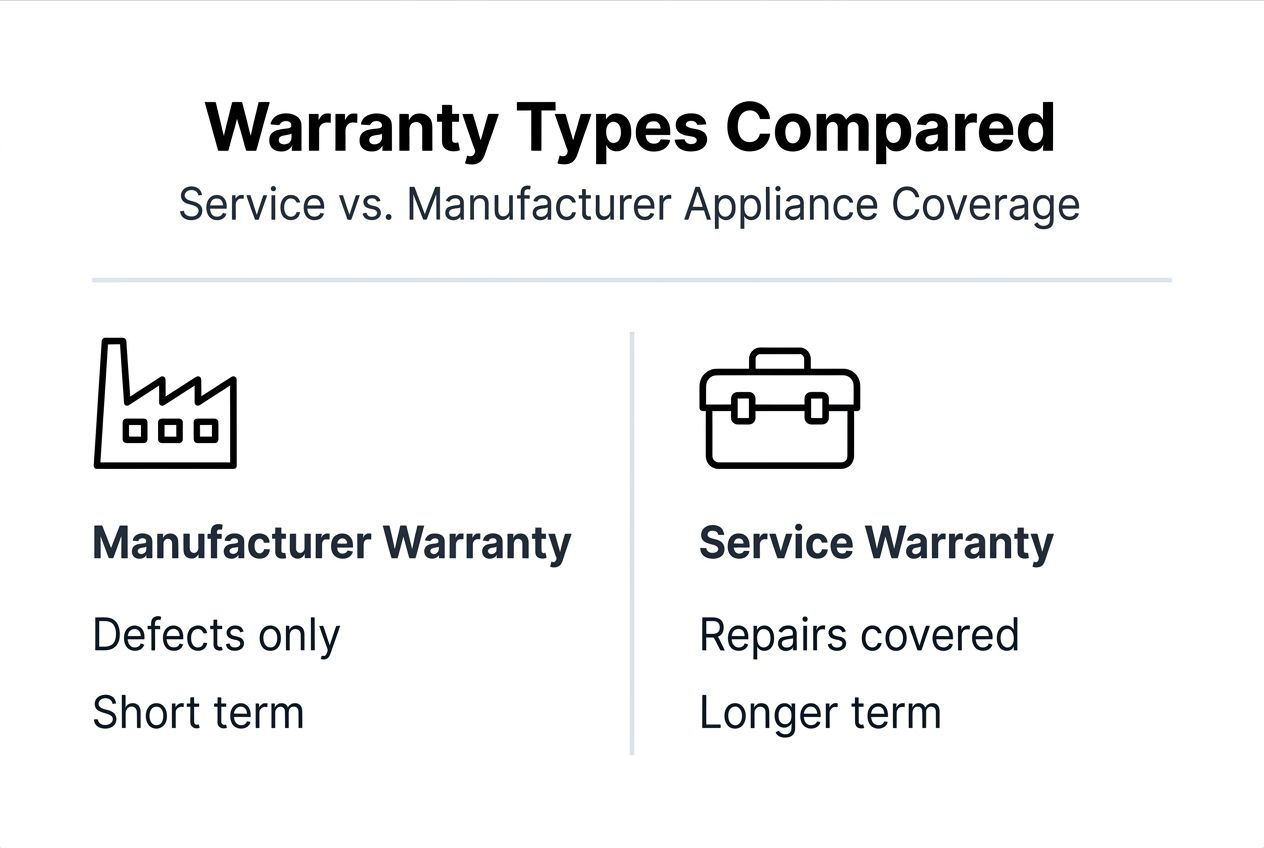
Manufacturer warranties and service warranties serve different purposes in your appliance protection strategy. Manufacturer warranties typically last about one year and cover parts only, while service warranties extend coverage duration and include labor costs. This distinction matters when your dishwasher motor burns out 18 months after purchase.
The coverage scope differs dramatically between these warranty types. Manufacturer warranties focus narrowly on defects in materials and workmanship during the first year of ownership. If your new washing machine arrives with a faulty control board, the manufacturer handles it. Service warranties pick up where manufacturer coverage stops, addressing mechanical failures and normal wear issues that emerge after year one.
| Feature | Manufacturer Warranty | Service Warranty |
|---|---|---|
| Duration | Usually 1 year | 2-3 years or longer |
| Parts Coverage | Yes | Yes |
| Labor Coverage | Limited or No | Yes |
| Cost | Included with purchase | Additional premium required |
| Coverage Start | Purchase date | After manufacturer warranty or immediately |
| Transferability | Sometimes | Varies by provider |
Cost structure represents another critical difference. Manufacturer warranties come bundled with your appliance purchase at no extra charge. Service warranties require annual premiums ranging from $300 to $600 depending on coverage breadth and appliance value. This upfront cost delivers peace of mind and budget predictability when repair bills could otherwise reach $800 or more for major component failures.
Understanding the warranty role in repairs helps you decide when extended coverage makes financial sense. For expensive appliances like high-end refrigerators or professional-grade ranges, service warranties often pay for themselves after a single major repair. For basic models with low replacement costs, paying out of pocket for occasional repairs might be more economical.
Coverage scope and common exclusions
Service warranties typically protect you against mechanical breakdowns and electrical system failures that occur during normal appliance use. Most service warranties cover mechanical and electrical failures but exclude accidental damage, cosmetic flaws, and upgrades. When your refrigerator’s compressor fails or your dryer’s heating element burns out, these qualify as covered events under standard service warranty terms.
Common covered repairs include:
- Compressor and motor failures in refrigerators and freezers
- Heating element burnout in ovens, dryers, and dishwashers
- Control board malfunctions affecting appliance operation
- Pump failures in washers and dishwashers
- Thermostat and sensor defects impacting performance
Exclusions matter just as much as covered items when evaluating service warranty value. Pre-existing conditions that existed before warranty purchase get automatically excluded from coverage. If your washing machine already leaked when you bought the warranty, future leak repairs won’t be covered. Accidental damage from dropping items, spilling liquids, or improper installation also falls outside warranty boundaries.
Cosmetic damage presents another exclusion category homeowners often misunderstand. Scratches, dents, discoloration, and rust don’t affect appliance function, so warranties exclude them from coverage. System upgrades, modifications, and code compliance improvements similarly get excluded because they represent enhancements rather than repairs to existing functionality.
Pro Tip: Always read the warranty contract carefully to know the exact coverage limits and exclusions before filing claims or paying premiums.
Understanding appliance warranty coverage details prevents frustration when filing claims. Many claim denials stem from homeowners misunderstanding what qualifies as covered repair work. Neglect-related damage from lack of maintenance, such as clogged filters or mineral buildup, typically gets excluded too. Regular appliance maintenance remains your responsibility even with warranty coverage in place.
Costs and financial benefits of service warranties
Service warranty premiums typically range from $300 to $600 annually depending on coverage level, appliance types included, and deductible amounts you select. Higher-tier plans covering more appliances and offering lower service call fees cost more upfront but deliver greater value if multiple repairs occur during the coverage period. Basic plans focus on major appliances only, keeping costs lower for budget-conscious homeowners.
Service call fees add to your total warranty costs each time you file a claim. These fees usually range from $75 to $150 per service visit, regardless of repair complexity or parts costs. While this seems expensive, compare it to $800 for compressor replacement or $600 for control board repairs without warranty coverage. The financial protection becomes clear when major component failures strike.
Homeowners covered by service warranties report a 45% reduction in unexpected appliance repair costs over five years. This statistic demonstrates the long-term value of strategic warranty investment for managing household maintenance budgets. The key is matching warranty coverage to your appliance portfolio’s age and failure risk profile.
Evaluating warranty financial tradeoffs:
- Calculate total annual appliance repair costs from the past three years to establish your baseline expense.
- Compare this historical average to warranty premium plus expected service call fees for similar coverage.
- Factor in appliance ages, with older units (5-10 years) more likely to need repairs justifying warranty coverage.
- Consider your risk tolerance and emergency fund capacity to absorb unexpected $500-$1000 repair bills.
- Review warranty terms for coverage limits per repair or annual maximum payouts that might cap benefits.
The cost benefits of repair versus replacement decisions also influence warranty value. When major appliances fail, repair costs often reach 50-70% of replacement costs. Service warranties make repair the obvious choice by covering most expenses, extending appliance lifespan, and deferring major replacement purchases.
Risk management represents the core value proposition of service warranties. You exchange predictable annual premiums for protection against unpredictable, potentially large repair expenses. This tradeoff works best for homeowners who prefer budget stability over potential savings from self-insuring against appliance failures.
How local service integrates with service warranties
Local licensed technicians in Orange and Los Angeles Counties provide faster service appointments and better repair outcomes under service warranty plans. Selecting local, licensed technicians improves repair turnaround time and ensures quality service under warranties. When your refrigerator fails on a hot summer day, having a local provider who can arrive within 24-48 hours makes a dramatic difference in food spoilage costs and household disruption.
Local technicians bring specialized knowledge of regional appliance installation variations and common failure patterns specific to Orange and Los Angeles County homes. They understand local building codes, water quality issues affecting appliances, and climate factors that accelerate wear on certain components. This regional expertise translates to more accurate diagnostics and durable repairs compared to national service chains.
Direct accountability represents another advantage of local repair benefits for warranty work. Local businesses depend on community reputation and repeat customers. When problems arise with warranty claim approvals or repair quality, you can communicate directly with the business owner rather than navigating corporate customer service systems. This accountability ensures better claim processing and repair outcomes.
Pro Tip: Verify technician licensing and reputation through state contractor databases and online reviews to maximize warranty benefits and avoid substandard repairs.
Platforms connecting homeowners to trusted local providers improve convenience and repair quality. These services pre-screen technicians for licensing, insurance, and customer satisfaction ratings. When filing warranty claims, you gain confidence that the responding technician meets professional standards and delivers quality repairs that honor warranty terms.
The local appliance repair importance extends to parts availability and service efficiency. Local providers stock common replacement parts for popular appliance brands, reducing repair completion time from weeks to days. National service providers often must order parts from distant warehouses, extending your appliance downtime and household inconvenience.
Common misconceptions about service warranties
Many homeowners believe service warranties cover accidental damages like dropping items on glass cooktops or spilling liquids into control panels. This misconception leads to claim denials and frustration. Over 85% of warranties exclude accidental and neglect-related damage, contrary to common belief. Understanding this exclusion upfront prevents false expectations when filing claims.
Another widespread myth suggests manufacturer and service warranties offer identical protections. The reality differs significantly in scope and duration. Manufacturer warranties last about one year and focus on defects, while service warranties extend for multiple years covering mechanical failures from normal wear. Confusing these warranty types leads homeowners to miss coverage gaps or purchase unnecessary duplicate coverage.
Some homeowners assume service warranties automatically include appliance upgrades and code compliance repairs when regulations change. These enhancements fall outside standard warranty coverage because they improve rather than restore original appliance functionality. When local building codes change requiring new safety features, you’ll pay out of pocket for compliance upgrades even with active warranty coverage.
Common warranty misconceptions:
- Service warranties cover preventive maintenance like filter changes and cleaning (they don’t, maintenance remains your responsibility)
- All appliances in your home get automatically covered under one warranty (you must specify covered appliances when purchasing)
- Warranty coverage continues indefinitely as long as you pay premiums (most warranties have age or condition limits for covered appliances)
- Any licensed technician can perform warranty repairs (many warranties require using approved service providers)
Claim timing requirements represent another area of confusion. Service warranties typically require reporting failures within 24-48 hours to maintain coverage eligibility. Delaying claim notification beyond this window can result in denial even for otherwise covered repairs. Understanding warranty misconceptions explained helps homeowners follow proper claim procedures and maximize coverage benefits.
Exclusions for improper installation, unauthorized modifications, and commercial use also surprise homeowners. If you convert a residential dishwasher for use in a rental property or home business, warranty coverage typically terminates. These limitations protect warranty providers from excessive claims while keeping premium costs reasonable for standard residential use.
How to select and use service warranties effectively
Successful warranty selection starts with assessing your appliance portfolio’s age and failure risk. Matching warranty coverage to appliance age and local service quality improves cost-efficiency and repair outcomes. Appliances between three and eight years old represent the sweet spot for warranty coverage, combining elevated failure risk with remaining useful lifespan that justifies repair over replacement.
Selecting and leveraging warranties effectively:
- Inventory all major appliances with purchase dates, current ages, and estimated remaining lifespan based on manufacturer specifications.
- Research warranty plans comparing coverage inclusions, exclusion lists, annual premiums, service call fees, and maximum payout limits per claim or year.
- Verify local service provider networks ensuring licensed, reputable technicians serve Orange and Los Angeles Counties under the warranty program.
- Review claim notification procedures, required documentation, and timeline requirements to maintain coverage eligibility when failures occur.
- Register warranties immediately after purchase with complete appliance serial numbers, model information, and installation dates for faster claims processing.
Understanding claim notification procedures prevents coverage denials from procedural mistakes. Most warranties require calling a claims hotline within 24-48 hours of appliance failure. Have your warranty policy number, appliance model and serial number, and failure description ready when calling. Delayed notification beyond the specified window often results in automatic claim denial regardless of repair eligibility.
Pro Tip: Review and update coverage as appliances age or your household changes to maintain optimal protection without paying for unnecessary coverage on replaced appliances.
Documentation organization streamlines claims processing and reduces approval delays. Maintain a warranty file with policy documents, appliance purchase receipts, warranty registration confirmations, and previous repair records. When filing claims, this information helps adjusters quickly verify coverage eligibility and approve repairs without extensive back-and-forth communication.
Choosing the right warranty requires balancing premium costs against potential repair savings. Calculate annual premiums plus expected service call fees, then compare this total to your historical appliance repair costs. If warranty costs exceed recent repair expenses by more than 30-40%, consider self-insuring against appliance failures instead.
Warranty registration importance cannot be overstated for maximizing coverage benefits. Unregistered warranties may face coverage disputes when you file claims. Take 10 minutes after purchasing warranty coverage to complete registration with accurate appliance information. This simple step prevents headaches and claim delays when you need repairs most.
Protect your home appliances today with MDTECH Appliance Repair
You now understand how service warranties protect your appliances and household budget. MDTECH Appliance Repair brings this knowledge to life with expert repair services supporting service warranty plans throughout Orange and Los Angeles Counties. Their licensed technicians specialize in major brands including Samsung appliance repair, delivering prompt, professional service that maximizes your warranty benefits.
Leveraging appliance warranty services from MDTECH ensures your warranty claims get processed smoothly and repairs completed efficiently. Their team understands warranty coverage requirements and documentation needs, streamlining the repair process from initial call to final testing. When appliance failures strike, you gain peace of mind knowing experienced professionals handle everything.
Connect with local appliance repair experts at MDTECH to secure reliable warranty repairs and avoid costly appliance downtime. Their commitment to quality service and customer satisfaction makes them the ideal partner for protecting your home’s essential appliances. Schedule your service appointment today and experience the difference professional local repair brings to warranty coverage.
Frequently asked questions about service warranties
What should I do immediately after an appliance breaks down under warranty?
Call your warranty provider’s claims hotline within 24-48 hours of failure to report the issue and initiate a service request. Have your warranty policy number, appliance model and serial number ready when calling. Document the failure symptoms and any error codes displayed before the technician arrives.
Are there any appliances that typically do not benefit from service warranties?
Small, inexpensive appliances like microwaves, coffee makers, and toasters rarely justify warranty coverage because replacement costs often equal or exceed repair costs. Appliances older than 10-12 years also offer limited warranty value since repair costs approach replacement prices for aging units.
How can I verify if my technician is licensed and qualified for warranty repairs?
Check California’s Contractor State License Board database using the technician’s license number to verify active status and view complaint history. Request proof of insurance coverage before allowing work to begin. Review online ratings and customer testimonials to assess service quality and reliability.
Can I transfer my service warranty if I sell my home?
Warranty transferability varies by provider and policy terms. Some warranties allow one-time transfer to new homeowners for a small administrative fee, while others remain non-transferable. Review your warranty contract or contact your provider directly to understand transfer options and requirements before listing your home.
How can I avoid delays in claim approval and repair service?
Maintain organized records with warranty policy documents, appliance information, and purchase receipts in one accessible location. Report failures promptly within required notification windows. Provide complete, accurate information during claim filing including detailed failure descriptions and any troubleshooting already attempted. Follow up within 48 hours if you haven’t received claim approval confirmation.