
TL;DR:
- Regular drain cleaning prevents costly repairs and protects home structure and health.
- DIY methods work temporarily but professional cleaning using snaking and hydrojetting ensures lasting results.
- Annual inspections help detect deeper pipe issues before they cause severe damage.
Most homeowners assume a slow drain is just a minor annoyance that a bottle of chemical cleaner can fix in minutes. But that slow drain could be the first sign of a buildup that has been growing for months inside your pipes. Drain cleaning is the process of removing blockages, buildup, and debris from residential drain and sewer lines to restore proper water flow. It goes well beyond what a plunger can reach. If you live in Orange County or Los Angeles County, understanding your options before a clog becomes a plumbing emergency can save you a lot of money and frustration.
Table of Contents
- What is drain cleaning and why is it important?
- DIY drain cleaning: Methods, effectiveness, and limitations
- Professional drain cleaning: Tools, techniques, and advantages
- Tips for maintaining clear drains: Prevention and routine care
- What most homeowners miss about drain cleaning
- Connect with professional drain and plumbing services
- Frequently asked questions
Key Takeaways
| Point | Details |
|---|---|
| Drain cleaning prevents damage | Keeping drains clear avoids leaks, flooding, and costly repairs for homeowners. |
| DIY methods have limits | Surface solutions like plungers and vinegar are quick fixes but don’t solve deep or recurring clogs. |
| Professional services offer lasting results | Experts use advanced tools to safely and thoroughly clean drains, protecting your property. |
| Routine maintenance is key | Regular inspections and responsible habits reduce the risk of major plumbing issues. |
What is drain cleaning and why is it important?
At its core, drain cleaning restores water flow by removing blockages, grease buildup, mineral deposits, and debris from your pipes. It sounds simple, but the process varies widely depending on the severity and location of the clog. A surface clog near the drain opening is very different from a blockage deep in your main sewer line.
Why does this matter so much for homeowners? Because neglected drains rarely stay a small problem. Here is what can happen when drain cleaning is put off:
- Slow drains become full backups, causing wastewater to overflow into your home
- Standing water creates mold and bacteria, which are health hazards for your family
- Pipe pressure builds up, leading to cracks, leaks, or burst pipes
- Flooding can damage flooring, drywall, and foundations, turning a $150 drain cleaning job into a $5,000 repair
- Appliances like dishwashers and washing machines work harder, shortening their lifespan when drainage is restricted
One thing many homeowners overlook is how drain health directly connects to appliance performance. A washing machine draining into a partially blocked pipe will strain its pump motor over time. Getting drain repair in Orange County addressed early protects both your plumbing and your appliances.
Stat to know: Plumbing failures, including drain backups, are among the top causes of home water damage claims in California, with average repair costs exceeding $4,000 per incident.
Understanding the importance of clear drainage goes beyond just keeping water moving. It is about protecting your home’s structure, your family’s health, and the appliances you depend on every day. Routine cleaning, even once a year, is far cheaper than emergency repairs.
DIY drain cleaning: Methods, effectiveness, and limitations
Many homeowners start with DIY methods, and that makes sense. They are affordable, fast, and sometimes effective for minor issues. But knowing where they fall short is just as important as knowing how to use them.
Here are the most common DIY approaches in order of effectiveness:
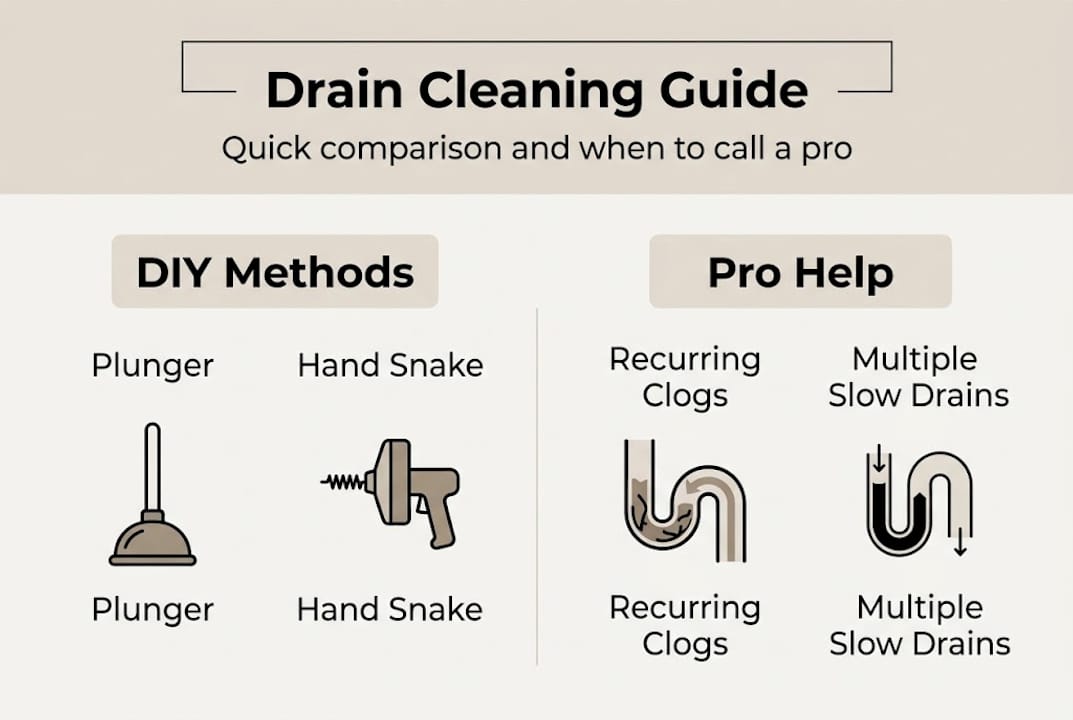
- Plunger Creates suction to dislodge surface clogs near the drain opening. Works well on hair and soft debris in sinks and tubs.
- Hand snake (drain auger) A flexible cable that physically breaks up or retrieves a clog a few feet into the pipe. Good for bathroom drains.
- Baking soda and vinegar Creates a fizzing reaction that can loosen minor organic buildup. Best used as a maintenance flush, not a clog fix.
- Boiling water Melts soft grease clogs in kitchen sinks. Never use on PVC pipes, as heat can warp them.
- Chemical drain cleaners Fast-acting but harsh. They dissolve soft clogs using caustic chemicals.
DIY methods work for minor clogs like hair and soft grease near the surface, but they provide only temporary relief, risk pipe damage from repeated chemical use, and completely fail on deep or recurring blockages.
Pro Tip: If you have tried a plunger and a hand snake and the drain is still slow 24 hours later, stop adding chemicals. You likely have a deeper issue that chemicals will not reach, and overuse can corrode older pipes.
Here is a quick comparison of DIY versus professional drain cleaning:
| Factor | DIY methods | Professional cleaning |
|---|---|---|
| Cost upfront | Low ($5 to $30) | Higher ($100 to $400+) |
| Effectiveness on deep clogs | Low | High |
| Risk of pipe damage | Moderate (chemicals) | Very low |
| Long-term results | Temporary | Lasting |
| Identifies root cause | No | Yes |
If you are dealing with a recurring clog near your laundry area, the issue might actually be related to how installing drain hoses were set up, or whether drain hose repairs are needed. DIY cleaning will not catch those kinds of problems.
Professional drain cleaning: Tools, techniques, and advantages
When DIY methods fall short, professional drain cleaning brings a different level of precision and power. Plumbers use specialized equipment designed to handle blockages at any depth and in any pipe material.
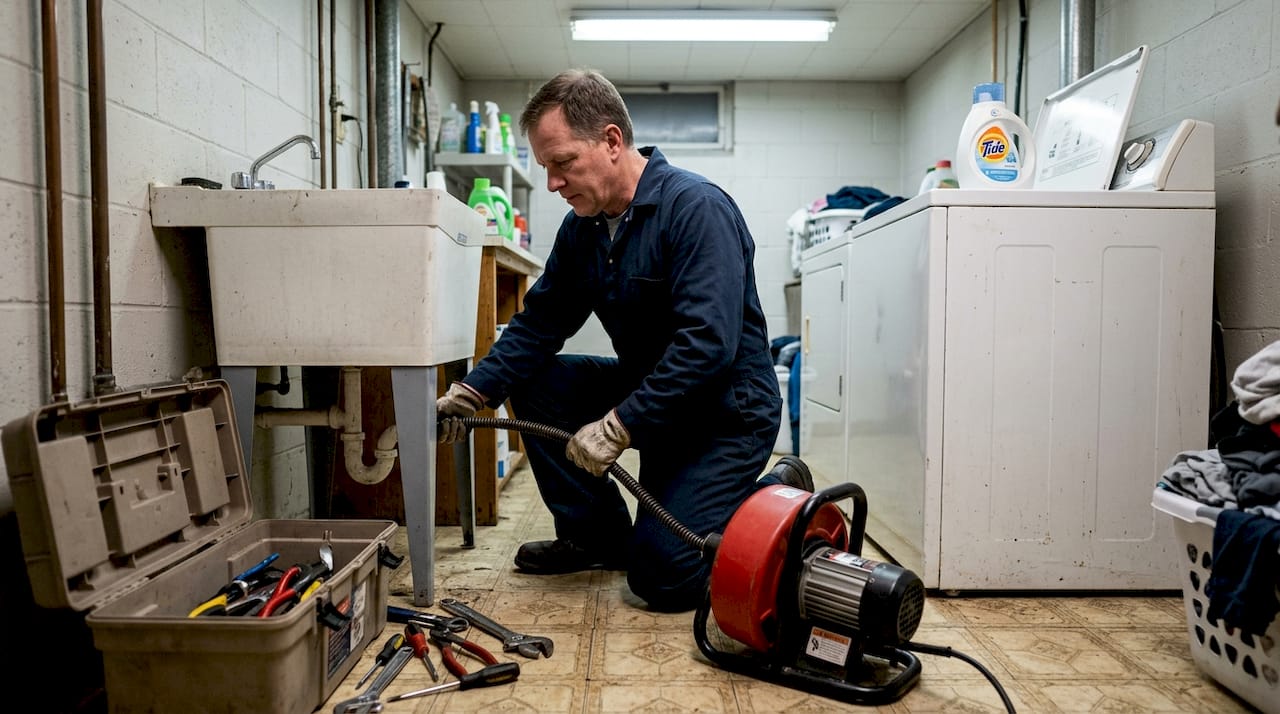
The two most widely used professional methods are:
Drain snaking (motorized): A motorized auger extends much deeper than a hand snake, reaching blockages 50 to 100 feet into a pipe. It physically breaks up or retrieves the clog. It is ideal for targeted blockages caused by hair, small objects, or tree root intrusion.
Hydrojetting: This method uses a high-pressure water stream (up to 4,000 PSI) to blast away grease, scale, mineral deposits, and debris from the full interior of the pipe wall. Unlike snaking, hydrojetting does not just punch a hole through a clog. It cleans the entire pipe.
Here is how the two professional methods compare:
| Method | Best for | Pressure/reach | Pipe safety |
|---|---|---|---|
| Motorized snaking | Hair, objects, roots | Up to 100 ft | Safe for most pipes |
| Hydrojetting | Grease, scale, full buildup | Up to 4,000 PSI | Requires inspection first |
Beyond the tools, the real advantage of hiring a professional is the assessment of drain blockages. Technicians use camera inspections to see exactly what is inside your pipes, whether it is grease buildup, a collapsed section, or tree roots. That information changes everything about how the problem gets fixed.
Key benefits of professional drain cleaning include:
- Accurate diagnosis using camera technology
- Complete pipe cleaning, not just temporary clog removal
- No chemical damage to your pipes or the environment
- Faster resolution for severe or recurring blockages
- Documentation of pipe condition for future reference
Pro Tip: Ask your plumber for a camera inspection before hydrojetting if your home is older than 30 years. High-pressure water on a weakened pipe can cause more harm than good.
If you are planning any updates to your plumbing system, understanding the drainage installation process or getting a full drainage repair and installation assessment can help you avoid future clogs before they start.
Tips for maintaining clear drains: Prevention and routine care
The best drain cleaning is the kind you never have to call for urgently. Prevention is genuinely cheaper, and the habits that keep drains clear are easy to build into your routine.
Start with what goes down the drain. Most serious clogs start with things that should never enter the pipe in the first place. Surface clogs from hair and grease are the most common culprits, and they are almost entirely preventable.
Here are the most effective prevention habits:
- Use drain screens on every sink, tub, and shower to catch hair and debris before it enters the pipe
- Never pour grease or cooking oil down the kitchen sink, even with hot water running. It solidifies inside the pipe.
- Run hot water for 30 seconds after washing dishes to push soap residue further down the line
- Flush drains monthly with a baking soda and hot water mixture to slow mineral and soap buildup
- Avoid flushing wipes, cotton balls, or paper towels, even if labeled flushable
- Schedule a professional inspection once a year, especially if your home is more than 20 years old
Pro Tip: In older Orange County and LA homes, hard water mineral buildup is a major contributor to slow drains. A simple water softener or periodic citric acid flush can dramatically reduce scale inside your pipes.
Routine care also extends to your appliances. Washing machines, dishwashers, and utility sinks all connect to your drain system. Reviewing preventive maintenance tips for your appliances can help you spot early warning signs before they become plumbing emergencies. Checking washer hose maintenance regularly prevents leaks that can compound drain issues. And staying on top of regular plumbing checks gives you the peace of mind that your entire system is working as it should.
What most homeowners miss about drain cleaning
Here is something we see constantly in Orange County and Los Angeles County homes: a homeowner pours chemical cleaner down a slow drain every few months, the drain clears temporarily, and they assume the problem is solved. It is not.
Chemical cleaners and even hand snakes only address the symptom. They punch through a clog without removing the buildup coating the pipe walls. That buildup keeps growing, and the next clog comes back faster and sits deeper. Over time, you end up with a pipe that is narrowed by years of residue, and no amount of DIY effort will fix that.
Older homes in our region, many built in the 1960s and 1970s, often have cast iron or galvanized steel pipes that corrode from the inside. That corrosion creates rough surfaces where grease and debris stick easily. The local climate also plays a role. Tree roots seeking moisture are a very real threat to underground drain lines in Southern California, especially after dry seasons.
The clear appliance drainage guide we recommend to homeowners makes one thing very clear: consistent professional evaluation is not a luxury. It is what separates a $200 maintenance visit from a $6,000 pipe replacement. Catching a problem early is always the smarter financial decision.
Connect with professional drain and plumbing services
If your drains have been slow, backing up, or causing odors, it is time to stop guessing and get a real answer from a licensed technician.
At appliancesrepairmdtech.com, we connect Orange County and Los Angeles County homeowners with experienced plumbing professionals who provide fast diagnostics and lasting solutions. Whether you need plumbing pipe repair services, a full plumbing repair for Orange County, or just want to schedule regular plumbing checks to stay ahead of problems, our team is ready to help. Book your evaluation today and protect your home before a minor clog turns into a major repair.
Frequently asked questions
What causes drains to clog most often?
Hair, grease, and soap buildup are the most common culprits, along with foreign objects like wipes or small debris that should never enter the drain in the first place.
Is it safe to use chemical drain cleaners?
Chemical cleaners can clear a surface clog quickly, but repeated use damages pipes over time and can harm your plumbing system, especially in older homes with metal pipes.
When should homeowners call a professional plumber for drain cleaning?
Call a professional when clogs keep coming back, when multiple drains are slow at once, or when you notice gurgling sounds or sewage odors, since these signal a deeper blockage in your sewer line that DIY tools cannot reach.
How often should drains be cleaned professionally?
Most plumbing professionals recommend annual or biannual drain cleaning to prevent surprise blockages, especially in homes older than 20 years or in areas with hard water.