
TL;DR:
- Most washing machine clogs occur in filters, hoses, or standpipes and are fixable within an hour.
- Regular maintenance like cleaning filters, hoses, and using vinegar prevents recurring clogs and prolongs washer life.
- When DIY fixes fail or if there’s persistent water drainage or burnt smells, professional repair is recommended.
A clogged washing machine can turn a routine laundry day into a frustrating, water-logged mess in minutes. For homeowners across Orange County and Los Angeles County, this is one of the most common appliance headaches we see. The good news is that most clogs trace back to a handful of predictable spots: blocked filters, kinked hoses, or overloaded standpipes. With the right steps and a little patience, you can fix the problem yourself in under an hour. This guide walks you through everything, from spotting the warning signs to clearing the blockage safely and keeping it from coming back.
Table of Contents
- Identify the signs and causes of a clogged washing machine
- What you need before you start: Tools, safety, and preparation
- Step-by-step guide: How to unclog your washing machine safely
- What if unclogging fails? Troubleshooting and when to call an expert
- Our take: What most guides miss about washing machine clogs
- Need more help? Trusted local washer repair is one call away
- Frequently asked questions
Key Takeaways
| Point | Details |
|---|---|
| Recognize clog signs fast | Rapidly spotting symptoms like slow draining or error codes helps stop washing machine issues early. |
| Preparation keeps you safe | Always unplug and gather the right tools before starting any washer repair project. |
| Follow clear repair steps | Step-by-step unclogging instructions work for major brands and keep things efficient. |
| Know when to go pro | If basic fixes fail, local experts can resolve persistent clogs and prevent water damage. |
Identify the signs and causes of a clogged washing machine
Before you grab a wrench, you need to know what you’re dealing with. Catching a clog early saves you from water damage, mold growth, and a machine that refuses to finish a cycle.
Common symptoms to watch for:
- Standing water left in the drum after a cycle ends
- Slow or incomplete draining that stretches the cycle time
- Gurgling or bubbling sounds coming from the drain hose
- Musty odors from inside the drum or around the machine
- Error codes on the display panel (check your owner’s manual for drain-related codes)
If you notice any of these, pay attention to your washer repair warning signs before the problem gets worse. Sometimes a slow drain is the first hint that something bigger is building up.
Where clogs form depends on your washer type. Front-load washers are more prone to filter clogs due to their design, while top-load clogs tend to form in the hose or standpipe. In hard water areas like much of Southern California, mineral buildup speeds up clogging significantly, so monthly cleaning is especially important here.
| Symptom | Most likely clog location |
|---|---|
| Standing water in drum | Drain pump filter or drain hose |
| Slow draining | Standpipe or lint trap |
| Gurgling sounds | Standpipe or drain hose |
| Machine won’t spin | Blocked pump filter |
| Leaking water | Kinked or cracked drain hose |
The root causes are usually simple. Lint and fabric fibers build up over time. Small objects like coins, buttons, and hair ties slip past pockets. Pet hair is a surprisingly big culprit in Southern California homes. Excessive detergent, especially non-HE soap in a high-efficiency machine, creates a thick residue that coats hoses and filters. Understanding why washers won’t spin often comes back to one of these same causes.
“Front-loaders are especially prone to filter clogs due to design, and in hard water areas, monthly cleaning is not optional, it’s necessary.”
Learning how to clean a washing machine regularly is the single best habit you can build to avoid these issues entirely.
What you need before you start: Tools, safety, and preparation
Once you know what signs to look for and where clogs tend to occur, the next step is to get ready for a safe and efficient repair. Rushing in without the right tools or safety steps can turn a simple fix into a bigger problem.
Tools and supplies you’ll need:
- Old towels or rags (several of them)
- Rubber gloves
- A flathead and Phillips screwdriver
- Needle-nose pliers
- A small bowl or shallow pan
- A bucket
- A flashlight
- HE detergent for future loads
- White distilled vinegar for cleaning
Safety first: Always unplug the machine and shut off both the hot and cold water supply valves before touching anything. This protects you from electric shock and prevents water from flowing while you work.
Tool comparison by washer type:
| Tool | Front-load washer | Top-load washer |
|---|---|---|
| Screwdriver | Yes (filter panel access) | Sometimes (hose clamps) |
| Shallow bowl/pan | Yes (catches filter water) | Rarely needed |
| Pliers | Yes (hose clamps) | Yes (hose clamps) |
| Flashlight | Yes (low filter panel) | Yes (drum interior) |
| Wet/dry vacuum | Optional (hose blockage) | Recommended |
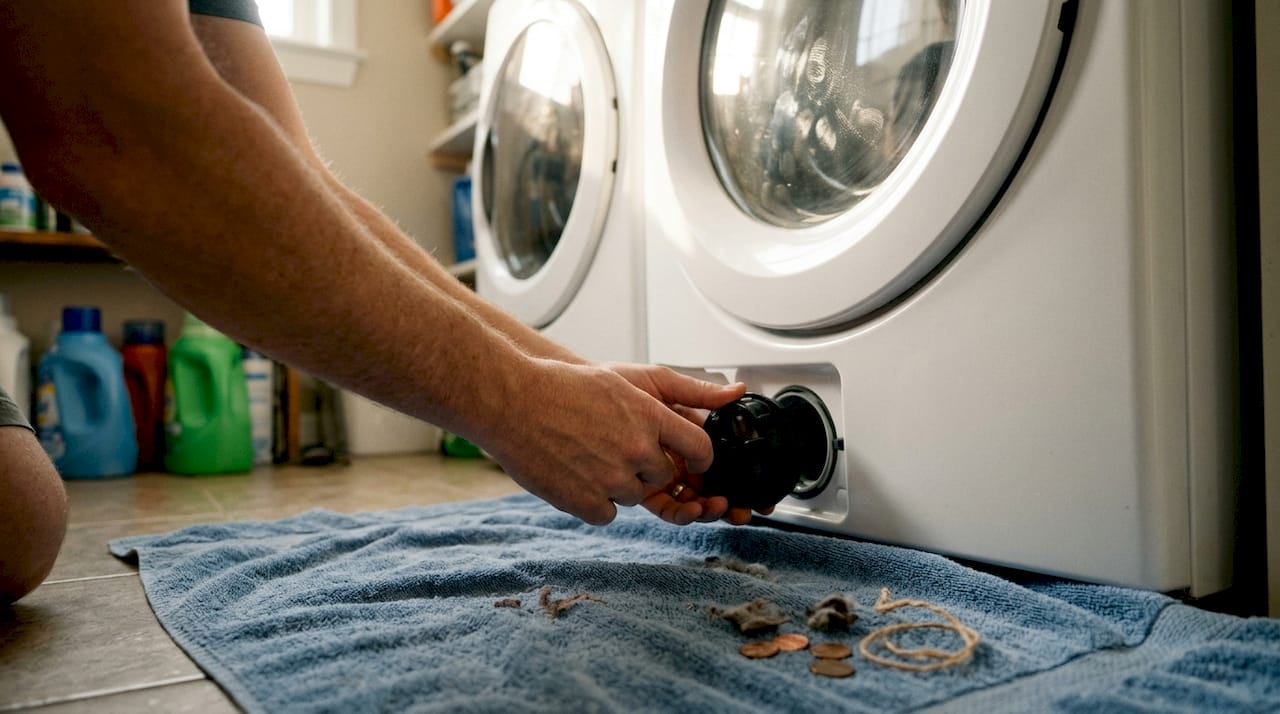
Pro Tip: Lay several old towels flat around the base of the machine before you open anything. Even after draining, residual water will spill out, and towels save your floor from water damage.
For front-load washers, the filter panel is usually located at the bottom front of the machine behind a small access door. For top-loaders, you’ll mostly be working with the drain hose at the back. If your washer is in a tight laundry closet, ask a helper to assist you in pulling it forward safely. Check your washing machine care tips to understand your specific model’s layout before you begin.
Step-by-step guide: How to unclog your washing machine safely
With everything you need at hand, you’re ready to start the unclogging process. Follow these steps carefully, and you’ll clear most clogs without needing a service call.
For front-load washers:
- Unplug the washer and shut off both water supply valves.
- Place towels and a shallow bowl below the filter access panel at the bottom front.
- Open the access door and slowly unscrew the drain pump filter counterclockwise.
- Let water drain into the bowl, emptying it as needed into your bucket.
- Pull out the filter completely and remove all lint, debris, coins, or hair.
- Rinse the filter under warm running water until it’s clean.
- Check inside the filter housing with a flashlight for any remaining debris.
- Reinsert the filter, screw it back in firmly, and close the access panel.
- Check the drain hose at the back for kinks or blockages and straighten if needed.
- Plug the machine back in and run a short rinse cycle to confirm drainage.
For top-load washers:
- Unplug the machine and turn off the water supply.
- Pull the washer away from the wall to access the drain hose.
- Disconnect the drain hose from the standpipe and lower it into a bucket to drain any standing water.
- Use a flashlight to check the hose interior for blockages. A long flexible brush works well here.
- Flush the hose with warm water to clear debris.
- Check the standpipe opening for lint or buildup and clear it with a brush.
- Reconnect the hose securely and push the washer back into position.
- Plug in and run a rinse cycle to test.
Pro Tip: For stubborn blockages deep in a hose or standpipe, a wet/dry vacuum placed over the opening can pull out debris that a brush won’t reach.
For light clogs and general maintenance, clean the filter and hose monthly, use HE detergent, check pockets before washing, and run a hot vinegar cycle once a month. Pour two cups of white vinegar directly into the drum, run a hot water cycle with no laundry, and follow it with a rinse. This breaks down detergent residue and mineral deposits before they harden into a clog. For a full walkthrough of related repairs, the washer repair guide covers additional scenarios you might encounter.
Most clogs involve the filter, hose, or standpipe and are fixable in under 30 minutes. Never work on the machine while it’s plugged in, no matter how quick the task seems.
What if unclogging fails? Troubleshooting and when to call an expert
Most DIY clogs can be solved with those steps, but occasionally, issues persist or point to a deeper problem. Knowing when to stop and call a professional saves you time and prevents further damage.
Common mistakes that leave clogs unresolved:
- Not fully removing the filter and missing debris packed at the back
- Forgetting to check the standpipe for buildup above the hose connection
- Reinstalling the filter without cleaning the housing cavity
- Ignoring a kinked drain hose that restricts water flow
- Using too much detergent, which rebuilds residue quickly after cleaning
If the machine still won’t drain after a thorough filter and hose cleaning, the drain pump itself may be jammed or failing. Severe clogs or a pump jam may require part replacement, and standing water left unaddressed breeds mold inside the drum and hose quickly. A burnt smell during operation is a serious red flag that the pump motor is overheating.
| Situation | DIY or call a pro? |
|---|---|
| Clogged filter or hose | DIY |
| Kinked drain hose | DIY |
| Standpipe blockage | DIY |
| Drain pump jammed or noisy | Call a pro |
| Burnt smell during cycle | Call a pro immediately |
| Repeated clogs after cleaning | Call a pro |
| Standing water with no clear cause | Call a pro |
For deeper washer troubleshooting tips specific to Orange and LA County homes, you’ll find guidance on identifying pump and motor issues. If the machine needs a service visit, washing machine service and washing machine repair service options are available locally with fast turnaround.
Pro Tip: If your machine repeatedly clogs within weeks of cleaning, or if it leaks after you’ve reseated the filter, stop running it and get a professional diagnosis. Repeated clogs are almost always a sign of a worn pump, a damaged hose, or a deeper drainage issue that DIY can’t fix.
Our take: What most guides miss about washing machine clogs
All the steps above are proven, but what really separates hassle-free homeowners from those calling us in a panic is their prevention strategy. Most guides focus entirely on the fix. Very few talk honestly about why the clog happened in the first place and how to stop it from returning.
Here’s what we’ve seen repeatedly: homeowners wait until water is pooling on the laundry room floor before they open the filter panel. By then, the filter is packed solid, the hose has residue coating its interior, and sometimes the pump has been straining for months. The damage is already done.
Every washing machine, regardless of brand or price point, shares the same weak points: the filter, the hose, and the standpipe. Consistent monthly maintenance prevents emergencies and extends your washer’s lifespan by years. Simple habits like leaving the door open after a cycle to dry the drum, installing an external lint trap on the drain hose, and checking pockets before every load make a real difference over time. Our full washer maintenance tips break this down into a routine any homeowner can follow.
Need more help? Trusted local washer repair is one call away
If your washer still struggles after all attempts, don’t wait for further damage. Reach out to local appliance specialists who know Orange County and Los Angeles County homes inside and out.
Our licensed technicians handle everything from simple clogs to full pump replacements, and we can usually diagnose the problem on the first visit. Not sure whether to fix or replace? Our repair vs replacement guide helps you make the right call. If parts are needed, our replace appliance parts resource walks you through what’s involved. We also offer brand-specific expertise, including Samsung repair experts for those models. Book online in minutes and get your washer running right.
Frequently asked questions
What causes a washing machine to clog most often?
Front-loaders are prone to filter clogs due to their design, while top-loaders typically clog in the hose or standpipe. Lint, coins, pet hair, and excess detergent are the most common culprits in both types.
How do I prevent my washer from clogging again?
Clean filters and hoses monthly, use HE detergent, check pockets before loading, and run a hot vinegar cycle once a month to break down residue before it hardens.
Can I use drain cleaners or chemicals to unclog my washing machine?
Avoid harsh chemical drain cleaners since they can damage rubber seals and internal components. Vinegar and hot water cycles are safe, effective, and recommended for regular maintenance.
When should I call a professional for a clogged washing machine?
If standing water won’t drain, you notice a burnt smell, parts need replacement, or clogs keep returning after cleaning, it’s time to call a licensed appliance repair technician.