
Most homeowners in Orange County and Los Angeles County assume their gas lines are fine unless something smells off. That assumption is dangerous. SoCalGas reports nearly 885,695 Mscf of annual emissions from customer meters alone, showing that gas leaks happen constantly, even in homes that look perfectly safe. This guide walks you through the real risks, what a professional inspection covers, how often you need one, and what you can safely check yourself. Your family’s safety depends on knowing this.
Table of Contents
- Understanding the real risks: Gas leaks at home
- What happens during a professional gas line check?
- Why timing is critical: Consequences of delay
- How often should you check your gas lines?
- DIY vs. professional gas line checks: What’s safe for you?
- Protect your home with trusted professionals
- Frequently asked questions
Key Takeaways
| Point | Details |
|---|---|
| Hidden leaks are common | Even new or recently repaired homes may have undetected gas leaks that threaten safety. |
| Annual checks save lives | Schedule professional inspections each year to lower explosion, fire, and carbon monoxide risks. |
| Pros catch what you can’t | Expert technicians use specialized tools that go far beyond sight and smell to detect leaks. |
| Delaying inspections costs more | Ignoring minor issues can quickly lead to expensive repairs and insurance problems. |
| Quick action prevents disasters | A simple call today for a timely check protects your family and property for the year ahead. |
Understanding the real risks: Gas leaks at home
Gas leaks are sneaky. Most people picture a dramatic hissing pipe or an overwhelming smell, but the reality is far more subtle. Many leaks release gas at levels too low for your nose to catch, yet high enough to build up in enclosed spaces over time. That buildup is what creates explosion and health risks.
Thousands of individual leaks are tracked annually across Southern California, revealing just how widespread hidden dangers really are. This isn’t a rare problem. It’s a routine one.
Common causes of residential gas leaks include:
- Aging pipes and fittings that corrode or crack over decades
- Faulty connectors on appliances like stoves, dryers, and water heaters
- Improper appliance installation by unlicensed contractors
- Ground movement from earthquakes or soil shifts, which is especially relevant in Southern California
- Wear from vibration near high-use appliances
Many homeowners believe that a newer home or a recent renovation means their gas lines are safe. That’s a misconception. New construction can have installation errors, and renovations often disturb existing lines. Staying current with plumbing checks for OC homeowners is one of the smartest habits you can build.
“The scale of tracked leaks in Southern California utility systems makes it clear that no home is automatically exempt from risk, regardless of age or condition.”
What happens during a professional gas line check?
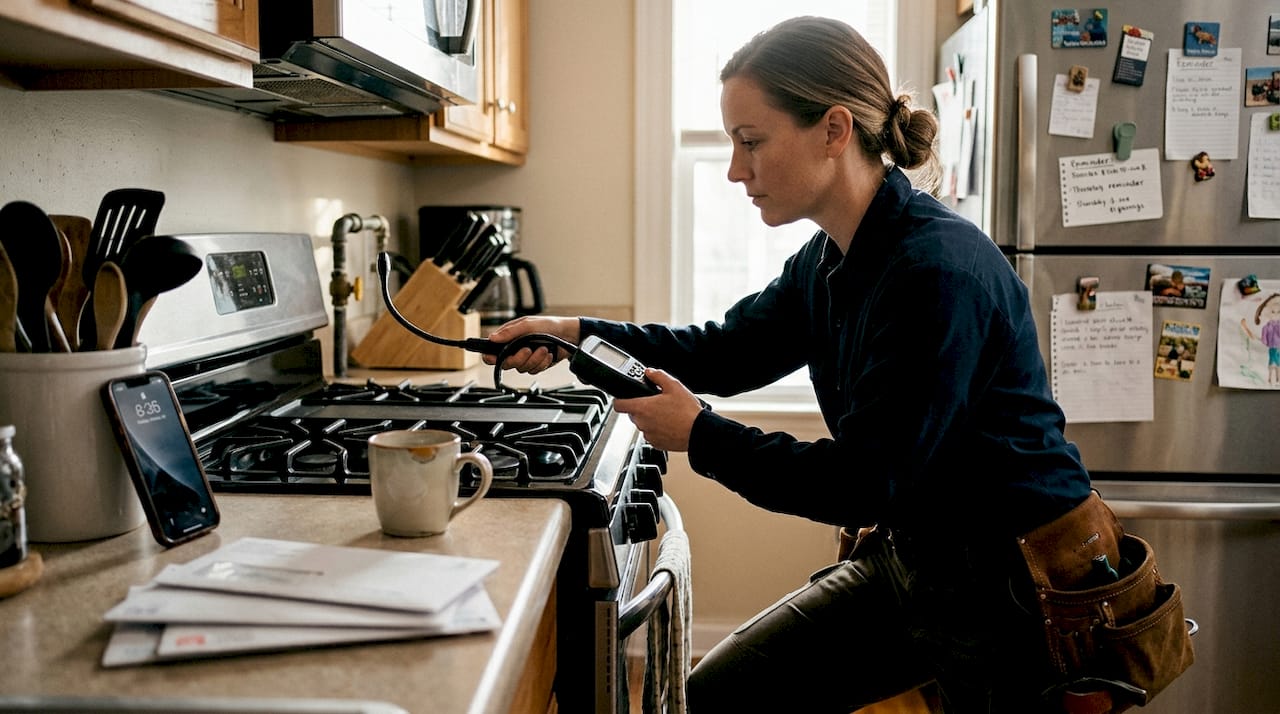
Understanding the prevalence of leaks, let’s break down what actually happens when you call in a pro. A thorough inspection is not just a quick sniff around the kitchen. It’s a structured, multi-step process.
Here’s what a certified technician typically does:
- Visual inspection of all accessible gas lines, connectors, valves, and appliances for corrosion, damage, or improper fittings
- Pressure testing using air or nitrogen (never oxygen) at controlled pressures to identify drops that signal a leak
- Calibrated leak detection with electronic sensors to pinpoint the exact location of any escaping gas
- Venting review to confirm that combustion gases are properly exhausted from your home
- Documentation of findings, with a written report you can keep for insurance or resale purposes
Professional inspections involve visual checks, pressure testing, calibrated leak detection, and venting review as standard steps. Beyond that, ultrasonic and infrared technology allows technicians to find leaks that soap solutions and basic sensors would miss entirely.
| Inspection step | Tool used | What it finds |
|---|---|---|
| Visual check | Eyes, flashlight | Corrosion, damage, loose fittings |
| Pressure test | Air or nitrogen | Pressure drops from leaks |
| Electronic detection | Calibrated gas sensor | Low-level gas escapes |
| Ultrasonic/infrared scan | Specialized equipment | Hidden or micro leaks |
| Venting review | Visual and airflow test | Combustion gas buildup risk |
If you’re scheduling a check, knowing about professional gas line repair options ahead of time helps you act fast if the technician finds an issue. Also, if your gas range repair is overdue, bundle it with your inspection for efficiency.
Pro Tip: Before your technician arrives, move any furniture or storage blocking access to your gas meter, appliance connections, and utility room. This saves time and ensures nothing gets missed.
Why timing is critical: Consequences of delay
With a sense of the inspection process, let’s see what happens if checks are delayed or skipped altogether. The consequences are not just inconvenient. They can be costly and dangerous.
| Factor | Timely inspection | Delayed or skipped |
|---|---|---|
| Leak detection | Caught early, low repair cost | Grows undetected, major repair needed |
| Appliance lifespan | Protected and optimized | Shortened by gas pressure issues |
| Insurance coverage | Maintained with documentation | Potentially voided after incident |
| Health risk | Minimized | Carbon monoxide and explosion risk |
| Legal liability | Reduced | Elevated, especially for landlords |
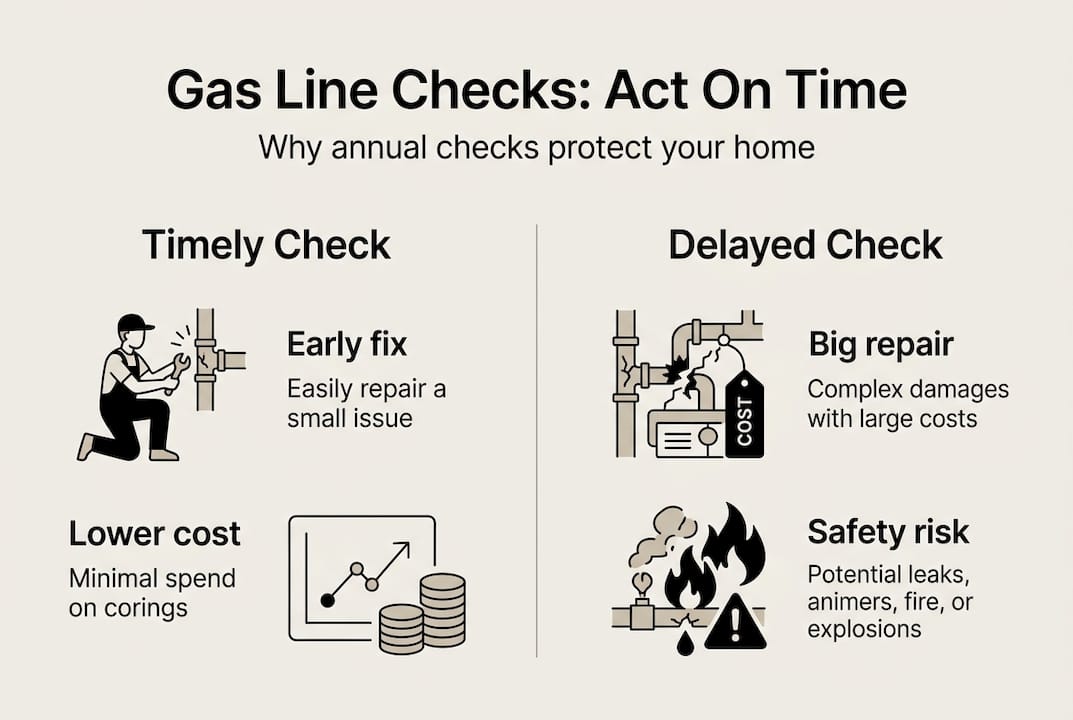
Annual inspections are standard for California’s major utilities to prevent incidents, and there’s a reason for that. Utilities see the data. Delayed checks lead to incidents that could have been avoided.
Red flags you should never ignore:
- A rotten egg or sulfur smell anywhere in your home
- Hissing or whistling sounds near gas lines or appliances
- Unexplained spikes in your monthly gas bill
- Dead or yellowing plants in a specific patch of your yard near buried lines
- Pilot lights that keep going out
- Feeling dizzy, nauseous, or having headaches indoors without explanation
Scheduling an annual HVAC inspection for safety at the same time as your gas line check is a smart way to cover both systems in one visit.
Pro Tip: Set a recurring calendar reminder every October or November to book your annual gas line check before the winter heating season begins. Demand for technicians spikes in December, so booking early gets you faster service.
How often should you check your gas lines?
Now that we know the costs of delay, here’s how often you should actually arrange a check. The short answer is once a year, minimum.
Utilities like SoCalGas and PG&E align with annual professional inspections as the baseline for residential safety. But annual checks are just the floor, not the ceiling.
You should also schedule an inspection after:
- Any major renovation that involved walls, floors, or utility areas
- Replacing a gas appliance such as a furnace, water heater, or stove
- Buying a home, even if it passed a general home inspection
- An earthquake, even a minor one, since ground movement can shift buried lines
- Noticing any warning sign from the list above
PG&E’s rapid response standard requires crews to arrive at reported gas emergencies within 60 minutes 99.7% of the time. That urgency reflects how seriously utilities treat gas risks. You should match that seriousness at home.
“Waiting for a problem to become obvious before scheduling an inspection is like waiting for a car to break down before changing the oil. By then, the damage is already done.”
For homeowners managing multiple systems, combining your gas line check with plumbing inspections in Orange and LA is a practical way to stay on top of everything. If you’re also considering switching appliances, learning about gas appliance conversion benefits can help you plan ahead.
DIY vs. professional gas line checks: What’s safe for you?
Finally, many homeowners wonder if they can handle gas line checks themselves, or if they always need a pro. Here’s how to decide.
There are a few things you can safely do on your own:
- Smell check: Walk through your home and note any sulfur or rotten egg odor, especially near appliances
- Visual scan: Look at visible gas lines and connectors for rust, discoloration, or physical damage
- Listen: Stand near your gas meter and appliances and listen for any hissing or unusual sounds
- Check your bill: Compare your gas usage month over month. A sudden spike with no change in habits is a red flag
- Test pilot lights: Make sure all pilot lights are burning blue, not yellow or orange
Visual checks can catch obvious warning signs, but only trained professionals have the tools for thorough leak detection. Your nose and eyes are useful first steps, not a replacement for real testing.
“Ultrasonic and infrared leak detection can identify escaping gas at concentrations far below what any human sense can perceive. These tools exist because the stakes are too high to rely on guesswork.”
Never attempt to tighten fittings, replace connectors, or test pressure yourself. These tasks require licensing, calibrated equipment, and safety protocols. If you smell gas strongly or hear a loud hiss, leave the building immediately and call 911 before calling anyone else. For everything short of an emergency, hiring insured technicians protects you legally and financially if anything goes wrong during the repair process.
Protect your home with trusted professionals
Ready to take control of your safety? Here’s how the right professionals make it easy.
At appliancesrepairmdtech.com, our licensed technicians serve homeowners across Orange County and Los Angeles County with fast, reliable gas line inspections and repairs. We know the local codes, the common issues in Southern California homes, and how to get to you quickly when it matters. Whether you need HVAC repair in Irvine or want to understand your gas line repair benefits before booking, we make the process straightforward. Don’t wait for a warning sign to become a crisis. Schedule your inspection today and get peace of mind that your home is genuinely safe.
Frequently asked questions
How do I recognize a gas leak before a professional check?
Common signs include a rotten egg smell, hissing noises near appliances or lines, dead vegetation above buried pipes, or an unexplained jump in your gas bill. Many leaks go undetected without special tools, so these warning signs are your first and only early alert system.
What does a pro use for advanced leak detection?
Technicians use ultrasonic and infrared detectors alongside pressure tests with air or nitrogen to find leaks that basic methods would miss entirely.
How often should Southern California homeowners get gas lines checked?
Once a year is the baseline, and annual inspections are supported by both SoCalGas and PG&E. You should also schedule a check after any major renovation, appliance replacement, or seismic event.
Is it safe to check gas lines myself?
Visual checks are safe and useful for spotting obvious issues, but only a licensed professional with calibrated equipment can test for hidden or low-level leaks that pose the greatest risk.