
Many homeowners believe plumbing inspections are expensive hassles reserved for emergencies or new construction. The reality? Regular inspections prevent 25-30% of costly repairs by catching issues early. In Orange and Los Angeles Counties, where aging infrastructure meets strict California codes, understanding plumbing inspections isn’t optional. It’s essential for property value, safety, and legal compliance. This guide walks you through inspection types, timing, costs, and how to avoid common pitfalls that lead to red tags and fines. Whether you manage rental properties or own your home, you’ll learn exactly when and why inspections matter, what they cost, and how to prepare your plumbing system for a passing grade.
Table of Contents
- What Is A Plumbing Inspection And Why Does It Matter?
- How Often Should You Have Your Plumbing Inspected In Orange And Los Angeles Counties?
- Costs, Methods, And What To Expect During A Plumbing Inspection
- Common Plumbing Inspection Failures And How To Avoid Them
- Expert Plumbing Services In Orange And Los Angeles Counties
- Frequently Asked Questions
Key takeaways
| Point | Details |
|---|---|
| Inspection purpose | Plumbing inspections verify California Plumbing Code compliance, detect leaks, corrosion, and ensure system safety and efficiency. |
| Recommended frequency | Schedule professional inspections every 1-2 years for typical homes, annually for properties over 30 years old, and every 2-3 years for sewer lines. |
| Cost factors | Visual inspections run $100-200, camera inspections $250+, with higher LA County rates due to labor costs and code complexity. |
| Common failures | Improper drain slopes, wrong pipe materials, and missing backflow devices trigger red tags, stop-work orders, and costly re-inspections. |
| Proactive benefits | Regular inspections reduce repair costs by 25-30%, prevent code violations, maintain property value, and avoid legal issues in rental units. |
What is a plumbing inspection and why does it matter?
A plumbing inspection systematically evaluates your property’s plumbing system to verify compliance with the California Plumbing Code, identify defects, leaks, corrosion, and ensure everything operates safely and efficiently. Think of it as a health checkup for your pipes, drains, and fixtures. Inspectors examine visible components and test system integrity through multiple stages, depending on whether you’re dealing with new construction, remodeling, or routine maintenance.
The inspection process typically unfolds in distinct phases. During new construction or major remodeling, inspectors conduct rough-in checks before walls close up, examining pipe placement, sizing, and connections. They perform pressure tests, holding systems at 100 psi for 15 minutes to detect leaks. Top-out inspections verify vent installations, and final inspections confirm all fixtures function properly with no code violations. For existing homes, inspectors focus on visible signs of trouble: corroded pipes, improper drain slopes, water stains, fixture leaks, and outdated materials like galvanized steel or polybutylene.
What exactly do inspectors scrutinize during these evaluations? Here’s what gets checked:
- Pipe materials and condition for code compliance and deterioration
- Drain slopes meeting minimum requirements for proper flow
- Backflow prevention devices protecting potable water supplies
- Fixture installations including proper venting and trap configurations
- Water heater safety features like temperature/pressure relief valves
- Sewer line integrity and connection to municipal systems
Inspections become legally mandatory when you pull permits for bathroom additions, kitchen remodels, or new construction. Local building departments in Orange and Los Angeles Counties require certified plumbers ensuring safe plumbing 2026 standards before approving projects. But even without permits, voluntary inspections deliver enormous value. They catch small leaks before they rot framing, identify code violations that could complicate future sales, and document your system’s condition for insurance purposes.
The safety angle matters more than most homeowners realize. Faulty plumbing creates health hazards through contaminated water, sewer gas intrusion, and structural damage from hidden leaks. Efficiency suffers too when corroded pipes restrict flow, increasing water bills and stressing fixtures. Regular inspections prevent these cascading problems, maintaining both your property’s value and your family’s wellbeing.
How often should you have your plumbing inspected in Orange and Los Angeles Counties?
Timing your plumbing inspections correctly balances cost, compliance, and risk management. Permitted work requires inspections at specific construction phases mandated by Orange and LA County building departments. But what about routine maintenance inspections when you’re not actively remodeling?
Professional inspections recommended every 1-2 years keep most residential plumbing systems healthy. This frequency catches developing issues before they escalate into expensive emergencies. Your property’s age dramatically affects this schedule. Homes built before 1995 face higher risks from outdated materials, corrosion, and shifting foundations that stress pipe connections. For these older properties, annual inspections make financial sense, preventing the 25-30% higher repair costs that neglect typically generates.
Sewer lines deserve special attention in Southern California. Tree roots aggressively invade underground pipes seeking moisture, especially during drought periods. Clay and cast iron sewer lines common in pre-1980s construction crack and separate over time. Schedule dedicated sewer camera inspections every 2-3 years, or immediately if you notice slow drains, gurgling sounds, or sewage odors. These warning signs indicate blockages or breaks that worsen rapidly without intervention.
Property managers in Los Angeles County navigate additional regulatory requirements. The LA County Department of Public Health enforces systematic rental inspection programs:
- Tier 1 properties (apartments, hotels, mobile home parks) face inspections every 4 years
- Tier 2 properties (single-family rentals, duplexes) get inspected every 2 years
- Complaint-triggered inspections occur anytime tenants report habitability issues
These mandatory cycles ensure rental units meet health and safety standards. Failing to maintain plumbing repair & maintenance services between official inspections risks citations, fines, and tenant lawsuits. Smart property managers schedule professional inspections six months before official county visits, allowing time to address any problems discovered.
Proactive inspection timing also aligns with real estate transactions. Buyers increasingly demand detailed plumbing reports during escrow. Sellers who provide recent inspection documentation from licensed plumbers negotiate better prices and close deals faster. Schedule an inspection before listing your property to avoid last-minute surprises that derail sales.
Pro Tip: Create a property maintenance calendar that coordinates plumbing inspections with your home’s age and local regulatory schedules. Set annual reminders for homes over 30 years old, biennial checks for newer properties, and separate sewer line inspections every 2-3 years. This systematic approach spreads costs across years while maximizing protection against catastrophic failures.
Costs, methods, and what to expect during a plumbing inspection
Understanding inspection costs and methods helps you budget appropriately and choose the right service level for your situation. Costs range from $100-500, with significant variation based on inspection type, property characteristics, and regional factors.
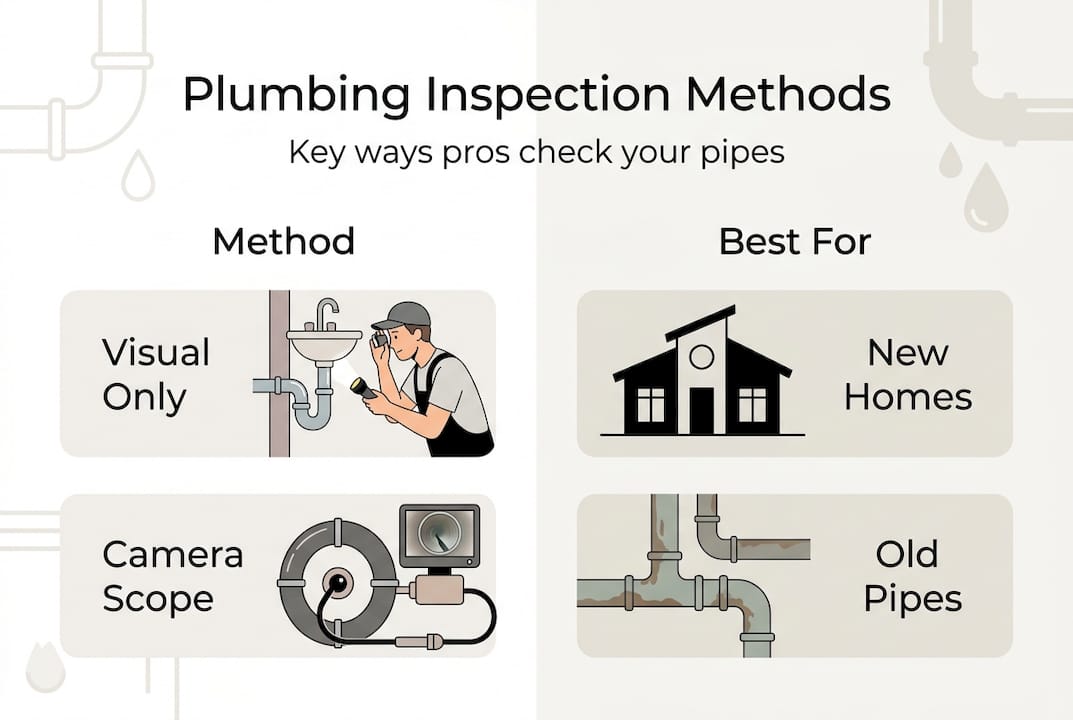
Visual inspections represent the most affordable option at $100-200. Plumbers examine accessible pipes, fixtures, and connections, checking for obvious leaks, corrosion, improper installations, and code violations. They test water pressure, run fixtures to verify drainage, and document visible conditions. Visual inspections work well for newer homes, routine maintenance checks, and situations where you need basic compliance verification.
Camera inspections cost $250 and up but deliver far more detailed information. Plumbers insert waterproof cameras into drain lines and sewers, recording video of internal pipe conditions. This technology reveals cracks, root intrusion, blockages, and deterioration invisible during visual checks. Camera inspections provide accurate assessments of sewer lines, especially critical in tree-root prone Southern California regions where mature landscaping threatens underground pipes.
Several factors push costs toward the higher end of these ranges:
- Property age and size increase inspection time and complexity
- Los Angeles County rates run 15-20% higher than Orange County due to labor costs
- Known issues requiring detailed investigation add diagnostic time
- Multi-story buildings need additional access equipment
- Sewer line length affects camera inspection pricing
Choosing between inspection methods depends on your specific circumstances and goals. The comparison below clarifies when each approach makes sense:
| Method | Best For | Limitations | Typical Cost |
|---|---|---|---|
| Visual only | New homes, routine checks, budget constraints | Misses hidden pipe damage, can’t assess sewer interiors | $100-200 |
| Camera only | Sewer line issues, pre-purchase evaluations, persistent drainage problems | Doesn’t check fixtures, water pressure, or above-ground plumbing | $250-400 |
| Hybrid approach | Older properties, comprehensive assessments, pre-sale inspections | Higher upfront cost but most thorough evaluation | $350-500 |
The hybrid approach combining visual and camera techniques delivers the best value for most homeowners. You get complete above-ground fixture checks plus underground pipe documentation. This comprehensive baseline establishes your system’s condition, making future inspections more efficient since plumbers can compare current findings against previous reports.
Expect inspections to take 1-3 hours depending on property size and method. Plumbers provide written reports documenting findings, code violations, recommended repairs, and estimated costs for corrections. Quality reports include photos or video evidence, making it easy to understand issues and prioritize fixes.
Pro Tip: Schedule camera and visual inspections together when buying a property or if your home is over 20 years old. The combined assessment benchmarks your entire plumbing system’s condition, preventing surprise repairs and giving you negotiating leverage with sellers. The $350-500 investment often uncovers thousands in hidden problems before you commit.
Common plumbing inspection failures and how to avoid them
Understanding typical inspection failures helps you maintain compliance and avoid the headaches of red tags, stop-work orders, and expensive corrections. Failures trigger red tags and stop-work orders from improper drain slope, wrong pipe materials, or missing backflow prevention devices.
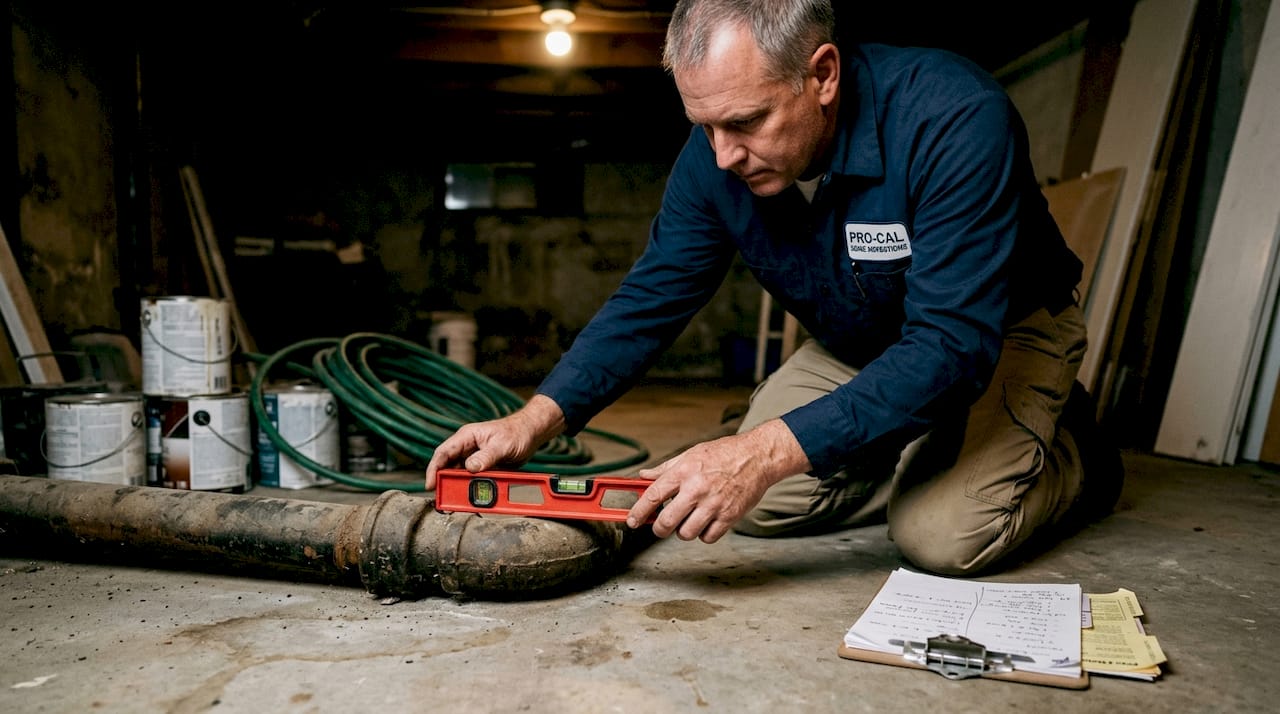
Improper drain slopes rank among the most frequent violations. California code requires minimum slopes of 1/4 inch per foot for most drain lines, ensuring gravity moves wastewater efficiently. Insufficient slope causes standing water, slow drainage, and eventual clogs. DIY remodelers often miss this requirement, installing drains too flat or even with reverse slopes that trap water. Inspectors measure slopes with levels and immediately flag violations.
Wrong pipe materials create serious compliance and safety issues. Older homes may have lead pipes, galvanized steel, or polybutylene, all prohibited for new installations or repairs. Even approved materials like PVC and CPVC have specific code applications. Using PVC for hot water supply lines violates code since it can’t handle high temperatures. ABS drain pipes require proper cement and fitting types. Mixing incompatible materials without approved transition fittings guarantees failure.
Missing or improperly installed backflow prevention devices pose health risks that inspectors take seriously. These devices prevent contaminated water from flowing backward into potable supplies. California requires backflow preventers on irrigation systems, commercial properties, and any cross-connections between potable and non-potable water sources. Residential properties need them on hose bibs and certain fixtures. Installing wrong device types or skipping them entirely results in immediate red tags.
Consequences of inspection failures extend beyond mere inconvenience. Stop-work orders halt construction until you correct violations, delaying projects and increasing costs. Red tags require re-inspection after repairs, adding $100-200 in additional fees. Neglecting inspections risks fines and habitability notices in rental properties enforced by LA County authorities. Severe violations can trigger daily fines until corrected, easily reaching thousands of dollars.
Older homes and rental properties face elevated failure risks. Decades-old plumbing systems often include materials and configurations that met old codes but violate current standards. Property managers must ensure repair plumbing orange county california work maintains habitability standards or face tenant complaints and legal action.
Follow these steps to prepare your property and minimize inspection failure risks:
- Hire licensed plumbers for all repairs and installations, ensuring code-compliant work from the start.
- Request pre-inspection consultations where plumbers identify potential violations before official inspections.
- Update outdated materials proactively, replacing galvanized pipes, polybutylene, and lead components.
- Document all plumbing work with permits, creating a compliance history that satisfies inspectors and future buyers.
- Address small issues immediately rather than allowing them to compound into major violations.
Maintenance practices that prevent common failures include:
- Clean drain lines annually to prevent clogs that stress pipes and fittings
- Inspect visible pipes quarterly for corrosion, leaks, and loose connections
- Test water pressure regularly, addressing high pressure that damages fixtures
- Verify backflow devices function properly through annual testing
- Use only code-compliant materials when making any repairs or modifications
- Keep appliance and fixture manuals documenting proper installation requirements
Property managers should implement systematic inspection protocols. Walk units quarterly, checking under sinks, around water heaters, and near washing machines for leaks or damage. Document conditions with photos, creating records that demonstrate proactive maintenance if disputes arise. Budget for plumbing upgrades in older buildings, replacing problem systems before they fail inspections or cause tenant issues.
Understanding your local jurisdiction’s specific requirements prevents surprises. Orange County and LA County building departments publish inspection checklists and code summaries online. Review these before starting projects or scheduling inspections. Some cities within these counties impose additional requirements beyond state code, making local research essential.
Expert plumbing services in Orange and Los Angeles Counties
Navigating plumbing inspections and maintaining code compliance requires professional expertise, especially in Southern California’s complex regulatory environment. Whether you need comprehensive inspections, emergency repairs, or proactive maintenance, working with licensed local professionals protects your property investment and ensures safety.
MDTECH Appliance Repair brings extensive plumbing knowledge to Orange and Los Angeles County homeowners and property managers. Our licensed technicians understand California Plumbing Code requirements, local jurisdiction variations, and the specific challenges aging infrastructure presents in Southern California properties. We provide thorough inspections that identify issues before they escalate, detailed reports that satisfy regulatory requirements, and prompt repairs that restore compliance and functionality.
Our comprehensive repair plumbing orange county california services cover everything from routine maintenance to complex system overhauls. We handle plumbing pipe repair orange county california projects efficiently, using modern materials and techniques that ensure long-lasting results. When you need reliable plumbing repair service you can trust, our team responds quickly with the expertise to diagnose problems accurately and implement effective solutions.
Schedule your comprehensive plumbing inspection today to safeguard your property, maintain compliance, and prevent costly emergency repairs tomorrow.
Frequently asked questions
What triggers a plumbing inspection?
Permit applications for remodeling, additions, or new construction automatically trigger mandatory inspections at multiple project stages. Property sales often include voluntary inspections requested by buyers or sellers. Rental properties face periodic inspections mandated by county health departments. Homeowners can request inspections anytime to verify system condition or investigate suspected problems.
How long does a typical inspection take?
Visual inspections of average-sized homes take 1-2 hours, covering accessible pipes, fixtures, and basic system testing. Camera inspections add 30-60 minutes depending on sewer line length and accessibility. Larger properties or those with known issues require 3-4 hours for comprehensive evaluation. Inspectors provide time estimates when scheduling based on your property specifics.
Are camera inspections worth the extra cost?
Camera inspections prove invaluable for homes over 20 years old, properties with mature trees near sewer lines, or when you’re experiencing persistent drainage issues. The $250-400 investment reveals hidden damage that visual inspections miss, preventing thousands in surprise repairs. For newer homes without symptoms, visual inspections may suffice for routine maintenance.
How do I prepare my home for an inspection?
Clear access to all plumbing fixtures, water heaters, and visible pipes by removing stored items from under sinks and around equipment. Ensure inspectors can reach shut-off valves, cleanouts, and exterior hose bibs. Document any known issues or recent repairs. For camera inspections, avoid using drains for several hours beforehand to allow clear video capture.
What happens if my property fails the inspection?
Inspectors issue detailed reports listing specific violations and required corrections. You must hire licensed plumbers to fix problems, then schedule re-inspection once work completes. Re-inspection fees typically run $100-200. For permitted work, you cannot proceed until passing inspection. Rental properties may face citations, fines, or habitability notices requiring immediate correction before tenants can occupy units.
Recommended
- What is smart home plumbing? A 2026 guide for homeowners
- Certified plumbers: ensuring safe plumbing in 2026
- Plumbing Pipe Repair – Orange County, California – MDTECH APPLIANCE REPAIR
- Repair Plumbing – Orange County, California – MDTECH APPLIANCE REPAIR
- Smart toilet installation guide for homeowners in 2026– Smart Toilets & Bidet Seats | Premium Bidet