
A musty washer is almost always a moisture and residue problem: damp rubber, leftover detergent and a door that stays shut. Most cases clear with a hot cleaning cycle, a scrubbed door gasket and a clean dispenser drawer. If the smell survives that, or smells like sewage rather than mildew, the cause is probably a clogged pump filter, a drain problem or a failing part, and that is when a technician saves you time.
TL;DR
- Musty washer odor comes from biofilm: detergent, softener and lint residue that bacteria and mold feed on in a damp drum, gasket and drawer.
- Fix it in this order: clean the door seal, run a Clean Washer cycle, wash the dispenser drawer, then leave the door ajar.
- Too much detergent is the most common habit behind the problem, especially in high-efficiency machines.
- A sewage or rotten-egg smell that survives cleaning points to the drain line or plumbing, not the drum.
- If the odor returns within a few weeks, look for a dirty pump filter, standing water or a worn gasket.
Table of Contents
- What that musty smell actually is
- Where the smell hides
- Why it keeps happening
- How to get rid of the smell: step by step
- When it is not the washer
- Signs you need a technician
- Our perspective: what we see in the field
- Keep it from coming back
- Need a hand? Book a washer repair
- FAQ
- Sources
What that musty smell actually is
That smell is not your laundry. It is the machine. Manufacturers describe odors in washers as the result of bacteria, mold and mildew feeding on residue left by detergent, fabric softener and soil, especially when the door or lid stays closed and moisture cannot escape.
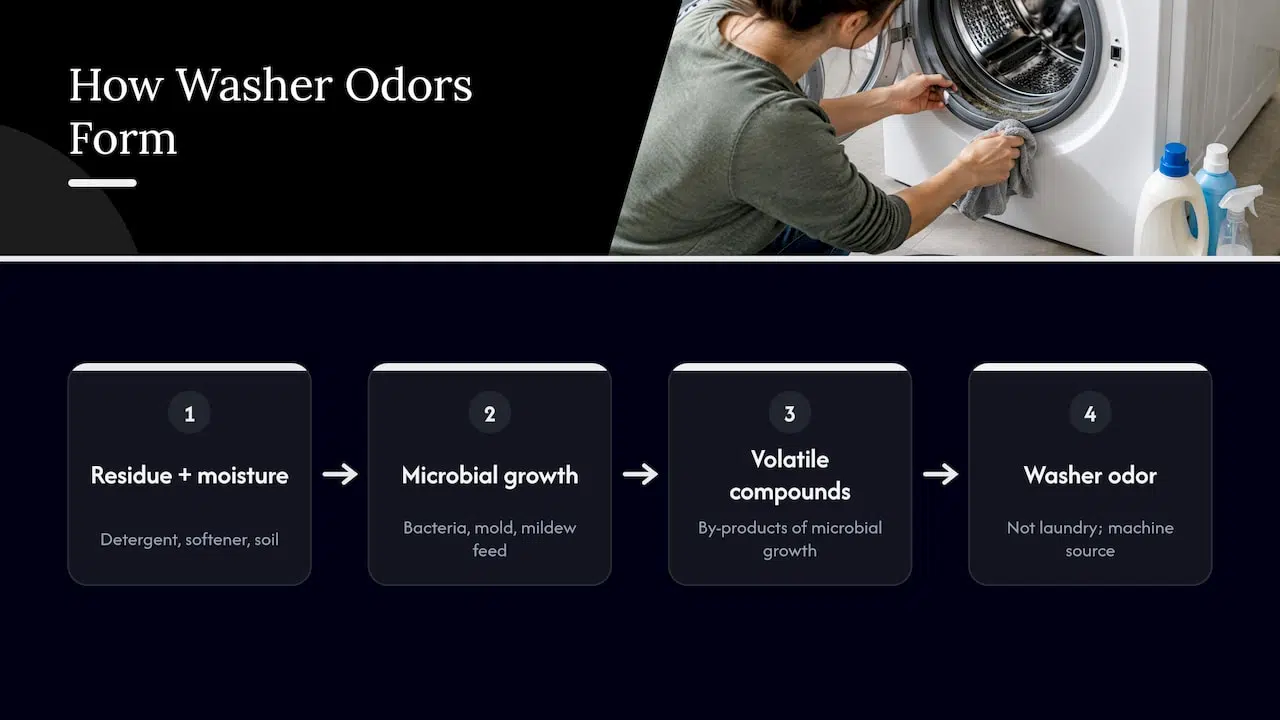
There is chemistry behind it too. A 2013 study on malodor generated by washing machines, indexed in the EPA’s HERO database, links laundry smell to volatile compounds produced by microbial growth, including dimethyl disulfide and isovaleric acid. In plain terms, the smell is the by-product of living organisms digesting leftovers in your machine. Masking it with a scented tablet does nothing about the source.
Does musty always mean mold?
Not automatically. A musty or mildew-like smell can come from bacteria, from fungi or from a mix of both in the same film. Mold is a common part of that film in damp, poorly ventilated spots, but you cannot confirm it by nose. What matters is the treatment, and it is the same: remove the film, then dry the machine.
The EPA’s guidance on mold cleanup in the home says hard surfaces can be scrubbed with detergent and water, while porous or heavily contaminated materials may be impossible to clean and need replacing. For a washer, that matters in one place: a gasket with deeply embedded black staining that returns right after scrubbing is a candidate for replacement, not more cleaning.
Where the smell hides
Check these spots in order. Most musty washers have a problem in at least two of them.
| Spot | What to look for | Typical fix |
|---|---|---|
| Door gasket (front loaders) | Black or pink film, trapped water, hair and lint in the folds | Scrub with diluted bleach solution per the manufacturer, rinse, dry |
| Detergent drawer and recess | Slimy residue, dried softener, dark spots in the cavity | Remove, wash, scrub the recess |
| Drum and outer tub | Smell when you open the door, even with an empty drum | Clean Washer cycle |
| Pump filter | Coins, lint, standing dirty water | Drain and clean the filter |
| Drain hose and standpipe | Gurgling, sewer smell, slow draining | Inspect connection, call a plumber if the line is the issue |
| Top-load lid and underside | Smell strongest right after opening the lid | Leave lid open, wipe under the rim |
Why it keeps happening
The door stays shut
A closed washer is a warm, damp box. Whirlpool’s guidance is to leave the door open between loads so fresh air can evaporate leftover moisture. GE says the same for top loaders: odors are usually caused by leaving the lid closed, which stops air from circulating and drying the tub.
Too much detergent
This is the one most people miss. Whirlpool’s own advice is that using more than the recommended amount of detergent leaves a film that becomes a breeding ground, and that heavy suds mean residue rather than better cleaning. High-efficiency machines use little water, so extra soap has nowhere to go. Use HE detergent only, measure it, and if your clothes come out of a normal load with suds on them, cut the dose further.
GE’s guidance for front loaders also covers detergent: its odor-in-tub support page begins its list of fixes with how you use detergent, before anything else.
Cool, short cycles and damp loads
Washing everything on cold quick cycles never heats the drum enough to loosen residue. Leaving wet towels or gym clothes in the drum for hours feeds the problem directly. Move wet laundry to the dryer promptly, and run a hot cycle regularly.
Clogged pump filter
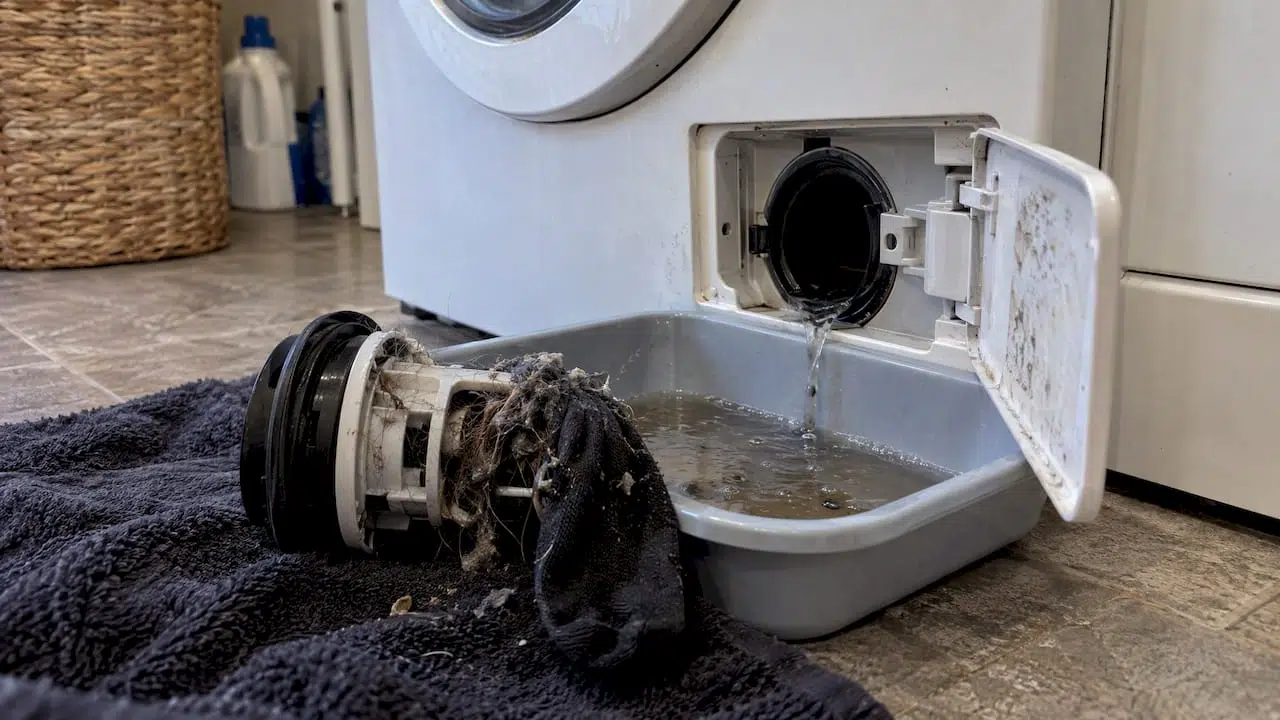
Front loaders have a filter that catches small items before they reach the drain. GE explains that small articles can pass to the pump and that the filter should be cleaned out. A filter full of lint, hair and a stray sock holds dirty water and smells accordingly. Put a towel and a shallow pan under it before you open it, because water will come out.
How to get rid of the smell: step by step
Read your owner’s manual first. Models differ in cleaning cycle names, bleach tolerance and filter location. The steps below follow manufacturer guidance for front loaders; use one cleaning product at a time and never combine bleach with other cleaners.
- Empty the washer. Remove all clothes and look inside the drum and gasket for trapped items.
- Clean the door seal. Whirlpool’s door seal instructions call for pulling the seal back to inspect it for stains and soil. For stained areas, the manufacturer’s solution is 3/4 cup of liquid chlorine bleach in 1 gallon of warm water. Wear rubber gloves, let it sit about 5 minutes, then scrub and rinse well. Work all the way around the fold, where water pools.
- Run a Clean Washer cycle. Use the machine’s dedicated cycle (often called Clean Washer, Self Clean or BasketClean) with a washer cleaner, or with 1 cup of liquid chlorine bleach where your manual allows it. No clothes inside.
- Wash the dispenser drawer. Pull it out, soak it in warm soapy water, scrub the recess with a small brush and let everything dry.
- Clean the pump filter. If your machine has an accessible one, drain it and clear it.
- Wipe and dry. Wipe the gasket, door glass and rim with a dry cloth. Leave the door open.
- Test. Run a normal hot load with the correct amount of detergent and smell the drum afterward.
Whirlpool’s mildew guide recommends repeating a Clean Washer cycle monthly as maintenance. A gasket-specific walkthrough is also useful if your seal is badly built up.
Top loaders
Top loaders lack a gasket, but residue collects under the agitator or impeller cap, around the rim and in the dispenser. Run the tub-clean cycle, wipe under the lid rim and in the dispenser, and keep the lid propped open afterward.
A note on vinegar
Vinegar is the most popular home fix, and many readers report it did nothing. That fits the cause: a thin acid rinse does not strip a biofilm that has built up for months, and the manufacturer procedures above are built around a dedicated cycle plus manual scrubbing of the gasket. Check your manual before using any home remedy, since some brands advise against particular chemicals on seals.
When it is not the washer
A sharp sewage or rotten-egg smell is a different problem. Whirlpool notes that persistent sewage-like smells often indicate an external plumbing issue rather than a machine fault. Signs that point that way:
- The smell is strongest around the standpipe or wall box, not inside the drum.
- The smell also appears at a nearby sink or floor drain.
- You hear gurgling when the washer drains, or water backs up.
- A clean drum still smells the same after a hot cycle.
If that sounds familiar, read our guide on a sink that smells like sewer, which covers the same dry-trap and vent causes. A blocked or dry drain trap needs a plumber, not another bottle of cleaner.
Signs you need a technician
Self-cleaning is worth one full round. Call a pro if:
- The smell returns within two or three weeks of a thorough clean.
- Water remains in the drum after a cycle, which suggests a drain pump or hose fault.
- The gasket is torn, deformed or stained so deeply that scrubbing changes nothing.
- You see leaks around the door or under the machine.
- The washer shows error codes, vibrates badly or stops spinning. Our guides on washer warning signs and a washer that will not spin help you tell a nuisance from a failing part.
- You are weighing a new machine. Our note on repair versus replacement lays out the factors.
A machine that holds standing water will keep growing odor no matter how often you clean it. Fixing the drain pump, hose or door seal is the lasting solution.
Our perspective: what we see in the field
We repair washers in homes across Orange County and Los Angeles County, and the musty-smell call has a familiar pattern. The owner has already tried vinegar, scented tablets and a couple of cycles, and the real cause is usually one of three things: a gasket that has never been scrubbed by hand, a dispenser recess nobody has looked into, or a habit of closing the door on a wet drum.
We tell customers to treat the cleaning cycle as the last step, not the first. Scrub what you can reach, then run the cycle to rinse out what you loosened. And we tell them to cut the detergent. Most households use more than the machine needs, and the smell is the bill for it.
Where we earn the call is the second tier of causes: a pump filter that has not been opened in years, a drain hose with a bad loop, a worn seal, a pump that leaves water behind. These are quick to confirm on site, and they are the reason a thorough homeowner clean sometimes still fails. If it fails, that is information, not a failure on your part.
If you want a printable routine, our washing machine care tips and washer maintenance guide cover the monthly and yearly habits that keep this from coming back.
— MDTECH
Keep it from coming back
A five-minute routine beats a deep clean every few months.
- After each load, leave the door or lid open. On front loaders, wipe the gasket if you see water pooled in it.
- Measure detergent. Use HE detergent, and use the amount the cup or label recommends, or less in soft water.
- Pull wet laundry out quickly. Do not let it sit in the drum.
- Run a hot wash regularly, and a Clean Washer cycle monthly, as the manufacturer advises.
- Pull out the drawer every month or two and rinse it.
- Check the pump filter a couple of times a year, and after any load where something could have slipped out of a pocket.
- Keep the area dry. Moisture on the floor or behind the machine hints at a leak that needs fixing.
Brand matters a little. Some European-built front loaders have tighter seals and deeper folds, and their owners benefit from extra attention to the gasket. If you own one, our Bosch troubleshooting guide is a useful companion.
Need a hand? Book a washer repair
If you have cleaned the gasket, run the cycle and still smell mildew, or you suspect a drain or pump problem, we can find the cause. MDTECH sends licensed technicians for appliance repair across Orange County and Los Angeles County, and you can book online. If the odor turns out to be a plumbing issue, we also handle plumbing repair. For a step-by-step version of the cleaning process with a call-a-pro cutoff, see our 45-minute mildew fix.
FAQ
How do I get the musty smell out of my washing machine?
Scrub the door gasket, wash the detergent drawer and run a Clean Washer cycle with a washer cleaner or, if your manual allows, 1 cup of liquid chlorine bleach. Then dry the gasket and leave the door open. Use less detergent from now on, or the film will rebuild.
Why does my washing machine keep smelling musty?
The usual reasons are a closed door, too much detergent, cold short cycles and a gasket or filter that never gets cleaned. If you have done all that and the smell returns within weeks, check for standing water, a clogged pump filter or a damaged seal.
Does a musty smell automatically mean mold?
No. It can come from bacteria, fungi or both growing in the residue film. You do not need lab confirmation to act, because the cleaning method is the same. Replace the gasket if staining keeps coming back after scrubbing.
Why does my washing machine smell like sewage instead of mildew?
A sewer or rotten-egg smell usually points to the drain line, standpipe trap or venting rather than the drum. If cleaning does not touch it and nearby drains smell too, have a plumber inspect the line.
Sources
- Why Does My Washing Machine Smell Like Mildew? (Whirlpool)
- Removing Odors or Smells, Front Load Washer (Whirlpool Product Help)
- Cleaning the Door Seal, Front Load Washer (Whirlpool Product Help)
- How to Clean the Gasket on a Front Load Washer (Whirlpool)
- Top Load Washer, Odor in Tub (GE Appliances)
- Front Load Washer, Odor in Tub (GE Appliances)
- Front Load Washer, Cleaning a Pump Filter (GE Appliances)
- Mold Cleanup in Your Home (US EPA)
- The potential impact of washing machines on laundry malodour generation (EPA HERO)