
If you notice an unexplained spike in your water bill, the sound of running water when fixtures are off, warm spots on the floor, or persistent damp flooring, treat it as a possible slab leak. When pooling water appears alongside foundation cracks, act fast: shut off the main if flooding is active, otherwise run a two-hour water meter test right away to confirm a continuous leak before calling a plumber.
TL;DR:
- Running a two-hour water meter test after turning off all fixtures can confirm the presence of a continuous slab leak.
- Signs like unexplained water bill increases and warm spots on the floor are hints but require testing for confirmation.
- Location methods such as acoustic listening, thermal imaging, tracer gas, and ground-penetrating radar escalate in invasiveness and cost based on initial results.
- Immediate action is critical when active water pooling or widening foundation cracks occur, but most leaks can be scheduled for repair once confirmed.
- Installing point-of-use sensors and inline flow monitors can help detect leaks early and prevent extensive floor or foundation damage.
Table of Contents
- 1. Key signs of a slab leak
- 2. Quick home tests to confirm a continuous leak
- 3. How professionals locate slab leaks
- 4. When to call a plumber and what to expect
- 5. Prevention and monitoring options
- 6. Immediate checklist to limit damage
- 7. MDTECH’s field-tested approach to slab leak calls
- 8. What this checklist gets right that most advice misses
- Book MDTECH for leak detection and repair
- Sources
- FAQ
1. Key signs of a slab leak
A slab leak rarely announces itself with a burst pipe. It shows up in small, easy-to-dismiss clues that add up over weeks or months.
- Unexplained water bill increase: compare your last two or three bills against the same period last year; a jump with no added usage (guests, gardening, a new appliance) points to a hidden leak.
- Sounds of running water when taps are closed: listen near the floor in quiet rooms, especially at night; plumbers use electronic listening devices to pick up the same sound at a much lower volume than the human ear can catch.
- Warm or hot spots on the floor: press a bare foot to tile or wood flooring in different rooms; a patch that stays noticeably warmer than the rest usually sits above a leaking hot-water line, since hot-water slab leaks respond well to thermal imaging.
- Moisture, damp patches, or buckled flooring: check carpet edges, laminate seams, and baseboards for curling, discoloration, or a spongy feel underfoot, which often signals water moving up through the slab.
- Low water pressure or sputtering fixtures: a leak under the slab can pull pressure away from showers and faucets, especially when the drop is sudden and affects multiple fixtures at once.
- Musty odors and visible mold or staining: a persistent damp smell near baseboards or a wall corner, paired with faint discoloration, suggests moisture has been present under or beside the slab for some time.
- Foundation cracks, settling, or uneven floors: hairline cracks that widen, doors that stick, or floors that slope slightly are common once a leak has run long enough to erode the soil supporting the slab.
- Outdoor clues near the slab perimeter: municipal leak-detection guides point to greener patches of lawn, small depressions, or pooling water along the foundation as signs of an underground supply-line or service-line leak.
None of these signs alone confirms a slab leak. A warm floor could just be sunlight through a window, and a bill spike could reflect a forgotten sprinkler cycle. The pattern matters more than any single clue, which is why a direct test comes next.
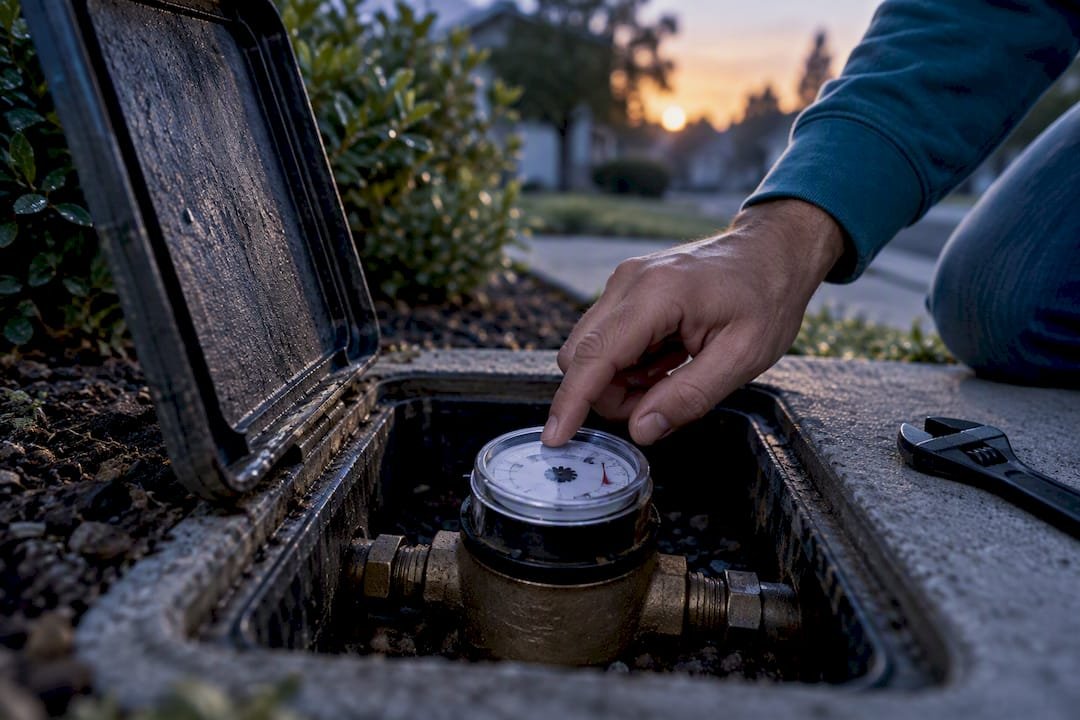
Pro Tip: Check your water meter before bed and again first thing in the morning without using any water overnight; steady movement on the dial is one of the clearest early warnings you can get for free.
2. Quick home tests to confirm a continuous leak
Before booking a technician, a few simple checks can tell you whether you are dealing with a continuous leak and roughly where it sits.
- Run the two-hour meter test: shut off every fixture and appliance that uses water, record the meter reading, wait two hours without using water, then check it again. EPA guidance on Fix a Leak Week recommends this as the first diagnostic step, since any change in the reading confirms a leak somewhere in the system.
- Do a toilet dye test: drop food coloring into each toilet tank and wait 10 minutes without flushing; color appearing in the bowl means a leaking flapper, not a slab leak, and rules out one of the most common false alarms.
- Isolate irrigation and outdoor lines: shut the valve that feeds sprinklers or a pool fill line, then repeat the meter test, since a leaking irrigation line can mimic slab-leak symptoms on the bill.
- Read the meter with the house main off: Portland’s water bureau notes that if the dial still moves while the home’s main shutoff is closed, the leak is likely on the service line between the meter and the house rather than inside it; if the dial stays still, the leak is inside the home, which points more strongly toward the slab.
- Document everything with photos and timestamps: capture the meter readings, any damp spots, and cracked flooring with a phone camera, since a written record speeds up a contractor’s estimate and supports any insurance claim.
Household leaks waste a significant amount of water annually, and fixing them can reduce water bills noticeably, according to the EPA. That gap between a normal bill and a leaking one is usually large enough to notice within a single billing cycle.
3. How professionals locate slab leaks
Once a home test confirms a continuous leak, locating it precisely is a job for equipment most homeowners do not own. Professionals typically start with the least invasive method and escalate only if needed.
- Acoustic or electronic listening: technicians use ground microphones to isolate the sound of water escaping under pressure, which works well for both hot and cold lines, but requires a quiet environment.
- Thermal imaging: this method reads temperature differences on the slab surface and is most reliable for hot-water line leaks, with less accuracy on cold-water lines since they carry no heat signature.
- Tracer gas: a safe, inert gas is pushed through the empty pipe and detected as it escapes through the slab, useful when acoustic tools cannot pinpoint a quiet or slow leak.
- Ground-penetrating radar (GPR): this maps subsurface conditions without cutting into the slab and is typically reserved for complex jobs where other methods have not narrowed the location enough.
This Old House describes this escalation sequence as standard practice: non-invasive listening and thermal checks first, then tracer gas or GPR when the picture is still unclear. Getting a precise location before cutting concrete matters because it turns an open-ended repair into a contained one with a defined cost.
Pro Tip: Ask any contractor which detection method they plan to use before agreeing to a slab cut; a tighter location means a smaller hole and a smaller bill.
4. When to call a plumber and what to expect
Some signs call for an emergency visit, others can wait for a scheduled appointment.
- Call immediately if you see active pooling water, a foundation crack that has visibly widened in days, or a sudden and severe loss of water pressure throughout the house.
- Schedule a standard visit if the meter test confirms a leak but there is no visible water damage or structural movement yet.
- Gather your evidence first: meter test results, dated photos of damp areas or cracks, and notes on when you first noticed the sound of running water all help a technician diagnose faster.
- Expect one of three repair routes: a spot repair that accesses just the leaking section, a full reroute that runs new piping above the slab or through walls, or, in more damaged cases, a broader slab access; each carries a different cost and disruption level tied to pipe material, access difficulty, and whether a hot-water line is involved.
- Ask before hiring: confirm the contractor is licensed and insured, ask which detection method they use, and get a written estimate before any concrete is cut.
5. Prevention and monitoring options
Catching a leak early usually costs far less than repairing slab and flooring damage after the fact.
- Point-of-use moisture sensors: small battery-powered sensors placed near water heaters, under sinks, or behind washing machines sound an alarm the moment they detect standing water.
- In-line flow monitors: installed at the main water line, these devices track flow patterns and flag anomalies such as constant low-level flow that suggests a hidden leak.
- Hybrid systems: EPA’s water flow monitoring guide explains that pairing sensors with an automatic shutoff valve reduces both detection time and the damage a leak causes before anyone notices.
- Routine checks: inspect toilet flappers, hose bib connections, and irrigation lines each season, since these are common sources of false alarms that mimic slab-leak symptoms.
Homeowners weighing a smart home plumbing setup can pair a flow monitor with point-of-use sensors for coverage at both the whole-house and fixture level.
6. Immediate checklist to limit damage
- Shut off the main water valve if you see active flooding or significant pooling.
- Record the meter reading, run the two-hour test, and photograph any wet flooring or foundation cracks.
- Run a toilet dye test and check hose connections to rule out simple fixture leaks.
- Turn off irrigation and note any unusually green or soggy patches outside near the foundation.
- Call a licensed plumber and share your documented findings, including meter readings and photos.
For a broader rundown of what else might be causing unusual water use, this guide on common plumbing problems helps separate slab leaks from simpler fixes.
7. MDTECH’s field-tested approach to slab leak calls
Homeowners often wait too long, assuming a bill spike is a fluke or blaming an appliance instead of checking the meter. MDTECH technicians typically test hot-water runs first, since hot-water lines fail more often under slab conditions due to thermal expansion. Licensed technicians offer online booking and coverage across Orange and Los Angeles counties, and homeowners who arrive with meter readings, photos, and dye test results tend to get a faster, more accurate diagnosis on the first visit.
8. What this checklist gets right that most advice misses
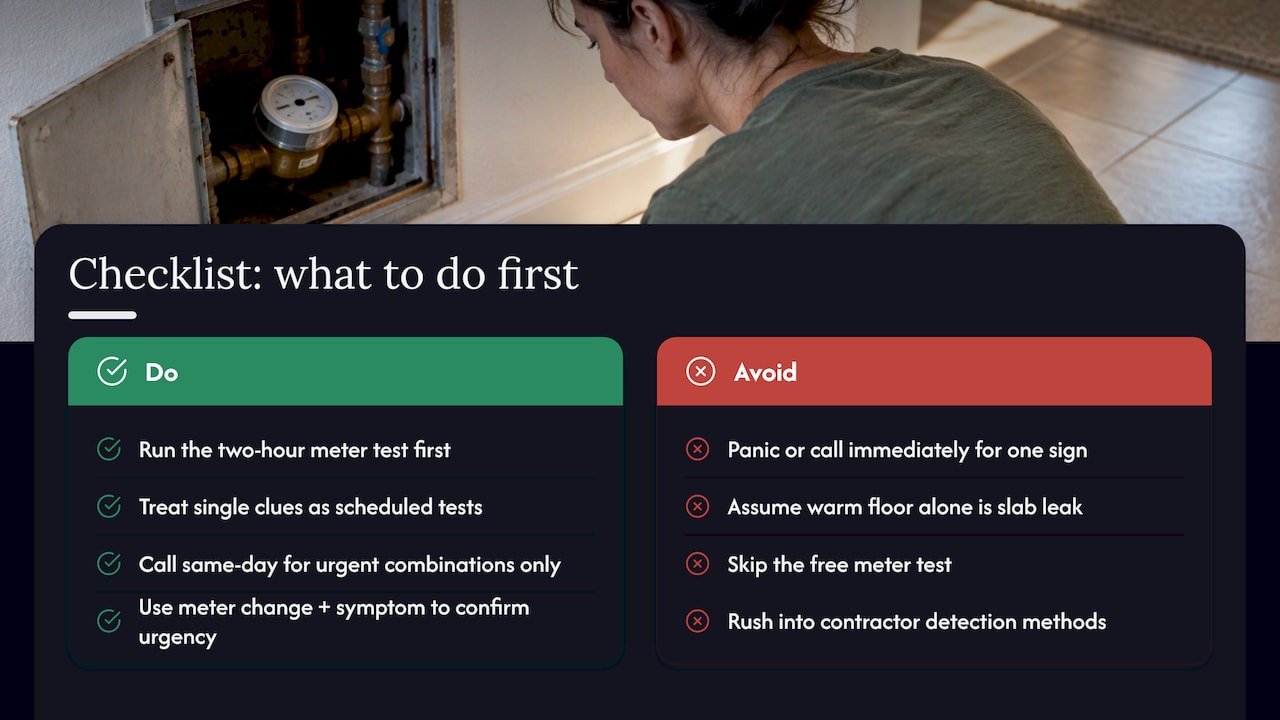
Most slab leak articles list symptoms and stop there, leaving homeowners to guess what to do next. The real value sits in the sequence: run the two-hour meter test before worrying about which detection method a contractor might use, since that single free step separates a continuous leak from a one-off appliance glitch or irrigation cycle. Too much advice treats every warm floor or bill spike as a slab emergency, which pushes people toward panic or unnecessary service calls.
The signs that actually deserve urgency are combinations, not single clues: pooling water paired with a widening crack, or a confirmed meter change paired with a warm floor. Everything else earns a scheduled test, not a same-day call. If you take one thing from this, let it be the meter test itself. It costs nothing, takes two hours, and tells you more than any single symptom on its own.
— MDTECH
Book MDTECH for leak detection and repair
A confirmed slab leak calls for a technician who can locate it precisely and repair it without guesswork. MDTECH’s licensed plumbers handle leak detection, slab-leak diagnosis, and pipe repair or reroute work across Orange and Los Angeles counties, and every visit starts with a clear estimate before any concrete gets cut.
| What you get | Detail |
|---|---|
| Service | Leak detection and slab-leak diagnosis |
| Coverage | Orange County and Los Angeles County |
| Technicians | Licensed plumbers |
| Next step | Book a visit and share your meter and photo evidence |
Bring your meter test results and photos to the visit and a technician can move straight to locating the leak. Schedule a plumbing repair visit to get a written estimate before anything is cut.
Sources
FAQ
Does homeowners insurance cover a slab leak?
Coverage depends on the policy and the cause: sudden, accidental pipe failure is often covered, while gradual leaks or wear-related damage are frequently excluded. Check your policy’s specific plumbing and water-damage language or ask your insurer directly, since terms vary widely between carriers.
How long can a slab leak go undetected?
A slow slab leak can run for weeks or months before symptoms like a bill spike, warm floor spot, or damp carpet become noticeable. Running the two-hour meter test periodically is the most reliable way to catch a continuous leak early, before it causes foundation or flooring damage.
Is a slab leak a big deal?
A slab leak can become a serious problem if left unaddressed, since ongoing water flow can erode soil under the foundation and lead to cracks or uneven flooring. Catching it early with a meter test and prompt repair usually limits the damage to the plumbing itself rather than the structure.
Is a slab leak an emergency?
It depends on what you observe: active pooling water, a rapidly widening foundation crack, or a sudden major loss of water pressure call for immediate action, including shutting off the main if flooding is present. A confirmed leak with no visible damage yet can typically be scheduled rather than treated as an emergency.