
Hidden water leaks cost American homeowners an average of $10,000 in property damage annually, yet most remain undetected for months. Smart home plumbing transforms water management through connected sensors and automated controls that monitor every drop flowing through your pipes. This technology offers Orange and Los Angeles County residents a powerful defense against costly water damage while dramatically reducing utility bills. This guide explains how smart plumbing systems work, their advanced leak detection capabilities, and what you need to know before upgrading your home.
Table of Contents
- What Is Smart Home Plumbing And How Does It Work?
- Advanced Leak Detection: AI, Sensors, And Automation In Smart Plumbing
- Smart Irrigation And Water Conservation Benefits
- Installation Requirements And Practical Considerations For Orange And Los Angeles County Homeowners
- Upgrade Your Plumbing With Professional Smart Home Installation And Repairs
- Frequently Asked Questions About Smart Home Plumbing
Key takeaways
| Point | Details |
|---|---|
| Smart plumbing uses sensors and automation | Connected devices monitor water flow continuously and control shutoff valves remotely through smartphone apps |
| AI algorithms learn your water patterns | Systems analyze household usage over seven days to distinguish normal activity from potential leaks |
| MicroLeak technology detects tiny drips | Daily automated tests identify leaks as small as one drip per minute before they cause major damage |
| Smart irrigation saves water outdoors | Weather-based controllers adjust watering schedules automatically, reducing waste and lowering bills |
| Professional installation ensures reliability | Proper setup on the main water line with verified Wi-Fi connectivity maximizes system effectiveness |
What is smart home plumbing and how does it work?
Smart home plumbing represents a fundamental shift in how we manage water systems. At its core, smart plumbing involves connecting water-using appliances and fixtures to a home’s Wi-Fi network for remote monitoring and control. This integration allows homeowners to track water usage, detect problems instantly, and prevent damage from anywhere using a smartphone app.
The hardware foundation includes several key components working together. The core of a smart water system is a motorized valve installed on the main water line, controlled by sensors that detect leaks or unusual flow patterns. Additional leak sensors placed near appliances, water heaters, and under sinks create a comprehensive monitoring network throughout your home.
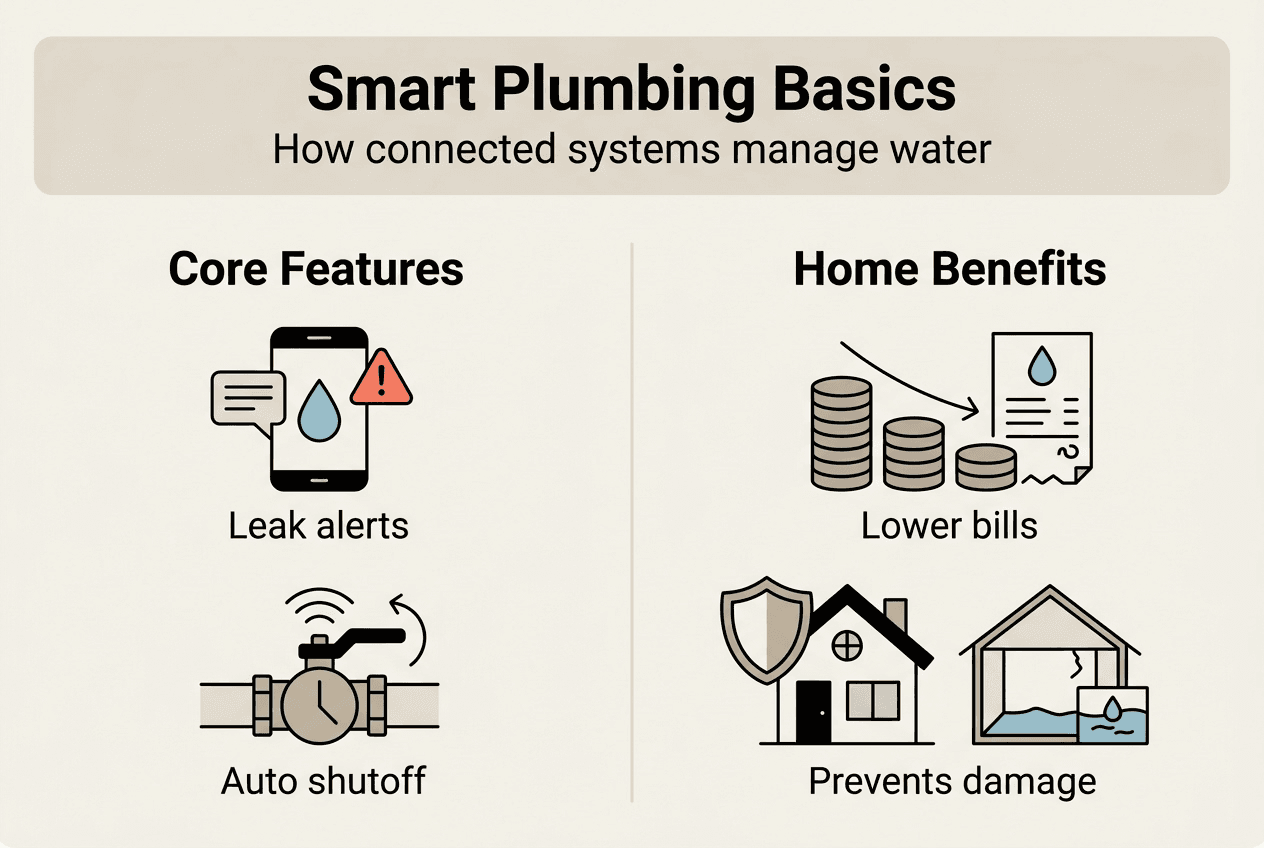
Typical smart plumbing features include:
- Real-time leak detection with instant mobile alerts
- Automatic water shutoff when abnormal flow is detected
- Remote valve control to turn water on or off from anywhere
- Detailed usage reports showing consumption by fixture or time
- Pressure monitoring to identify pipe stress or blockages
Continuous monitoring provides the critical advantage of early detection. Traditional plumbing relies on visible signs like water stains or puddles, which appear only after significant damage occurs. Smart systems analyze flow data every second, catching problems when they’re still manageable. This constant vigilance protects your home even when you’re away for extended periods.
These systems distinguish normal water use from anomalies through sophisticated sensor arrays and real-time data processing. When you flush a toilet or run the dishwasher, the system recognizes these as expected patterns. A slow, continuous trickle from a leaking flapper valve triggers an alert because it doesn’t match learned behavior. This intelligent differentiation minimizes false alarms while ensuring genuine threats never go unnoticed.
Pro Tip: Before scheduling water hose installation or other plumbing work, verify your home’s main shutoff valve location and ensure it’s accessible for potential smart device integration.
For homeowners considering upgrades, understanding your existing plumbing condition helps determine compatibility. Older homes may need preliminary repair plumbing orange county california services to address corroded pipes or outdated fixtures before adding smart technology.
Advanced leak detection: AI, sensors, and automation in smart plumbing
Artificial intelligence elevates smart plumbing beyond simple flow monitoring into predictive water management. FloSense algorithms use artificial intelligence to learn a home’s unique water footprint during an initial Learning Mode over seven days. During this period, the system observes when you shower, run laundry, water plants, and perform other water-consuming activities. It builds a behavioral model specific to your household, accounting for occupancy patterns, fixture types, and seasonal variations.
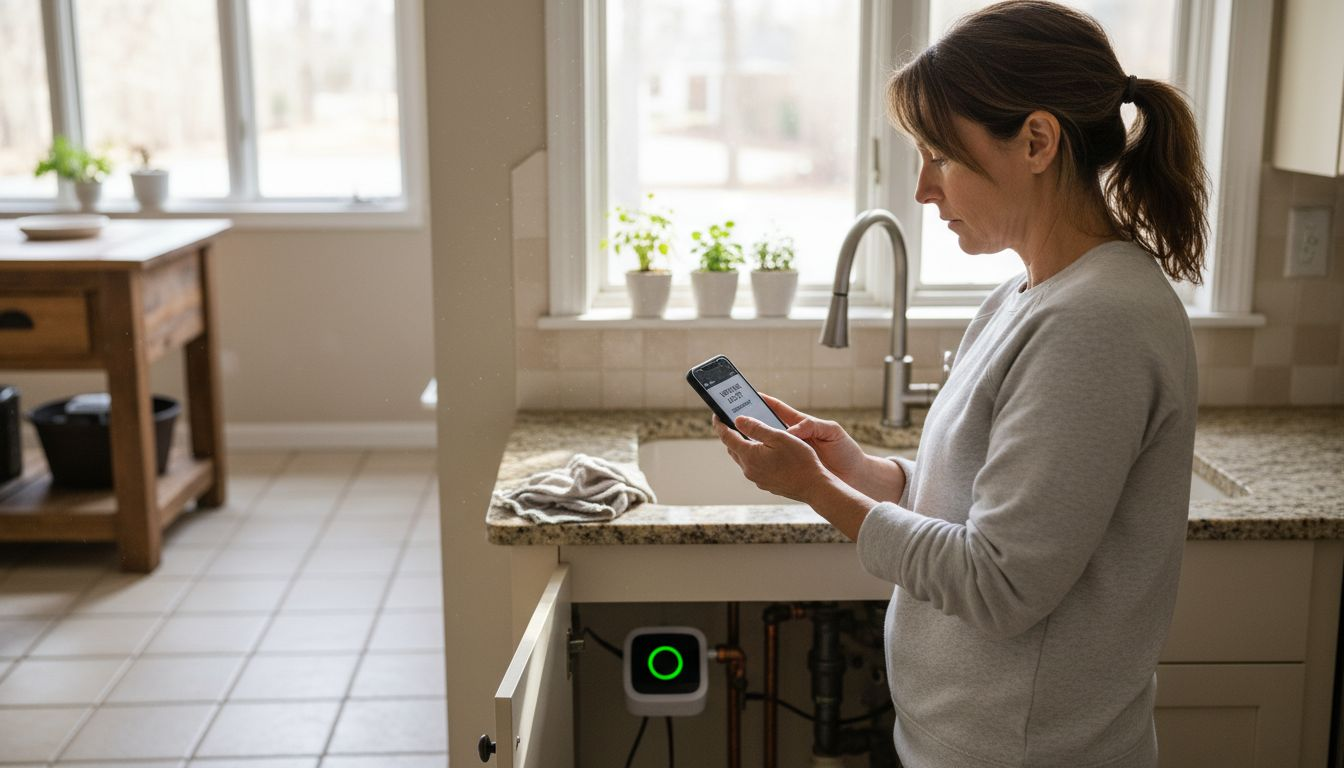
Once trained, the AI continuously compares current usage against this baseline. A toilet running after everyone leaves for work stands out immediately. The system distinguishes between a teenager taking an unusually long shower and a burst pipe flooding the basement. This contextual awareness dramatically reduces false positives that plague simpler flow-based detectors.
MicroLeak technology represents a breakthrough in sensitivity. The patented MicroLeak technology runs daily automatic Health Tests detecting leaks as small as a drip per minute. These tests pressurize the system briefly when no water is being used, typically during early morning hours. Any pressure drop indicates water escaping somewhere, even if the leak is too small to register during normal flow monitoring.
The impact statistics are compelling:
| Metric | Result | Timeframe |
|---|---|---|
| Users discovering leaks | 60% found at least one leak | First 30 days |
| Household water waste reduction | Over 90% when fully utilized | Ongoing |
| Average leak detection size | 1 drip per minute | Daily tests |
| False alarm rate | Under 5% after learning period | After 7 days |
User interaction plays a crucial role in system accuracy. When you receive an alert, the app asks you to confirm whether the water use was intentional. Marked a shower alert as expected? The AI adjusts its model to recognize similar patterns in the future. This feedback loop continuously refines detection algorithms, making the system smarter over time.
Compared to traditional methods, smart detection offers overwhelming advantages. Visual inspections miss hidden leaks behind walls or under foundations until catastrophic damage appears. Water meter checks require manual reading and only reveal usage totals, not leak locations or sizes. Moisture sensors detect water after it’s already escaped and potentially damaged materials. Smart plumbing identifies problems at the source before a single drop causes harm.
Pro Tip: If you notice signs you need appliance repair like unusual sounds or performance issues from water-using appliances, address them promptly to prevent leaks that even smart systems may struggle to pinpoint within complex appliance mechanisms.
Refrigerator water lines present a common leak source. Understanding why refrigerators leak water helps you recognize when appliance issues require attention separate from whole-house monitoring systems.
Smart irrigation and water conservation benefits
Smart irrigation controllers extend plumbing intelligence beyond your home’s walls into landscape management. Smart irrigation controllers optimize watering schedules based on weather data, leading to water and cost savings. These devices connect to local weather stations, soil moisture sensors, and your home’s smart plumbing network to deliver precisely the water your landscape needs.
Weather-adjusted watering prevents the wasteful practice of irrigating during or right before rainfall. Controllers access real-time precipitation forecasts and automatically skip scheduled watering when rain is coming. They also adjust duration based on temperature, humidity, and wind conditions that affect evaporation rates. A cool, overcast day requires less water than a hot, sunny afternoon for the same landscape.
The benefits stack up quickly for California homeowners:
- Reduced water waste by eliminating unnecessary irrigation cycles
- Lower monthly utility bills through optimized consumption
- Healthier plants and lawns from consistent, appropriate moisture levels
- Environmental impact reduction in drought-prone regions
- Compliance with local water restrictions and conservation mandates
- Extended irrigation system life through controlled, efficient operation
How smart irrigation responds to conditions follows a logical sequence:
- System checks weather forecast and current soil moisture at scheduled watering time
- Algorithms calculate evapotranspiration rate based on temperature, humidity, and sun exposure
- Controller determines if watering is needed and calculates optimal duration
- If conditions warrant, system activates zones according to plant-specific requirements
- Post-watering, system logs usage data and adjusts future schedules based on results
Comparing traditional and smart approaches reveals dramatic differences:
| Feature | Traditional Irrigation | Smart Irrigation |
|---|---|---|
| Schedule adjustment | Manual, seasonal at best | Automatic, daily based on weather |
| Rain response | Continues unless manually disabled | Auto-skips during precipitation |
| Zone customization | Timer-based, uniform duration | Plant-specific, soil-adjusted watering |
| Water waste | 30-50% over-watering typical | Optimized to plant needs |
| Monitoring | None, issues discovered visually | Real-time alerts for leaks or malfunctions |
| Annual water savings | Baseline consumption | 20-50% reduction common |
For properties with extensive landscaping, the combination of indoor leak detection and outdoor irrigation optimization creates comprehensive water stewardship. You protect your home’s structure while nurturing your landscape efficiently.
Regular plumbing pipe repair orange county california maintenance ensures outdoor faucets and irrigation lines remain leak-free, maximizing the benefits of smart controller technology.
Installation requirements and practical considerations for Orange and Los Angeles County homeowners
Successful smart plumbing integration starts with understanding what your home needs. Installing the Flo Monitor requires placing the device directly in line with the main cold-water service pipe, often requiring professional assistance. This isn’t a simple plug-and-play accessory. The installation involves cutting into your main water line, installing the monitoring unit, and ensuring watertight connections that will handle full household pressure.
Essential prerequisites determine system viability. Prerequisites include accessible main water line, functional 2.4 GHz Wi-Fi network, and continuous power source. Your main water line must be reachable, typically in a basement, crawl space, or exterior utility area. The installation location needs Wi-Fi signal strength sufficient for reliable data transmission. Most systems require constant electrical power, either through a nearby outlet or hardwired connection.
Location and network quality directly impact performance:
- Weak Wi-Fi signals cause delayed alerts or missed notifications
- Extreme temperature environments may affect sensor accuracy
- Limited physical access complicates maintenance and troubleshooting
- Distance from router requires Wi-Fi extenders or mesh network upgrades
- Electrical outlet availability determines installation feasibility
Homeowners frequently ask about compatibility with existing plumbing. Most modern systems work with standard pipe sizes from half-inch to two inches in diameter. Unusual configurations, very old galvanized pipes, or homes with multiple main lines may need custom solutions. Material compatibility matters too, as some sensors perform better with copper or PEX than with certain plastics.
Cost considerations extend beyond the device purchase price. Professional installation typically adds several hundred dollars, varying by accessibility and complexity. Monthly monitoring subscriptions for advanced features like detailed analytics or extended warranties range from ten to thirty dollars. However, these costs pale compared to potential savings from prevented water damage and reduced consumption.
Pro Tip: Before committing to installation, verify your chosen plumber holds current licensing and carries insurance specifically covering smart device integration. Request references from previous smart plumbing installations to assess their experience with these systems.
Working with certified plumbers ensuring safe plumbing 2026 standards guarantees your installation meets local codes and manufacturer specifications. Proper certification matters especially for systems that automatically shut off water, as incorrect installation could create pressure problems or void warranties.
For urgent situations or questions during setup, having access to 24/7 emergency plumbing repair services provides peace of mind. Even the best smart systems can’t replace immediate professional help when major plumbing issues arise.
Upgrade your plumbing with professional smart home installation and repairs
Ready to protect your Orange or Los Angeles County home with cutting-edge water management technology? MDTECH specializes in repair plumbing orange county california services including smart home plumbing installation, leak detection system integration, and comprehensive pipe repairs. Our licensed technicians ensure your smart water monitors connect properly to your main line, configure AI learning modes accurately, and integrate seamlessly with your home network.
We handle everything from initial system assessment and compatibility verification to complete installation and user training. Whether you need plumbing pipe repair orange county california before adding smart technology or want ongoing maintenance for your new system, our team delivers reliable, professional service. Access our emergency plumbing repair services anytime you need urgent assistance. Contact MDTECH today for a free consultation and discover how smart plumbing can save you thousands while conserving California’s precious water resources.
Frequently asked questions about smart home plumbing
What devices are included in a smart home plumbing system?
A comprehensive system includes smart leak sensors placed near appliances and fixtures, automatic shutoff valves on the main water line, continuous water flow monitors, and often smart water heaters with remote temperature control. Many homeowners add connected irrigation controllers for outdoor water management and smart faucets with voice activation. These devices work together through a central hub or app, providing complete visibility and control over your home’s entire water infrastructure.
How much can I expect to save on water bills with smart plumbing?
Savings vary significantly based on your current usage patterns and existing leak issues. Moen products have saved 290 million gallons of water, and Flo devices reduce household water waste by over 90% when homeowners actively use all features. Typical households see 15-30% reductions in water bills within the first year. Homes with previously undetected leaks often experience even more dramatic savings, sometimes cutting bills in half after repairs.
Is professional installation necessary for these systems?
Installing devices like the Flo Smart Water Monitor usually requires professional plumbing to position on main water line and ensure proper setup. While some leak sensors offer DIY placement, whole-house monitoring systems demand expertise in cutting pipes, soldering or compression fitting connections, and pressure testing. Professional installation guarantees code compliance, prevents installation leaks, and ensures warranty coverage remains valid. The investment in expert setup pays for itself through reliable operation and avoided mistakes.
Can smart plumbing detect all types of leaks?
Smart systems excel at detecting leaks within your home’s pressurized water system, catching drips as small as one per minute through daily testing. They identify toilet flappers, dripping faucets, water heater issues, and pipe cracks with impressive accuracy. However, they may miss leaks in drain lines, sewer pipes, or external irrigation before the meter. Roof leaks and condensation issues fall outside their scope. Regular visual inspections and maintenance complement technology for complete protection.
Will smart plumbing systems work with older homes?
Most systems adapt to older homes, though installation may require additional preparation. Homes built before 1970 often have galvanized steel pipes that need assessment for corrosion before adding monitoring devices. Accessibility challenges in older construction sometimes necessitate creative mounting solutions or minor renovations. Consult professional plumbers familiar with both vintage home plumbing and modern smart technology to evaluate your specific situation and determine necessary modifications for successful integration.