
A vinegar smell from your air conditioner is almost always microbial, mold or bacteria growing on the coil, drain pan, or ductwork, or it comes from stagnant water sitting in a clogged condensate drain. The fastest way to check is simple: pull the air filter and look at it, then find the condensate drain line and see if it is blocked or full of standing water. In a car, start with the cabin air filter.
TL;DR:
- Most vinegar odors originate from microbial growth on coils, drain pans, or within ductwork, which often requires professional cleaning for persistent issues.
- A clogged condensate drain line that causes water pooling and stagnation is a common source of sour smells and can often be cleared with household tools.
- Regularly replacing filters and maintaining low indoor humidity levels help prevent mold growth and reduce the chances of recurring odors.
- Rotten egg smells near gas lines indicate a gas leak and require immediate evacuation and contact with emergency services; these are unrelated to AC microbial issues.
- When DIY steps fail and visible mold or leaks appear, a licensed technician should perform deeper inspections, coil cleaning, and possible mold treatments to eliminate persistent odors.
Table of Contents
- Common causes of a vinegar or sour smell from your AC
- Step-by-step DIY fixes for home air conditioners
- Vehicle A/C steps: cabin filter, drying, and evaporator cleaning
- Health risks and how to tell a musty smell from a gas leak
- When to call a professional technician
- Preventing the smell from coming back
- What we see most often on service calls
- Getting a professional inspection and cleaning
- Sources
- FAQ
Common causes of a vinegar or sour smell from your AC
Before you touch anything, it helps to know what you are dealing with. A vinegar-like or sour odor usually points to one of a handful of culprits, and matching the smell to the cause saves you from cleaning the wrong part of the system.
- Microbial growth on the evaporator coil, drain pan, or inside the ductwork, which produces musty-smelling compounds as bacteria and mold break down organic material.
- A clogged condensate drain line that lets water pool and stagnate instead of draining outside.
- A dirty or saturated air filter combined with coil slime, a buildup of dust and moisture that turns into a sour film.
- A dead rodent, bird, or insect nest trapped in the ductwork or outdoor unit.
- Leftover residue from a previous vinegar or cleaning-solution flush that was not fully rinsed out.
- In vehicles, a soiled cabin air filter or a wet evaporator housing that never fully dries between uses.
Home systems and car air conditioners share the same basic problem: moisture sitting somewhere it should not, feeding bacteria that produce the smell.
Step-by-step DIY fixes for home air conditioners
Start with the least invasive fix and work your way up. Most vinegar smells clear up with the first two or three steps.
- Turn off power to the unit at the thermostat and breaker before opening any panels, and wear gloves and a mask when handling the drain pan or coil.
- Replace the air filter, then run the system for an hour and see if the smell has faded.
- Locate the condensate drain line (usually a PVC pipe near the indoor unit) and clear it with a wet/dry vacuum at the outdoor end or a flexible drain brush from the indoor access point.
- Wipe down visible slime on the coil fins and drain pan with an HVAC coil cleaner or a mild detergent solution, following the product label.
- Flush the drain line with plain water once it is clear, then run the system again to confirm the smell is gone.
Household vinegar can help with light maintenance on a drain line that is only slightly slow, but it will not break down thick organic sludge or a fully blocked trap according to CDC guidance on mold health effects and remediation, which notes that visible mold needs to be removed and the moisture source fixed rather than masked. If the smell returns within a day or two, the clog or growth is likely deeper than a household fix can reach.
Pro Tip: Pour a cup of warm water down the condensate drain access point after cleaning to confirm it flows freely before you close everything back up.
Vehicle A/C steps: cabin filter, drying, and evaporator cleaning
A sour smell from your car’s vents is almost always tied to a wet, dirty evaporator or a saturated cabin filter. Work through these before booking a shop visit.
- Replace the cabin air filter first. It’s the cheapest fix and often solves the problem on its own.
- Run the blower on high with the setting on fresh air (not recirculate) for 10 to 15 minutes after driving to help dry out the evaporator.
- Use an evaporator or vent cleaner spray made for automotive A/C systems, following the can’s instructions for application through the intake or vents.
- If the smell keeps coming back once the system cools down again, the evaporator housing itself likely needs a mechanic’s access and a deeper clean than a spray can reach.
Health risks and how to tell a musty smell from a gas leak
Damp indoor spaces and mold growth are linked to respiratory irritation, worsening asthma, and allergic rhinitis, according to CDC health guidance on mold exposure. If you see or smell mold, the agency’s advice is to remove it and fix the underlying moisture problem rather than just covering the smell.
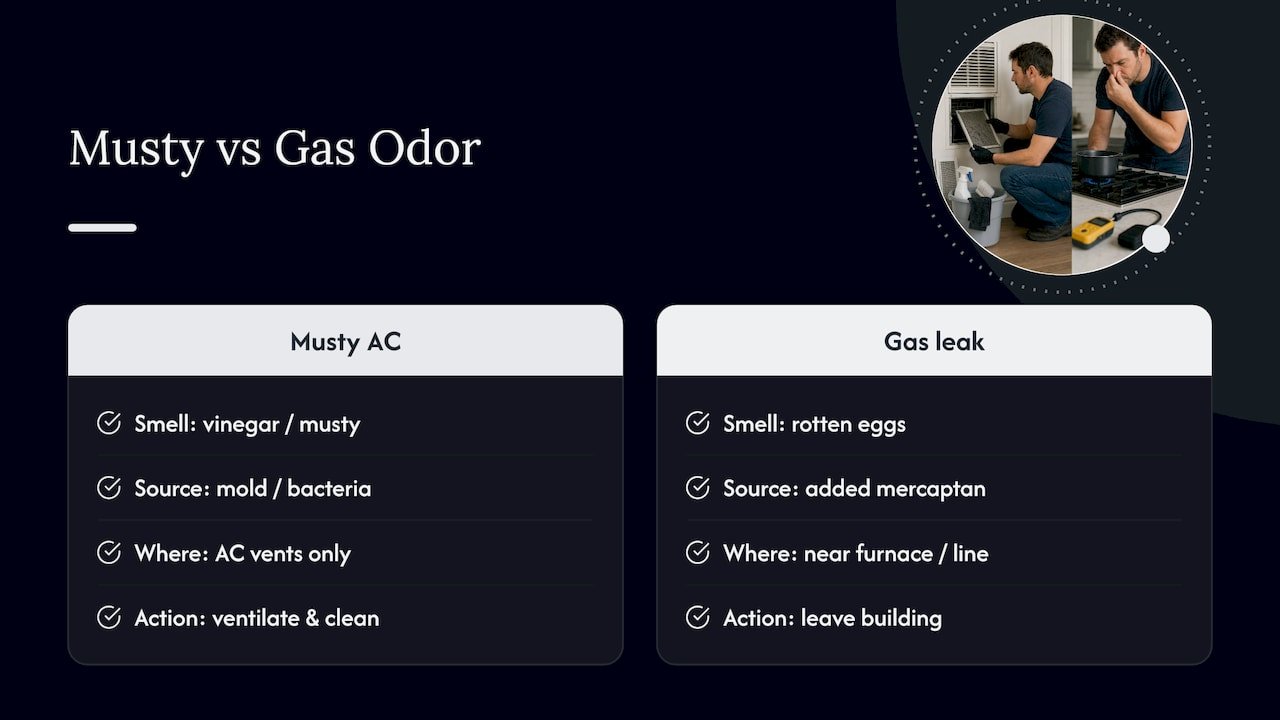
A musty or vinegar-like AC odor is typically caused by microbial volatile organic compounds, byproducts of mold and bacteria, and it is not the same thing as a gas leak. Natural gas is odorless on its own, but utilities add a chemical called mercaptan that smells like rotten eggs, not vinegar. If you smell rotten eggs, especially near a furnace or gas line, leave the building and call your gas utility or emergency services immediately. If the smell is sour or musty and limited to the AC vents, ventilate the space and move on to cleaning the microbial source.
When to call a professional technician
Some situations call for more than a filter change and a drain flush. Bring in a licensed technician when:
- The smell persists after you’ve replaced the filter and cleared the visible parts of the drain line.
- You spot visible mold growth on the coil, in the ductwork, or around the unit.
- You suspect a dead animal is trapped somewhere in the system and can’t reach it.
- You notice water stains, active leaks, or a drain pan that keeps refilling no matter how often you empty it.
A technician typically checks coil access panels, tests the condensate pump, clears deeper points in the drain trap, and may run a camera inspection through the ductwork to spot blockages or contamination you can’t see. For heavier microbial growth, they may apply an HVAC-grade antimicrobial treatment or foaming coil cleaner that reaches further into the coil fins than a spray bottle can. Carcass removal, when that’s the cause, usually requires containment and sanitizing the area afterward to prevent the odor from returning.
Preventing the smell from coming back
A little routine upkeep goes a long way toward keeping vinegar and musty odors from returning.
- Change or check your air filter every one to three months, more often if you have pets or run the system constantly.
- Keep indoor humidity below recommended levels, since CDC mold prevention guidance points to moisture control as the most effective way to stop mold before it starts.
- Schedule annual HVAC maintenance, ideally a spring startup check, and keep the outdoor condenser unit clear of leaves and debris.
- In your vehicle, replace the cabin filter on schedule and let the blower run on fresh air occasionally to keep the evaporator dry.
EPA guidance on air cleaners and filters notes that good filtration helps reduce airborne particles, but it does not replace removing the moisture sources that let mold take hold in the first place.
What we see most often on service calls
Most vinegar-smell calls trace back to the same three things: a filter that hasn’t been changed in months, a condensate drain clogged with algae or sludge, or debris and animal nesting material caught in the outdoor unit. Start with the easy checks yourself, and bring in a licensed technician once the smell sticks around or you spot standing water or visible growth.
— MDTECH
Getting a professional inspection and cleaning
If your own checks haven’t fixed the smell, a licensed technician can get to the parts of the system a household fix can’t reach, deep coil cleaning, drain-line clearing, or safe removal of a trapped animal, without you having to guess at what’s causing it.
Technicians handle diagnostic visits and HVAC cleaning with online booking available for easy scheduling. A typical service call includes an inspection of the coil, drain line, and ductwork, followed by the specific cleaning or repair the problem calls for. If your AC still smells off after trying the steps above, you can book an HVAC repair visit and get a technician looking at the actual source of the smell.
Sources
FAQ
How do I get rid of a sour smell in my AC?
Start by replacing the air filter and clearing the condensate drain line with a wet/dry vacuum or drain brush, then wipe down any visible slime on the coil and drain pan. Flush the line with water and run the system to confirm the smell is gone. If it returns within a day or two, the clog or mold growth is likely deeper than a DIY fix can reach, and it’s time to call a technician.
Does a gas leak smell like vinegar?
No. Natural gas is odorless, but utilities add mercaptan, a chemical that smells like rotten eggs, not vinegar. A vinegar or musty smell from your AC is typically caused by mold or bacteria, while a rotten-egg smell near a gas line or furnace means you should evacuate and call your gas utility or emergency services right away.
Is it bad if my AC smells like mildew?
A musty or mildew smell usually means mold or bacteria are growing somewhere in the system, most often the coil, drain pan, or ductwork. According to CDC guidance, damp environments with mold growth are linked to respiratory irritation and worsened asthma, so it’s worth addressing promptly rather than ignoring it.
How long does the vinegar smell take to go away?
If the cause is a dirty filter or a light drain clog, the smell often clears within a few hours of running the system after cleaning. If mold or a deeper clog is behind it, the odor can linger or return within a day or two until a technician cleans the coil, drain line, or ductwork more thoroughly.
What does a professional AC inspection for odors involve?
A technician typically checks the condensate drain and pump, inspects the coil and drain pan for buildup, and may use a camera to look inside the ductwork for blockages or contamination. If a dead animal or heavy mold growth is the cause, they’ll handle removal and sanitizing so the odor doesn’t come back.