
TL;DR:
- A sump pump protects your basement by automatically removing groundwater before flooding occurs. Proper installation, annual maintenance, and backup power systems are essential for reliable operation and avoiding costly water damage.
A sump pump is an electric device installed at the lowest point of a basement or crawl space that automatically removes accumulated groundwater before it floods your home. The pump activates through a float switch when water in the sump pit reaches 8–12 inches, then discharges that water at least 10 feet from your foundation. Every homeowner with a basement should understand how this device works, what types exist, and what proper maintenance looks like. Skipping that knowledge is how a $200 maintenance visit turns into a $10,000 water damage claim.
What is a sump pump and how does it protect your basement?
A sump pump is defined as a reactive water management device that engages only after water accumulates in the pit to a set level. It does not stop water from entering your basement. It manages water after it arrives, which is a critical distinction most homeowners miss.
The pump sits inside a sump basin, a cylindrical pit dug into the lowest point of your basement floor. Groundwater, rainwater, and water from interior drainage channels all flow into that basin. When the water level rises high enough, the float switch triggers the motor, which pushes water through a discharge pipe and out away from your home.
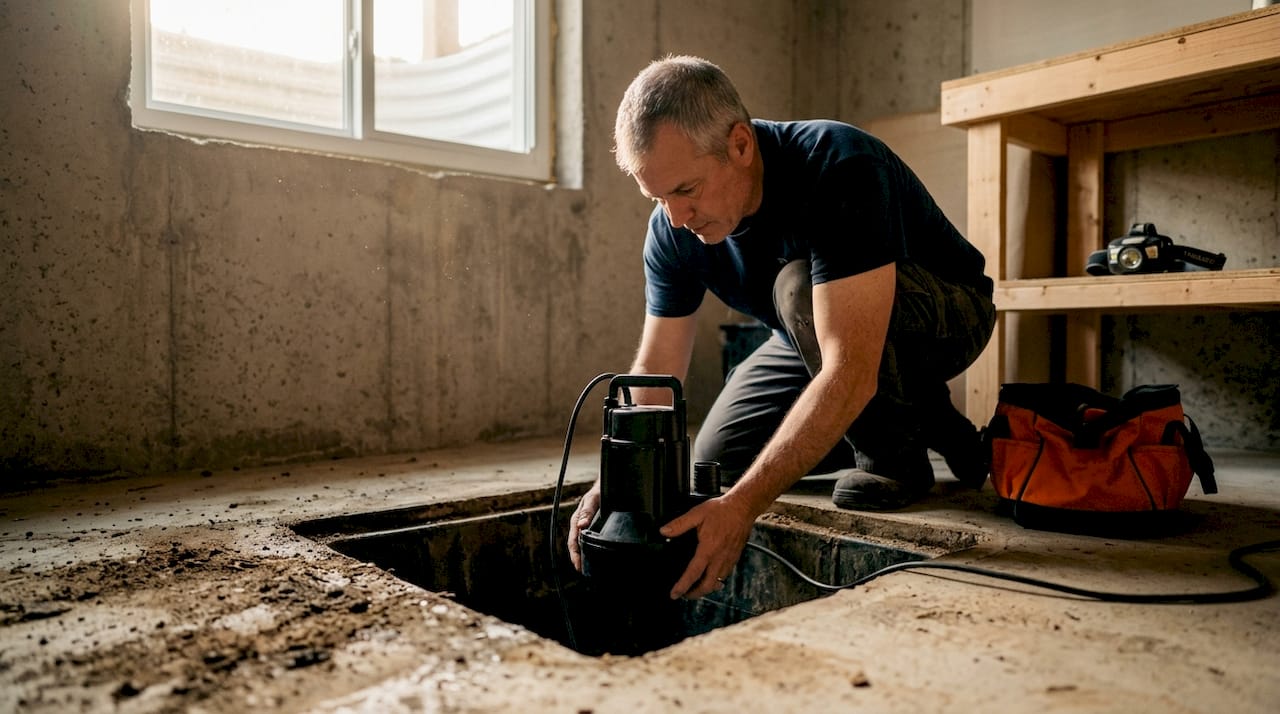
A sump pump is part of a larger drainage system. Without proper perimeter drains directing water toward the pit, the pump cannot do its job regardless of how powerful the motor is. Failure often stems from drainage system problems, not pump motor malfunction.
The device runs on standard household electricity. That creates one major vulnerability: power outages. Storms that cause the most flooding are also the storms most likely to knock out your power. That single fact drives the entire case for backup systems.
How does a sump pump work step by step?
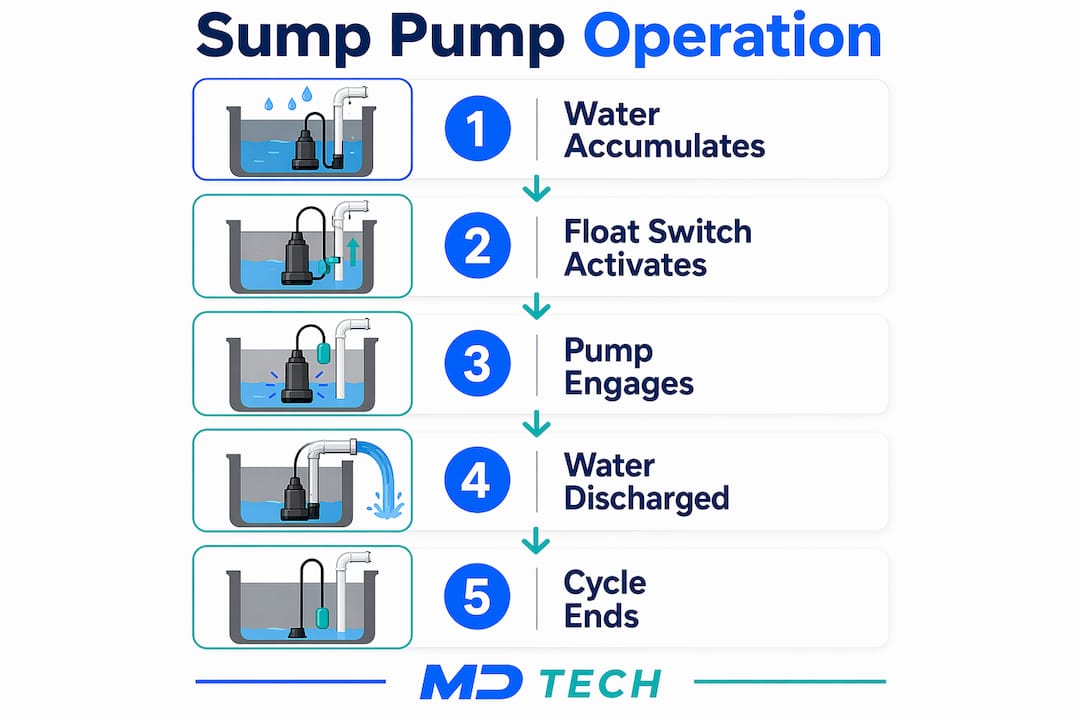
The operational sequence is straightforward once you see it clearly.
- Water enters the pit. Groundwater seeps through the soil and into the sump basin through perforated walls or a gravel bed beneath the floor.
- The float switch rises. As water fills the pit, a plastic float attached to the pump rises with it. At the trigger depth (typically 8–12 inches), the float activates the motor.
- The motor pumps water out. The impeller spins and forces water up through a discharge pipe. A check valve on the pipe prevents water from flowing back into the pit when the pump stops.
- Water exits the home. The discharge line routes water to a storm drain, dry well, or a point at least 10 feet from your foundation. Shorter discharge distances allow water to re-enter the soil and cycle back into the pit.
- The pump shuts off. Once the water level drops below the float’s lower threshold, the motor stops automatically.
Pro Tip: Pour a bucket of water directly into the sump pit twice a year. If the pump activates and clears the water within 30 seconds, it is working correctly. If it hesitates or fails to start, schedule a service call before storm season.
The entire cycle takes seconds. A properly sized pump handles hundreds of gallons per hour without overheating. Undersized pumps run continuously, overheat, and burn out within a single heavy rain event.
What are the different types of sump pumps?
Two primary types cover the vast majority of residential installations: submersible and pedestal.
| Feature | Submersible pump | Pedestal pump |
|---|---|---|
| Motor location | Submerged inside the pit | Mounted above the pit on a stand |
| Noise level | Quieter (motor is enclosed) | Louder (motor is exposed) |
| Lifespan | 10–15 years typical | 25–30 years typical |
| Space required | Fits inside the basin | Requires clearance above pit |
| Cost range | Higher upfront | Lower upfront |
| Best for | Finished basements, tight spaces | Unfinished basements, budget installs |
Submersible pumps handle higher water volumes and run cooler because the surrounding water dissipates heat. Pedestal pumps last longer because the motor stays dry and never contacts water. Neither type is universally better. Your basement layout and water volume determine the right choice.
Beyond those two, two backup categories matter:
- Battery backup pumps. These activate automatically when the primary pump fails or loses power. Battery-powered backup systems are the standard recommendation for any home in a storm-prone area.
- Water-powered backup pumps. These use municipal water pressure to operate with no battery required. They work where battery backups are impractical but consume tap water during operation.
Horsepower ratings typically range from 1/4 HP for light-duty residential use up to 1 HP for high-volume applications. A 1/3 HP or 1/2 HP pump handles most standard single-family homes.
What does professional sump pump installation involve and what does it cost?
Professional installation covers three distinct phases: excavation, plumbing, and electrical hookup. Each phase adds time and cost depending on your home’s existing infrastructure.
Proper sump pump installation requires excavating a sump pit, routing a discharge line away from the home, and completing an electrical connection. Regional labor rates and permit requirements affect both the timeline and the final price.
Cost breakdown by scenario:
| Scenario | Typical cost range |
|---|---|
| Simple pump replacement (existing pit) | $350–$1,000 |
| Standard new installation | $1,000–$1,800 |
| Complex installation (new pit, concrete coring) | $7,000–$12,000 |
| Annual maintenance visit | $100–$250 |
The primary cost driver in new installations is cutting through the concrete basement floor to create the pit, not the pump unit itself. Pump units typically cost $120–$900 depending on horsepower and model quality. Labor runs $300–$2,000 based on pit complexity.
Most homeowners pay $1,000–$1,800 for a standard installation. That figure assumes an existing pit or straightforward excavation. If your basement has never had a sump system, budget for the higher end of the range.
Pro Tip: Ask your installer about permit requirements before work begins. Some municipalities require an inspection after installation. Skipping the permit can complicate home sales and insurance claims later.
The benefits of professional installation go beyond correct pump placement. A licensed technician sizes the pump correctly, routes the discharge line to code, and confirms the electrical connection meets local standards. DIY errors in any of those three areas create bigger problems than the original flooding risk.
How do you maintain a sump pump to ensure reliable operation?
Annual maintenance prevents the most common and costly failures. Many homeowners skip it until the pump fails during a storm. By then, the damage is already done.
Follow this maintenance sequence every year, ideally in early spring before heavy rain season:
- Test the float switch. Pour water into the pit and confirm the pump activates. A float switch that sticks or fails to trigger is the leading cause of pump failure during actual flooding.
- Clean the pit. Remove debris, sediment, and gravel that accumulates at the bottom. Debris clogs the impeller and causes the motor to overheat.
- Inspect the discharge line. Check for blockages, cracks, or ice damage at the exit point. A blocked discharge line causes water to back up into the pit and overflow.
- Check the check valve. Confirm it opens and closes freely. A stuck check valve allows discharged water to flow back into the pit, forcing the pump to run continuously.
- Inspect electrical connections. Look for corrosion on the power cord and confirm the pump is plugged into a GFCI-protected outlet. Water and electricity in the same space require that protection.
- Test the backup system. Disconnect the primary pump and confirm the backup activates. A backup that has never been tested is not a backup.
Annual professional inspections cost $100–$250 and catch mechanical wear that visual checks miss. That fee is a fraction of the cost of water damage repairs. Connecting your maintenance schedule to a broader preventive maintenance plan keeps your entire home’s systems running reliably.
What are common sump pump problems and how do you fix them?
Most sump pump failures fall into a small number of predictable categories. Knowing them in advance lets you act before a minor issue becomes a flooded basement.
- Power outage during a storm. The pump goes offline exactly when you need it most. Battery or water-powered backups are the only reliable solution. Install one before the first major storm of the season.
- Float switch malfunction. The float gets stuck against the pit wall or tangled in debris. The pump never activates even as water rises. Regular pit cleaning prevents this.
- Debris clogging the impeller. Gravel, dirt, and sediment enter the pump housing and jam the spinning impeller. The motor runs but moves no water. Annual cleaning removes the material before it causes damage.
- Drainage system failure. The pump motor works fine, but water still floods the basement. Without functioning perimeter drains directing water to the pit, the pump has nothing to remove. This is a drainage problem, not a pump problem.
- Pump running continuously. The float switch is set too low, the check valve is stuck open, or the discharge line routes water back toward the foundation. Each cause has a different fix, but all require prompt attention to avoid motor burnout.
Pro Tip: If your pump runs more than two or three times per hour during dry weather, something is wrong. Continuous cycling in dry conditions signals a stuck float, a failed check valve, or a discharge line problem. Call a technician before the motor burns out.
Knowing when to repair versus replace saves money. A pump under five years old with a single failed component is worth repairing. A pump over ten years old with repeated failures is a replacement candidate. The repair vs. replacement decision follows the same logic for sump pumps as it does for any home appliance.
Key Takeaways
A sump pump protects your basement by removing water reactively through a float-activated motor, and its reliability depends entirely on proper installation, annual maintenance, and a functioning backup power source.
| Point | Details |
|---|---|
| Reactive, not preventive | A sump pump removes water after it enters the pit; it does not stop water from entering. |
| Backup power is non-negotiable | Install a battery or water-powered backup to maintain protection during storm-related outages. |
| Installation cost varies widely | Simple replacements run $350–$1,000; new installations with concrete coring can reach $12,000. |
| Annual maintenance prevents failure | Test the float, clean the pit, and inspect the discharge line every spring before storm season. |
| Drainage system matters as much as the pump | A pump cannot compensate for missing or blocked perimeter drains directing water to the pit. |
What I’ve learned after years of seeing sump pump failures
Most homeowners treat a sump pump like a smoke detector: they install it, forget it, and assume it will work when needed. That assumption is wrong, and the consequences are expensive.
The pumps I see fail most often are not old or cheap. They are neglected. A float switch caked in sediment, a discharge line blocked by a wasp nest, a backup battery that has never been tested. These are not mechanical failures. They are maintenance failures.
The other misconception I encounter constantly is that a sump pump is a complete waterproofing solution. It is not. A pump without a proper drainage system is like a bucket with no one to fill it. If water is not being directed to the pit, the pump sits idle while your basement floods through the walls.
My honest recommendation: schedule a professional inspection every year, not just when something goes wrong. The $100–$250 annual maintenance cost is the cheapest insurance you can buy for a finished basement. Pair that with a battery backup, and you have genuine protection. Without both, you have a device that might work when you need it most.
For homeowners in Orange County and Los Angeles County, seasonal home maintenance should include sump pump testing as a standard item, not an afterthought.
— MDTECH
Professional sump pump service from Appliancesrepairmdtech
Appliancesrepairmdtech serves homeowners and property managers across Orange County and Los Angeles County with licensed technicians who handle sump pump installation, maintenance, and repair. Whether you need a straightforward pump replacement or a full new installation with pit excavation, the team brings the tools and expertise to do it correctly the first time.

Getting the installation right from the start protects your home and avoids the costly repairs that follow a failed DIY attempt. Appliancesrepairmdtech also offers annual maintenance visits that cover float switch testing, pit cleaning, discharge line inspection, and backup system verification. Book an appointment online or call to speak with a technician about your specific basement water management needs. For broader home system support, the appliance repair and installation services page covers the full range of what the team handles.
FAQ
What is a sump pump used for?
A sump pump removes accumulated groundwater from a basement or crawl space before it causes flooding. It protects your home’s foundation, flooring, and stored belongings from water damage.
How often should a sump pump be replaced?
Submersible pumps typically last 10–15 years; pedestal pumps can last 25–30 years. A pump over ten years old with repeated failures is a strong replacement candidate.
Do I need a backup sump pump?
Yes. Battery-powered backup systems are the standard recommendation because power outages occur most often during the storms that generate the most groundwater.
What does sump pump installation cost?
Most homeowners pay $1,000–$1,800 for a standard installation. New installations requiring concrete floor coring can range up to $12,000 depending on site complexity and regional labor rates.
How do I know if my sump pump is working?
Pour a bucket of water into the sump pit. The pump should activate within seconds and clear the water completely. If it does not start or runs but moves no water, schedule a service inspection.