
TL;DR:
- A pilot light is a small flame that continuously burns inside gas appliances to ignite the main burner when needed. Modern appliances use electronic ignition instead of standing pilots to save energy and improve reliability. If the pilot keeps going out repeatedly, it usually indicates a faulty thermocouple that requires professional replacement.
A pilot light is defined as a small, continuously burning flame inside gas appliances that serves as a permanent ignition source for the main burner. You find it in furnaces, water heaters, gas fireplaces, and older gas dryers. When your thermostat calls for heat, the pilot light ignites the main burner instantly, without any spark or delay. Understanding how this system works, and what can go wrong, protects your home and your wallet. This guide covers the mechanics, safety features, flame identification, and the modern alternatives that are replacing standing pilots in homes across the country.
How does a pilot light work in gas appliances?
A pilot light ignites the main burner when the thermostat signals a demand for heat. Think of it as a match that never goes out. The gas valve opens, fuel flows to the main burner, and the pilot flame catches it immediately. Without the pilot, the main burner has no ignition source and the appliance cannot produce heat.
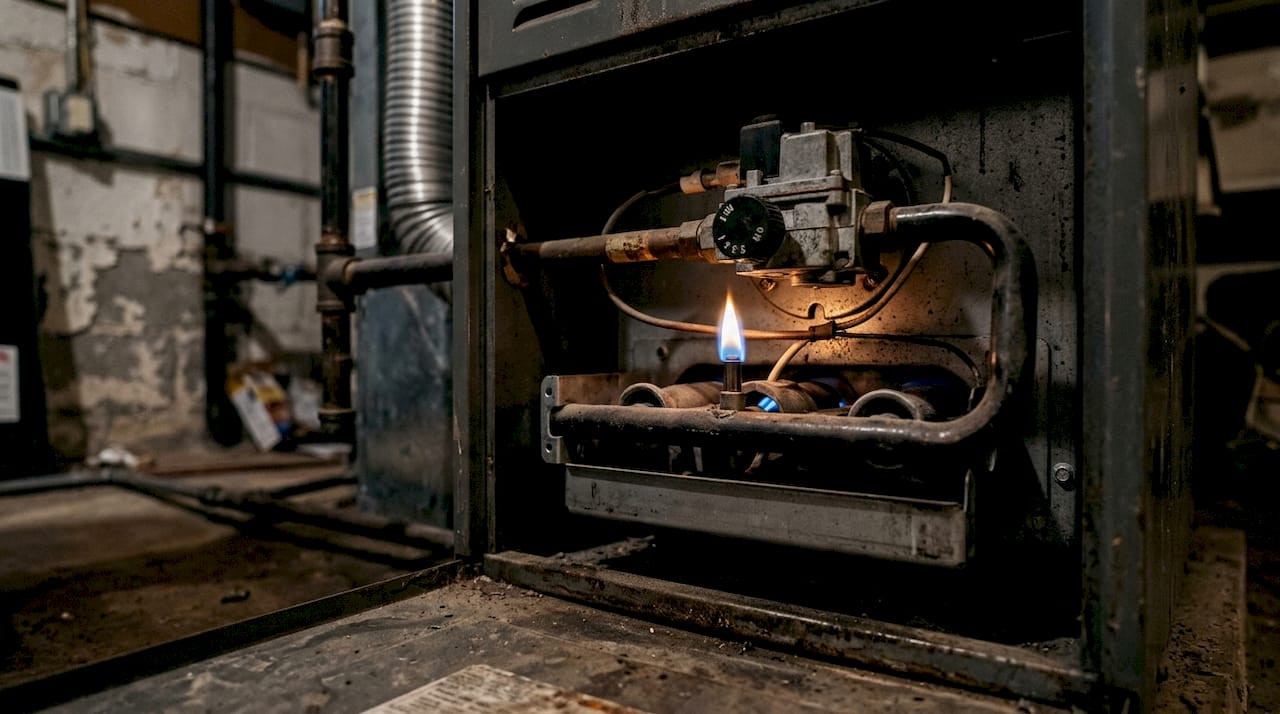
The standing pilot system
A standing pilot burns continuously, 24 hours a day, seven days a week, regardless of whether the appliance is actively heating. That constant burn is reliable. The flame is always ready. The tradeoff is that the appliance consumes gas even when you do not need heat, which adds up over a year.
The role of the thermocouple
The thermocouple is the safety brain of the standing pilot system. It sits directly in the pilot flame and generates a small voltage from the heat, typically in the range of 20–30 millivolts. That voltage signals the gas valve to stay open. If the pilot flame goes out, the thermocouple cools, the voltage drops to zero, and the gas valve closes automatically. This single mechanism prevents raw gas from flooding your home.
- The thermocouple must be positioned directly in the flame to work correctly.
- A weak or yellow flame may not heat the thermocouple enough to hold the valve open.
- Thermocouple failure is one of the most common reasons a pilot lights but then goes out immediately.
- Replacing a thermocouple is a straightforward repair that a licensed technician can complete in under an hour.
Pro Tip: If your pilot lights when you hold the control knob but goes out the moment you release it, the thermocouple is almost certainly the problem, not the flame itself. Do not keep relighting. Call a technician.
What are the common types of pilot lights?
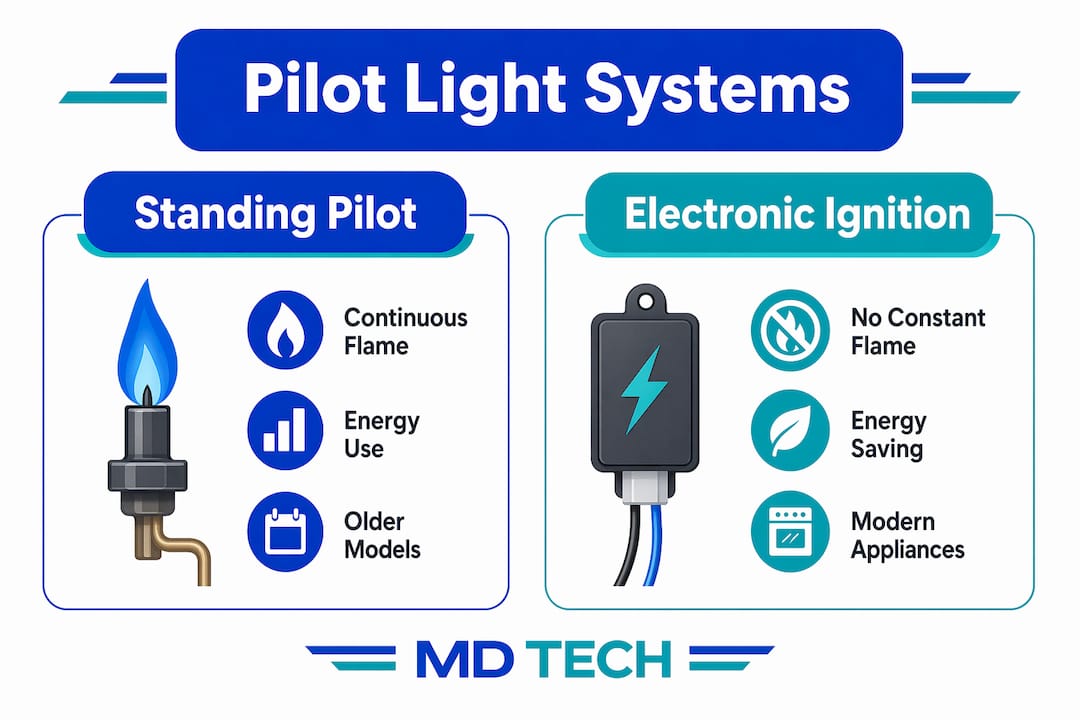
Two systems dominate residential gas appliances: the standing pilot and the electronic ignition. Knowing which one your appliance uses tells you a lot about its age, efficiency, and maintenance needs.
Standing pilot vs. electronic ignition
| Feature | Standing pilot | Electronic ignition |
|---|---|---|
| Flame present at all times | Yes | No |
| Gas consumption when idle | Continuous | None |
| Common in appliances installed | Before 2010 | After 2010 |
| Requires thermocouple | Yes | No |
| Ignition method | Continuous flame | Spark or hot surface |
Most furnaces installed after 2010 use electronic ignition instead of a standing pilot. Electronic ignition systems only activate when the appliance needs to fire, which eliminates idle gas consumption entirely.
How to identify which system you have
- Look for a small blue flame near the burner assembly when the appliance is in standby mode. That is a standing pilot.
- Check the appliance label or manual for the installation year. Pre-2010 units almost always have standing pilots.
- Listen for a clicking sound before the burner fires. That click is an electronic igniter, not a pilot.
- Inspect the vent pipe material. Older PVC or metal B-vent pipes often indicate older appliances with standing pilots.
A gas appliance safety checklist can help you document which system each appliance in your home uses, which is useful information before any service call.
What safety mechanisms are involved with pilot lights?
The pilot light system includes multiple layers of protection, but those protections only work when the components are functioning correctly. Understanding the failure points helps you respond safely when something goes wrong.
What happens when the pilot goes out
A pilot light going out is not a carbon monoxide emergency on its own. The real risk is raw gas accumulation. If the thermocouple fails to close the gas valve after the pilot extinguishes, unburned gas can build up in the appliance and surrounding area. That buildup creates a fire and explosion hazard, not a carbon monoxide hazard. The distinction matters because your response should be different.
- Turn the gas control knob to the “off” position immediately.
- Open windows and doors to ventilate the area.
- Wait at least five minutes before attempting to relight.
- Follow the manufacturer’s relighting instructions printed on the appliance label.
- If you smell gas strongly or the pilot will not stay lit after two attempts, leave the building and call your gas utility.
Relighting a pilot repeatedly in rapid succession is dangerous. Each failed attempt can push unburned gas into the space around the burner. Waiting several minutes between attempts allows that gas to dissipate.
Pro Tip: Never use a long lighter or match to relight a pilot if you can smell gas in the room. Ventilate first, wait, then follow the appliance label instructions. If the odor is strong, do not relight at all.
Pilot light flame color as a diagnostic tool
A healthy pilot flame is small and blue. Blue indicates complete combustion. A yellow or orange flame signals incomplete combustion, often caused by a dirty burner orifice or poor air supply. A flame that flickers or lifts off the burner tip suggests a draft problem. Any color other than blue warrants a service call. For detailed pilot light troubleshooting steps, the pilot light failure guide from Appliancesrepairmdtech covers the most common causes and fixes.
Why are pilot lights being phased out in modern appliances?
The shift away from standing pilots is driven by three factors: energy waste, safety improvements, and reliability gains from electronic ignition technology.
The energy cost of a standing pilot
Standing pilot lights consume 500–1,000 BTU of gas per hour, which translates to roughly $60 to $110 in wasted fuel every year. That cost is paid whether you use the appliance or not. Over a decade, a single standing pilot can cost a homeowner more than $1,000 in fuel that produces no useful heat.
Why electronic ignition wins on efficiency
- Electronic ignition uses no gas when the appliance is in standby.
- Hot surface igniters reach ignition temperature in seconds, eliminating the need for a constant flame.
- Intermittent pilot systems only light a small pilot flame on demand, then extinguish it after the main burner fires.
- Electronic systems have fewer moving parts, which reduces long-term maintenance frequency.
- The shift to electronic ignition also removed the thermocouple as a failure point, which was one of the most common service calls on older furnaces.
If your furnace or water heater still uses a standing pilot and is more than 15 years old, a gas appliance conversion to a modern electronic ignition system is worth evaluating. The energy savings alone often justify the upgrade within a few years.
Key Takeaways
A pilot light is a continuously burning flame that ignites the main burner in gas appliances, controlled by a thermocouple safety valve that shuts off gas if the flame goes out.
| Point | Details |
|---|---|
| Pilot light purpose | Ignites the main burner instantly when the thermostat calls for heat. |
| Thermocouple function | Generates voltage from flame heat to hold the gas valve open safely. |
| Flame color matters | A blue flame signals healthy combustion; yellow or orange means service is needed. |
| Energy cost of standing pilots | Standing pilots waste $60–$110 per year in gas with no useful heat output. |
| Modern alternative | Furnaces installed after 2010 use electronic ignition, eliminating idle gas consumption. |
What I’ve learned after years of gas appliance calls
Most homeowners I talk to assume a pilot light going out is a minor nuisance. It can be. But the calls that concern me most are from homeowners who relighted the pilot four or five times in a row because it kept going out, without pausing between attempts. That behavior is genuinely dangerous, and it is almost always unnecessary.
The real issue in most repeated pilot outages is not the flame. It is the thermocouple. If the pilot lights and then dies the moment you release the control knob, the thermocouple is not holding the gas valve open. Relighting again will not fix that. A thermocouple replacement costs very little and takes a short time. Ignoring the pattern and keep relighting is the risk.
The other thing I see constantly is homeowners treating a yellow pilot flame as normal. It is not. A yellow flame means the burner orifice is dirty or the air-to-gas ratio is off. Left alone, that condition degrades combustion efficiency and can shorten the life of the appliance. An annual inspection catches this before it becomes a repair bill.
My honest advice: if your pilot goes out more than once in a season, stop relighting and get a technician to look at the thermocouple. If your appliance is pre-2010 and still running a standing pilot, start thinking about an upgrade. The energy savings are real, and the newer systems are genuinely more reliable.
— MDTECH
Gas appliance repair and pilot light service in Orange County and Los Angeles
When a pilot light problem goes beyond a simple relight, you need a technician who understands the full system, not just the flame.
Appliancesrepairmdtech serves homeowners across Orange County and Los Angeles County with licensed technicians who diagnose pilot light failures, thermocouple issues, and gas valve problems on the same visit. Whether your furnace, water heater, or gas fireplace is acting up, the team handles diagnostics and repairs without guesswork. For HVAC-related pilot and ignition issues, the HVAC repair service page covers scheduling and service areas. If you are weighing whether to repair or replace an older standing pilot appliance, the repair vs. replacement guide gives you a clear framework for that decision.
FAQ
What is a pilot light and what does it do?
A pilot light is a small, continuously burning flame inside gas appliances that ignites the main burner when heat is needed. It acts as a permanent ignition source, eliminating the need for a separate spark each time the appliance fires.
What color should a pilot light flame be?
A healthy pilot light flame should be small and blue, which indicates complete combustion. A yellow or orange flame signals a problem with the burner orifice or air supply and requires service.
Why does my pilot light keep going out?
Thermocouple failure is the most common reason a pilot light goes out after relighting. The thermocouple fails to sense the flame heat and closes the gas valve, extinguishing the pilot.
Is it dangerous if the pilot light goes out?
A pilot outage is not immediately dangerous if the thermocouple closes the gas valve correctly. The hazard comes from gas accumulation if the valve fails to close, which creates a fire and explosion risk.
How do I safely relight a pilot light?
Turn the gas knob to “off,” wait at least five minutes, then follow the relighting instructions on the appliance label. Attempt relighting no more than twice before calling a professional if the pilot will not stay lit.