
TL;DR:
- Professional installation by licensed technicians ensures safety, protects your appliance warranty, and prolongs device lifespan. It prevents hazards like electrical fires, water damage, and warranty denials resulting from improper setup, saving you money and risk. Proper documentation from professionals is essential for warranty claims and optimal appliance performance over time.
Professional installation is defined as appliance setup performed by a licensed technician who follows manufacturer specifications, local building codes, and safety standards. The benefits of professional installation go far beyond convenience. Improper DIY setup causes electrical fires, voided warranties, and hidden water damage that can cost thousands to fix. For homeowners in Orange County and Los Angeles County, choosing expert setup means protecting your appliances, your home, and your family from preventable risks.
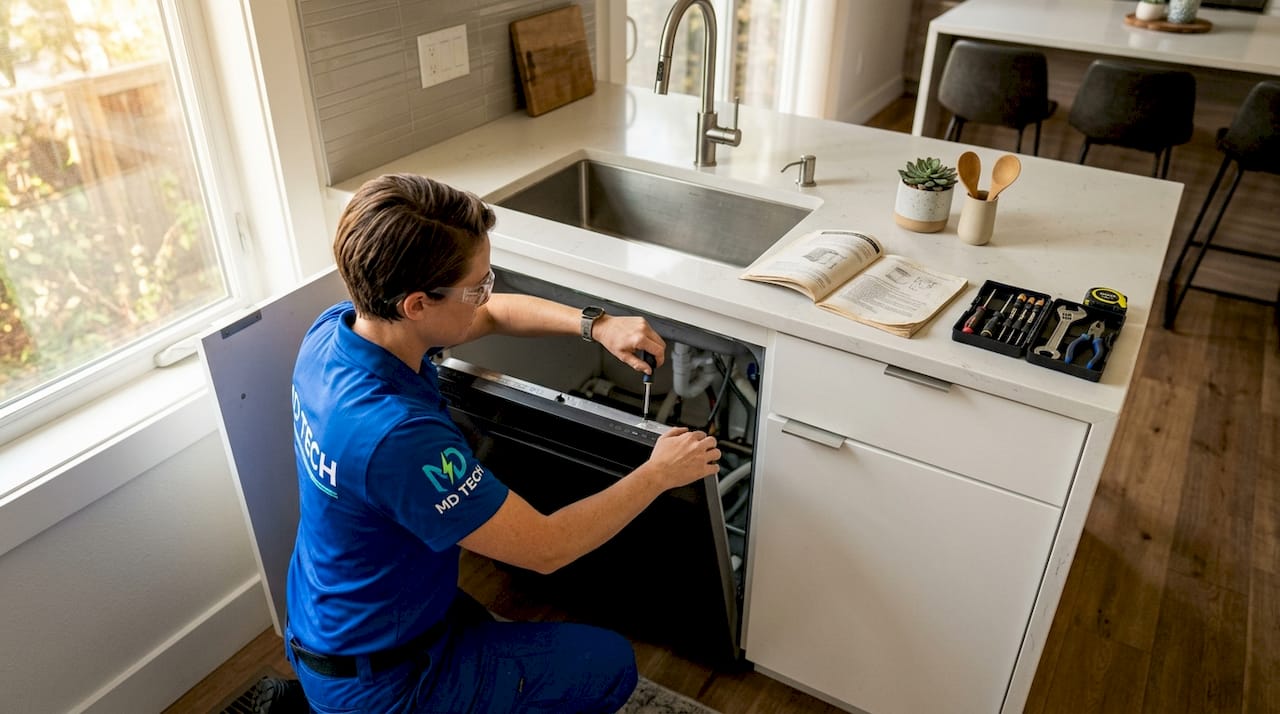
1. Benefits of professional installation: safety comes first
Safety is the most direct reason to hire a licensed technician. Around 30% of residential electrical fires involve improper installation errors. That number means roughly one in three home electrical fires traces back to a mistake that a licensed professional would have caught.
Water damage is an equally serious risk. Faulty appliance connections account for about 10% of residential water damage insurance claims. A dishwasher drain line that is not properly secured can leak slowly for months before you notice the damage underneath your cabinets.
Licensed technicians perform checks that most homeowners skip entirely. These include leak detection, wiring load verification, and pressure testing on gas lines. Each check catches a hazard before it becomes an emergency.
Pro Tip: Ask your installer for a written safety checklist after the job is done. That document proves the work was completed correctly and gives you a record if questions arise later.
Key safety checks performed by trained technicians include:
- Electrical load verification to prevent circuit overloads
- Gas line pressure testing to detect leaks before startup
- Water supply and drain line inspection for secure connections
- Ventilation checks to prevent carbon monoxide buildup
- Leveling confirmation to avoid vibration and mechanical stress
2. How professional installation protects your appliance warranty
Most homeowners do not realize their warranty depends on who installs the appliance. Manufacturers commonly deny warranty claims when appliances are self-installed without proof of professional setup. That denial can leave you paying full price for a repair that should have been covered.
Warranty language typically excludes “field errors,” which include incorrect setup, unapproved parts, and missing documentation. Improper or unlicensed installation is the leading cause of warranty claim denials across major appliance brands. The fix costs nothing extra at installation time but saves you the full cost of a repair later.
“A licensed installer’s invoice is key documentation for manufacturer warranty claims. Without it, homeowners have little recourse when a covered failure is denied due to installation questions.”
Licensed installer records serve as critical evidence in warranty disputes. Keep every invoice, work order, and service record in a dedicated folder for each appliance in your home.
- Require a signed invoice showing the technician’s license number
- Keep the original installation receipt with your appliance manual
- Document the date, model number, and serial number at installation
- Store records digitally as a backup in case paper copies are lost
Pro Tip: Take a photo of the appliance’s serial number tag and the installer’s paperwork on the same day. Store both in a cloud folder labeled by appliance.
3. How professional installers enhance appliance performance and longevity
Correct installation directly affects how well your appliance runs and how long it lasts. Poor leveling or venting causes noise, inefficiency, and faster mechanical wear. A washing machine that is not level, for example, vibrates excessively and wears out its drum bearings years ahead of schedule.
Electrical requirements matter just as much. An appliance connected to the wrong circuit voltage runs hotter than designed, shortening its lifespan and raising your energy bill. Professionally installed units run quieter, use less energy, and require fewer service calls over their lifetime.
Correct venting, load sizing, and manufacturer compliance are steps that licensed professionals perform and document correctly. These are not optional extras. They are the baseline for getting the performance you paid for when you bought the appliance.
| Installation quality factor | Impact on performance | Impact on durability |
|---|---|---|
| Proper leveling | Reduces vibration and noise | Prevents premature bearing wear |
| Correct venting | Maintains airflow efficiency | Prevents overheating and motor failure |
| Accurate electrical connection | Ensures rated energy use | Avoids insulation damage from overload |
| Secure water line connections | Prevents pressure drops | Eliminates slow leak damage |
| Manufacturer spec compliance | Delivers rated performance | Preserves full expected lifespan |
Pro Tip: Ask your technician to confirm the appliance’s voltage and amperage requirements match your home’s circuit before they leave. This one check prevents the most common performance complaints.
4. What types of appliances most benefit from expert setup
Not every appliance carries the same installation risk. Gas appliances require certified installation because connection errors create explosion, fire, and carbon monoxide hazards. A gas range or dryer that is not properly connected can leak undetected for hours.
Appliances connected to water supply or drain lines pose significant leak risks. Dishwashers, washing machines, and refrigerators with ice makers all require secure fittings and proper drain routing. Slow leaks and poor venting cause mold, structural damage, and costly repairs that often go undetected for months.
Heavy or built-in appliances add a third category of risk. Wall ovens, built-in refrigerators, and over-the-range microwaves require secure fastening to cabinetry. An improperly anchored unit can fall and cause serious injury or damage to your kitchen.
Appliances by installation complexity and risk level:
- High risk: Gas ranges, gas dryers, gas water heaters (explosion, fire, carbon monoxide)
- High risk: Dishwashers, washing machines, refrigerators with water lines (flooding, mold)
- Medium risk: Electric dryers, electric ranges (circuit requirements, heat damage)
- Medium risk: Built-in ovens, over-the-range microwaves (structural anchoring)
- Lower risk but still recommended: Refrigerators without water lines, freestanding ranges (leveling, electrical)
For gas appliances specifically, review the gas appliance safety checklist before any installation to understand what a licensed technician should verify.
5. Professional installation cost savings over time
The upfront cost of professional installation is small compared to what improper setup can cost you. Professional installation serves as protective insurance against appliance and home damage, often costing far less than the repairs it prevents. A single water damage claim from a faulty dishwasher connection can run into thousands of dollars in flooring, cabinetry, and mold remediation.
Warranty protection adds another layer of financial value. When a covered component fails within the warranty period, a valid claim saves you the full cost of parts and labor. Without professional installation documentation, that claim gets denied and you pay out of pocket.
Energy efficiency is the third financial benefit. An appliance installed correctly runs at its rated efficiency. One installed incorrectly draws more power than necessary, adding to your monthly utility bill every single day it operates.
6. How to choose an installer you can trust
Choosing the right professional protects you as much as the installation itself. Evaluating installation risk includes assessing life safety, code compliance, and job complexity. Start by verifying that any technician you hire holds a current state license for the type of work involved.
Ask for proof of insurance before anyone touches your appliance. A licensed and insured technician protects you from liability if something goes wrong during the job. Check that the technician is familiar with your specific appliance brand and model, since manufacturer specs vary significantly.
Request a written estimate before work begins. A professional who refuses to provide one in writing is a warning sign. For a detailed overview of what correct installation involves, the appliance installation safety guide covers the standards that qualified technicians follow.
7. Hidden installation problems that only experts catch
Many installation problems are invisible at first. Tiny water leaks or poor dryer vents cause hidden damage over time, often going unnoticed until the repair bill is severe. A dryer vent that is kinked or too long traps lint, reduces airflow, and creates a fire hazard that builds gradually.
Slow water leaks behind a dishwasher or washing machine can saturate subfloor material for months before you see any visible sign. By that point, mold may already be growing inside your wall cavity. A licensed technician checks every connection point and confirms there is no moisture present before completing the job.
Professionals understand building codes, manufacturer requirements, and safety testing in ways that go beyond what any installation manual covers. They also know when a home’s existing wiring or plumbing is not adequate for the new appliance, and they flag that before it becomes your problem.
Key Takeaways
Professional installation protects your safety, preserves your warranty, and extends appliance life in ways that DIY setup cannot reliably replicate.
| Point | Details |
|---|---|
| Safety is the top priority | Licensed technicians catch electrical, gas, and water hazards before they cause damage. |
| Warranties require documentation | Keep your installer’s signed invoice to validate manufacturer warranty claims. |
| Performance depends on correct setup | Proper leveling, venting, and wiring deliver the efficiency and lifespan you paid for. |
| Gas and water appliances carry the highest risk | These require certified installation to prevent fires, floods, and carbon monoxide exposure. |
| Professional cost prevents larger expenses | Installation fees are small compared to water damage, voided warranties, or early replacement. |
Why I always recommend professional installation
After years of seeing what goes wrong in homes across Orange County and Los Angeles County, my view on this is straightforward. The homeowners who skip professional installation to save $100 to $200 are the same ones calling us six months later with a flooded kitchen or a warranty claim that got denied.
The part that surprises most people is how invisible the problems stay at first. A washing machine that vibrates slightly more than it should. A dryer that takes a little longer than expected. These feel like minor annoyances, but they are early signs of an installation error that is quietly wearing out your appliance.
What I find most underappreciated is the warranty angle. Homeowners assume the warranty covers them no matter what. It does not. The fine print in most major brand warranties requires professional installation, and the manufacturer will ask for documentation when you file a claim. If you cannot produce it, the claim is denied. That is not a technicality. That is the rule.
Professional installation is not a luxury for expensive appliances. It is the baseline for getting what you paid for, whether that is a $400 dishwasher or a $2,000 refrigerator. The value of professional assembly shows up every month in lower energy bills, fewer service calls, and the confidence that your home is not quietly developing a problem behind the walls.
— MDTECH
Appliancesrepairmdtech: professional installation and appliance care in Orange County and LA
Appliancesrepairmdtech connects homeowners in Orange County and Los Angeles County with licensed technicians for appliance installation, repair, and HVAC services. Every technician on the team follows manufacturer specifications and local building codes, so your warranty stays intact and your appliances run correctly from day one.
Whether you are upgrading a refrigerator, replacing a gas range, or installing a new washer and dryer, Appliancesrepairmdtech handles the job with the documentation you need. The team also supports appliance warranty protection by providing signed service records for every installation. For homeowners who want professional setup backed by local expertise, book an installation appointment with Appliancesrepairmdtech today.
FAQ
Does professional installation really protect my warranty?
Yes. Most manufacturers require licensed installation documentation to validate warranty claims. Without it, warranty claims are commonly denied even when the appliance itself is defective.
What appliances need professional installation most?
Gas appliances, dishwashers, and washing machines carry the highest installation risk due to fire, carbon monoxide, and flooding hazards. Licensed installation is strongly recommended for all three categories.
How much does improper installation actually cost?
The financial impact varies, but faulty appliance connections cause roughly 10% of residential water damage claims. Mold remediation, flooring replacement, and cabinetry repairs from a single slow leak can reach thousands of dollars.
How do I verify an installer is qualified?
Ask for a current state license number and proof of insurance before work begins. A qualified technician will also provide a written estimate and a signed invoice after the job is complete.
Can I install a gas appliance myself to save money?
Gas appliance installation requires certified technicians in most jurisdictions because connection errors create fire, explosion, and carbon monoxide risks. The cost of professional setup is far lower than the risk of getting it wrong.