
TL;DR:
- Routine inspections help detect small home system issues early, preventing costly repairs and safety hazards.
- Documented records also strengthen insurance claims and property resale value by proving ongoing maintenance.
Routine inspections are the proactive examination of your home’s critical systems and components to detect issues before they become expensive problems or safety hazards. Most homeowners only call a technician when something breaks, but that reactive approach costs far more than scheduled prevention. A preventive maintenance program covers everything from your roof and fire alarms to your appliances and plumbing, creating a documented record of your home’s condition over time. Understanding why routine inspections are important means recognizing that your home is a system of interconnected parts, and one failing component can trigger a chain of expensive consequences.
Why routine inspections are important for preventing costly repairs
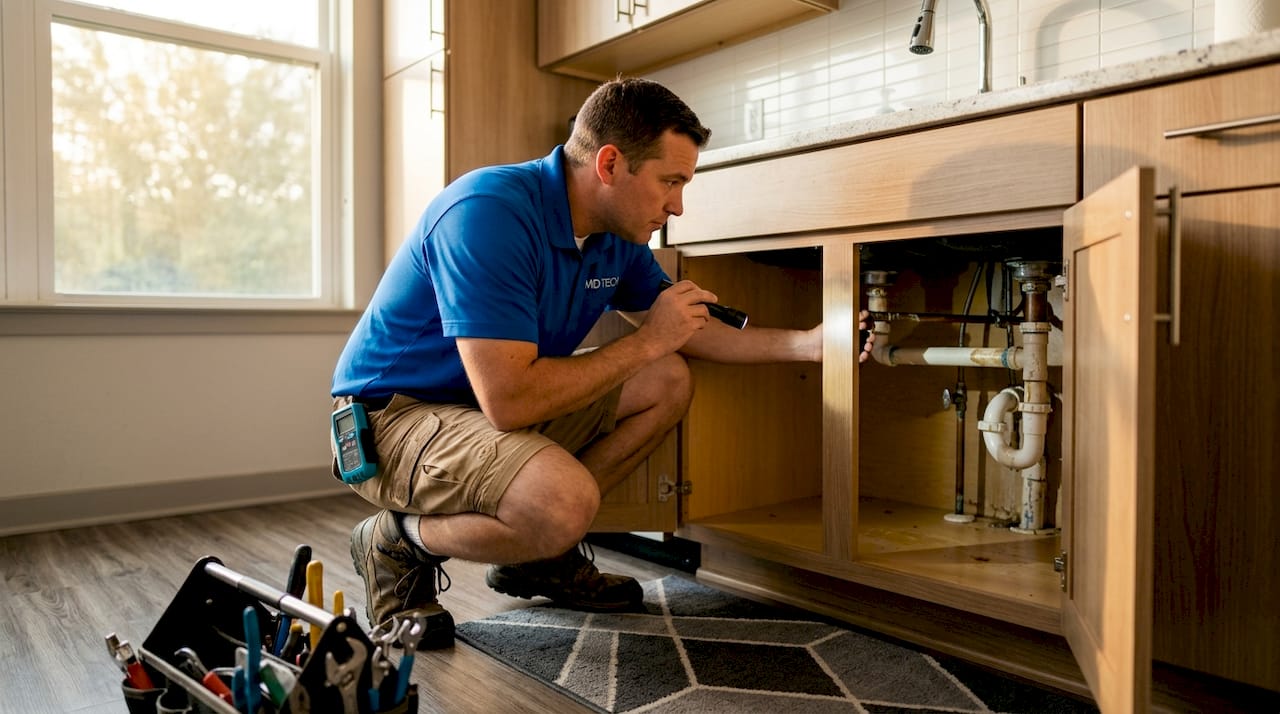
Costly home problems almost always start as small, hidden issues that build quietly over time. A slow drip under a sink, a slightly loose shingle, or a worn appliance seal rarely announces itself. By the time you notice the damage, you are already dealing with mold, water staining, or a flooded laundry room.
Routine inspections break that cycle by catching problems at the stage when they are still cheap to fix. A plumber who spots a failing pipe joint during a scheduled visit charges a fraction of what emergency water damage restoration costs. An HVAC technician who finds a clogged filter during an annual HVAC inspection prevents the compressor burnout that would require a full unit replacement.
The financial case for regular inspections is straightforward:
- Appliances: Refrigerators, washers, and dryers last significantly longer when motors, seals, and filters are checked and cleaned on schedule.
- Plumbing: Pressure tests and visual checks on supply lines catch corrosion and joint failures before they cause water damage.
- Electrical systems: Inspecting outlets, panels, and wiring reduces fire risk and prevents costly code violations.
- HVAC: Filter replacements and coil cleanings maintain efficiency and extend compressor life.
- Roof: Catching a cracked flashing or missing shingle early prevents the water intrusion that leads to structural rot.
Research from Homer Inspection Services confirms that annual home maintenance inspections focus on safety, moisture, structure, and electrical systems as part of a scheduled program. That combination covers the four categories most likely to generate emergency repair bills.
Pro Tip: Schedule your home inspections at least once a year, and time appliance checks to coincide with seasonal changes. Spring is ideal for roof and HVAC assessments after winter stress; fall is the right moment to test heating systems and check weatherproofing before temperatures drop.
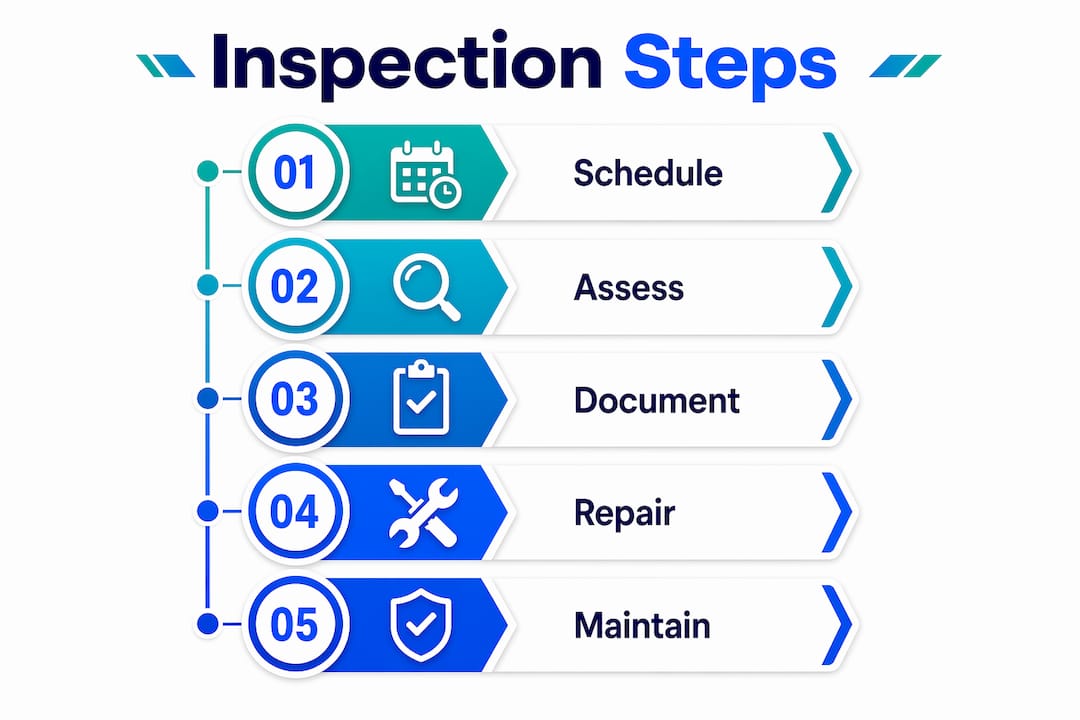
The return on investment is real. Homeowners who invest in timely preventive maintenance consistently avoid the compounding costs that come from deferred repairs. A $150 inspection that prevents a $3,000 mold remediation job is not a luxury. It is basic financial planning.
How fire safety inspections protect your home and family
Fire safety is the area where skipping inspections carries the most severe consequences. Smoke detectors, carbon monoxide alarms, and fire sprinkler systems do not fail loudly. They fail silently, and you only discover the problem when you need them most.
Fire safety inspections confirm system readiness and produce compliance records that can be vital in emergencies. That documentation matters not just for your family’s safety but also for your insurance carrier and local fire code compliance.
A thorough fire safety inspection covers:
- Smoke and carbon monoxide detector battery life and sensor function
- Fire extinguisher pressure and expiration dates
- Sprinkler head condition, checking for corrosion, obstructions, and leaks
- Emergency lighting and exit path clarity
- Electrical panel condition and breaker function
Fire alarm systems require periodic testing to confirm detection and notification functionality, and to maintain insurance compliance. Many homeowners own functioning equipment but fail to test it on the required schedule, which creates a false sense of security.
Sprinkler systems deserve special attention. Annual sprinkler inspections evaluate visible components, while five-year inspections assess internal conditions to prevent emergency failures. Visual condition alone cannot prove a sprinkler system is ready. Corrosion inside pipes can block water flow entirely, and that failure only becomes visible during an internal assessment.
Fire inspections verify physical system readiness, while drills test occupant response. Both are necessary for genuine emergency preparedness, and neither substitutes for the other.
Proper fire and life safety also requires maintaining systems according to code timelines, including regular replacement of components, not just owning the equipment. The International Code Council emphasizes that code-compliant fire protection requires active maintenance, not passive ownership.
Why roof inspections matter for your home’s long-term value
Your roof is your home’s first line of defense against water, and water is the most destructive force a house faces. A single compromised flashing joint or a cluster of missing shingles can allow moisture to penetrate your attic, rot your decking, and grow mold inside your walls before you see a single stain on your ceiling.
Regular roof inspections prevent water intrusion and mold growth by catching small issues early, delivering significant financial value. SERVPRO’s research confirms that early detection of problems like loose shingles substantially reduces costly repairs and preserves roof lifespan. That is not a minor benefit. Roof replacement in Southern California averages tens of thousands of dollars, while a repair caught during inspection typically costs a few hundred.
Here is what a professional roof inspection covers and why each step matters:
- Shingle condition: Cracked, curled, or missing shingles are the most common entry points for water. Replacing a handful of shingles costs under $300. Replacing rotted decking costs ten times that.
- Flashing integrity: Metal flashing around chimneys, vents, and skylights is the most failure-prone area on most roofs. Inspectors check for separation, rust, and improper sealing.
- Gutter attachment and drainage: Clogged or detached gutters direct water against your fascia and foundation. An inspector identifies blockages and improper slope before damage occurs.
- Attic ventilation: Poor ventilation traps heat and moisture, accelerating shingle degradation from the inside out and raising your cooling costs.
- Moss and algae growth: Organic growth holds moisture against roofing materials and shortens their lifespan. Early treatment is inexpensive; replacement is not.
Roof condition also directly affects your home’s energy efficiency. A damaged or poorly ventilated roof forces your HVAC system to work harder, raising utility bills and shortening equipment life. The connection between roof health and HVAC performance is a detail many homeowners overlook until they see both a repair bill and a high energy statement in the same month.
Pro Tip: Schedule roof inspections twice a year: once in late spring after winter weather stress, and once in early fall before the rainy season. In Orange County and Los Angeles County, the Santa Ana wind season in fall is a particular risk for shingle displacement.
The benefits of inspection documentation and home maintenance planning
Inspection records are a homeowner asset, not just paperwork. Every report, photo, and repair invoice you collect builds a documented history of your home’s condition. That history pays dividends in three specific situations: insurance claims, property sales, and maintenance budgeting.
Organized inspection documentation supports insurance claims by providing fast, credible evidence that damage was sudden and not the result of long-term neglect. After a storm, insurers distinguish between pre-existing deterioration and new damage. Homeowners with inspection records win that argument. Those without them often do not. Capturing photos, videos, and repair invoices within 24 to 48 hours after a damage event strengthens any claim.
The table below shows how documentation supports different homeowner goals:
| Documentation type | Primary benefit |
|---|---|
| Annual inspection reports | Establishes baseline condition for insurance and resale |
| Repair invoices with dates | Proves proactive maintenance to buyers and insurers |
| Appliance service records | Supports warranty claims and extends coverage eligibility |
| Photo logs after weather events | Differentiates sudden damage from pre-existing wear |
| System replacement records | Helps buyers assess remaining lifespan of major components |
Routine inspections also support property value by detecting roof and foundation problems early, preventing costly damage, and maintaining market appeal. When you list your home for sale, a buyer’s inspector will find every deferred maintenance item. Sellers with clean inspection histories and documented repairs command stronger offers and face fewer renegotiations.
From a budgeting perspective, inspection records let you plan repairs before they become emergencies. If your HVAC report notes that the heat exchanger is showing early wear, you have 12 to 18 months to budget for replacement rather than facing a $4,000 surprise in January. That kind of system-level maintenance planning prevents the scenario where multiple systems fail in the same year, which is the most financially damaging outcome for any homeowner.
Key takeaways
Routine inspections protect your home by catching hidden problems early, maintaining safety systems, and creating documentation that supports insurance claims and property value.
| Point | Details |
|---|---|
| Early detection saves money | Small issues caught during inspections cost a fraction of emergency repairs. |
| Fire safety requires active testing | Smoke detectors and sprinklers must be tested on schedule, not just owned. |
| Roof inspections prevent water damage | Catching loose shingles or failed flashing early prevents mold and structural rot. |
| Documentation is a financial asset | Inspection records support insurance claims, resale negotiations, and repair budgeting. |
| Annual scheduling is the standard | Most home systems benefit from at least one professional inspection per year. |
What I’ve learned from watching homeowners skip inspections
After years of working with homeowners across Orange County and Los Angeles County, the pattern is consistent. The calls that cost the most are never about a sudden catastrophic failure. They are about a small problem that went unnoticed for two or three years until it became unavoidable.
A refrigerator seal that fails slowly drives up electricity costs for months before the compressor gives out. A dryer vent that fills with lint over a season becomes a fire risk that no one notices until the machine stops heating. These are not dramatic failures. They are quiet ones, and they are entirely preventable.
My honest recommendation is to treat inspections the way you treat your car’s oil change. You do not wait for the engine to seize. You follow a schedule because you know the cost of skipping it. The same logic applies to every major system in your home.
Selecting qualified professionals matters as much as the schedule itself. Look for licensed technicians with experience in the specific system you are having inspected, whether that is HVAC, plumbing, roofing, or appliances. A generalist can miss what a specialist catches. And when you get a report, act on it. An inspection that produces a list of deferred repairs you never address is just an expensive piece of paper.
The peace of mind that comes from knowing your home’s systems are in good condition is real and underrated. You sleep differently when you know your smoke detectors work, your roof is sound, and your appliances are not quietly failing.
— MDTECH
Keep your home systems running with Appliancesrepairmdtech
When inspections reveal appliance wear, HVAC issues, or plumbing concerns in Orange County or Los Angeles County, Appliancesrepairmdtech provides fast, professional repair and maintenance services from licensed technicians.
Whether your refrigerator, washer, dryer, or oven needs attention, or your HVAC system requires a full service check, Appliancesrepairmdtech covers the full range of household systems. The team also handles Samsung appliance repairs and complex HVAC diagnostics, with online booking available for both urgent calls and scheduled maintenance visits. If you are weighing whether to fix or replace a failing unit, the repair vs. replacement guide from Appliancesrepairmdtech gives you a clear framework for that decision. Do not wait for a breakdown. Schedule a preventive check today.
FAQ
Why are routine inspections important for homeowners?
Routine inspections catch developing problems before they become expensive repairs, verify that safety systems like smoke detectors and sprinklers are functional, and create documentation that supports insurance claims and property resale. Most costly home failures start as small, hidden issues that a scheduled inspection would have identified early.
How often should I schedule a home inspection?
Most home systems benefit from at least one professional inspection per year, with roof and HVAC assessments ideally timed to seasonal transitions. Fire safety equipment like smoke detectors and carbon monoxide alarms should be tested monthly and professionally inspected annually.
What does a routine home inspection typically cover?
A standard annual home maintenance inspection covers smoke and carbon monoxide detectors, electrical systems, moisture risk assessment using tools like infrared imaging, structural condition, and major appliances. The scope expands based on the age of the home and the condition of specific systems.
Can inspection records actually help with insurance claims?
Organized inspection records, including photos, repair invoices, and dated reports, provide credible evidence that damage was sudden rather than the result of neglect. Insurers use this documentation to differentiate new storm damage from pre-existing deterioration, which directly affects claim outcomes.
Do fire sprinkler systems really need annual inspections?
Annual sprinkler inspections evaluate visible components for corrosion, leaks, and obstructions, while five-year inspections assess internal pipe conditions that visual checks cannot detect. Skipping these inspections can leave a system that appears functional but fails entirely when activated during an emergency.