
TL;DR:
- Routine appliance maintenance involves scheduled cleaning, inspections, and minor repairs to extend lifespan and prevent costly failures. Consistent practices, such as cleaning filters, coils, and vents at recommended intervals, improve efficiency and reduce wear on key components. When appliance problems arise beyond basic upkeep, professional diagnostics ensure safe and effective repairs.
Preventative appliance care is defined as a routine schedule of cleaning, inspection, and minor maintenance tasks designed to stop small problems before they become expensive repairs. Homeowners who follow a structured approach to home appliance upkeep can add years to the life of refrigerators, washers, dryers, dishwashers, and HVAC systems. Sources like Whirlpool and Consumer Reports have documented that consistent maintenance reduces energy consumption, lowers repair frequency, and protects the warranties on major appliances. This guide covers exactly what to do, how often to do it, and when to call a professional.
What does a preventative appliance care guide actually include?
A solid preventative appliance care guide is built around three pillars: a calendar-based task schedule, model-specific instructions from your owner’s manual, and a short list of basic tools. Following a calendar-based routine mapped to your owner’s manual produces the safest and most effective results. Without a schedule, most homeowners default to reactive maintenance, meaning they only act after something breaks. That pattern costs significantly more over time.

The industry term for this practice is preventive maintenance, and it applies to both residential and commercial equipment. The core idea is identical whether you own a Whirlpool refrigerator or a Samsung dishwasher: address wear before it compounds. An appliance maintenance checklist is the most practical format for putting this into action at home.
How often should you perform routine maintenance on major appliances?
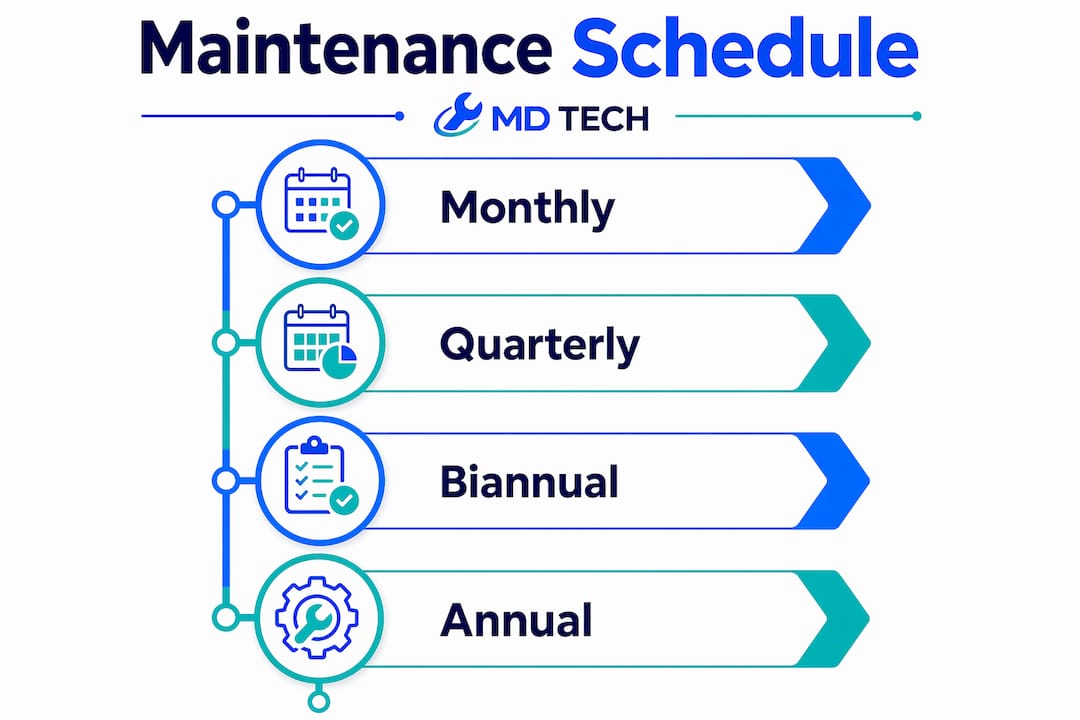
Frequency is everything in long-term appliance maintenance. Doing the right task at the wrong interval is nearly as ineffective as skipping it entirely. Below is a schedule built from manufacturer guidance and expert sources.
After every use:
- Clean the dryer lint trap before or after each cycle. Whirlpool dryer manuals specifically advise maintaining lint screen cleanliness to prevent airflow restriction and fire risk. This single habit takes under 30 seconds and directly affects drying efficiency.
Monthly:
- Run a cleaning cycle on your washing machine. Whirlpool recommends cleaning washing machines once a month or every 30 wash cycles to prevent detergent and mineral buildup inside the drum.
- Wipe down kitchen appliance surfaces, door gaskets, and control panels with a damp microfiber cloth.
- Inspect your HVAC filter and replace it if it looks gray or clogged. Monthly filter changes prevent efficiency losses and keep indoor air quality high.
Every two to three months:
- Clean your dishwasher filter under running water. Consumer Reports recommends cleaning dishwasher filters at least every couple of months to prevent odors and residue buildup that reduces cleaning performance.
Twice a year:
- Clean refrigerator condenser coils. Experts recommend cleaning coils biannually, or every two to three months if you have pets, to keep the compressor from overworking.
- Inspect door seals on your refrigerator, dishwasher, and oven for cracks or gaps. A failing seal forces the appliance to work harder to maintain temperature.
- Check dryer vents and exhaust ducts for lint accumulation beyond the trap.
Pro Tip: Set a recurring phone reminder on the first of each month for your monthly tasks. Pair the biannual tasks with daylight saving time changes so you never forget them.
Consulting your owner’s manual for model-specific intervals is non-negotiable. A Samsung French door refrigerator and a compact Whirlpool unit have different coil configurations and cleaning access points. Generic schedules get you 80% of the way there. Your manual covers the rest.
How do cleaning and airflow affect appliance efficiency and lifespan?
Dirt and blockages are the two most common causes of premature appliance failure, and both are entirely preventable. Understanding the mechanism helps you take the task seriously rather than treating it as optional housekeeping.
“Small deposits and clogging translate rapidly into appliance strain, dramatically reducing efficiency and lifespan if not addressed monthly.” — Martha Stewart
Refrigerators: Dust buildup on condenser coils forces the compressor into longer duty cycles. Consumer Reports notes that coil and dust buildup pushes compressors into harder cycles, accelerating wear on one of the most expensive components in the appliance. A refrigerator with clean coils runs shorter cycles, uses less electricity, and lasts longer. Detailed guidance on refrigerator coil cleaning is worth reviewing before your first attempt.
Dishwashers: Clogged filters and spray arms are the most common reason a dishwasher stops cleaning effectively. Dishwasher failures from blockages are almost always preventable. Before you change your detergent or adjust your cycle settings, check the filter and spray arms first. Understanding how dishwasher filters work makes this task faster and more effective.
Dryers: The lint trap is necessary but not sufficient. Vent system obstructions are the most costly maintenance oversight in laundry appliances. A clogged vent duct forces the dryer to run multiple cycles for a single load, raises energy costs, and creates a genuine fire hazard. Lint screen cleaning alone does not address duct buildup.
| Appliance | Primary blockage point | Effect if neglected | Cleaning frequency |
|---|---|---|---|
| Refrigerator | Condenser coils | Compressor overwork, higher energy use | Every 6 months (2-3 months with pets) |
| Dishwasher | Filter and spray arms | Poor cleaning, odors | Every 2-3 months |
| Dryer | Lint trap and vent duct | Longer cycles, fire risk | Trap: every use. Duct: twice yearly |
| HVAC | Air filter | Reduced airflow, poor air quality | Monthly or per manufacturer |
What tools and products do you need for DIY appliance maintenance?
You do not need a professional toolkit to handle most preventative care tasks. The right basic supplies cover the majority of what this guide recommends.
Core toolkit:
- Vacuum with a brush attachment (for condenser coils and vent areas)
- Bottle brush or coil cleaning brush (narrow enough to reach behind refrigerators)
- Microfiber cloths (lint-free and safe on stainless steel and glass)
- Baking soda and white vinegar (effective, non-corrosive cleaners for drums, filters, and gaskets)
- Mild dish soap (for dishwasher filter rinsing)
- Flashlight (for inspecting door seals, vent openings, and coil access panels)
Avoid bleach-based cleaners inside washing machine drums or on rubber gaskets. Harsh chemicals degrade seals faster than normal wear does. For dryer duct cleaning, a flexible vent brush kit reaches several feet into the exhaust duct and removes compacted lint that a vacuum cannot reach alone.
Pro Tip: Keep your appliance manuals in a single folder, either physical or digital. When you run a monthly cleaning cycle, pull the relevant manual and spend two minutes confirming you are not missing a model-specific step.
Safety comes first on every task. Unplug the appliance before cleaning coils, filters, or any internal component. For gas appliances like ranges and dryers, turn off the gas supply valve before inspecting connections or moving the unit. Never use water near electrical components, and allow appliances to cool fully before cleaning heating elements or oven interiors.
Expert kitchen appliance cleaning tips can help you go deeper on specific appliances once you have the basics covered.
How do you know when a problem is beyond DIY maintenance?
Preventative care handles the majority of appliance wear, but some symptoms signal that a professional inspection is the right next step. Catching these early prevents a manageable repair from becoming a full replacement.
- Longer drying times after you have already cleaned the lint trap and inspected the vent duct point to a heating element issue or a failing motor, not a maintenance gap.
- Unusual noises such as grinding, banging, or squealing in a washing machine or refrigerator indicate mechanical wear on bearings, belts, or fans that cleaning cannot fix.
- Persistent odors from a dishwasher or washing machine after a cleaning cycle suggest mold growth in areas you cannot reach without disassembly.
- Poor cooling in a refrigerator after coil cleaning may indicate a refrigerant leak or a failing thermostat, both of which require a licensed technician.
- Repeated tripping of circuit breakers when an appliance starts is an electrical issue that should never be ignored or treated as a maintenance task.
Warranty terms matter here. Many manufacturer warranties, including those from Whirlpool and Samsung, require documented professional service for certain repairs to remain valid. Attempting a complex repair yourself can void coverage. When in doubt, a professional diagnostic visit costs far less than a replacement unit. Knowing when to repair versus replace is a decision worth making with accurate information rather than guesswork.
Key takeaways
Consistent preventative maintenance is the single most effective strategy for extending appliance lifespan and avoiding costly emergency repairs.
| Point | Details |
|---|---|
| Schedule drives results | A calendar-based routine tied to your owner’s manual prevents the most common appliance failures. |
| Airflow is the critical variable | Cleaning coils, filters, and vents directly reduces energy use and compressor wear across all major appliances. |
| Lint trap is not enough | Dryer duct cleaning is required twice yearly to prevent fire risk and inefficiency beyond what the trap catches. |
| Know your limits | Unusual noises, poor cooling after cleaning, and electrical issues require a licensed technician, not more DIY. |
| Tools are simple | A vacuum, microfiber cloths, baking soda, vinegar, and a coil brush cover most preventative care tasks at home. |
What I have learned from years of watching appliances fail early
Most appliance failures we see at Appliancesrepairmdtech are not random. They follow a pattern: a homeowner skips a few months of basic cleaning, a component works harder to compensate, and then it fails at the worst possible time. The refrigerator stops cooling the day before a dinner party. The dryer quits mid-cycle on laundry day. These are not bad luck. They are the predictable result of deferred maintenance.
The habit that makes the biggest difference is not the biannual deep clean. It is the five-minute monthly check. Monthly 5-minute cleanings reduce strain on appliances by preventing clogged filters and vents before they cause real damage. That is a low bar, and most homeowners clear it easily once they build the habit.
What I tell every homeowner is this: treat your appliances the way you treat your car. You would not skip oil changes and then wonder why the engine failed. The same logic applies to condenser coils and dryer ducts. The preventive maintenance guide we put together covers the full picture if you want a deeper reference.
One more thing worth saying plainly: overcrowding your dishwasher or washing machine is a maintenance issue. Following manufacturer load recommendations prevents mechanical strain just as much as cleaning does. How you use an appliance is part of how you care for it.
— MDTECH
Keep your appliances running with professional support
DIY maintenance covers a lot of ground, but some tasks require tools and expertise that go beyond what most homeowners have at home. Appliancesrepairmdtech provides professional appliance repair, inspection, and maintenance services across Orange County and Los Angeles County, California. Whether you need a thorough diagnostic on a refrigerator that is not cooling properly or a full dryer vent cleaning, our licensed technicians handle it fast. If you own Samsung appliances, our Samsung appliance repair service covers everything from refrigerators to washers with brand-specific expertise. Combine your home maintenance routine with a professional checkup once a year and your appliances will last significantly longer.
FAQ
How often should you clean refrigerator condenser coils?
Clean refrigerator condenser coils at least twice a year. If you have pets, increase that to every two to three months, since pet hair accelerates dust buildup and compressor strain.
What is the most overlooked appliance maintenance task?
Dryer vent duct cleaning is the most commonly skipped task. Cleaning the lint trap after every cycle is necessary but does not address lint accumulation inside the duct, which creates fire risk and reduces drying efficiency over time.
Can you use vinegar to clean appliances?
White vinegar is safe and effective for cleaning washing machine drums, dishwasher filters, and refrigerator door gaskets. Avoid using it on rubber seals repeatedly at high concentrations, as prolonged exposure can degrade the material.
When does preventative maintenance stop being enough?
When an appliance produces unusual noises, fails to maintain temperature after cleaning, or trips a circuit breaker repeatedly, the problem is mechanical or electrical. At that point, a licensed technician should diagnose the issue before it causes further damage.
How do you build a consistent appliance care routine?
Tie monthly tasks to a fixed date, such as the first of each month, and pair biannual tasks with seasonal events like daylight saving time changes. Keeping all owner’s manuals in one accessible location makes it easier to confirm model-specific steps each time.