
TL;DR:
- Hiring licensed technicians ensures compliance with federal and state laws, preventing legal and warranty issues.
- Verified credentials guarantee safety, current training, and accountability, leading to higher-quality repairs.
When your refrigerator stops cooling or your HVAC unit starts making strange noises, the temptation to call whoever is cheapest and available can be hard to resist. But choosing the wrong person for the job carries real risks. The reasons to hire licensed technicians go far beyond a piece of paper on the wall. Licensing signals verified training, legal compliance, and accountability that unlicensed workers simply cannot offer. Before you schedule your next repair, here is what every homeowner should know about why credentials matter more than convenience.
Table of Contents
- Key Takeaways
- 1. The real reasons to hire licensed technicians start with the law
- 2. Safety compliance you cannot afford to skip
- 3. Verified training and up-to-date knowledge
- 4. Accountability backed by real oversight
- 5. Protection of your warranty and insurance coverage
- 6. Real cost savings over time
- 7. Legal protection against fraud and civil liability
- How to verify a license before you hire
- My take on why licensing matters more than most homeowners realize
- Why Appliancesrepairmdtech is built around licensed professionals
- FAQ
Key Takeaways
| Point | Details |
|---|---|
| Licensing is legally required | EPA Section 608 certification is mandatory for any technician who handles refrigerants in HVAC systems. |
| Unlicensed work voids warranties | Repairs done without proper licensing can void manufacturer warranties and trigger insurance claim denials. |
| Licensed techs carry liability coverage | Proper insurance protects you from out-of-pocket costs if something goes wrong during a repair. |
| Verification is your responsibility | Always check active license status and request insurance documents before any work begins. |
| Long-term savings outweigh upfront cost | Licensed contractors often save homeowners money by preventing costly repeat repairs and legal complications. |
1. The real reasons to hire licensed technicians start with the law
Licensing is not just a formality. For appliance and HVAC technicians, it is a legal requirement backed by federal and state regulation. EPA Section 608 certification requires any technician who opens a refrigerant circuit to hold one of five credential categories: Core, Type I, Type II, Type III, or Universal. There is no grandfathering. If your HVAC tech cannot show EPA certification, they are breaking federal law every time they touch your system.
Beyond federal requirements, California adds its own layer. The Contractors State License Board enforces permit violations with license suspensions and revocations. Unpermitted work can also trigger insurance claim denials and void the manufacturer warranty on your equipment. That is a steep price to pay for saving a few dollars upfront.
Pro Tip: Ask your technician to show their license number before the appointment is confirmed. You can verify active status in minutes through your state’s contractor database.
- EPA Section 608 applies to all technicians who open refrigerant circuits
- California CSLB enforces licensing for HVAC and appliance contractors
- Unpermitted work creates legal exposure for the homeowner, not just the contractor
2. Safety compliance you cannot afford to skip
Licensed technicians are trained to work within building codes and safety standards. Licensed contractors comply with these regulations to prevent unsafe conditions and legal liabilities for both the worker and the homeowner. An unlicensed worker who installs a gas line incorrectly or wires an appliance outside of code creates a hazard that could injure your family long after the job is “done.”
The Ohio Construction Industry Licensing Board, for example, enforces standards for over 10,000 professionals specifically because code violations have real consequences. California operates on the same principle. When a licensed tech works in your home, every step of the job is guided by tested safety protocols, not guesswork.
3. Verified training and up-to-date knowledge
Licensing requires technicians to pass exams, complete training, and often pursue continuing education. That means a licensed technician coming to your home has proven knowledge, not just claimed experience. Appliance technology changes fast. A tech who earned a certification five years ago and stopped learning is already behind on modern refrigerant types, smart appliance diagnostics, and updated safety protocols.
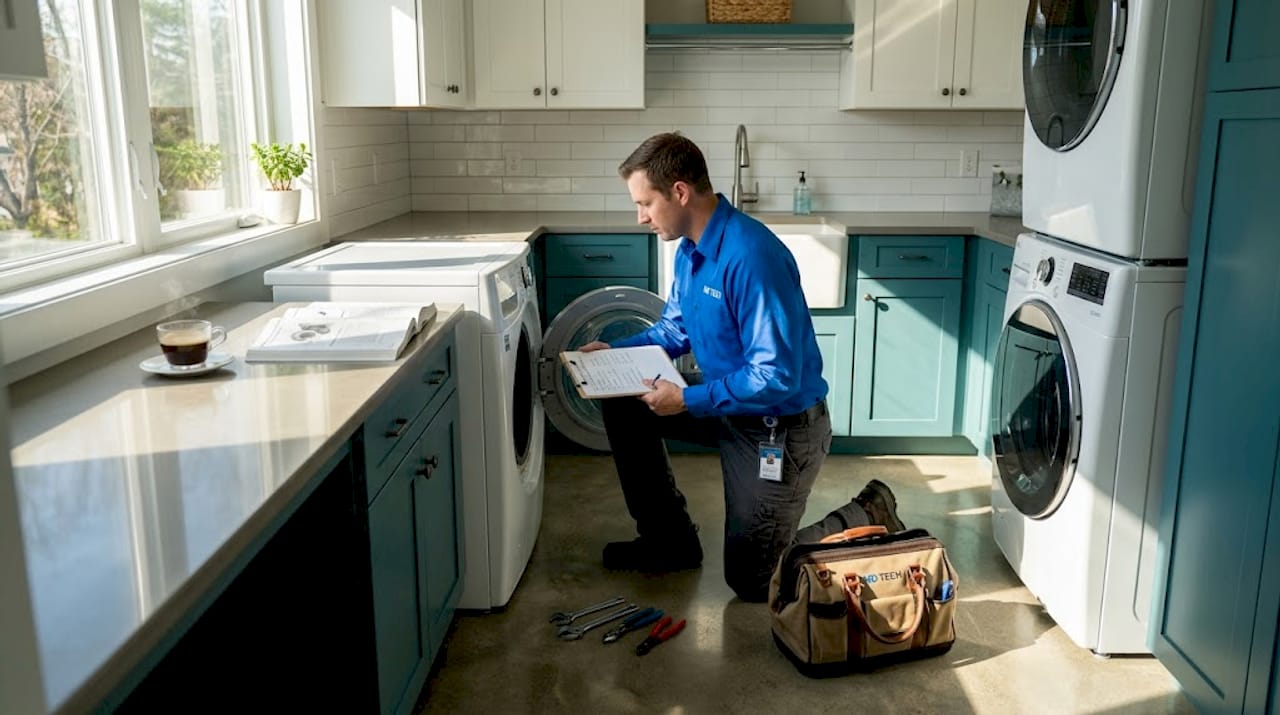
This is one of the clearest advantages of hiring licensed technicians. The license signals that training was verified at a minimum standard, and in many cases, techs pursue additional manufacturer certifications to stay current on specific brands. The result is a repair that actually fixes the root problem instead of masking symptoms until the next breakdown.
4. Accountability backed by real oversight
When something goes wrong with an unlicensed contractor, your options are limited. You can argue, you can leave a bad review, and that is about it. With a licensed technician, there is a regulatory body that can investigate complaints, suspend licenses, and compel resolution. Formal documentation like permits, contracts, and licenses creates a paper trail that supports your case if you need to file a complaint or pursue legal action.
“Detailed documentation and formal complaints expedite resolution when homeowners encounter unlicensed or substandard technicians.” — Bad Contractor Law
This accountability structure is one of the most underappreciated benefits of hiring professionals. Most homeowners never need to use it. But knowing it exists changes the entire dynamic of the service relationship.
5. Protection of your warranty and insurance coverage
This point catches many homeowners off guard. If an unlicensed technician works on your appliance or HVAC system, your manufacturer warranty can be voided on the spot. The warranty terms on most major brands specify that service must be performed by a certified repair professional. One repair by the wrong person can eliminate years of remaining coverage.
Insurance is the same story. If an unlicensed contractor damages your home during a repair, your homeowner’s insurance policy may refuse to cover it. Insurers may deny claims if unlicensed work is involved. You could be left paying for both the failed repair and the resulting damage.
6. Real cost savings over time
The upfront cost of a licensed technician is often higher than the guy who quotes you half the price with no credentials. But the math shifts quickly. Licensed and insured contractors benefit from supplier relationships and insurance protection that save homeowners from hidden costs down the line. They also tend to diagnose problems correctly the first time, which eliminates repeat service calls.
Consider the cost of an unlicensed HVAC repair that voids your warranty, triggers a permit violation fine, and leaves you with a system that fails again in three months. What looked like a $150 savings turns into a $2,000 problem. The importance of hiring experts becomes obvious once you do the real math.
Pro Tip: When comparing quotes, ask each contractor to include their license number and insurance policy information in writing. This filters out unlicensed workers before you ever pick up the phone to negotiate price.
7. Legal protection against fraud and civil liability
In many states, hiring someone to do HVAC or appliance work without a license is not just risky. It can expose you to legal liability. In New Jersey, unlicensed HVAC work can be treated as a violation of the Consumer Fraud Act, which imposes substantial fines and civil damages. California carries similar penalties for both unlicensed contractors and, in some cases, homeowners who knowingly hire them.
The why use certified technicians argument is not just about quality. It is about protecting yourself legally. A licensed tech gives you clear legal standing if something goes wrong. An unlicensed one can create a situation where you have fewer rights and more liability, not the other way around.
You can find more details on EPA certified technicians and what their credentials actually cover before you hire.
How to verify a license before you hire
Knowing the advantages of licensed workers is only half the equation. You also need to know how to confirm those credentials are real and active. Here is where to start.
- Check your state’s contractor license database (California homeowners use the CSLB website)
- Request the technician’s EPA Section 608 certificate number directly and verify it with the certification body
- Ask for a copy of their general liability insurance certificate, not just a verbal confirmation
- Confirm the policy is active by calling the insurance provider directly if the job is significant
- Watch for warning signs: cash-only quotes, reluctance to pull permits, or vague answers about credentials
Active license verification should happen before any technician sets foot in your home. This is especially true for HVAC work involving refrigerants, gas lines, or electrical components. The few minutes it takes to verify could save you from weeks of legal and financial headache.
If a contractor pressures you to skip permits or discourages you from checking their license, that is your answer. Walk away.
My take on why licensing matters more than most homeowners realize
I have been around this industry long enough to see what happens on both ends of the licensing spectrum. Homeowners who skip verification often do not realize anything went wrong until months later, when the equipment fails again or an inspection turns up unpermitted work that stalls a home sale. The damage is rarely dramatic. It is quiet and expensive.
What I find most interesting is that the unlicensed worker is rarely malicious. Sometimes they are just undertrained and overconfident. But good intentions do not fix a refrigerant leak that was handled without EPA certification, and they do not restore a warranty that was voided by an uncertified repair.
The thing most homeowners never hear is this: licensed technicians are often easier to work with professionally, not just legally safer. They carry documentation, they pull permits when required, and they stand behind their work because their license is on the line. That accountability creates a completely different service experience. You are not just getting a repair. You are getting someone with a real stake in doing it right.
Verification is not optional in my view. It is the first thing you do, not the last.
— MDTECH
Why Appliancesrepairmdtech is built around licensed professionals
At Appliancesrepairmdtech, every technician on our team holds the credentials homeowners should be asking for before any repair begins. Our HVAC techs carry EPA Section 608 certification and comply with California’s permitting requirements. Our appliance repair specialists are trained on the major brands and stay current with manufacturer requirements that protect your warranty coverage.
If you need HVAC repair in Orange County, our licensed team handles everything from refrigerant work to full system diagnostics, with insurance coverage and permit handling included. For appliance repairs, we work across refrigerators, washers, dryers, ovens, and more, always with documented credentials you can verify. Booking is available online, and we cover cities throughout Orange County and Los Angeles County. When credentials matter, and they always do, Appliancesrepairmdtech gives you a team you can check up on.
FAQ
What does licensed mean for an HVAC technician?
A licensed HVAC technician has passed state and federal exams, including EPA Section 608 certification for refrigerant handling, proving they meet minimum safety and technical standards required by law.
Can I hire an unlicensed technician to save money?
Hiring an unlicensed technician can void your manufacturer warranty, trigger insurance claim denials, and in some states expose you to legal liability under consumer fraud statutes.
How do I verify a technician’s license in California?
You can verify a contractor’s license through the California Contractors State License Board website by searching the license number, which shows active status, insurance, and any disciplinary history.
Does licensing matter for appliance repairs, not just HVAC?
Yes. Many appliance repairs, especially those involving gas or refrigerants, require specific certifications. Manufacturer warranties also often require service by certified technicians to remain valid.
What should I ask before letting a technician start work?
Ask for their license number, EPA certification if the job involves refrigerants, and a copy of their current liability insurance certificate before any work begins.