
Every american homeowner knows how quickly a breakdown in the kitchen or laundry room can disrupt daily life. In Orange and Los Angeles Counties, finding a licensed technician you can trust is no small matter. Statistics show that improper appliance repair leads to thousands of fire and safety issues each year in the United States. Understanding the real differences between professional, certified experts and uncertified handymen can protect your investment and your peace of mind.
Table of Contents
- Defining Licensed Technicians In Appliance Repair
- Key Certifications And Training Requirements
- California Licensing Laws For Appliance Technicians
- Real-World Responsibilities And Specializations
- Risks, Liabilities, And Compliance For Homeowners
Key Takeaways
| Point | Details |
|---|---|
| Licensed Technicians Ensure Safety | Only licensed technicians have met regulatory requirements necessary to perform safe appliance repairs, protecting both homeowners and their investments. |
| Certification Validates Expertise | Technicians should possess recognized certifications, such as EPA Section 608 and NASTeC, ensuring they have the knowledge to handle complex repairs responsibly. |
| Compliance with Local Laws | In California, technicians must adhere to licensing laws that vary depending on project scope and safety implications, underscoring the importance of verifying a technician’s credentials. |
| Risk Management is Crucial | Homeowners must verify technician credentials and maintain documentation to mitigate risks associated with appliance repairs, including potential liabilities and safety hazards. |
Defining Licensed Technicians in Appliance Repair
Licensed technicians represent highly trained professionals who have met strict regulatory requirements to legally perform specialized appliance repair services. Unlike general handymen, these experts undergo comprehensive certification processes that validate their technical knowledge, safety understanding, and professional competence. Their credentials demonstrate not just mechanical skill, but a commitment to maintaining industry standards and protecting homeowner investments.
The certification process involves rigorous training and compliance with government regulations. For instance, Section 608 of the Clean Air Act establishes critical occupational licensure standards for technicians working with refrigeration systems. This federal regulation requires professionals to obtain specific certifications based on the types of appliances and refrigerant systems they service. Technicians must demonstrate expertise in handling potentially hazardous materials, understanding environmental protection protocols, and executing precise repair techniques.
Licensed technicians typically earn credentials through multiple pathways, which may include:
- Completing accredited technical education programs
- Passing comprehensive written and practical examinations
- Maintaining ongoing professional education credits
- Demonstrating proficiency in specific appliance repair techniques
- Passing background checks and safety training requirements
Pro tip: Always request to see a technician’s current licensing documentation before allowing them to perform repairs in your home to ensure you’re working with a qualified professional.
Key Certifications and Training Requirements
Professional appliance repair technicians must navigate a complex landscape of certifications that validate their technical expertise and commitment to industry standards. These credentials go far beyond simple technical skills, representing comprehensive proof of a technician’s ability to safely and effectively diagnose and repair household appliances.

Among the most significant credentials is the Certified National Appliance Service Technician (NASTeC) certification, a nationally recognized qualification that assesses technicians’ comprehensive knowledge and professional competence. This certification requires rigorous examination processes, demonstrating a technician’s proficiency in handling complex repair scenarios across multiple appliance types. Additionally, technicians often pursue multiple certifications to expand their professional capabilities.
Key certifications in the appliance repair industry typically include:
- EPA Section 608 Certification for refrigerant handling
- North American Technician Excellence (NATE) Certification
- HVAC Excellence Certification
- NASTeC Appliance Repair Certification
- State-specific technical licenses
Each certification pathway involves specific requirements such as:
Here’s a summary of the most common appliance repair certifications and what they signify:
| Certification Name | Required For | Main Focus | Certification Issuer |
|---|---|---|---|
| EPA Section 608 Certification | Refrigerant handling | Environmental safety | Environmental Protection Agency |
| NASTeC Appliance Repair Certification | Appliance repair technicians | Broad technical proficiency | International Society of Certified Electronics Technicians |
| North American Technician Excellence (NATE) | HVAC professionals | HVAC system expertise | NATE Organization |
| HVAC Excellence Certification | HVAC servicing | Technical mastery | HVAC Excellence |
| State-Specific Technical Licenses | Varies by state | Legal compliance | Local government agencies |
- Completing accredited technical training programs
- Passing comprehensive written examinations
- Demonstrating hands-on technical skills
- Maintaining continuing education credits
- Passing background and safety assessments
Pro tip: Request technicians provide documented proof of their current professional certifications to ensure you’re hiring a truly qualified appliance repair professional.
California Licensing Laws for Appliance Technicians
Appliance repair technicians in California operate within a complex regulatory framework designed to protect consumers and ensure professional standards. The state’s approach to licensing goes beyond simple credentialing, focusing on comprehensive consumer protection and technical competence across various service domains.
The California Contractors State License Board (CSLB) serves as the primary regulatory body governing technician licensing and contractor regulations. While a specific appliance repair license is not always mandatory, technicians must navigate intricate legal requirements depending on the scope and monetary value of their work. Critical factors determine licensing needs, including:
- Project cost thresholds
- Complexity of repair services
- Specific types of home improvement work
- Potential safety implications of the repair
Licensing requirements vary based on several key considerations. For minor repairs under a specific dollar amount, technicians might not require formal licensing. However, work exceeding certain thresholds necessitates registration with the CSLB and obtaining appropriate contractor classifications. These regulations ensure that technicians demonstrate:
- Technical proficiency
- Financial responsibility
- Commitment to safety standards
- Consumer protection understanding
- Professional accountability
Pro tip: Always verify a technician’s current CSLB license status online before hiring to confirm their legal authorization to perform appliance repair services in California.
Real-World Responsibilities and Specializations
Appliance repair technicians are sophisticated professionals whose roles extend far beyond simple equipment maintenance. Their work requires a complex blend of technical expertise, diagnostic skills, and customer service capabilities that adapt to rapidly evolving technological landscapes in residential and commercial settings.
Heating, Air Conditioning, and Refrigeration Mechanics demonstrate remarkable versatility in their professional approach, interpreting technical documents, troubleshooting intricate electrical circuits, and ensuring strict adherence to safety protocols. Technicians must possess a multifaceted skill set that encompasses:
- Advanced electrical system understanding
- Mechanical repair techniques
- Diagnostic problem-solving capabilities
- Environmental and safety compliance knowledge
- Customer communication skills
Specialization areas for appliance repair technicians typically include:
- Residential Appliance Repair
- Commercial Kitchen Equipment Maintenance
- HVAC System Services
- Refrigeration Unit Diagnostics
- Smart Appliance Technology Integration
Professional responsibilities often require technicians to continuously update their technical knowledge, adapt to emerging technologies, and maintain rigorous safety standards across different equipment categories. This demands ongoing training, certification renewals, and a commitment to professional development.
Pro tip: Request technicians provide documentation of their recent training and specialization certifications to ensure they are current with the latest technological advancements.
Risks, Liabilities, and Compliance for Homeowners
Homeowners face significant potential risks when addressing appliance repairs without proper understanding of safety protocols and legal considerations. Electrical systems, mechanical components, and complex home appliances present intricate challenges that extend far beyond simple maintenance, requiring specialized knowledge and careful navigation of potential hazards.
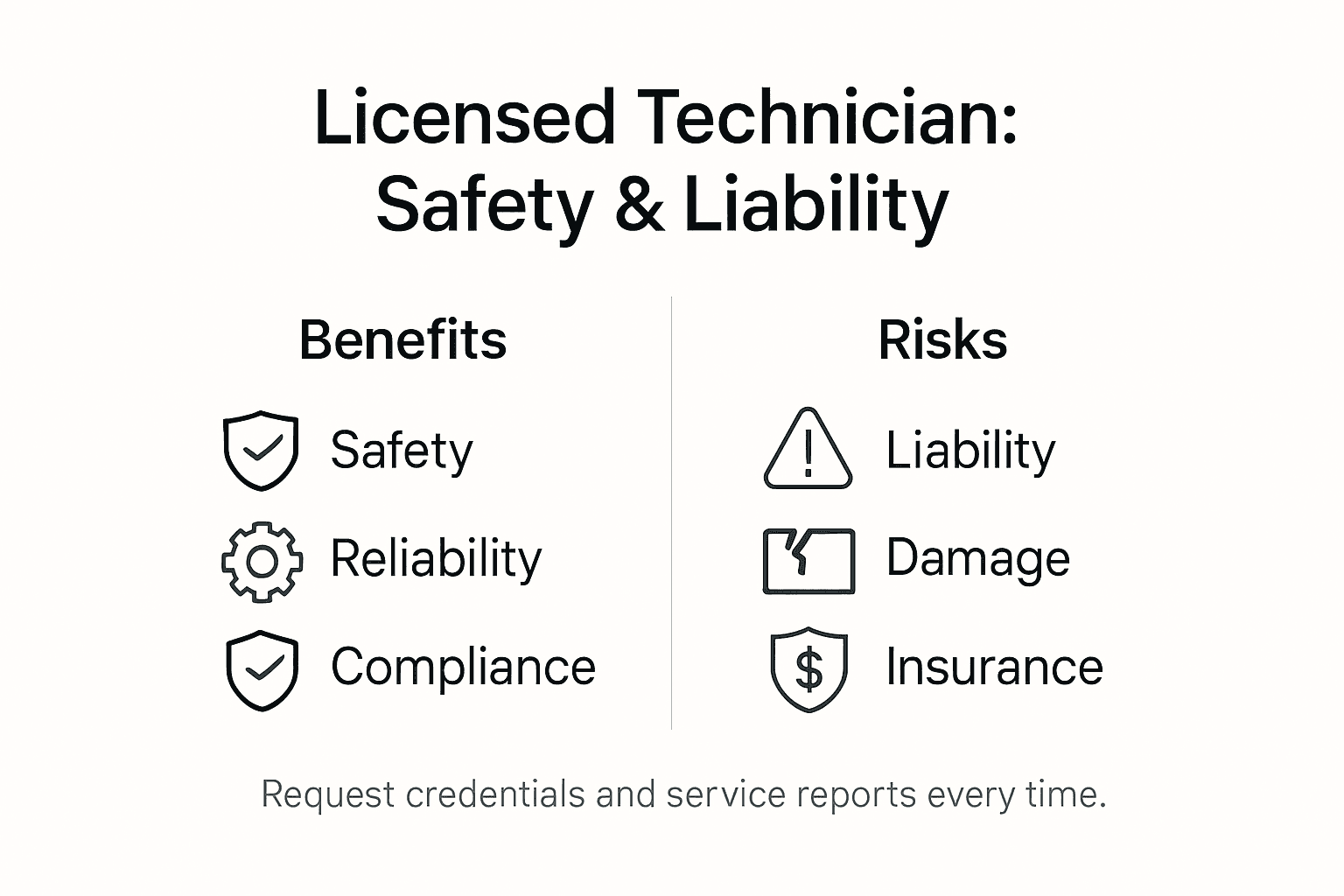
Home safety assessments reveal multiple critical risk areas that homeowners must carefully consider when managing appliance repairs. Potential liability scenarios can emerge from improper repairs, including:
- Electrical shock hazards
- Fire risks from faulty installations
- Property damage from incorrect repair techniques
- Personal injury potential
- Insurance claim complications
Comprehensive risk management for homeowners involves several strategic approaches:
- Verifying technician credentials and licensing
- Understanding manufacturer warranty requirements
- Documenting all repair work professionally
- Maintaining detailed service records
- Ensuring compliance with local safety regulations
Understanding Portable Appliance Testing principles can provide additional insights into proactive safety management. Homeowners should recognize that professional intervention significantly reduces potential legal and safety risks associated with complex appliance repairs.
Below is a comparison of risk management steps for homeowners versus the consequences of skipping professional appliance repair:
| Approach | Benefit | Risk if Overlooked | Potential Long-Term Impact |
|---|---|---|---|
| Technician credential verification | Ensures legal, safe repairs | Unqualified repairs, liability | Property damage, insurance denial |
| Professional documentation | Supports warranty, claims | Disputed warranty, lack of evidence | Increased repair costs |
| Compliance with safety regulations | Minimizes hazards | Fire, electrical, injury risks | Health hazards, code violations |
| Detailed service records | Clear repair history | Difficulty proving maintenance | Lower property resale value |
Pro tip: Always request and retain comprehensive documentation of repairs, including technician credentials, service reports, and warranty information to protect yourself legally and financially.
Trust Licensed Technicians for Safe and Reliable Appliance Repair
When it comes to protecting your home and family, trusting licensed technicians who meet rigorous certification standards is essential. The risk of improper repairs can lead to costly damages, safety hazards, and voided warranties. At Appliances Repair MD Tech, we understand these concerns and connect you with licensed professionals fully compliant with California licensing laws and industry certifications. Our team specializes in repairing refrigerators, washers, dryers, ovens, and HVAC systems with safety and precision.
Take control of your appliance repair needs today by choosing expert technicians who provide documented proof of their qualifications and deliver guaranteed quality service. Schedule your appointment now through our easy online booking at Appliance Repair Services in Orange County and Los Angeles County and experience peace of mind knowing your home is in trusted hands.
Frequently Asked Questions
What qualifications should I look for in a licensed appliance repair technician?
Look for credentials like the Certified National Appliance Service Technician (NASTeC) certification, EPA Section 608 certification for refrigerant handling, and other relevant technical licenses. These demonstrate the technician’s expertise and commitment to safety standards.
Why is it important to hire a licensed technician for appliance repairs?
Licensed technicians have undergone rigorous training and certification processes, ensuring they possess the necessary skills to repair appliances safely and effectively. Hiring a licensed professional minimizes risks associated with improper repairs, such as electrical shocks or property damage.
What risks do homeowners face when using unlicensed repair services?
Homeowners may expose themselves to several hazards, including electrical shock risks, potential fire hazards, and complications with insurance claims if repairs are performed without proper qualifications. Repairing appliances can be complex, requiring specialized knowledge that unlicensed individuals may lack.
How can I verify the credentials of an appliance repair technician?
You can verify a technician’s credentials by asking for their licensing documentation and confirming their status through the appropriate licensing board or regulatory authority’s website. Ensuring they are up to date with certifications is crucial for safe appliance repair.