
TL;DR:
- Many homeowners in Orange and Los Angeles Counties spend unnecessary money on compressor replacements that often are not needed because the original issue was misdiagnosed.
- Accurate diagnosis frequently reveals electrical, refrigerant, or airflow problems instead of true compressor failure, helping homeowners avoid major repair costs.
Homeowners across Orange County and Los Angeles County often pay thousands of dollars for compressor replacements that were never truly necessary.
Research shows that many compressors returned under warranty have no actual defect. In many cases, the real issue involves airflow restrictions, refrigerant imbalance, or electrical problems. Compressor failure is one of the most serious HVAC issues, but it is also one of the most commonly misdiagnosed. This guide explains what compressor failure really means, what causes it, how professionals diagnose it properly, and how homeowners can avoid expensive mistakes.
Table of Contents
- What is compressor failure?
- Common causes of compressor failure
- Diagnosing compressor failure and avoiding costly mistakes
- Repair, replacement, and technician requirements
- Why accurate compressor diagnosis saves money
- Professional HVAC and appliance repair services
- Frequently asked questions
Key Takeaways
| Point | Details |
|---|---|
| Not all failures are real | Many compressors get replaced because of incorrect diagnosis. |
| Root causes matter | Electrical faults and refrigerant issues often trigger compressor problems. |
| Certified pros are required | EPA-certified technicians must handle refrigerant-related repairs. |
| Repairs may be possible | Electrical components sometimes fail instead of the compressor itself. |
| Maintenance prevents breakdowns | Routine inspections help extend compressor lifespan. |
What is compressor failure?
The compressor acts as the heart of your air conditioning or heat pump system. Its main purpose is to pressurize refrigerant and move it throughout the HVAC system. Once the compressor stops functioning properly, cooling and heating performance immediately decline.
Compressor failure occurs when the refrigeration system can no longer circulate refrigerant effectively. Homeowners may notice warm air coming from vents, loud humming sounds, or outdoor units shutting down shortly after startup.
Compressors exist in several household systems, including central air conditioners, heat pumps, refrigerators, and mini-split units. If refrigerant cannot circulate correctly, the cooling cycle stops completely. Understanding
how refrigerant works helps explain why compressor problems affect the entire HVAC system.
Common Symptoms of Compressor Failure
| Symptom | Possible Meaning | Effect on the Home |
|---|---|---|
| Warm air from vents | Refrigerant is not circulating | No cooling or heating |
| Grinding or clicking noises | Mechanical or electrical damage | System may shut down |
| Frequent breaker trips | Excessive electrical draw | Potential electrical hazard |
| Ice buildup on lines | Airflow or refrigerant issues | Reduced system efficiency |
| Outdoor unit will not start | Failed start components | Complete comfort loss |
Signs Your Compressor May Be Struggling
Homeowners often notice warning signs before total compressor failure occurs. Weak airflow, inconsistent cooling, strange buzzing sounds, or rising utility bills usually indicate deeper HVAC system issues. Addressing these symptoms early may prevent expensive repairs later.
Common causes of compressor failure
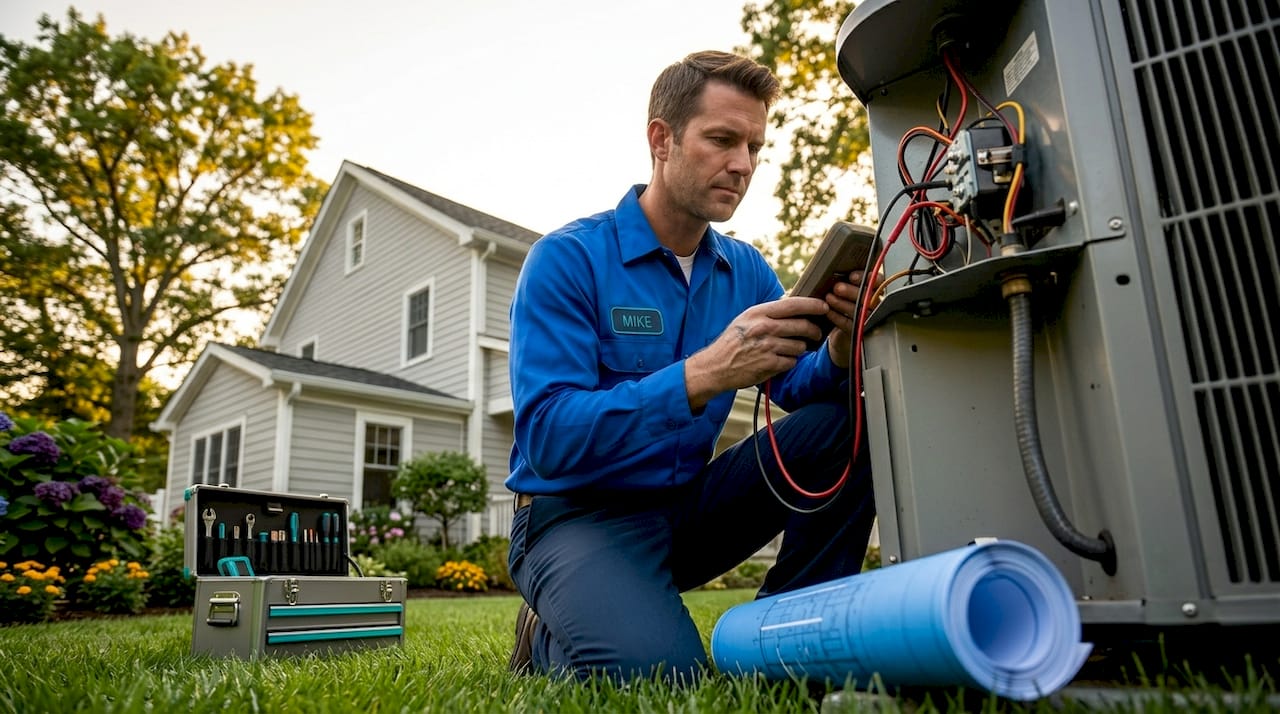
Most compressors do not fail randomly. Underlying system issues usually create conditions that eventually damage the compressor. In many situations, the compressor becomes the final damaged component instead of the original source of the problem.
| Root Cause | Warning Signs | Recommended Solution |
|---|---|---|
| Electrical problems | Breaker trips, wiring damage | Inspect capacitors and electrical components |
| Lubrication failure | Grinding sounds, overheating | Inspect oil system and compressor condition |
| Refrigerant imbalance | Weak cooling, ice buildup | Repair leaks and recharge refrigerant |
| Contamination | Burned smell or acidic oil | Flush system and replace filter dryers |
| Restricted airflow | Overheating and short cycling | Clean coils and replace filters |
Electrical Problems That Mimic Compressor Failure
Electrical faults are among the most common reasons HVAC systems appear to have compressor failure. A failed capacitor or damaged contactor may stop the compressor from starting correctly. Voltage fluctuations can also damage internal electrical windings.
Why Refrigerant Levels Matter
Incorrect refrigerant levels create severe stress on the compressor. Low refrigerant allows the compressor to overheat, while liquid refrigerant entering the compressor can damage internal components. Proper leak detection and refrigerant charging protect system performance.
Importance of Airflow and Maintenance
Dirty filters and blocked condenser coils reduce airflow significantly. Restricted airflow forces the compressor to work harder and increases operating temperatures. Routine
preventive maintenance helps homeowners avoid these problems.
Diagnosing compressor failure and avoiding costly mistakes
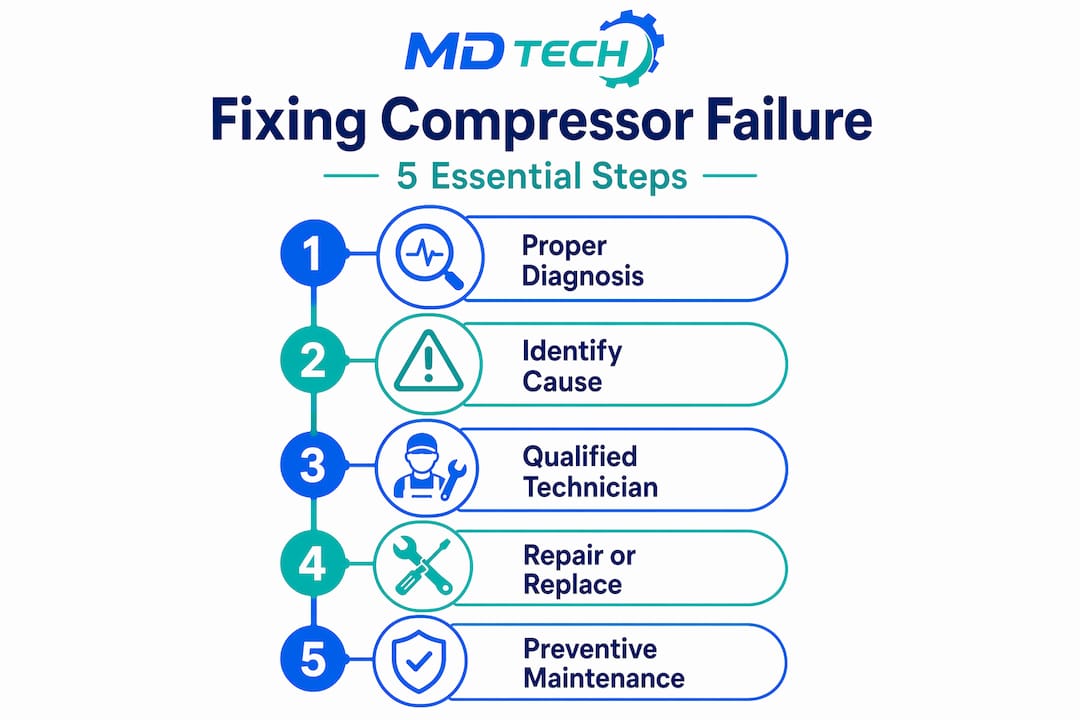
Many homeowners assume compressor replacement is necessary as soon as cooling stops working. That assumption often leads to unnecessary repair costs. Proper diagnosis requires several important tests before confirming compressor failure.
Steps Professionals Use During Compressor Diagnosis
- Inspect electrical components: Technicians test capacitors, relays, and contactors before inspecting the compressor itself.
- Verify incoming voltage: Low voltage may prevent proper startup without indicating compressor damage.
- Measure amperage draw: High amp draw can indicate refrigerant imbalance or internal mechanical stress.
- Check refrigerant pressure: Pressure readings help identify leaks, restrictions, or airflow problems.
- Perform compressor testing: Pump-down and insulation resistance tests confirm true compressor condition.
Common Diagnostic Mistakes
- Accepting verbal diagnoses without test documentation
- Replacing compressors before checking electrical components
- Ignoring refrigerant pressure testing
- Skipping second opinions for expensive repairs
- Assuming system age alone confirms compressor failure
“Proper compressor diagnosis protects homeowners from unnecessary replacement costs and repeated HVAC failures.”
Licensed professionals should explain the entire testing process clearly. Reliable technicians provide measurements, pressure readings, and detailed repair recommendations before discussing replacement options.
Repair, replacement, and technician requirements
After confirming the issue, homeowners must decide whether repair or replacement makes more financial sense. The best solution depends on system age, repair costs, and the exact source of failure.
When Repairs Are Enough
In many cases, repairs focus on electrical components instead of compressor replacement. Replacing a failed capacitor or contactor can restore full HVAC operation quickly and affordably.
- Capacitor replacement
- Contactor replacement
- Electrical wiring repairs
- Refrigerant leak repairs
- System cleaning and maintenance
When Compressor Replacement Is Necessary
Mechanical seizure, internal motor burnout, or severe winding damage usually require full compressor replacement. Older HVAC systems may also benefit more from complete system replacement when repair costs become too high.
Required Technician Certifications
- EPA Section 608 certification
- California contractor licensing
- Liability insurance coverage
- Manufacturer authorization for warranty repairs
Homeowners should avoid DIY compressor repairs because refrigerant handling requires federal certification. Professional
EPA-certified technicians ensure safe installation and warranty compliance.
Why accurate compressor diagnosis saves money
Accurate diagnosis protects homeowners from unnecessary repair expenses and repeat system failures. Some HVAC companies recommend compressor replacement immediately without completing proper diagnostic testing.
Homeowners often assume the most expensive component has failed when cooling suddenly stops. However, many systems only require inexpensive electrical repairs or refrigerant adjustments.
Replacing a compressor without correcting the root cause creates additional risks. Contamination, airflow restrictions, or refrigerant imbalance can quickly damage a newly installed compressor if technicians ignore those underlying issues.
Benefits of Preventive HVAC Maintenance
Routine maintenance greatly reduces the risk of compressor failure. Annual inspections allow technicians to identify refrigerant leaks, airflow problems, or electrical wear before major damage occurs.
Reliable
HVAC repair professionals save homeowners money by diagnosing the real issue correctly the first time.
Professional HVAC and appliance repair services
Fast and accurate diagnostics become critical anytime your home suddenly loses cooling. Experienced HVAC professionals should inspect the system carefully before recommending expensive replacement options.
Appliances Repair MD Tech proudly serves homeowners across Orange County and Los Angeles County with licensed and certified HVAC technicians. Our team handles compressor diagnostics, refrigerant leak detection, capacitor replacement, airflow correction, and complete system evaluations.
We also provide
preventive HVAC maintenance plans that help homeowners reduce emergency repair costs. Customers can also review our
appliance warranty guide for information about coverage and repair options.
Frequently asked questions
What are early signs of compressor failure?
Reduced cooling, loud buzzing sounds, frequent breaker trips, and warm airflow are common early warning signs. These symptoms may also indicate electrical or refrigerant issues, so professional diagnosis is important.
Can a failed compressor be repaired?
Electrical components like capacitors and contactors can often be repaired or replaced. Internal mechanical or electrical compressor damage usually requires full replacement.
What causes compressor failure most often?
Electrical faults, refrigerant imbalance, poor lubrication, contamination, and restricted airflow are the most common causes of compressor damage.
Do I need a certified HVAC technician?
Yes. Refrigerant-related repairs legally require EPA Section 608 certification, and California HVAC work requires proper contractor licensing.