
TL;DR:
- A plenum is a pressure-controlled chamber that distributes conditioned air from your HVAC system to the home, affecting efficiency and comfort. Proper sizing, sealing, and maintenance of the plenum prevent leaks, pressure imbalances, and system failures, ultimately saving energy and extending equipment life. Understanding its crucial role helps homeowners troubleshoot issues and optimize HVAC performance effectively.
If you have ever wondered what is plenum in HVAC and why it matters more than most homeowners think, you are not alone. Most people know about their air filters and ducts, but the plenum sits quietly behind the scenes doing heavy lifting. It is the pressurized chamber that receives air directly from your air handler and sends it where it needs to go. Get it right and your home stays comfortable, your energy bills stay manageable, and your system runs longer. Get it wrong and you feel the consequences in every room.
Table of Contents
- Key takeaways
- What is plenum in HVAC: types and definitions
- How a plenum works and why sizing and sealing matter
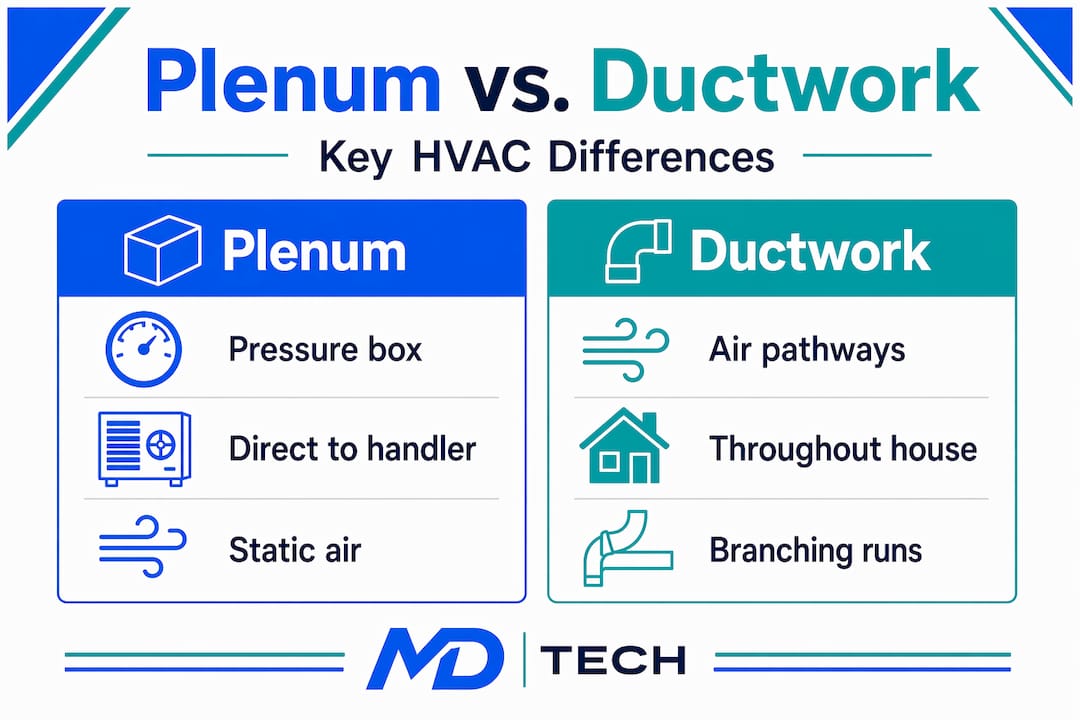
- Plenums vs. ductwork: what is the real difference
- Maintenance, troubleshooting, and upgrades for homeowners
- My take on why plenums get overlooked
- How Appliancesrepairmdtech can help with your HVAC system
- FAQ
Key takeaways
| Point | Details |
|---|---|
| Plenum is not a duct | The plenum is a pressure-controlled chamber that feeds air into ducts, not a duct itself. |
| Two types matter | Supply and return plenums play separate roles in pushing and pulling air through your home. |
| Sizing directly affects bills | An undersized plenum causes inefficiency and uneven temperatures across rooms. |
| Seal it with the right material | Mastic or foil tape outlasts standard duct tape, which fails within a few years. |
| Maintenance protects the blower | A well-maintained plenum extends blower motor life and lowers long-term repair costs. |
What is plenum in HVAC: types and definitions
Think of the plenum as the hub of your HVAC system. Air does not just shoot directly from your furnace or air conditioner into individual ducts. It first passes through a plenum chamber, which equalizes pressure and distributes the air in a controlled, balanced way before it fans out into the rest of your home.
Two main types of plenums are used in residential HVAC systems.
- Supply plenum: Sits on the outlet side of your air handler or furnace. It receives heated or cooled air and distributes it into the supply ducts that run to each room. This is where conditioned air begins its journey through your home.
- Return plenum: Positioned on the intake side of the system. It collects air from living spaces through return vents and channels it back to the air handler to be filtered and conditioned again.
- Plenum box vs. plenum space: A plenum box is the physical metal chamber attached to your air handler. A plenum space is an architectural cavity in your home, such as a drop ceiling or raised floor, that doubles as an air passageway. Fire codes require plenum-rated cabling in those spaces because standard wiring poses serious fire risks when exposed to circulating air.
- Plenum materials: Most residential plenums are made from galvanized sheet metal, though fiberglass duct board is also common. Metal plenums are durable and hold their shape well. Duct board versions offer built-in insulation, which reduces condensation and heat transfer.
Many homeowners confuse plenums with ducts, using the terms interchangeably. The plenum is the central pressure-balancing chamber. The ducts are the pathways that branch off from it. That distinction matters a lot when you are troubleshooting comfort problems.
How a plenum works and why sizing and sealing matter
A plenum is not just a box with holes in it. It is a pressure-controlled zone that maintains the static pressure your blower motor needs to move air efficiently. Think of it like a water tank feeding a sprinkler system. The tank keeps steady pressure so every sprinkler gets consistent flow. Without that pressure balance, some rooms get too much air and others get too little.

The effect of undersized plenums
When a plenum is too small for your system’s airflow capacity, it cannot build sufficient static pressure. The blower has to work harder to push air through, which stresses the motor and wastes electricity. Improperly sized plenums create chaotic airflow that leads directly to higher energy bills and hot or cold spots in your home. For context, a standard plenum kit sized around 20x20x36 inches is matched to typical residential blower CFM (cubic feet per minute) ratings for optimal performance.
Why leaks are a bigger problem than you think
A leaking plenum loses conditioned air before it ever reaches your living spaces. That air might end up in your attic or basement, which means you are paying to heat or cool spaces you never use. Beyond wasted energy, leaks can also introduce unconditioned air into the system, throwing off humidity levels and air quality.
Here is where many DIY repairs go wrong:
- Using standard rubber-based duct tape to seal plenum joints
- Skipping insulation on supply plenums in unconditioned spaces like attics
- Overlooking small gaps at duct connection points
Pro Tip: Never use gray cloth duct tape on a plenum. Rubber-based duct tape fails within two to three years, causing pressure loss and wasted energy. Use mastic sealant or aluminum foil tape rated for HVAC applications. These hold up for the life of the system.
Noise reduction and blower lifespan
A well-sized, insulated plenum acts as a noise buffer between the blower and the duct system. Turbulent airflow creates that whooshing sound you hear from vents. A properly designed plenum smooths that turbulence out before air enters the ducts. It also protects your blower motor. Improper plenum design starves the blower of air, leading to overheating and premature failure. A blower motor replacement is an avoidable expense when the fix is as simple as correct plenum sizing and sealing.
Plenums vs. ductwork: what is the real difference
Homeowners often treat these as the same thing. They are not. Here is a clear breakdown.
| Feature | Plenum | Ductwork |
|---|---|---|
| Location | Directly attached to air handler | Branches off from plenum |
| Shape | Box or chamber | Long rectangular or round tubes |
| Primary function | Pressure equalization | Air transport to rooms |
| Sealing priority | High (closest to blower) | High (prevents distribution loss) |
| Material | Sheet metal or duct board | Sheet metal, flexible duct, duct board |
| Role in system | Junction point | Delivery network |
The plenum sits between your air handler and your duct network. Every duct in your home connects back to it, either on the supply side or the return side. You can think of plenums as the loading dock of a distribution warehouse. Air gets staged and organized there before it is sent down the right corridors.
What makes this distinction matter for you as a homeowner? If you have uneven temperatures in your home, the problem might not be in the duct runs at all. It could be in how the plenum is sized or whether it is leaking. Replacing a duct section when the real problem is a poorly sealed plenum is a waste of time and money. Understanding HVAC air distribution systems as a whole helps you target the right fix.
Maintenance, troubleshooting, and upgrades for homeowners
Knowing what the plenum does is only half the picture. Knowing how to keep it working well is where you actually save money and avoid service calls.
Signs your plenum may have a problem
- Uneven temperatures from room to room. If one side of your home is always warmer or cooler, the plenum may not be distributing pressure evenly across all duct connections.
- Unusually high energy bills. When conditioned air escapes through plenum leaks, your system runs longer cycles to compensate. The bill reflects it.
- Loud whooshing or rumbling near the air handler. Airflow turbulence inside or just past the plenum creates noise. A well-sized plenum should be relatively quiet.
- Short cycling or blower issues. If the plenum is restricting airflow, the blower motor overheats and the system shuts down prematurely. This is a red flag worth investigating immediately.
- Musty or dusty smells from vents. Gaps in the plenum can pull in attic or basement air, introducing mold spores, dust, and humidity into your living spaces.
Practical maintenance steps you can take
Start with a visual inspection around the plenum box, which is typically located right on top of or beside your furnace or air handler. Look for:
- Visible gaps or separations at duct connection points
- Discolored spots on insulation, which may indicate air leaks
- Condensation or rust on metal surfaces, which points to moisture problems
Seal any gaps you find with mastic sealant or aluminum foil tape. Wrap an uninsulated supply plenum in unconditioned spaces with duct wrap insulation to reduce heat transfer. Annual HVAC inspections should always include a check of the plenum connections and seals.
Pro Tip: If your home has a zoned HVAC system, check whether your plenum is sized to handle the peak load from all zones running simultaneously. An undersized plenum in a multi-zone HVAC setup can undercut the whole zoning investment by creating pressure imbalances.
Plenums in modern smart HVAC systems
Smart HVAC systems increasingly rely on plenum-based sensors to monitor airflow and adjust system settings automatically. Those sensors live inside or near the plenum because that is where they get the most accurate read on system-wide air pressure and temperature. If you are upgrading to a smart thermostat or zoned system, your plenum may need to be retrofitted to accommodate the sensor hardware. This is one reason HVAC zoning improvements often involve plenum work that homeowners do not anticipate.
My take on why plenums get overlooked
I have seen a pattern in homes across Orange County. Homeowners spend real money on new thermostats, high-efficiency filters, and even full duct replacements, but the plenum box sitting right behind the furnace panel is crusty, improperly sealed, and two sizes too small for the system. Then they wonder why their energy bills did not drop and why the back bedrooms are still ten degrees warmer in summer.
The honest truth is that plenums are not glamorous. They do not show up in appliance ads. Nobody is marketing the perfect plenum on social media. But the attention to plenum size and sealing matters more to real-world efficiency than most of the upgrades homeowners actually spend money on.
What I have learned from years of HVAC work is that misunderstanding plenum function consistently causes DIY repairs that make things worse. A homeowner adds a duct run to a new room without accounting for how it affects plenum pressure. Or they seal everything else and leave the plenum joints open. The plenum is not an afterthought. It is the foundation of how your entire distribution system performs.
If I could change one thing about how HVAC is explained to homeowners, it would be this: start with the plenum. Everything downstream depends on getting it right.
— MDTECH
How Appliancesrepairmdtech can help with your HVAC system
When your HVAC system is not keeping up, the plenum is often the last thing anyone checks. At Appliancesrepairmdtech, our licensed technicians serving Orange County and Los Angeles County know exactly where to look.

Our team handles full HVAC system diagnosis and repair, including plenum inspection, sealing, and sizing assessment. Whether you are dealing with uneven temperatures, high energy bills, or a blower motor that keeps tripping, we trace the problem to its source. We also offer HVAC maintenance services that include plenum checks as part of every inspection. Book online at Appliancesrepairmdtech and get a technician to your door fast, with no guesswork and no unnecessary parts replacements.
FAQ
What does a plenum do in an HVAC system?
A plenum is a pressurized chamber that receives air from the air handler and distributes it evenly into the duct network. It balances airflow pressure across all duct connections so every room gets consistent heating or cooling.
What is the difference between a plenum and a duct?
A plenum is a central chamber attached directly to the air handler, while ducts are the tubes that branch off from it and carry air to individual rooms. The plenum manages pressure; the ducts manage delivery.
How do I know if my plenum is the right size?
A plenum that is too small causes pressure imbalances, high energy bills, and loud airflow noise. Standard residential plenums are typically sized around 20x20x36 inches to match common blower CFM ratings. A licensed HVAC technician can measure static pressure to confirm proper sizing.
Can I seal a leaking plenum myself?
You can seal visible gaps with mastic sealant or aluminum foil tape, both of which are available at hardware stores. Avoid standard duct tape, which dries out within two to three years. For gaps near the blower or in hard-to-reach locations, a professional inspection is the safer choice.
Do smart HVAC systems use the plenum differently?
Yes. Modern smart HVAC systems place sensors inside or near the plenum to monitor real-time airflow and temperature. These sensors feed data to automated controls that adjust dampers and fan speeds. If you are adding smart controls to an older system, the plenum may need modifications to support the new hardware.