
Many homeowners believe all HVAC systems deliver similar performance, but this misconception costs them hundreds of dollars annually in wasted energy. High efficiency HVAC systems are defined by higher SEER and AFUE ratings compared to standard models, offering dramatically lower utility bills and superior comfort. Understanding what makes an HVAC system truly efficient empowers you to make smarter decisions about your home’s heating and cooling needs. This guide breaks down efficiency ratings, explores the tangible benefits for Orange and Los Angeles County residents, and provides practical advice on choosing and maintaining systems that maximize your investment while reducing environmental impact.
Table of Contents
- Key takeaways
- Understanding high efficiency HVAC systems
- Benefits of high efficiency HVAC systems for Orange and Los Angeles County homeowners
- Choosing and maintaining a high efficiency HVAC system
- Comparing high efficiency HVAC systems: Brands, costs, and rebates
- Heating and cooling solutions from MDTECH Appliance Repair
- Frequently asked questions about high efficiency HVAC
Key Takeaways
| Point | Details |
|---|---|
| Definition and ratings | High efficiency systems use higher SEER and AFUE ratings to deliver more comfort with less energy. |
| Energy savings impact | A typical high efficiency unit can cut energy use by up to thirty percent, lowering monthly bills. |
| Local climate benefits | In hot Orange and Los Angeles Counties, higher efficiency reduces energy demand during long summer cooling cycles. |
| Installation matters | Proper sizing, installation and ongoing maintenance ensure the system reaches its efficiency ratings and delivers the expected savings. |
Understanding high efficiency HVAC systems
High efficiency HVAC systems stand apart from standard units through advanced technology and superior performance metrics. The distinction starts with two critical ratings that define how well your system converts energy into comfort.
SEER, or Seasonal Energy Efficiency Ratio, measures cooling efficiency across an entire season. Modern high efficiency air conditioners typically achieve SEER ratings of 16 or higher, while older standard units often operate at 13 or below. AFUE, or Annual Fuel Utilization Efficiency, applies to heating systems and indicates the percentage of fuel converted into usable heat. High efficiency furnaces reach AFUE ratings of 90% or above, meaning 90 cents of every energy dollar directly heats your home.
Several components work together to achieve these impressive ratings:
- Variable speed motors adjust airflow precisely to match your home’s needs, eliminating the energy waste of constant on/off cycling
- Advanced compressors modulate capacity smoothly rather than running at full blast, reducing power consumption during moderate weather
- Smart thermostats learn your preferences and schedule, automatically optimizing temperature settings to minimize unnecessary heating or cooling
- Enhanced insulation and sealed ductwork prevent conditioned air from escaping before it reaches living spaces
The performance gap between standard and high efficiency systems becomes obvious in real world use. Standard HVAC units operate like light switches, turning fully on or completely off regardless of actual demand. This binary approach wastes energy during mild weather when partial capacity would suffice. High efficiency systems continuously adjust output, maintaining consistent comfort while using only the energy required for current conditions. The result is quieter operation, fewer temperature fluctuations, and dramatically lower utility bills month after month.
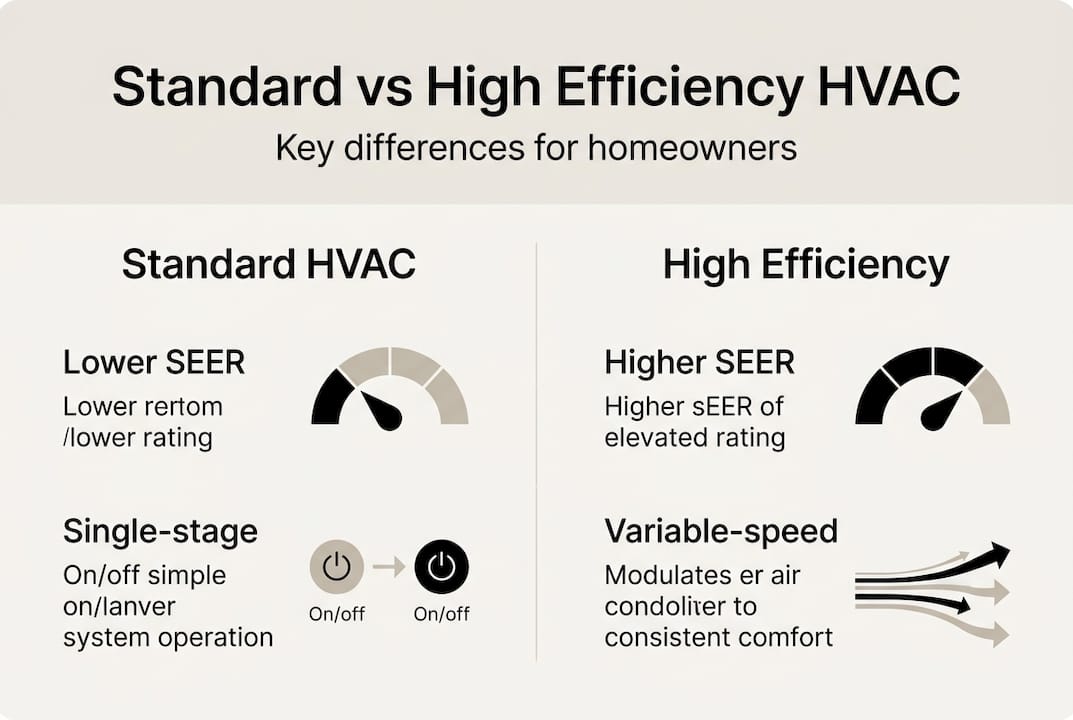
For homeowners in Orange and Los Angeles Counties, where summer temperatures regularly exceed 90 degrees and air conditioning runs for extended periods, efficiency ratings directly impact annual costs. A system with a SEER rating of 18 uses approximately 30% less electricity than a unit rated at 13, translating to savings that compound over the system’s 15 to 20 year lifespan. Understanding these energy efficient HVAC guide fundamentals helps you evaluate options and recognize when an upgrade makes financial sense.
Benefits of high efficiency HVAC systems for Orange and Los Angeles County homeowners
Investing in high efficiency HVAC technology delivers measurable advantages that extend far beyond lower energy bills. The benefits compound over time, improving both your financial position and quality of life.
High efficiency HVAC systems can cut home energy use by up to 30%, which translates directly to reduced monthly utility costs. For a typical Orange County home spending $200 monthly on heating and cooling, a 30% reduction saves $60 per month or $720 annually. Over a 15 year system lifespan, that amounts to $10,800 in savings, often exceeding the cost difference between standard and high efficiency equipment. These savings become even more significant as energy rates continue rising.
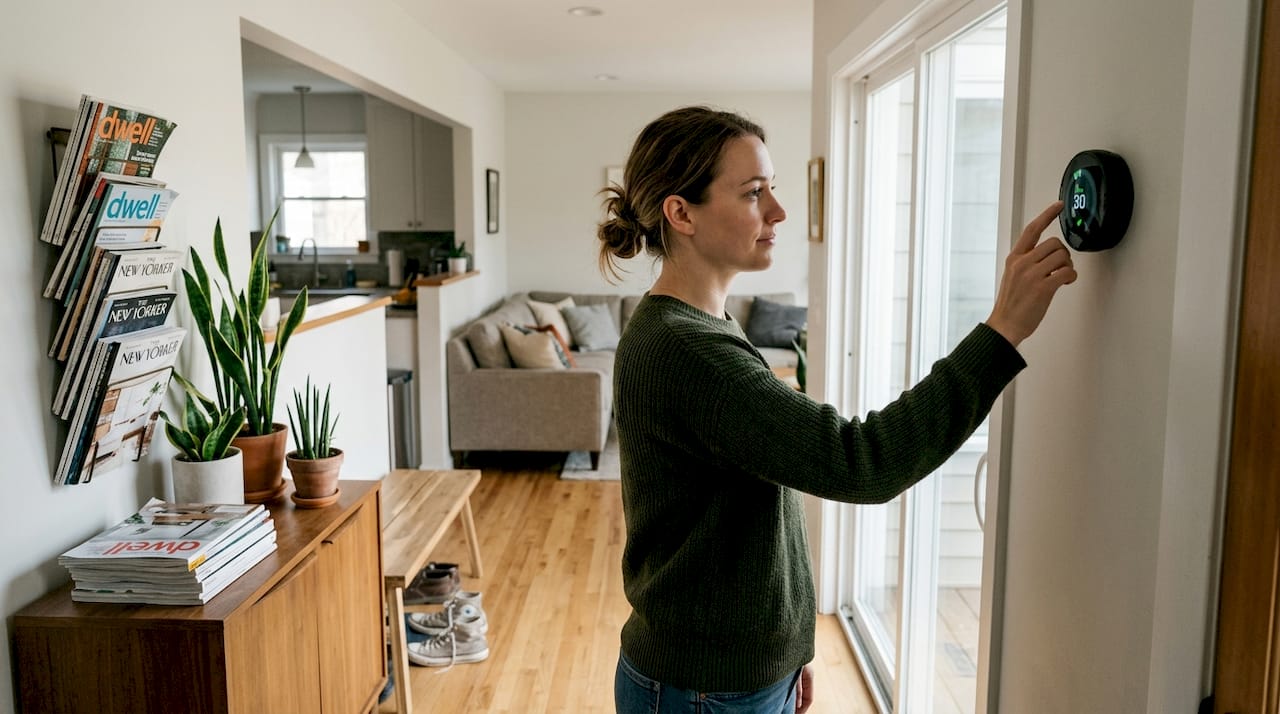
Comfort improvements represent another major advantage. Variable speed technology eliminates the hot and cold spots common with standard systems, maintaining consistent temperatures throughout your home. Humidity control improves as well, since longer, lower speed cycles remove more moisture from the air than short, intense bursts. This matters tremendously in coastal areas where humidity can make homes feel clammy even when temperatures seem reasonable.
Indoor air quality benefits from enhanced filtration and continuous air circulation. High efficiency systems move air through filters more frequently, capturing more dust, pollen, and allergens before they circulate through living spaces. For families with asthma or allergies, this difference can significantly reduce symptoms and improve daily comfort.
High efficiency HVAC systems reduce carbon emissions equivalent to planting 180 trees annually, making them one of the most impactful home upgrades for environmental stewardship.
California’s climate intensifies the importance of efficiency. Summer heat waves strain the electrical grid, and air conditioning represents the largest single energy load in most homes. By reducing peak demand, high efficiency systems help prevent brownouts while lowering your contribution to greenhouse gas emissions. The state’s aggressive carbon reduction goals make efficient heating and cooling not just a personal benefit but a community responsibility.
Property value considerations matter too. Buyers increasingly prioritize energy efficiency when evaluating homes, and modern HVAC systems serve as strong selling points. Appraisers recognize the value of recent upgrades, particularly when documentation shows professional installation and regular maintenance. The investment in efficiency often returns 70% to 100% of its cost at resale, making it one of the better home improvement returns available.
For more insights on how HVAC systems impact overall HVAC energy savings in homes and contribute to HVAC role in home comfort, these resources provide detailed breakdowns of performance factors and comfort optimization strategies.
Choosing and maintaining a high efficiency HVAC system
Selecting the right high efficiency HVAC system requires careful consideration of your home’s specific characteristics and your family’s comfort priorities. Professional guidance ensures you avoid costly mistakes that undermine efficiency.
Start by assessing your home’s size, insulation quality, window efficiency, and layout. An oversized system cycles on and off too frequently, wasting energy and failing to control humidity properly. An undersized unit runs constantly, struggling to maintain comfortable temperatures during extreme weather. Load calculations performed by qualified technicians account for dozens of variables to determine the ideal capacity for your space.
SEER and AFUE ratings deserve close attention, but higher numbers don’t always justify their premium cost. A system rated at SEER 20 costs significantly more than one rated at SEER 16, yet the efficiency gain may take 15 years to recoup through energy savings. For most Orange and Los Angeles County homes, systems in the SEER 16 to 18 range offer the best balance of performance and value.
Compatibility with your existing ductwork and electrical service matters tremendously. Some high efficiency systems require larger ducts or upgraded electrical panels to function properly. Identifying these requirements before purchase prevents surprise expenses and installation delays. Professional assessment reveals whether your home needs modifications to support the system you’re considering.
Professional installation makes the difference between rated efficiency and actual performance. Even the most advanced equipment fails to deliver promised savings when improperly installed. Refrigerant charge must be exact, ductwork connections must seal perfectly, and airflow must balance across all rooms. Licensed technicians have the tools and training to verify every aspect of installation meets manufacturer specifications.
Maintaining peak efficiency requires consistent attention to several critical tasks:
- Replace air filters every 30 to 90 days depending on usage and filter type; dirty filters force systems to work harder and waste energy
- Schedule professional inspections annually before heating and cooling seasons begin; technicians identify minor issues before they become expensive failures
- Keep outdoor units clear of debris, vegetation, and obstructions that restrict airflow and reduce efficiency
- Seal duct leaks in attics and crawl spaces; up to 30% of conditioned air escapes through gaps in typical ductwork
- Clean evaporator and condenser coils annually; dirt buildup acts as insulation, preventing heat transfer and forcing longer run times
Pro Tip: Schedule your annual HVAC inspection benefits in early spring for cooling systems and early fall for heating systems. This timing ensures your equipment receives attention before peak demand seasons when service calls surge and technician availability becomes limited. Early maintenance also allows time to address any issues discovered before you depend on the system daily.
Regular annual HVAC inspection significantly boosts efficiency and saves money by catching problems early. Technicians measure refrigerant levels, test electrical connections, verify thermostat accuracy, and assess overall system performance. These preventive measures extend equipment lifespan by years while maintaining the efficiency that makes high performance systems worthwhile.
For ongoing support and maintenance needs, connecting with reliable HVAC maintenance role for homeowners resources and expert HVAC repair services ensures your system receives proper care throughout its service life.
Comparing high efficiency HVAC systems: Brands, costs, and rebates
Navigating the high efficiency HVAC market requires understanding how different systems compare in features, costs, and available financial incentives. This knowledge helps you identify the best value for your specific situation.
Several manufacturers dominate the high efficiency market, each offering distinct advantages. Carrier and Trane lead in reliability and warranty coverage, with extensive service networks throughout California. Lennox emphasizes quiet operation and smart home integration. Rheem and Goodman provide solid performance at more accessible price points, making efficiency upgrades feasible for budget conscious homeowners.
System costs vary widely based on capacity, efficiency rating, and features. A basic high efficiency central air conditioner with a SEER rating of 16 typically costs $3,500 to $5,500 including professional installation for a standard home. Premium systems rated at SEER 20 or higher range from $6,000 to $9,000. Heat pumps, which provide both heating and cooling, generally cost 10% to 20% more than air conditioners of comparable efficiency. High efficiency furnaces with AFUE ratings above 95% run $3,000 to $6,000 installed, depending on capacity and brand.
| System Type | Efficiency Rating | Approximate Cost | Key Features |
|---|---|---|---|
| Standard AC | SEER 14-15 | $3,000-$4,500 | Single stage cooling, basic thermostat |
| High Efficiency AC | SEER 16-18 | $4,500-$6,500 | Variable speed fan, enhanced humidity control |
| Premium AC | SEER 19-21 | $6,500-$9,000 | Two stage or modulating compressor, smart controls |
| Heat Pump | SEER 16-20 | $5,000-$8,500 | Year round climate control, electric heating |
| High Efficiency Furnace | AFUE 95-98% | $3,500-$6,000 | Sealed combustion, modulating gas valve |
California offers rebates and incentives to homeowners installing high efficiency HVAC systems, significantly reducing upfront investment. These programs change periodically, so verifying current availability ensures you capture all eligible savings.
Common rebate sources include:
- Southern California Edison and Los Angeles Department of Water and Power offer rebates ranging from $500 to $2,000 for qualifying high efficiency air conditioners and heat pumps
- SoCalGas provides rebates up to $1,500 for high efficiency furnaces meeting specified AFUE thresholds
- Federal tax credits allow homeowners to claim 30% of equipment and installation costs, up to specified limits, for systems meeting Energy Star requirements
- Local municipalities occasionally offer additional incentives during peak energy reduction campaigns
Applying for rebates requires documentation including equipment model numbers, efficiency ratings, installation dates, and contractor information. Most programs mandate professional installation by licensed technicians and may require pre approval before purchase. Submitting applications promptly after installation prevents missing deadlines that could forfeit hundreds or thousands of dollars in available incentives.
Financing options through manufacturers and contractors spread costs over time, making high efficiency systems accessible even when upfront cash is limited. Many programs offer zero interest for 12 to 36 months, allowing you to pay off the system using energy savings before interest accrues. Comparing total cost including rebates, tax credits, and financing terms reveals the true affordability of efficiency upgrades.
For comprehensive details on maximizing HVAC efficiency rebates and costs, reviewing current program requirements and eligibility criteria ensures you optimize your investment and capture every available dollar of support.
Heating and cooling solutions from MDTECH Appliance Repair
Upgrading to a high efficiency HVAC system represents a significant investment in your home’s comfort and long term operating costs. Working with experienced professionals ensures you maximize the benefits while avoiding common pitfalls that compromise performance.
MDTECH Appliance Repair brings specialized expertise in expert HVAC repair services to homeowners throughout Orange and Los Angeles Counties. Our licensed technicians understand the unique climate challenges facing local residents and recommend systems proven to deliver reliable performance in California conditions. Whether you’re replacing an aging unit or upgrading to capture energy savings, we guide you through equipment selection, professional installation, and ongoing maintenance that preserves efficiency year after year. Our commitment to HVAC home comfort expertise means we prioritize your family’s needs, ensuring every system we install meets the highest standards for performance and reliability. Contact MDTECH today for a personalized consultation and discover how the right high efficiency HVAC system transforms your home’s comfort while reducing energy costs. Our team makes the upgrade process straightforward, handling everything from energy efficient HVAC guide recommendations through final installation and system optimization.
Frequently asked questions about high efficiency HVAC
What makes an HVAC system high efficiency?
High efficiency HVAC systems achieve SEER ratings of 16 or higher for cooling and AFUE ratings above 90% for heating. These systems use variable speed motors, advanced compressors, and smart controls to minimize energy waste while maintaining consistent comfort.
How much can a high efficiency HVAC reduce my energy bills?
Most homeowners see 20% to 30% reductions in heating and cooling costs after upgrading to high efficiency equipment. For a typical Orange County home, this translates to $50 to $75 in monthly savings during peak seasons, totaling $600 to $900 annually.
Are there special maintenance requirements for high efficiency systems?
High efficiency HVAC systems need the same basic maintenance as standard units, including regular filter changes and annual professional inspections. However, their advanced components benefit from technician familiarity with variable speed technology and electronic controls to ensure optimal performance.
Can I install a high efficiency HVAC system in any home?
Most homes accommodate high efficiency systems, but older properties may require ductwork modifications or electrical upgrades. A professional load calculation and home assessment identifies any necessary improvements before installation, ensuring your new system operates at rated efficiency.
What rebates are available for upgrading to a high efficiency HVAC?
California homeowners can access utility company rebates ranging from $500 to $2,000, plus federal tax credits covering 30% of equipment and installation costs. Combining these incentives often reduces total upgrade costs by $2,000 to $4,000, significantly improving return on investment.