
TL;DR:
- A blower motor powers the fan in your HVAC system, moving air across heating or cooling elements to ensure home comfort. Its failure can mimic system breakdowns, but symptoms like no airflow, strange noises, and burning odors indicate a motor problem. Regular maintenance, such as filter changes and blower wheel cleaning, extends its lifespan and maintains efficient airflow.
A blower motor is the electric motor that powers the fan inside your HVAC system, pulling return air through your home and pushing it across heating or cooling elements before distributing it through your ductwork. Without it, your furnace heat exchanger could glow red hot while your living room stays cold. The blower motor is the mechanical link between conditioned air and the rooms where you actually live. Understanding what it does, how it fails, and how to maintain it saves you money and prevents misdiagnosed repair calls.
What is a blower motor and what does it do?
A blower motor is defined as the electric motor that drives a blower wheel (also called a blower cage or squirrel cage fan) to move air through HVAC ductwork or appliance airflow paths. The industry standard term is “blower motor,” and it applies to the unit found inside your furnace, air handler, or heat pump system. It draws return air from your living spaces, forces that air across the furnace heat exchanger or evaporator coil depending on the season, and then pushes the conditioned air through supply ducts to every room in your home.
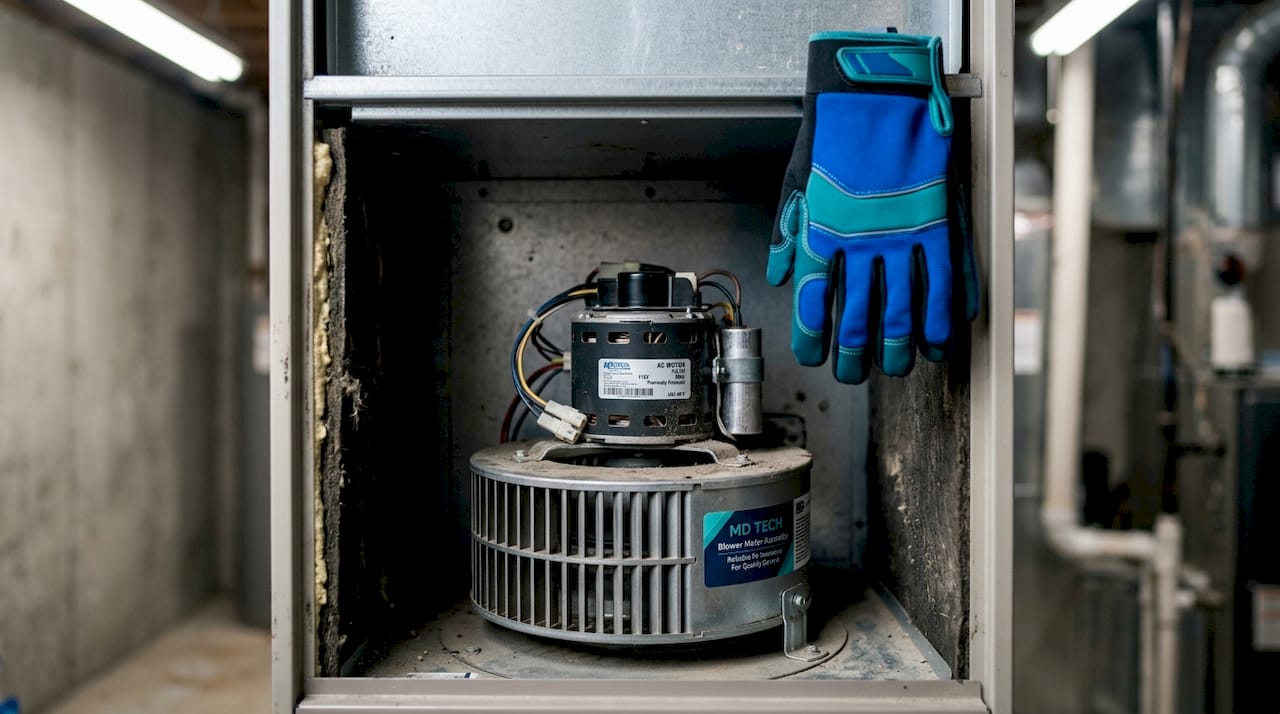
The blower motor sits inside the air handler or furnace cabinet, typically at the base of the unit. Its location makes it easy to overlook during routine maintenance, which is exactly why so many homeowners are surprised when it fails. The blower wheel attached to the motor shaft is responsible for generating the airflow volume your system needs to heat or cool your home effectively. A motor that spins too slowly or not at all means your system produces conditioned air that never reaches you.
Blower motor issues can mimic total system failure. Your thermostat calls for heat, the burner fires, the heat exchanger warms up, and then nothing comes out of the vents. That scenario points directly to the blower, not the heating components.
How does a blower motor work in home HVAC systems?
The blower motor operates as part of a carefully sequenced process controlled by your thermostat and the furnace control board. Here is how that sequence runs in a standard forced-air heating cycle:
- Thermostat signals demand. Your thermostat detects a temperature drop and sends a signal to the furnace control board to begin a heating cycle.
- Burner ignites. The gas valve opens, the igniter activates, and the burner fires. The heat exchanger begins warming up.
- Blower delay activates. The control board waits roughly 30 to 90 seconds before starting the blower motor. This delay is a deliberate design feature. Sending air across a cold heat exchanger would push cold drafts into your rooms and stress the heating components.
- Blower motor starts. The motor spins the blower wheel, drawing return air from your home through the return ducts and across the now-warm heat exchanger.
- Conditioned air distributes. Warmed air travels through supply ducts and exits at registers throughout your home.
- Blower runs post-cycle. After the burner shuts off, the blower continues running briefly to extract residual heat from the heat exchanger before stopping.
The speed at which the motor runs matters significantly. Single-speed motors run at full capacity or not at all, which creates noticeable temperature swings and higher energy use. Variable-speed motors, by contrast, run at reduced capacity (typically 40% to 60% of full speed) for most of the day. This means more consistent temperatures, quieter operation, and continuous air filtration even when your system is not actively heating or cooling.
Pro Tip: If your blower motor starts immediately when the furnace fires and you feel cool air from the vents for the first minute, the blower delay relay or control board setting may be misconfigured. A licensed technician can recalibrate the delay sequence in under an hour.
What are the common types of blower motors?
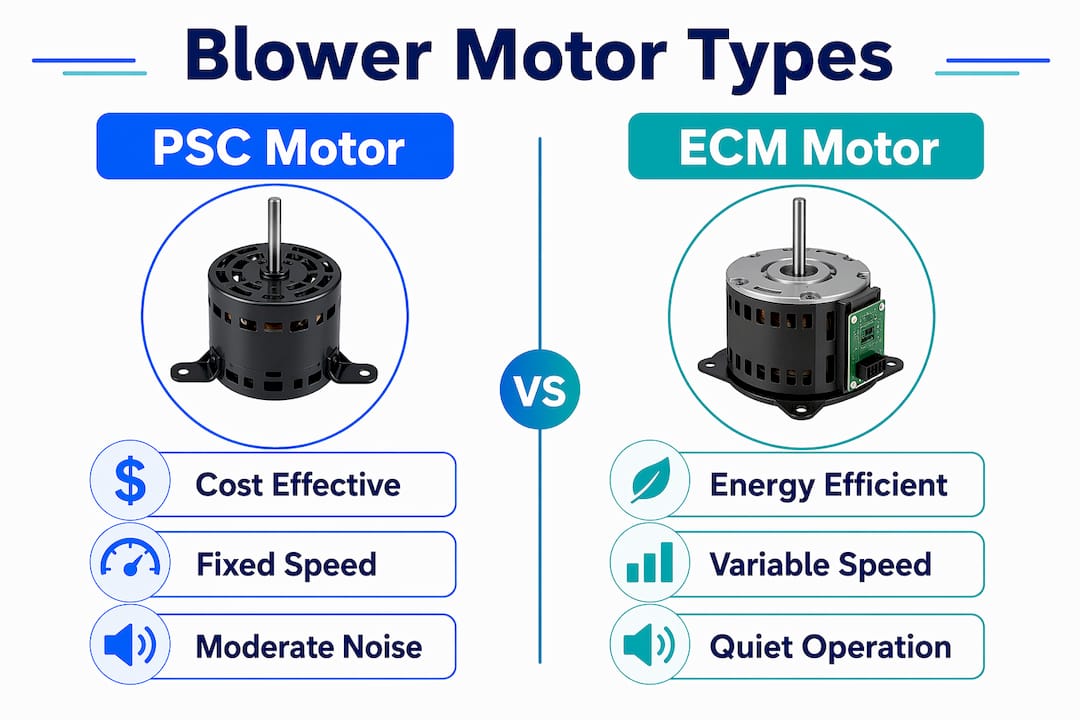
The furnace blower assembly uses two primary motor types in residential systems: PSC (Permanent Split Capacitor) and ECM (Electronically Commutated Motor). Each has a distinct performance profile that affects your comfort, energy bill, and long-term maintenance costs.
| Motor type | Efficiency | Noise level | Cost | Best for |
|---|---|---|---|---|
| PSC (Permanent Split Capacitor) | Lower (standard) | Moderate | Lower upfront | Budget-conscious replacements |
| ECM (Electronically Commutated Motor) | High (variable speed) | Quieter | Higher upfront | Long-term savings, comfort |
| Variable-speed ECM | Highest | Quietest | Premium | Whole-home comfort systems |
PSC motors are the most common type found in older residential systems. They are reliable, relatively inexpensive to replace, and straightforward to diagnose. The trade-off is that they run at a fixed speed, which limits their ability to modulate airflow based on actual demand.
ECM motors use a brushless DC design controlled by an internal computer. Key advantages include:
- Automatic speed adjustment based on static pressure in the duct system
- Significantly lower electricity consumption compared to PSC motors
- Quieter operation at lower speeds
- Better humidity control in cooling mode because slower airflow allows more moisture to condense on the evaporator coil
Variable-speed ECM motors represent the top tier. They provide the smoothest airflow, the lowest noise, and the best energy performance. One important note: variable-speed motors degrade gradually, with early symptoms like subtle tone changes or slightly reduced airflow before total failure. That gradual decline makes them harder to diagnose than PSC motors, which tend to fail more abruptly.
What are the signs of a bad blower motor?
Recognizing blower motor failure early prevents a minor repair from becoming a full system replacement. Symptoms like no airflow, weak airflow, and unusual noises are the most common indicators, but they are also frequently confused with clogged filters or duct restrictions. Knowing the difference saves you a diagnostic fee.
Common signs of a failing blower motor:
- No airflow from supply registers even though the furnace or AC unit is running. The system produces conditioned air, but heat is trapped inside the cabinet because the blower cannot move it.
- Weak or uneven airflow across rooms, suggesting the motor is running below its rated speed.
- Grinding, squealing, or rattling noises from the air handler cabinet. Grinding usually means worn bearings. Squealing often points to a failing capacitor on a PSC motor.
- Overheating and automatic shutoff. A motor drawing too much current due to a dirty blower wheel or failing bearings will trip its thermal overload protector.
- Burning smell from vents, which indicates the motor windings are overheating.
Pro Tip: Before assuming the blower motor is dead, check your air filter first. A severely clogged filter creates enough static pressure to stall a motor or trigger its thermal overload. Replace the filter, reset the system, and wait 30 minutes before running another diagnostic cycle.
Basic DIY checks you can safely perform:
- Inspect and replace the air filter.
- Check the circuit breaker for the air handler or furnace.
- Visually inspect the blower wheel through the access panel for debris or obstructions.
- Listen for the motor attempting to start. A humming sound with no rotation often points to a failed run capacitor, which is a less expensive fix than a full motor replacement.
Accurate blower motor diagnosis requires understanding the full blower assembly, including the fan wheel, housing, mounts, and electrical controls. If your checks come up clean and the motor still does not run, call a licensed HVAC technician. Electrical testing of motor windings requires a multimeter and knowledge of safe voltage procedures.
How to maintain and extend the life of your blower motor
Blower motor maintenance is one of the highest-return investments a homeowner can make. Regular maintenance like changing filters, cleaning the blower wheel, and lubricating motor parts directly extends motor life and keeps your energy bills in check. Neglecting these tasks forces the motor to work harder against restricted airflow, which shortens its lifespan and raises your monthly costs.
Follow this maintenance sequence annually:
- Replace the air filter every 1 to 3 months. A clean filter is the single most effective way to reduce motor strain. Use a MERV 8 to MERV 11 rated filter for the best balance of filtration and airflow.
- Clean the blower wheel once a year. Dust and debris accumulate on the fan blades, creating imbalance and reducing airflow efficiency. Turn off power to the unit at the breaker before removing the blower assembly for cleaning.
- Inspect motor mounts and housing. Loose mounts cause vibration that accelerates bearing wear. Tighten any loose hardware during your annual inspection.
- Lubricate motor bearings if applicable. Older PSC motors with oil ports benefit from a few drops of non-detergent electric motor oil annually. ECM motors are sealed and require no lubrication.
- Schedule a professional tune-up every one to two years. A technician will measure motor amperage draw, check capacitor health, and verify that the blower is moving the correct volume of air for your duct system.
If your system uses an older PSC motor and you are facing a blower motor replacement, consider upgrading to an ECM variable-speed unit. The higher upfront cost is offset by lower electricity consumption and improved comfort over the motor’s lifespan. Professional blower installation by a licensed technician also guarantees the motor is matched correctly to your duct system’s static pressure requirements.
Key takeaways
A blower motor is the core component that determines whether your HVAC system delivers conditioned air effectively, and its condition directly controls your home’s comfort and energy costs.
| Point | Details |
|---|---|
| Core blower motor function | The motor drives the blower wheel to move return air across heating or cooling elements and into your ductwork. |
| Sequenced operation | A 30 to 90 second blower delay after burner ignition is a designed safety feature, not a malfunction. |
| Motor type matters | ECM variable-speed motors outperform PSC motors in efficiency, noise, and comfort but cost more upfront. |
| Early failure signs | No airflow, weak airflow, grinding noises, and burning smells are the primary indicators of blower motor problems. |
| Maintenance priority | Annual filter changes and blower wheel cleaning are the two highest-impact tasks for extending motor life. |
What I’ve learned from years of blower motor calls
Most homeowners who call about a “broken furnace” or “AC that stopped working” are actually dealing with a blower motor problem. The heating or cooling equipment is fine. The motor that moves the air is not. That distinction matters because a blower motor replacement is a fraction of the cost of replacing a compressor or heat exchanger.
The misconception I see most often is that weak airflow means the system is losing refrigerant or the furnace is failing. In reality, a partially seized blower motor or a blower wheel caked with dust causes the same symptom. I have seen homeowners spend thousands on unnecessary diagnostics because no one checked the blower wheel first.
The other thing worth saying plainly: variable-speed ECM motors are genuinely worth the upgrade cost if you live in a climate like Southern California where your system runs most of the year. The energy savings are real, the noise reduction is noticeable, and the comfort improvement is something you feel every day. The gradual failure pattern of ECM motors does require more attentive monitoring, but that is a manageable trade-off.
My honest advice is to treat your blower motor the same way you treat your car’s engine. Change the filter (think of it as an oil change), keep the components clean, and have a professional check the system before problems compound. The homeowners who do this rarely face emergency repair calls.
— MDTECH
Let Appliancesrepairmdtech handle what DIY cannot
When your blower motor troubleshooting hits a wall, Appliancesrepairmdtech has licensed technicians serving Orange County and Los Angeles County who diagnose and repair blower motor problems the same day. Whether your system needs a capacitor swap, a full motor replacement, or a variable-speed ECM upgrade, the team brings the right parts and the right tools to your door.
Appliancesrepairmdtech offers dedicated HVAC repair services covering blower motor diagnostics, repair, and replacement for residential systems across Irvine, Los Angeles, and surrounding communities. For homeowners who need blower-specific work, the blower repair page covers the full scope of services available. Book an appointment online and get your airflow back on track without the guesswork.
FAQ
What does a blower motor do in an HVAC system?
A blower motor drives the fan that moves return air across your furnace heat exchanger or AC evaporator coil and pushes conditioned air through your home’s ductwork. Without it, your system produces heat or cooling that never reaches your living spaces.
Where is the blower motor located?
The blower motor sits inside the furnace or air handler cabinet, typically at the base of the unit near the return air inlet. It connects directly to the blower wheel that generates airflow through the duct system.
How do I know if my blower motor is bad?
The clearest signs are no airflow or weak airflow from supply registers while the system is running, unusual grinding or squealing noises from the cabinet, and a burning smell from the vents. Check your air filter first, since a clogged filter can mimic motor failure.
What is the difference between a PSC and an ECM blower motor?
A PSC (Permanent Split Capacitor) motor runs at a fixed speed and costs less upfront, while an ECM (Electronically Commutated Motor) adjusts speed automatically, uses significantly less electricity, and operates more quietly. ECM motors are the standard in modern high-efficiency HVAC systems.
Can I replace a blower motor myself?
Basic checks like filter replacement and visual inspection of the blower wheel are safe DIY tasks. Actual motor replacement involves electrical connections and requires matching the motor to your system’s specifications, so most homeowners get better results and safer outcomes from a licensed HVAC technician.