
Most sewer cleanouts sit within a few feet of your foundation, in a basement or crawl space, or outside in a flush access box or a capped pipe. Start in the basement, check your plot plan, and probe the ground where the main sewer line exits the house. Model code, including WAC 51-56-0700, requires cleanouts at key points, and we at MDTECH can locate yours if you hit a wall.
TL;DR:
- Check plot plans and permit records first, then trace the lowest drain run toward the wall where it exits before searching outdoors.
- Outside, follow the sewer lateral toward the street and inspect within a few feet of the foundation, beneath mulch, or around unusual concrete lids.
- If the route remains unclear, gently probe every two to three feet with a thin metal rod, and call 811 before digging.
- Model code places cleanouts at the building drain and sewer junction and limits spacing on horizontal drains to 100 feet; local rules vary.
- Never loosen a cleanout cap yourself: standing sewage or pressure can cause contaminated water to spill, so call a licensed plumber if drains back up.
Table of Contents
- Where should you look for a cleanout outside your home?
- Where do indoor sewer cleanouts hide?
- How do you find a sewer cleanout step by step?
- What does a sewer cleanout look like?
- What do plumbing codes say about cleanouts?
- When is it time to stop and call a pro?
- How do you keep your cleanout accessible?
- MDTECH perspective: the cleanouts homeowners lose
- How can we help you find and service your cleanout?
- FAQ
- Sources
Where should you look for a cleanout outside your home?
Outdoor cleanouts usually follow the path of the main sewer lateral, the pipe that carries wastewater from your house to the street. That route tells you where to focus your search. Check these spots first:
- Within a few feet of the foundation, near where the main drain leaves the house
- Along the driveway or sidewalk if the lateral runs that way
- In the front or side yard, in line with the house’s main plumbing stack
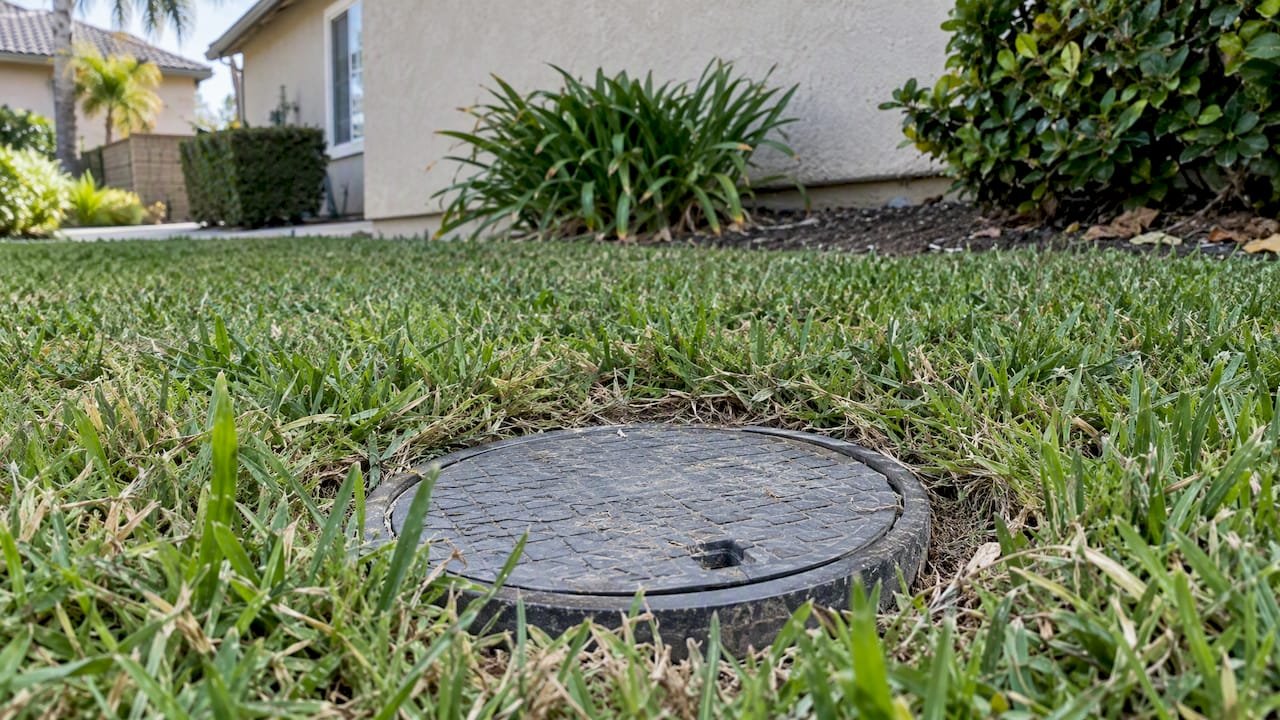
On the surface, you are looking for a capped pipe sticking out of the ground, a flush plastic or metal access box, a small round lid set into concrete, or a recessed cover in the lawn. Landscaping hides a lot. Check under mulch, around shrubs, and near odd concrete patches or lids you have never opened.
Cleanouts outside may sit in an access box flush with grade or stand as an exposed capped pipe, so a lid that blends into the lawn is a good candidate, not a mystery.
Where do indoor sewer cleanouts hide?
Inside the house, the cleanout normally sits on the lowest horizontal drain run, or near the base of the main soil and vent stack. In many homes that means the basement, but crawl spaces and garages are common too. Walk the lowest level and look along walls and floors where the main drain leaves the building.
Visual cues make the fitting easier to spot:
- A T-shaped or Y-shaped fitting on the drain pipe
- A threaded cap, often with a square recess for a wrench
- A 2-way cleanout, which gives access in both directions along the pipe
- A cap sitting at or just above the finished floor
Cleanouts under a floor are often extended up so the cap reaches the finished floor or just above it. If you see a round plug in a basement slab, that is worth a closer look. Remember that a cleanout should stay reachable, and permanent finishes such as flooring should not cover the plug because crews need access in an emergency.
How do you find a sewer cleanout step by step?
Work from the easiest checks to the hardest, and stop as soon as you find it.
- Check your paperwork. Look at plot or site plans, closing documents, and local permit records. Official property records and county permit files are a more reliable guide than memory, and town offices can often pull older plans.
- Trace the plumbing inside. Find the lowest horizontal drain run, then follow it to the wall or floor where it exits. A capped fitting near that route is likely your cleanout, as The Spruce’s locating guide also suggests.
- Line up the roof vent. Find the plumbing vent pipes on your roof. The main stack usually sits close to the main drain, so project a straight line from it toward the street or the sewer connection.
- Probe the predicted line. Push a thin metal rod into the soil every 2–3 feet along that line. Watch for a change in resistance, a hard pipe top, or a lid under the turf. Go gently and call 811 before any real digging.
- Escalate. If nothing turns up, a locating sonde or a sewer camera can trace the line without tearing up your yard. Partners such as Trenchless Maine use camera inspection for exactly this kind of job.
Pro Tip: Run water in the lowest basement fixture while you probe or listen along the wall; the sound often points toward the main drain’s exit.
Do not dig with a shovel on a guess, and do not force open caps you cannot identify.
What does a sewer cleanout look like?
A typical cleanout is a short vertical pipe with a threaded cap or plug on top. Some are fittings in a T or Y shape with a cap on the open leg, and 2-way versions serve both directions of the line.
- Access boxes: Plastic or metal boxes set flush with the ground, often green or black, hide the cap below
- Round concrete lids: Older homes often have a small round lid cast in a sidewalk or slab
- Older installations: Expect cast iron or clay-era fittings, often rusted and partly buried; newer ones are plastic and easier to spot
- Look-alikes: Water meter boxes, irrigation valve covers, and gas shutoff lids can be mistaken for cleanouts, so check the size and what sits beneath the lid
Whether inside or outside, the cleanout cap may be hidden in a box or stand as a capped pipe, so recognize both shapes before you rule a spot out. A sewer cap is usually larger than irrigation or water lids.
What do plumbing codes say about cleanouts?
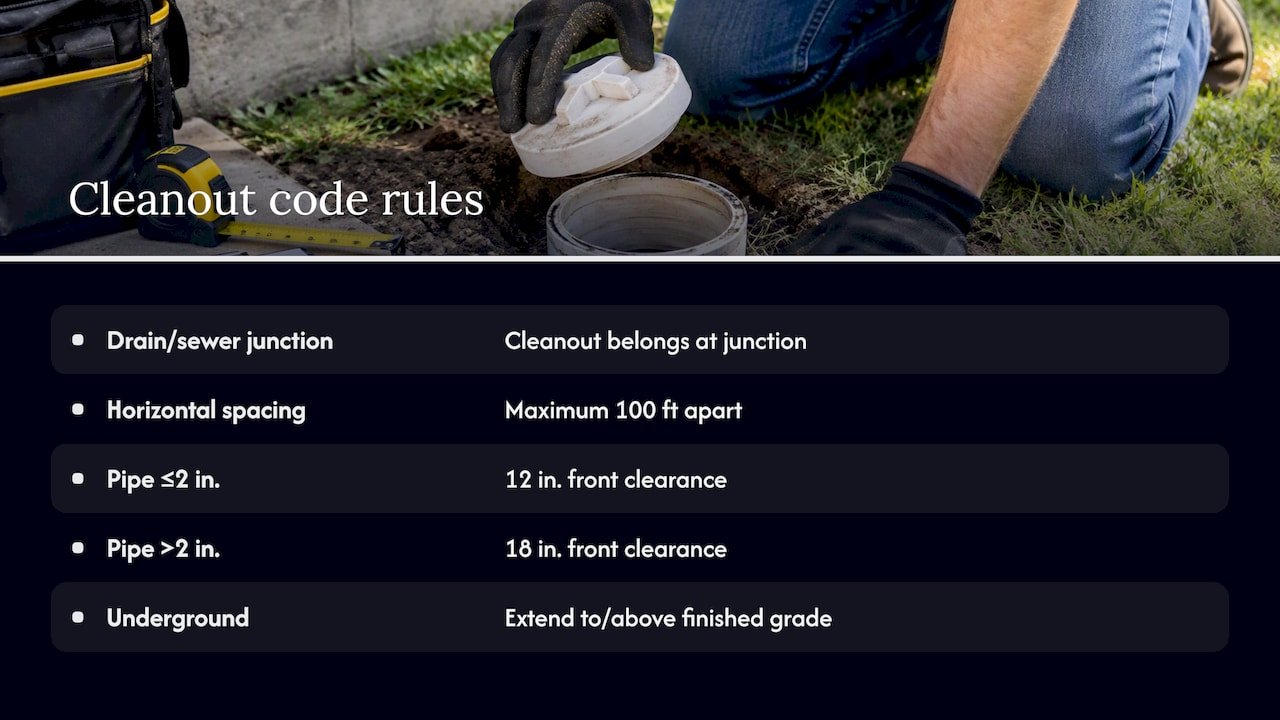
You do not need to memorize code, but a few rules explain where cleanouts end up. Model code says a cleanout belongs at the junction of the building drain and building sewer, and horizontal drain lines need one no more than 100 feet apart. Underground cleanouts are extended to or above finished grade.
Washington’s code adds clearance rules that show up in the field:
Cleanouts on piping 2 inches or less need at least 12 inches of clearance in front, while larger piping needs 18 inches. Under-floor cleanouts must be extended to or above the finished floor, or outside where clearance is limited. (WAC 51-56-0700)
In practice, that is why you find caps standing up from basement floors and pipes brought up to the yard surface. Rules differ by jurisdiction, so check your local code or ask a licensed plumber what applies to your home.
When is it time to stop and call a pro?
Opening a cleanout is not risk free. The line may hold standing sewage, and a cap removed under pressure can release contaminated water onto your floor or yard. Do not loosen the cap yourself. If water or sewage is rising, move away and contact a plumber or the municipality if the problem appears to be in the public main.
Call a licensed plumber when:
- The cleanout is buried, covered, or otherwise inaccessible
- Drains are backing up in more than one fixture
- You do not recognize a fitting, or cannot find a cleanout after the checks above
- You smell sewage near a cap or in the yard
Municipal guidance notes that owners generally own the side sewer up to the public pipe and recommends licensed plumbers for inspection and cleaning. If you are chasing early warning signs, our guide on sinks that smell like sewer covers what you can safely check first.
Pro Tip: Do not open a cleanout yourself. Keep children and pets away and contact a licensed plumber.
How do you keep your cleanout accessible?
An accessible cleanout can make it easier for a plumber to respond and may help avoid unnecessary disruption. These habits keep it that way:
- Keep permanent landscaping, planters, and hardscape off the cleanout, and leave clear working room around it.
- Take a photo, mark it on a property map, and store both with your home documents.
- Inspect it every 2–3 years if large trees grow near the sewer line, since roots love sewer pipes; otherwise check it now and then.
- Keep box lids secure and intact, and do not bury them under mulch, soil, or new sod during yard projects.
If a cleanout sits somewhere exposed to freezing, protect it before cold snaps.
MDTECH perspective: the cleanouts homeowners lose
Cleanouts can be covered by landscaping, poured concrete, or even carpet and flooring. The fastest way to narrow the search is paperwork plus tracing the drain inside, not randomly digging the yard. Once you find yours, do one thing today: mark it, photograph it, and save the photo with your home files. The next person to need it, maybe you at 2 a.m., will thank you.
— MDTECH
How can we help you find and service your cleanout?
If the DIY checks come up empty, our licensed technicians can help you locate a buried cleanout, run a camera inspection, clear clogs, and handle plumbing repairs. We serve homeowners across Orange and Los Angeles counties, and you can book a visit online. Tell us what you have already checked and we will start from there.
Book plumbing repair with us or see our Orange County plumbing repair services to request a visit.
FAQ
Where should a sewer cleanout be located?
Code puts a cleanout at the junction of the building drain and the building sewer, with more along long horizontal runs. Underground ones should extend to or above grade. See model code guidance for the specifics.
Where can I find my sewer cleanout?
Start in the basement or crawl space on the lowest drain run, then check near the foundation outdoors. Plot plans and permit records can narrow it down quickly. If you still cannot find it, a locating service can trace the line.
What do old sewer cleanouts look like?
Older cleanouts are often a rusted cast iron cap or a small round lid set in concrete, sometimes partly buried. They may sit under soil or turf and show only as a slightly raised or oddly colored spot.
Where is the cleanout plug located?
The plug is the threaded cap on top of the cleanout fitting. It sits at the end of a short vertical pipe or in a T or Y fitting on the drain, either near the basement floor or in a box outdoors.
Sources
- Sewer Cleanouts – City of Minneapolis
- Taking Care of Your Sewer Pipe
- WAC 51-56-0700:
- Drainage Pipe Cleanouts | UpCodes
- How to Locate Your Sewer or Plumbing Cleanout