
A shower drain that smells usually points to one of three things: biofilm buildup from hair and soap scum, a dry or faulty P-trap, or, less often, a sewer or septic issue. Start by pulling out any visible hair, running hot water for a few minutes, and smelling a glass of tap water away from the shower to isolate the source. If the odor persists after cleaning or shows up with gurgling or slow drains elsewhere, that’s a signal to call a plumber.
TL;DR:
- Musty odors point to biofilm; rotten egg smells may come from hydrogen sulfide or a heater anode rod, but smell strength cannot gauge safety.
- The glass test separates water supply odors from drain odors; smells or gurgling across other fixtures point toward a vent, sewer, or septic problem.
- Run water in rarely used showers monthly to refill the P trap; a dry trap can admit sewer gas even when no pipe is damaged.
- Remove hair mechanically before flushing with hot water; baking soda and vinegar only loosen light residue, while enzyme cleaners work over several days.
- Call a plumber if odor returns after cleaning and trap refilling, fixtures gurgle or drain slowly, sewage backs up, or the septic field becomes wet.
Table of Contents
- What Different Shower Drain Smells Usually Mean
- Common Causes Behind a Smelly Shower Drain
- How to Pinpoint Where the Smell Is Coming From
- Step-by-Step Fixes for a Smelly Shower Drain
- When a Plumber or Septic Specialist Should Take a Look
- Preventing Shower Drain Smells From Coming Back
- Where This Guidance Comes From
- Our Take on Fixing Shower Drain Odors
- Get Professional Help for Persistent Shower Drain Odors
- FAQ
- Sources
What Different Shower Drain Smells Usually Mean
The type of odor coming from your shower tells you a lot about what’s causing it, and matching the smell to the cause saves you from trying the wrong fix.
- A musty or mildew smell usually points to biofilm or mold growing on the drain walls from trapped hair, soap residue, and skin oils.
- A rotten-egg smell often means hydrogen sulfide gas, produced by bacteria breaking down organic matter or sometimes released by a hot water heater’s anode rod.
- A sewage-like odor suggests a bigger problem: a dry trap, a blocked vent, a sewer-line obstruction, or a septic system issue.
- An odor that comes and goes, especially when other fixtures drain, often means a venting or trap problem rather than a simple clog.
Hydrogen sulfide can be detected by smell at concentrations as low as 0.0005 to 0.3 parts per million, but at higher concentrations it can overwhelm your sense of smell entirely. That means a weaker smell doesn’t always mean a safer situation, and a strong one deserves attention rather than just a stronger cleaner.
If the smell only shows up in one shower and nowhere else, it’s most likely localized to that drain. If it shows up alongside gurgling in a sink or toilet, the problem may be systemic rather than isolated to the shower.
Common Causes Behind a Smelly Shower Drain
Most shower drain odors trace back to a short list of causes, and working through them in order of likelihood saves you time and unnecessary repairs.
- Biofilm buildup: hair, soap scum, and skin oils accumulate on the drain walls over weeks or months, and bacteria feeding on that layer produce the musty or rotten-egg smell. The University of Georgia’s water quality guidance notes that cleaning and mechanically removing that organic layer typically resolves a localized odor.
- Hair and debris clogs: trapped hair creates a dense mat that slows drainage and gives bacteria a stable place to grow, which is often the first visible sign something is wrong before the smell even starts.
- A dry or damaged P-trap: every drain relies on a water-filled bend in the pipe to block sewer gas from entering your bathroom. If that trap dries out from infrequent use, or cracks or leaks, gas has a direct path into your shower.
- Sewer-line or septic issues: less common, but when a sewer line is obstructed or a septic system is struggling, gas gets forced back up through drains throughout the house, not just one shower.
A dry P-trap is one of the easiest causes to overlook because it doesn’t require anything to be broken, just unused for a while. If you have a guest bathroom or rarely used shower, a leaking or dried P-trap is often the first thing worth checking.
How to Pinpoint Where the Smell Is Coming From
Before you clean anything, a few simple checks tell you whether the problem is contained to the shower drain or part of something bigger.
- Do the glass test. Fill a glass with cold tap water and smell it away from the shower and any other fixtures. The University of Georgia extension guidance uses this method to rule out the water supply itself as the source; if the glass smells fine but the drain doesn’t, the odor is coming from the drain or the sewer line, not your water.
- Check other fixtures. Run water in sinks and flush toilets to see if the shower smell appears or worsens when other fixtures drain. That pattern often points to a venting or trap issue rather than a simple clog, which EPA’s septic system guidance ties to pressure changes in the system when nearby fixtures discharge.
- Lift the drain grate and look. Check for visible slime, hair, or small drain flies, and note whether water drains slowly or gurgles as it goes down.
- Watch for system-wide signs. If more than one fixture smells, drains slowly, or gurgles, stop troubleshooting on your own and treat it as a plumbing or septic problem.
Pro Tip: Do the glass test before you clean anything. If you mask the smell first, you lose the chance to tell whether it was ever in the water supply at all.
If you notice gurgling specifically, diagnosing whether it’s a single fixture or a system-wide issue is worth doing before you reach for any cleaner.
Step-by-Step Fixes for a Smelly Shower Drain
Once you’ve identified a localized odor, these steps go from the safest, least invasive options to more involved fixes.
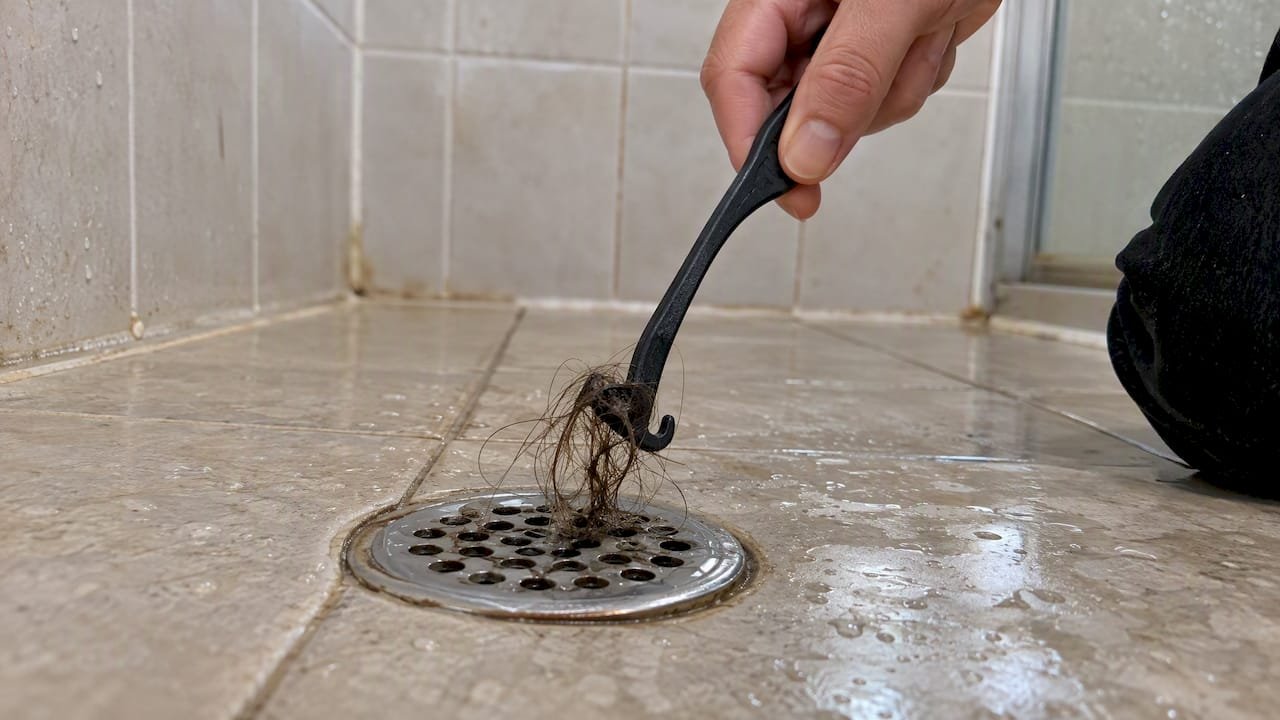
- Remove visible hair and debris first. Put on gloves, lift the drain grate, and pull out hair and sludge with a drain hook or a bent wire. This single step resolves a surprising number of odor complaints because it removes the organic matter feeding the bacteria directly.
- Flush with hot water. Run hot water for several minutes to loosen and carry away residual biofilm and oils clinging to the pipe walls. Do this after any mechanical cleaning, not instead of it.
- Try baking soda and vinegar. Pour baking soda down the drain, follow with vinegar, let it fizz, then flush with hot water. This loosens light residue and helps with odor, though it won’t clear a hair clog on its own, so it works best as a follow-up to mechanical removal, not a replacement for it. Ventilate the bathroom while you do this.
- Consider an enzyme-based cleaner for organic buildup. Enzyme cleaners break down organic matter gradually without the harsh chemistry of a drain opener, which makes them a gentler option for homes on septic systems. They work slower than chemical openers, so expect to use them over several days rather than once.
- Use a hand drain snake for stubborn hair clogs. Feed it in slowly, rotate to catch hair, and pull out gently rather than forcing it, which avoids scratching or cracking the pipe.
- Treat chemical drain openers as a last resort. EPA’s septic system care guidance notes that chemical openers often fail to clear hair-and-biofilm clogs, can damage pipes, and can harm the bacteria that septic systems depend on to function. Mechanical removal and enzyme treatments are safer first steps, especially if you’re on a septic system.
Pro Tip: If a dry P-trap is the suspected cause, simply run water in that drain for a minute every week or two. A refilled trap often resolves the smell without any cleaning at all.
Repeat the hot-water flush and hair removal every few weeks as routine maintenance. If the smell returns soon after cleaning, or doesn’t go away at all, that’s a sign the cause isn’t something you can fix with a bottle from under the sink; it could indicate deeper issues such as those outlined in signs water system legionella risk: key indicators.
When a Plumber or Septic Specialist Should Take a Look
Some odor patterns point to problems that need professional diagnosis rather than another round of home remedies.
- The smell returns soon after cleaning and refilling the trap.
- Drains run slowly throughout the house, not just in the shower.
- You hear gurgling from toilets or sinks when the shower drains, or vice versa.
- Sewage backs up into a tub, sink, or floor drain.
- More than one fixture in the house smells at the same time.
- Ground near a septic drainfield feels wet or spongy, or grass there looks unusually green.
EPA’s guidance on septic system troubleshooting lists these exact signs as indicators of a blocked vent, a damaged pipe, a sewer-line obstruction, or a septic system in distress, problems that can’t be diagnosed or fixed from above the drain. A blocked or defective plumbing vent in particular needs a trained technician, since diagnosing it usually means checking the roof stack or running a camera through the line.
Before calling, jot down when the smell started, what you’ve already tried, and whether you’ve noticed slow drains or gurgling elsewhere. That short list cuts down the time a technician needs to find the actual cause.
Preventing Shower Drain Smells From Coming Back
A few consistent habits keep biofilm and dry traps from becoming a recurring problem.
- Install a hair catcher or drain cover and empty it every week.
- Flush the drain with hot water every couple of weeks, even if there’s no smell yet.
- Run water in rarely used showers at least monthly to keep the P-trap full.
- Skip grease, oils, paint, and harsh chemical cleaners, which EPA’s septic care guidance warns can damage pipes and disrupt the bacteria septic systems rely on.
| Maintenance task | How often | Why it matters |
|---|---|---|
| Empty hair catcher | Weekly | Stops biofilm-feeding buildup before it forms |
| Hot-water flush | Regularly | Clears residual soap scum and oils |
| Run water in unused showers | Monthly | Keeps the P-trap filled and sealed |
| Enzyme treatment | Monthly or as needed | Breaks down organic buildup gently |
Where This Guidance Comes From
As a local appliance, HVAC, and plumbing service platform connecting homeowners with licensed technicians, we rely on established public health and environmental guidance to shape the advice we give. The diagnostic and safety points in this guide draw on EPA’s septic system guidance, University of Georgia extension research on household water odors, and federal toxicology data on hydrogen sulfide exposure, which is why smell alone should never be treated as a reliable safety gauge.
Our Take on Fixing Shower Drain Odors
Most shower drain smells respond to mechanical cleaning and a hot-water flush long before any chemical product is needed, and we’d rather see homeowners try that first. We dispatch a technician when the odor persists after cleaning or when signs point to a sewer or septic failure, not before. A dry trap in a guest bathroom nobody uses can be fixed once identified.
— MDTECH
Get Professional Help for Persistent Shower Drain Odors
If you’ve tried cleaning and flushing and the smell keeps coming back, the cause is probably something mechanical rather than cosmetic, a cracked trap, a blocked vent, or a line that needs a camera inspection to diagnose properly. We offer plumbing repair with licensed technicians who can isolate the real source instead of guessing.
During a visit, you can expect a technician to run the same diagnostic checks covered above, inspect the trap and visible plumbing, and recommend a specific repair rather than a generic fix.
- Onsite diagnosis to confirm whether the issue is a trap, vent, or line problem.
- Clear explanation of findings before any repair work starts.
- Repair performed by a licensed technician.
Book a visit through our plumbing drain repair service page, or see our broader plumbing pipe repair options if you suspect a pipe issue beyond the drain itself.
FAQ
How do I get rid of the sewer smell in my shower drain?
Remove hair and debris from the drain, flush with hot water, and refill the P-trap by running water for a minute if the shower is rarely used. If the smell returns quickly, the cause is likely a vent, sewer-line, or septic issue that needs a plumber.
How can I get rid of the smell from my shower drain?
Start with mechanical removal of hair and buildup, then flush with hot water, since organic matter on the drain walls is the most common cause. A baking soda and vinegar rinse or an enzyme cleaner can follow for lighter residue.
What do plumbers recommend for smelly drains?
Plumbers generally recommend mechanical removal of hair and debris, hot-water flushes, and enzyme cleaners over chemical drain openers, since chemical openers can damage pipes and harm septic systems. A drain snake handles stubborn hair clogs without the risk harsh chemicals carry.
Does pouring vinegar down the drain make it smell better?
Vinegar combined with baking soda can loosen light residue and reduce mild odors when used after hair and debris are already removed. It does not clear a hair clog or fix a dry P-trap, so it works best as a follow-up step rather than a standalone fix.
Why does my shower smell even after cleaning it?
A smell that persists after cleaning usually means the cause isn’t surface buildup but something structural: a dry or cracked P-trap, a blocked plumbing vent, or a sewer-line issue. Persistent odor after cleaning is one of the signs that it’s time to call a plumber rather than clean again.
Sources
- Odors in Your Water | CAES Field Report
- Frequent Questions on Septic Systems | US EPA
- Toxicological Profile for Hydrogen Sulfide and Carbonyl Sulfide