
Run the water for 30 to 60 seconds and wait ten minutes. If the rotten-egg smell comes back, you’re dealing with a dry P-trap, biofilm buildup, disposal residue, or a vent or sewer-line issue. Most single-fixture cases are DIY jobs you can knock out in under 20 minutes. Gurgling, backups, or odor from more than one fixture means it’s time to call a plumber.
TL;DR:
- Running water for 30 to 60 seconds and then waiting helps determine if a dry P-trap is causing the odor, especially in rarely used fixtures.
- Most single-fixture odors can be resolved with DIY cleaning, such as scrubing the stopper, flushing with baking soda and vinegar, or reattaching the P-trap.
- Persistent or multiple fixture odors, gurgling, or recurring dry traps indicate system issues like vent blockages, cracked pipes, or main-line leaks requiring professional diagnosis.
- Avoid chemical drain cleaners and always inspect for water heater problems if the rotten-egg smell only occurs with hot water.
- Preventative habits include weekly flushing of seldom-used sinks, monthly stopper cleaning, and ensuring roof vents remain clear of debris.
Table of Contents
- Quick Checks Before You Touch Anything
- What’s Actually Causing That Sewer Smell
- Step-by-Step Fixes That Work
- When to Stop and Call a Plumber
- Keeping the Smell From Coming Back
- What Years of Service Calls Taught Us About Sink Odor
- Book a Sink and Drain Diagnostic That Actually Finds the Problem
- Sources
Quick Checks Before You Touch Anything
Before grabbing a wrench, spend five minutes narrowing down what you’re actually dealing with.
- Run the water. Let it flow for 30 to 60 seconds, then walk away for 10 minutes and smell again. If the odor is gone, you had a dry P-trap, the most common and easiest cause to fix.
- Smell the faucet stream directly. Turn on hot and cold separately. A rotten-egg smell only from hot water usually points to the water heater, not the drain.
- Check other fixtures. Sniff nearby drains, tubs, and toilets. Odor in one sink only means a local problem. Odor everywhere means a bigger system issue.
- Listen while draining. Gurgling, bubbling, or slow drainage signals a vent or line problem, not a simple cleaning job.
What’s Actually Causing That Sewer Smell
Eight fixture-level problems account for most single-fixture drain odors, and knowing which one you’ve got determines how much work you’re in for.
A dry P-trap is the number one culprit, especially in guest bathrooms, laundry sinks, or vacation homes that sit unused for weeks. The trap is that curved pipe under your sink that’s supposed to hold a small water seal blocking sewer gas from rising up through the drain. When water evaporates from it, commonly after a period of disuse, that gas has a clear path straight into your bathroom or kitchen.
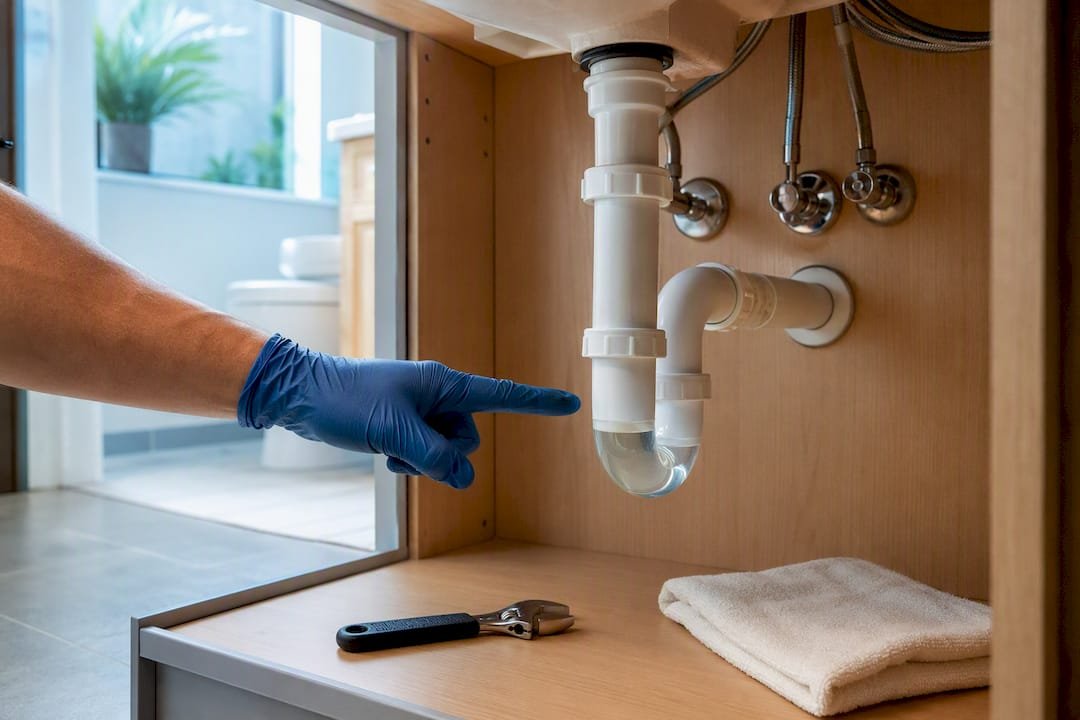
Biofilm and soap scum build up on the stopper, inside the overflow channel, and along the trap walls. This slimy layer feeds bacteria that produce a sour, musty version of sewer smell rather than the sharp rotten-egg odor. You’ll often notice a slippery film if you run a finger under the stopper.
Partial clogs trap hair, grease, and organic debris that decomposes slowly. Unlike a full clog, water still drains, just slower than normal, while the trapped material keeps rotting and releasing gas.
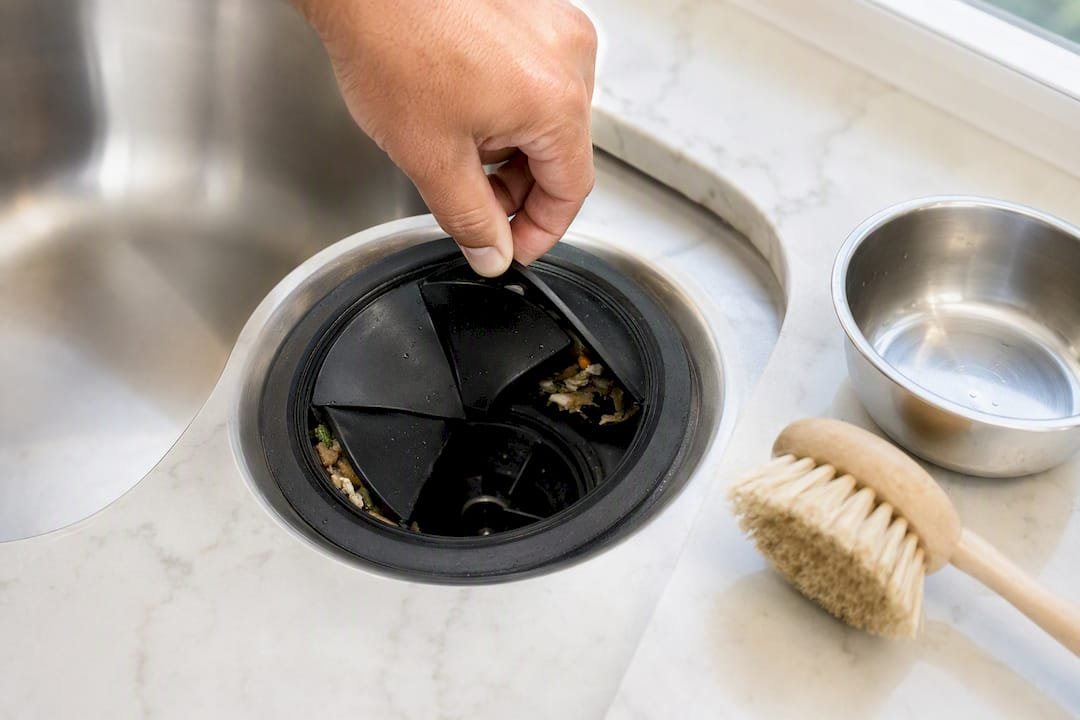
In the kitchen, garbage disposal residue is the usual offender. Food particles collect on the splash guard and in the tailpiece below the disposal, and they smell far worse than actual sewage. Cleaning that splash guard resolves the vast majority of kitchen sink odor complaints.
Vent problems cause siphoning, where drainage pulls water out of the trap faster than it refills. If your P-trap keeps drying out again within days of you fixing it, and you hear gurgling when other fixtures drain, your plumbing vent may be blocked or improperly installed.
Water heater odor mimics sewer gas almost perfectly but comes from the supply line, not the drain. A reaction between the anode rod and sulfate bacteria in the tank produces hydrogen sulfide that only shows up in hot water. Learn more in this guide to common water heater problems.
Cracked drain pipes or sewer-line leaks are the least common but most serious cause. Watch for odor from multiple fixtures at once, damp spots under cabinets, or unexplained wet patches in the yard near the main line.
| Cause | Smell type | Typical location |
|---|---|---|
| Dry P-trap | Faint sewer gas | Rarely used sinks |
| Biofilm/scum | Musty, sour | Stopper, overflow |
| Partial clog | Rotting, stagnant | Slow-draining sinks |
| Disposal residue | Food rot | Kitchen sink only |
| Vent siphoning | Sewer gas + gurgling | Recurs after fixing trap |
| Water heater | Rotten egg, hot water only | Faucet, not drain |
| Cracked line | Sewer gas, persistent | Multiple fixtures |
Step-by-Step Fixes That Work
Start with the least invasive option and only move down the list if the smell persists.
- Run hot water for a full minute, then follow with a half cup of baking soda and a cup of vinegar poured straight down the drain. Let it fizz for 15 minutes, then flush with more hot water. This clears light biofilm and refills a dry trap in one move.
- Pull the stopper and clean it. Most pop-up stoppers twist and lift out by hand. Scrub off the slime with an old toothbrush, then run a bottle brush through the overflow channel behind the faucet, a spot people almost never think to clean.
- Remove the P-trap if the smell continues. Place a bucket underneath, loosen the slip nuts by hand or with pliers, and slide the trap off. Dump out the standing water, scrub the inside with a brush and dish soap, and check the rubber gaskets for cracks before reinstalling. Run water afterward and check for drips at both connections.
- Use a zip tool or a hand snake for stubborn partial clogs the trap cleaning didn’t fix. For kitchen sinks, run ice cubes and citrus peels through a running disposal to scrape and deodorize the blades and splash guard at the same time.
- Apply an enzyme cleaner for lingering organic buildup. Enzymatic drain treatments break down waste without eating through pipe seals, unlike repeated doses of caustic drain cleaner, which can degrade plastic PVC over time.
Pro Tip: Never mix chemical drain cleaners with each other or with vinegar. The reaction can produce dangerous fumes, and if there’s already a sewage backup, skip the plunger entirely, it can push contaminated water back up into the fixture.
If you’ve worked through all five steps and the smell keeps coming back within a day or two, that’s your signal to stop DIY-ing and get a professional opinion.
When to Stop and Call a Plumber
Some symptoms mean you’re past the point of a home fix.
- Odor coming from more than one sink, tub, or toilet at the same time
- Gurgling sounds when any fixture drains, even ones you’re not using
- Sewage backing up into a tub or floor drain
- A trap that dries out again within days of refilling it
- Anyone in the house getting headaches or nausea from a strong, persistent odor
Sewer gas exposure at high enough concentrations can trigger headaches and nausea, and a smell that keeps returning despite cleaning almost always points to a vent or main-line problem no amount of baking soda will solve.
A plumber diagnosing a recurring sewer smell will typically run a camera inspection down the line, hydro-jet built-up debris out of the main, or clear a blocked roof vent. If the issue traces back to a cracked or leaking drain line, repair costs vary widely depending on whether the damage is under a slab or in an accessible wall, which is exactly why a diagnostic visit, not a guess, is the right first step.
Keeping the Smell From Coming Back
A few small habits prevent almost every cause on this list from resurfacing.
- Flush seldom-used sinks with water weekly so the P-trap never fully dries out.
- Pull and rinse the stopper monthly to keep biofilm from rebuilding.
- Skip pouring grease down the kitchen drain, and always run cold water when using the disposal.
- Run ice and citrus peels through the disposal once a month to scour the blades and splash guard.
- Use an enzyme cleaner monthly for ongoing organic buildup, and do a full mechanical cleaning once a year.
- Keep roof vent openings clear of leaves, nests, and debris that force air pressure problems back into your drains.
Pro Tip: Set a phone reminder for the first of every month to run your disposal with ice and citrus. It takes 30 seconds and prevents the single most common kitchen sink odor complaint.
What Years of Service Calls Taught Us About Sink Odor
The one-minute trap-refill test remains the single most reliable triage step out there. It costs nothing, takes no tools, and instantly separates a dry trap from something that needs real diagnostics. Most single-fixture odors clear up with cleaning alone, no camera, no hydro-jetting, just a stopper scrub or a trap flush.
What surprises people is how often a “sewer smell” turns out to be the water heater instead of the drain. That faucet-stream smell test saves homeowners from tearing apart a perfectly good P-trap. When odor hits multiple fixtures or a trap won’t stay refilled, that’s not a cleaning problem anymore. It’s a system problem, and Appliancesrepairmdtech has seen enough of those calls to know guessing wastes more time than a proper diagnostic visit.
— MDTECH
Book a Sink and Drain Diagnostic That Actually Finds the Problem
Baking soda and a hand snake solve most sink odors. When they don’t, guessing at pipe fittings under your cabinet isn’t a great use of a Saturday. There are licensed technicians who can pinpoint a dry trap, a failing vent, or a cracked line in one visit instead of three return trips.
A typical diagnostic covers the P-trap, overflow channel, disposal tailpiece, and, when needed, a camera inspection of the line to rule out cracks or blockages beyond what a snake can reach. From there, technicians handle everything from trap and drain repair to full hydro-jetting and sewer-line service. If the smell keeps coming back after you’ve tried the fixes above, book a visit and get it diagnosed properly instead of buying another bottle of enzyme cleaner.
Sources
- Hydrogen sulfide — University of Minnesota Septic Education
- Why Does My Drain Smell Like Sewage? 8 Causes 2026 — Plumbing by the Book
- Why Your Bathroom Smells Like Sewage and How to Fix It — BobVila
- How to Clean a Smelly Drain — Liquid-Plumr