
Shut off your main water valve immediately. That single move stops most of the damage a burst pipe can cause. Then move fast on the follow-ups: cut power to any area near standing water if you can reach the breaker safely, get people and pets away from the leak, and start containing water with towels or buckets while someone calls for help.
Here’s your scan-in-seconds checklist:
- Shut off the main water supply valve
- Turn off electricity at the breaker if it’s safe to reach
- Move people, pets, and valuables away from the water
- Contain the flow with towels, buckets, or a wet/dry vac
- Call a licensed emergency plumber or restoration company
- Start documenting damage with photos before you clean anything up
Pro Tip: Mold can start growing within 24 to 48 hours of water intrusion, and restoration companies generally aim to arrive within about 60 to 90 minutes of your call. Speed in the first hour is what can determine whether this becomes a repair or a renovation.
Key Takeaways
Stopping a burst pipe emergency fast requires shutting off the main valve immediately, containing water safely, documenting everything before cleanup, and calling licensed professionals within the first hour.
| Point | Details |
|---|---|
| Shut off the main valve | This is the single action that stops most ongoing damage; know its location before an emergency happens. |
| Act within the golden hour | Relieve pipe pressure, cut power if safe, and contain water within the first 60 minutes. |
| Race the mold clock | Growth can begin within 24 to 48 hours, so extraction and drying should start immediately. |
| Document before cleanup | Photograph and video all damage, and report the loss to your insurer the same day. |
| Call the right professional | Use a licensed plumber for source control and a restoration crew for standing water and drying. |
| Book fast, documented repair | Appliancesrepairmdtech connects Orange County and Los Angeles County homeowners with licensed technicians for emergency pipe repair and insurance-ready documentation. |
Table of Contents
- Your First 5 to 60 Minutes: A Burst Pipe Emergency Action Plan
- When Is a Burst Pipe Dangerous Enough to Evacuate?
- Safe Temporary Fixes While You Wait for Help
- Emergency Plumber or Restoration Company: Who Do You Call?
- How Do You Document a Burst Pipe for Insurance?
- How Can You Prevent the Next Burst Pipe?
- Get Fast, Documented Help From Appliancesrepairmdtech
- Sources
Your First 5 to 60 Minutes: A Burst Pipe Emergency Action Plan
The first minute sets the tone for everything after it. A half-inch pipe can dump roughly 50 gallons a minute once it fails completely, which means hesitation costs you real gallons on the floor, not just time.
In the first 60 seconds: locate the main shutoff valve and turn it clockwise until it stops. Most homes have it near the water meter, in the basement, a crawl space, or a utility closet on an exterior wall. If you don’t know where yours is, that’s the first thing to figure out today, not during the next emergency.
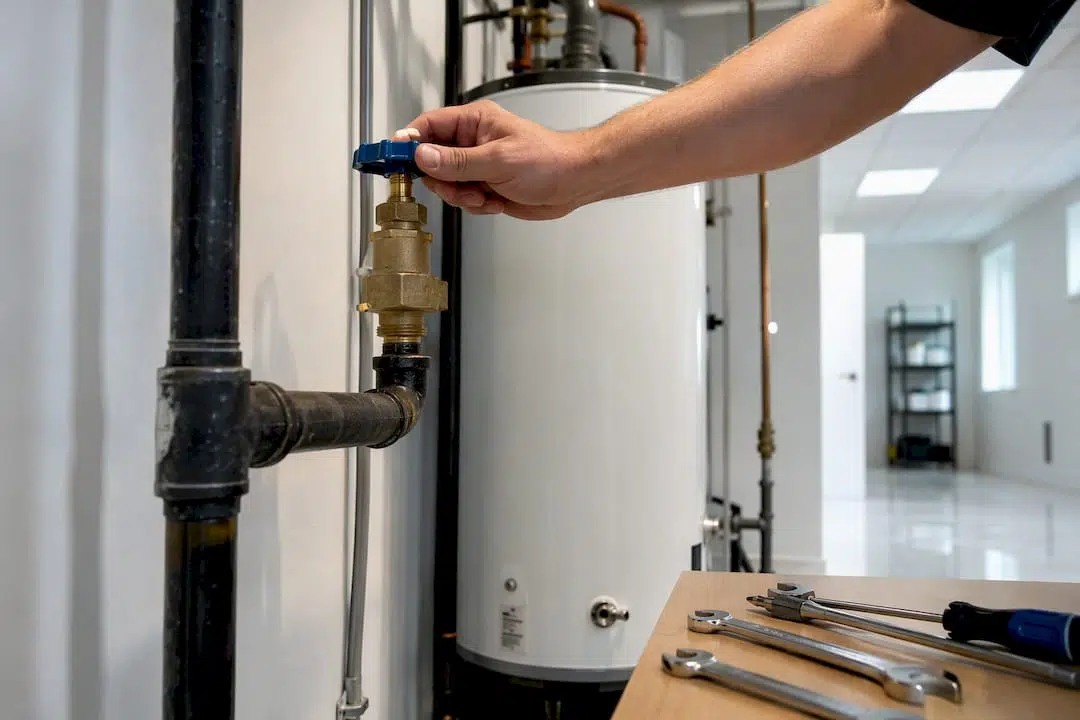
In the first 5 minutes: once the main is off, open a few faucets throughout the house and flush toilets once. This relieves residual pressure in the lines and drains water still sitting in the pipes, which reduces additional dripping. If the burst is near an outlet, light fixture, or electrical panel, and you can safely reach your breaker box without stepping in water, shut off power to that circuit or the whole panel.
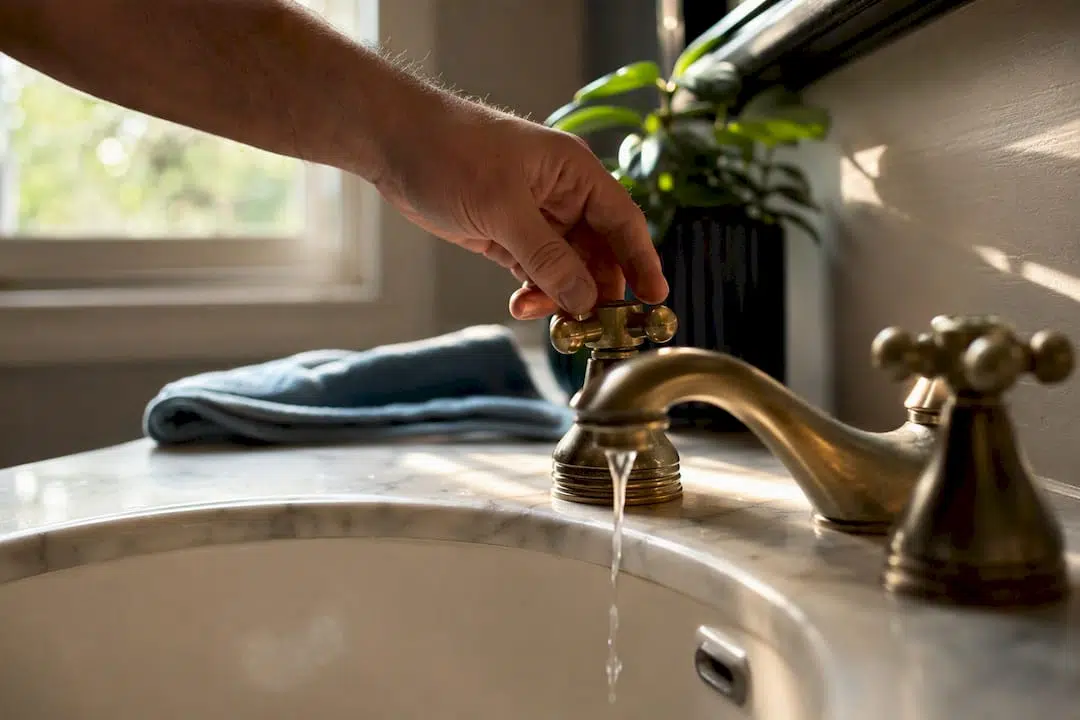
In the first 15 minutes: contain what’s already on the floor. Towels, buckets, and a shop vac (never a standard household vacuum) handle small pools. Close doors between the affected room and the rest of the house to slow spread, and get furniture, rugs, and electronics up off wet flooring. If the leak is coming from a specific fixture rather than a main line, a local shutoff valve under a sink or behind a toilet might let you isolate just that fixture instead of the whole house.
In the first hour: call your emergency plumber and, if water covers more than a room or two, a restoration company. Take photos and short videos of standing water, soaked walls, and damaged belongings before you move or discard anything. If the water utility needs to be notified, do it now rather than later.
- Shut off the main valve
- Relieve pressure with open faucets
- Cut power if it’s safe
- Contain and elevate belongings
- Photograph everything
- Call the plumber and, if needed, a restoration crew
Pro Tip: Split the work. One person handles safety and containment while another gets on the phone with the plumber and insurer. Running both tracks at once easily saves you 10 to 15 minutes.
When Is a Burst Pipe Dangerous Enough to Evacuate?
Most burst pipes are a mess, not a danger. A few signs change that calculus fast:
- Standing water touching an outlet, appliance cord, or the electrical panel itself
- Any smell of gas, especially near a water heater or furnace that shares a utility space with the leak
- Sagging ceilings, bulging drywall, or cracking sounds that suggest structural strain from trapped water
- Water rising in a finished basement or near sleeping areas overnight
If the panel is wet or you’re not confident reaching your breakers without standing in water, leave the circuit alone and get everyone out of that section of the house. A whiff of gas means you evacuate and call 911 or your gas utility from outside, no exceptions.
Should you call the fire department for a burst pipe? Usually no, unless electrical or gas hazards are present or water is actively flooding a room faster than you can manage. A plumber and, if needed, a restoration company are the right call for a pipe failure on its own.
Safe Temporary Fixes While You Wait for Help
You can slow the damage without making it worse, as long as you stick to low-risk moves.
- Line doorways with towels or a makeshift threshold barrier to keep water from spreading room to room
- Wrap a rubber patch (a section of old hose or rubber sheeting) around the split section of pipe and secure it tightly with a hose clamp or several tight loops of duct tape
- Turn off the water heater, both the power or gas supply and its own shutoff valve, since a dry tank can damage the heating element
- Set up a wet/dry vac if you have one; a household vacuum can short out or shock you on contact with water
A basic emergency kit worth keeping under the sink: adjustable wrench, pliers, a couple of hose clamps in different sizes, rubber sheeting or an old bike tube, and a flashlight. This is enough for a stopgap, not a repair.
- Never work near an outlet, panel, or appliance sitting in or near standing water
- Never attempt to cut into a wall to access a pipe unless you already know exactly what’s behind it
- Never assume a rubber patch is a permanent fix. It buys hours, not days
Immediate mitigation steps like these matter because a burst pipe left flowing for even a few hours lets water travel far past where you can see it, soaking into subfloors and wall cavities long before visible staining shows up.
Emergency Plumber or Restoration Company: Who Do You Call?
Call a licensed emergency plumber the moment you have an active leak you can’t fully stop, a burst hidden behind a wall or under a slab, or any situation where shutting the main valve didn’t fully kill the flow. Their job is source control: finding the failure point, cutting out the damaged section, and repairing or replacing the pipe.
Call a water-damage restoration company once standing water covers more than a small area, soaks into multiple rooms, or has been sitting long enough that you’re worried about hidden moisture in drywall and subfloor. Their team handles extraction, structural drying, and moisture mapping, tracking water that traveled beyond the visible wet spot using thermal imaging and meters, since a small leak on the surface often hides a much larger soaked area inside the framing.
| Phase | Typical Timeframe | What Happens |
|---|---|---|
| Arrival | 60 to 90 minutes | Plumber or restoration crew assesses the source and scope |
| Extraction | Hours 1 to 6 | Standing water removed, containment set up |
| Structural drying | Days 1 to 7 | Fans, dehumidifiers, and moisture checks run until materials read dry |

When you call, ask for an estimated arrival window, what certifications the crew carries, what equipment they’re bringing, and how they document damage for your insurance file. A reliable emergency plumbing partner will walk you through exactly what to do in the minutes before they show up, which is worth confirming on that first call.
How Do You Document a Burst Pipe for Insurance?
Photos and video, taken before any cleanup, are your strongest evidence. Walk every affected room and capture wide shots plus close-ups of damaged flooring, drywall, furniture, and belongings, then save receipts for any emergency purchases like a shop vac, fans, or emergency plumber invoices.
- Photograph and video the damage from multiple angles before moving anything
- Note the date and approximate time the pipe burst
- List damaged items room by room with estimated value
- Save every receipt tied to the emergency, from hardware store runs to plumber invoices
- Call your insurer the same day and get a claim number in writing
Report the loss to your insurer as soon as you can. Most policies expect you to act quickly to mitigate further damage, and delays can complicate a claim even when the cause is covered.
Coverage generally comes down to how the pipe failed. Sudden, accidental bursts are typically covered, while damage traced to neglect, like ignoring a known slow leak or letting pipes freeze because the heat was never checked, is often excluded. If your burst happened during a cold spell, note your thermostat settings and any heating issues beforehand, since adjusters will ask. Keep every contractor bid and invoice organized in one folder; it speeds up reimbursement more than almost anything else you can do.
How Can You Prevent the Next Burst Pipe?
Most bursts trace back to freezing, old piping, or a fixture nobody’s inspected in years. A few habits close most of that gap.
- Insulate exposed pipes in attics, crawl spaces, and exterior walls before winter
- Keep indoor temperatures above 55°F even when you’re away during a freeze
- Disconnect and drain outdoor hoses, then shut off exterior spigots before the first hard freeze
- Install a leak-detection shutoff valve that cuts water automatically if it senses a burst
- Add water sensors near your water heater, washing machine, and under sinks
- Know exactly where your main shutoff valve is, and make sure everyone in the house does too
A simple cadence works well: check exposed pipes and hose bibs visually each quarter, and bring in a licensed plumber for a full inspection every couple of years, sooner if your home has galvanized or original piping over 20 years old.
Pro Tip: A $50 leak sensor near your water heater is cheap insurance against a five-figure claim. Most homeowners skip this until after their first flood, not before.
Why the First 48 Hours Determine Your Mold Risk
Mold doesn’t wait. The CDC’s own guidance puts the window at 24 to 48 hours after water intrusion before growth can start, which is why extraction and drying speed matter more than almost any other decision you make.
Prioritize in this order: remove standing water first, open windows and run fans for ventilation, then bring in dehumidifiers. Let professionals handle moisture mapping behind walls, since surface-dry drywall can still be soaked underneath. Skipping ahead on drying is one of the most common reasons repair costs balloon and insurance claims get disputed later.
A Technician’s Take on What Homeowners Get Wrong
Most burst-pipe calls MDTECH technicians respond to share one detail: the homeowner didn’t know where the main shutoff valve was. That single gap turns a 10-minute fix into a flooded hallway. If there’s one thing worth doing this week, it’s finding that valve and testing that it turns freely, before you ever need it in the dark at 2 a.m.
Get Fast, Documented Help From Appliancesrepairmdtech
A burst pipe doesn’t wait for business hours, and neither should your plumber. Appliancesrepairmdtech coordinates emergency plumbing response across Orange County and Los Angeles County, connecting you directly with licensed technicians instead of a call center that has to dispatch someone else later.
On that first call, the team triages what you describe, gives you a realistic arrival window, and sends a technician equipped to handle source control on-site, whether that’s a pipe replacement, a valve repair, or a temporary patch that holds until parts arrive. Appliancesrepairmdtech technicians also know to document the damage as they work, which gives you photos and a service record ready to hand to your insurance adjuster instead of trying to reconstruct the timeline from memory.
If you’re dealing with an active leak right now, the fastest path forward is booking through the emergency plumbing and pipe repair page for Orange County and greater Los Angeles. Get the shutoff done, get a technician on the way, and let the documentation piece take care of itself.