
Electrical hazards cause more than 51,000 american home fires each year—a fact that highlights why safe appliance repair matters so much. When an appliance suddenly malfunctions, it puts both your property and family at risk. Knowing how to assess dangers, gather the right tools, and address warning signs helps keep your home secure. This guide offers clear steps for any american household to handle emergencies confidently while staying safe.
Table of Contents
- Step 1: Assess Appliance And Identify Immediate Hazards
- Step 2: Gather Basic Tools And Shut Off Power Safely
- Step 3: Diagnose The Problem Using Symptom Checks
- Step 4: Perform Essential Emergency Repairs
- Step 5: Test Appliance Function And Confirm Safe Operation
Quick Summary
| Key Point | Explanation |
|---|---|
| 1. Perform a Safety Inspection | Unplug the appliance and check for wear, frayed cords, or unusual sounds to prevent hazards. |
| 2. Gather Safety Tools | Use insulated tools and wear personal protective equipment when working on electrical components for safety. |
| 3. Document Symptoms Carefully | Note unusual behaviors like strange noises or inconsistent operation to aid in diagnosing the problem. |
| 4. Focus on Emergency Repairs | Stabilize the situation with temporary fixes to prevent further damage, but avoid complex repairs without training. |
| 5. Thoroughly Test After Repairs | Confirm safe operation by running the appliance and observing for any issues before regular use. |
Step 1: Assess Appliance and Identify Immediate Hazards
When an appliance starts acting weird, your first job is detecting potential safety risks before they become serious problems. A systematic visual and functional inspection can save you from electrical dangers and prevent potential home disasters.
Start by unplugging the appliance and performing a thorough visual examination. Look closely for any signs of wear like frayed electrical cords, burn marks, cracked casings, or exposed wiring. According to the Nevada Office of Emergency Management, electrical cord inspections are critical for preventing potential fire hazards. Pay special attention to areas where cords connect to outlets or the appliance itself.
Next, check the appliance’s operational behavior. Strange sounds, unexpected sparking, or irregular performance are red flags. Prince William County Fire and Rescue recommends immediately repairing or replacing appliances that sputter or spark. Keep all appliances away from wet areas to minimize electrical risks. If you notice anything suspicious during your assessment, stop using the appliance and consult a professional repair technician who can diagnose and resolve potential safety issues.
Warning: Never attempt to repair electrical components if you lack proper training. Your safety is always the priority.
Step 2: Gather Basic Tools and Shut Off Power Safely
Before diving into appliance repair, you need the right protection and preparation. This step is all about assembling your safety toolkit and ensuring electrical safety through proper power management.
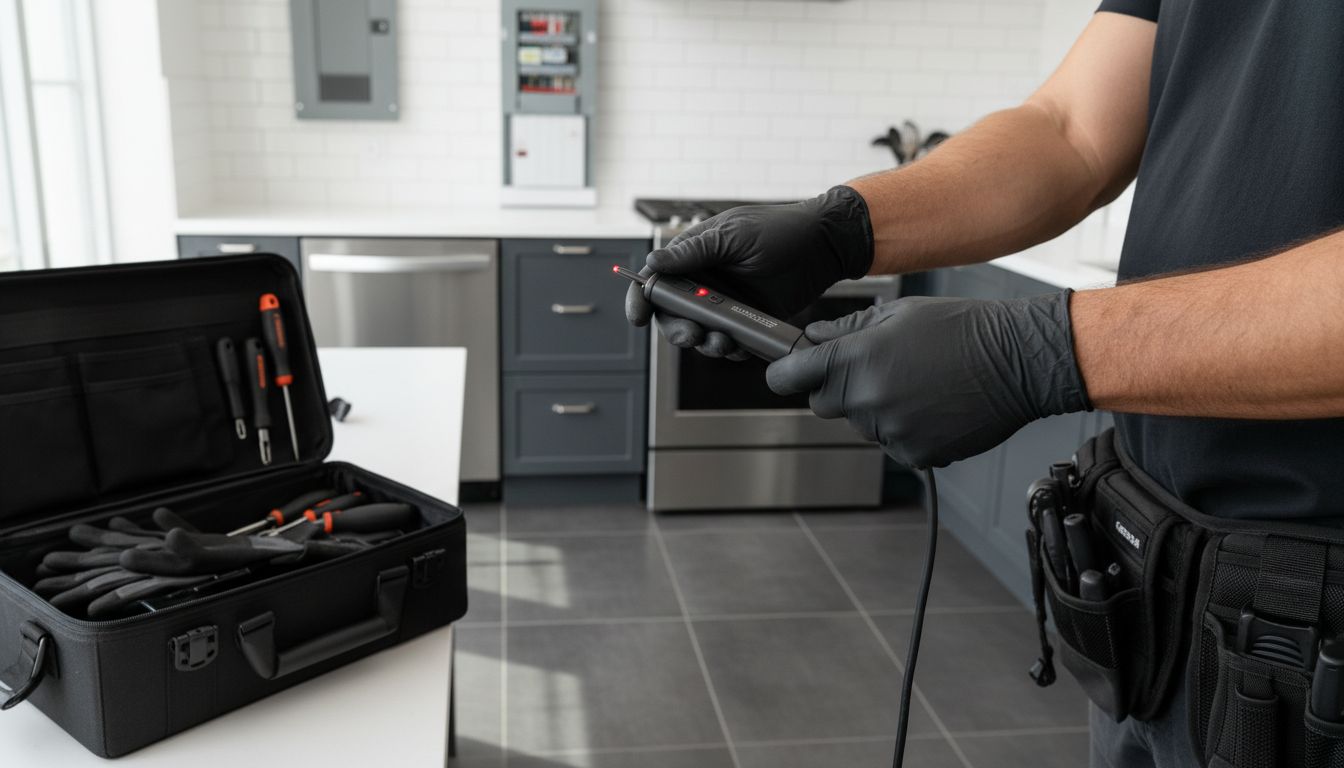
First, collect essential safety equipment. According to OSHA, using insulated tools is critical when working with electrical components. Your toolkit should include insulated screwdrivers, wire cutters, electrical tape, work gloves, and safety glasses. These items create a protective barrier between you and potential electrical hazards.
Next, locate your home’s main electrical panel and carefully shut off power to the specific circuit or appliance you will be working on. The International Association of Electrical Inspectors emphasizes using dry tools and ensuring power is completely off before performing any electrical work. Test the appliance with a non contact voltage tester to confirm no electrical current is present. Always treat every wire as if it were live and use extreme caution.
Warning: If you feel uncertain or uncomfortable at any point during this process, stop immediately and contact a professional electrical repair technician. Your personal safety is far more important than completing a DIY repair.
Step 3: Diagnose the Problem Using Symptom Checks
Diagnosing an appliance problem requires careful observation and systematic investigation. Your goal is to identify specific symptoms that point to potential mechanical or electrical issues without jumping to immediate conclusions.
Start by documenting the appliance’s unusual behaviors. According to the Electrical Safety Foundation International, repeatedly blown fuses or tripped circuit breakers are serious warning signs that indicate an underlying defect. Pay close attention to performance changes like unusual noises, irregular functioning, unexpected shutdowns, or inconsistent power draw. Prince William County Fire and Rescue recommends watching for signs like sputtering or unexpected sparking during operation.
Take detailed notes about the specific symptoms you observe. Is the refrigerator not cooling consistently? Does the washer stop mid cycle? Are there burning smells or unusual sounds? Each symptom provides valuable diagnostic information that can help you or a professional technician pinpoint the exact problem. Photograph or video record the issue if possible to provide visual documentation. This evidence can be crucial when consulting with repair professionals who might not be able to witness the problem firsthand.
Warning: Some symptoms might indicate serious electrical risks. If you notice persistent electrical problems or feel uncertain about the appliance’s condition, always prioritize safety and consult a professional repair technician.
Step 4: Perform Essential Emergency Repairs
When confronting an appliance emergency, your primary focus is stabilizing the situation safely and preventing further damage. This step requires careful decision making and precision to address immediate repair needs.
According to the Appliance Repair School, proper safety procedures are critical when performing emergency repairs. Begin by using appropriate personal protective equipment like safety glasses, work gloves, and non conductive tools. Carefully inspect the component that requires immediate attention. For electrical issues, look for signs of wire damage, loose connections, or burnt components. Mechanical problems might involve checking for misaligned parts, worn bearings, or broken seals.
While some minor repairs can be attempted, the Academy House West Residence Guide strongly advises against attempting complex repairs without professional training. Focus on temporary stabilization techniques that can prevent further damage. This might include disconnecting a problematic component, applying temporary sealing for small leaks, or securing loose parts. Take clear photographs of the issue and be prepared to provide detailed information to a professional repair technician.
Warning: Emergency repairs are not about complete fixing but about preventing additional damage. When in doubt, always consult a professional who can provide a comprehensive and safe repair solution.
Step 5: Test Appliance Function and Confirm Safe Operation
After performing emergency repairs, your critical next step is thoroughly testing the appliance to ensure it operates safely and effectively. This final verification process helps prevent potential future failures and confirms the success of your repair efforts.
According to the Copper Valley Electric Association, it is crucial to fully reassemble the appliance and ensure it is properly grounded before testing. Start by carefully reconnecting all components and performing a visual inspection to confirm everything is correctly positioned. Plug the appliance into a grounded outlet and run a slow test cycle, watching for any unusual sounds, irregular movements, or unexpected behavior. Prince William County Fire and Rescue recommends paying special attention to signs like sputtering or unexpected sparking during this initial test phase.
Observe the appliance closely during its first few operational minutes. Check for consistent performance, normal temperature ranges, and smooth mechanical movements. Listen for any strange noises and monitor electrical connections for signs of overheating. Document your observations in case you need to consult a professional repair technician about any lingering concerns. Take note of specific performance metrics like cooling rates, spinning speeds, or heating consistency depending on the appliance type.
Warning: If you notice any persistent issues or feel uncertain about the appliance’s performance, immediately unplug the device and contact a professional repair service to conduct a comprehensive evaluation.
Fast and Reliable Emergency Appliance Repair in Your Area
Facing sudden appliance troubles can create serious safety risks and disrupt your daily life. Whether it is unexpected sparking, strange noises, or an appliance that shuts down mid cycle, these warning signs from the “Emergency Appliance Repair Guide for Fast Home Solutions” demand immediate and expert attention. You need prompt, professional help to ensure your home stays safe and your appliances run smoothly again.
Do not let emergency appliance issues put your family or property in jeopardy. Reach out now to experienced local technicians who specialize in quick responses for urgent repairs across Orange County and Los Angeles County. Our licensed experts use proper safety procedures and tools to diagnose and stabilize your appliance fast. Take control of your home safety and comfort today by visiting Appliances Repair MD Tech to schedule your appointment. Act now before a small problem turns into a costly disaster.
Frequently Asked Questions
How can I assess my appliance for immediate hazards?
Start by unplugging the appliance and performing a visual inspection for any signs of damage like frayed cords or burn marks. After visually checking, listen for strange sounds or other unusual behaviors that may indicate an electrical issue.
What tools do I need for emergency appliance repairs?
Gather essential tools such as insulated screwdrivers, wire cutters, electrical tape, safety glasses, and work gloves. Make sure to collect these items before starting any repair to ensure your safety throughout the process.
How should I diagnose the problem with my appliance?
Document any unusual behaviors or symptoms your appliance exhibits, such as blown fuses or strange noises. Take notes and photographs of these issues to help you or a technician pinpoint the problem more effectively.
What should I do during emergency repairs?
Focus on stabilizing the appliance by inspecting for damage and using temporary fixes to prevent further harm. If you find any broken parts or loose connections, address those situations safely and effectively.
How do I test my appliance after performing repairs?
Reassemble the appliance and ensure all components are safely connected before plugging it in. Run a test cycle while closely monitoring for any unusual sounds or behaviors to confirm that the appliance is functioning properly.
When should I contact a professional for appliance repairs?
If you encounter persistent issues or feel uncertain about any aspect of the repair process, stop and consult a professional technician. Prioritizing your safety is crucial, so don’t hesitate to get expert help when needed.