
The fastest way to stop most dishwasher smells is to pull and clean the filter, run a hot cycle with white vinegar or a dishwasher cleaner, and wipe down the door gasket. Clean the filter regularly, approximately once a month, or more often with heavy use. These three steps resolve the majority of odor complaints within one cycle.
TL;DR:
- Soak the filter in warm, soapy water for 10 minutes, clear spray arm holes, then run an empty hot cycle with 2 cups of vinegar.
- If one cleaning leaves biological odors, use an enzyme cleaner; for hard water scale, choose a dishwasher safe descaler or citric acid rinse.
- A persistent sewer smell usually signals drain backflow: check for a high loop or air gap, hose sags, and standing water after a cycle.
- Clean the filter monthly, or every two weeks with daily use, and leave the door ajar after cycles so moisture can evaporate.
- Unplug the dishwasher before opening pump or sump access; call a technician for undrained standing water, electrical or burning odors, or persistent sewer smells.
Table of Contents
- What commonly causes a dishwasher to smell
- How to clean your dishwasher in 30 to 60 minutes
- Deep clean options for stubborn or recurring smells
- How to check the drain and plumbing for sewer-like smells
- Prevention: a maintenance schedule that actually works
- When to call a professional and what to tell them
- A technician’s perspective on dishwasher smells
- FAQ
- Sources
What commonly causes a dishwasher to smell
Most dishwasher odors trace back to one of four sources, and figuring out which one applies to you saves a lot of wasted scrubbing.
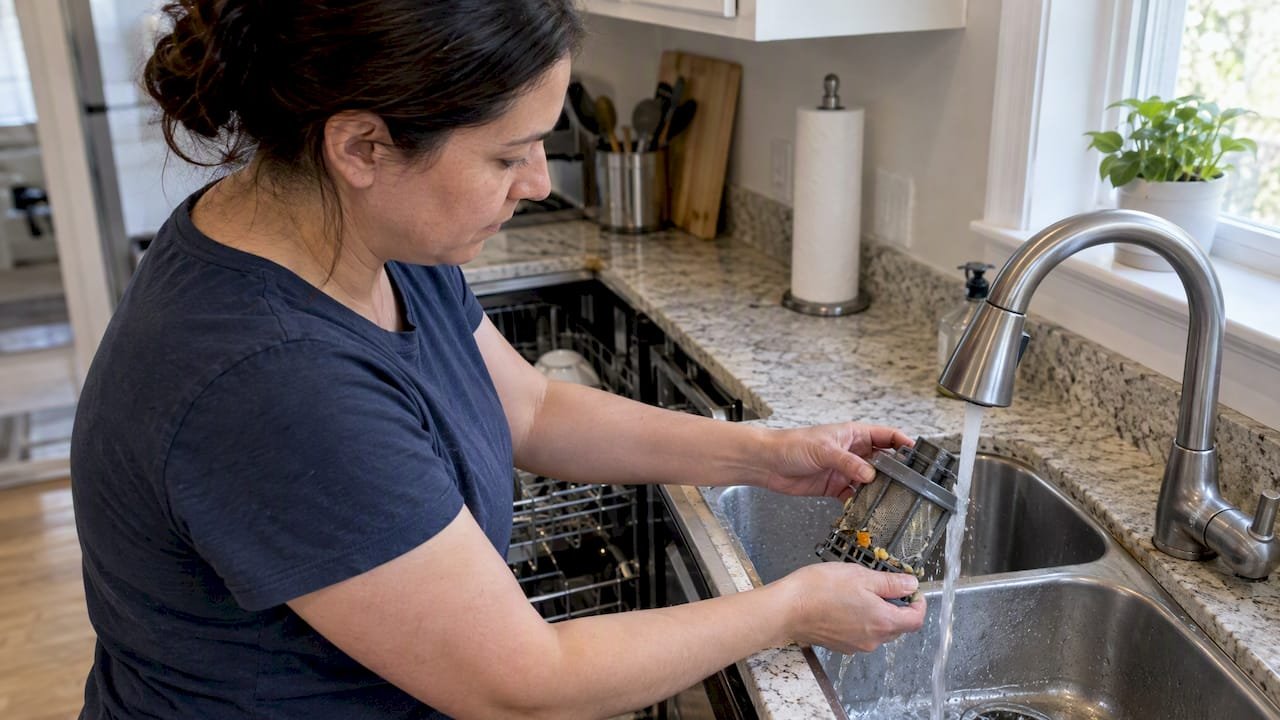
Food particle buildup in the filter is the most frequent culprit. Every cycle pushes small bits of food into the lower filter basket, and when that filter isn’t rinsed out regularly, trapped scraps rot and produce a sour or rotten-egg smell. Manufacturer guidance from Whirlpool points to trapped food particles, clogged drains, and stagnant water as the most common causes, and recommends cleaning the filter at least once a month.
Standing or stagnant water forms when the filter or drain path is partially blocked, leaving a shallow pool at the bottom of the tub between cycles. That water sits, grows bacteria, and smells musty or sour within a day or two.
Mold and mildew tend to colonize the rubber door gasket and the folds around the door seal, where moisture lingers after each cycle. This biological odor smells distinctly earthy or musty, unlike the sharp plastic or faint motor smell that sometimes comes from a brand-new machine.
Soap scum and mineral films build up on interior walls and the heating element, especially with hard water, trapping food residue and detergent that never fully rinses away.
- Food buildup: rotten or sour smell concentrated near the filter basket.
- Standing water: musty smell that worsens between loads.
- Mold or mildew: earthy odor centered on the door gasket.
- Soap scum or mineral film: dull, chemical-tinged residue smell on interior surfaces.
How to clean your dishwasher in 30 to 60 minutes
This routine handles the vast majority of smells without any special tools beyond a brush and some vinegar.
- Empty the dishwasher completely and inspect the bottom of the tub and the filter area for visible debris, bones, or labels.
- Twist and lift out the filter assembly (check your filter’s function and removal steps if you’re unsure how yours comes apart).
- Soak the filter in warm, soapy water for 10 minutes, then scrub it with an old toothbrush to clear mesh holes and crevices.
- Rinse the filter under running water and reinstall it, making sure it locks or twists back into place correctly.
- Wipe down the spray arms and use a toothpick or thin wire to clear any clogged holes, since blocked jets reduce rinsing power and let residue sit.
- Run a hot cycle with 2 cups of white vinegar in a dishwasher-safe bowl on the top rack, or follow the label directions for a commercial cleaner like affresh®, which cleaning guides recommend for clearing buildup in hidden components like pumps and hoses.
- Wipe the door gasket and interior walls dry with a cloth once the cycle finishes, paying attention to the folds in the rubber seal.
- Leave the door propped ajar for an hour or two after each cycle to let residual moisture evaporate instead of sitting in the sealed tub.
Pro Tip: Run the vinegar cycle on the hottest setting with no dishes inside; the heat and acidity do more work together than either does alone.
Deep clean options for stubborn or recurring smells
When vinegar and a filter cleaning don’t fully clear the smell, the problem is usually biofilm, grease, or mineral scale that has built up over months.
- Switch to an enzyme-based cleaner when the odor is biological rather than mineral. Enzymes break down organic residue that vinegar only masks, according to cleaning guides that compare the two approaches.
- Unplug the dishwasher before attempting to access the pump or sump area, and only open panels you’re confident are user-accessible; this is where things can quickly go beyond a DIY fix.
- Descale hard-water deposits with a dishwasher-safe descaling product or a citric-acid rinse, since mineral film traps grease and odor-causing residue on the tub walls and heating element.
- For persistent smells, run two or three consecutive hot vinegar or cleaner cycles rather than one, since a single pass often loosens buildup without fully flushing it out.
How to check the drain and plumbing for sewer-like smells
A sewer-like smell that survives a full cleaning usually points to the drain line, not the dishwasher interior. GE Appliances explains that a drain hose installed without a high loop or an air gap can let wastewater flow back into the dishwasher, producing a persistent sewage smell no amount of interior cleaning will fix.
- Check whether the drain hose is routed in a high loop under the sink cabinet, or connects through an air gap fitting on the countertop.
- Look for kinks, sags, or low points in the hose where water could pool and sit.
- Confirm the hose connects cleanly to the garbage disposal inlet, with adequate clearance and no cracked fittings.
- Run a cycle and check for standing water at the end; then sniff near the garbage disposal separately from the dishwasher tub to localize the smell’s true source.
Nearly all persistent sewer odors that survive a full interior cleaning trace back to drain installation issues rather than dishwasher hygiene, according to GE Appliances’ installation guidance. If the smell is stronger at the disposal or persists after a clean filter and a vinegar cycle, it’s time to treat this as a drain issue rather than a cleaning one.
Prevention: a maintenance schedule that actually works
A short recurring routine keeps smells from coming back, and it takes less time than most people expect.
- Clean the filter monthly, or every two weeks if you run the dishwasher daily, following Whirlpool’s filter maintenance schedule.
- Run a vinegar or commercial cleaner cycle monthly; if the machine sits unused for stretches, run an empty rinse cycle every 24 hours until it’s back in regular rotation.
- Load dishes so water and detergent reach every surface: scrape off large food chunks, but skip the pre-rinse, since modern detergents need some residue to work against.
- Keep plastics away from the heating element and use a rinse aid formulated for your water hardness to cut down on the film that traps odor.
For a broader routine beyond odor control, our dishwasher care checklist covers the rest of the maintenance calendar.
When to call a professional and what to tell them
Call a technician when the sewer smell persists after a full cleaning, you see standing water that won’t drain, or you notice a burning or electrical odor near the motor. Before the appointment, have ready: the brand and model, when the smell started, which DIY steps you’ve already tried, and whether the drain hose has a visible high loop or air gap. A technician will inspect drain routing, the pump and sump, hose connections, and the disposal link, and can usually diagnose the cause on the first visit. If you’re in that spot, our appliance repair services cover exactly this kind of dishwasher and drain troubleshooting.
A technician’s perspective on dishwasher smells
Most dishwasher odors are maintenance problems, not mechanical failures, and the filter-and-vinegar routine above solves nearly all of them. Keep the unplug-before-you-open-it rule for anything near the pump, and bring in a professional once plumbing or electrical smells enter the picture.
— MDTECH
FAQ
How do you get rid of a bad smell in the dishwasher?
Remove and clean the filter, run a hot cycle with white vinegar or a dishwasher cleaner, and wipe down the door gasket. Repeat the cleaner cycle if the smell lingers after the first pass.
How do I get rid of the sewer smell in my dishwasher?
A sewer smell usually points to the drain hose rather than the dishwasher interior, since a hose without a proper high loop or air gap can let wastewater flow back in. Check the hose routing under the sink, and call a plumber or appliance technician if the loop or air gap looks missing or damaged.
Why does my dishwasher stink but the filter is clean?
A clean filter with a lingering smell often means the problem has moved to the drain hose, the door gasket, or standing water trapped lower in the pump area. It can also signal a plumbing installation issue like a missing high loop, which a filter cleaning won’t touch.
How do you stop a dishwasher from smelling?
Clean the filter monthly, run a vinegar or dishwasher cleaner cycle monthly, and leave the door ajar after cycles so moisture doesn’t linger. Avoid overpacking the racks and skip heavy pre-rinsing so detergent and rinse aid can do their job without leaving residue behind.
Sources
These manufacturer pages and maintenance guides back the steps above, and they’re worth bookmarking if you want more detail than a single cleaning session covers.
- Removing Odors in your Dishwasher – Product Help | Whirlpool
- GE Appliances support content (drain hose/high loop guidance)
- The Dishwasher Blog — Best dishwasher cleaners and maintenance advice