
Most weak flushes are fixable at home by checking tank water level, the flapper and chain, rim jets, and clearing partial clogs. Start by lifting the tank lid and doing a single test flush while you watch what happens inside. If the flush stays weak after basic fixes or more than one fixture in the house drains slowly, that points to a bigger plumbing issue and it’s time to call a pro.
TL;DR:
- Keep tank water about an inch below the overflow pipe; adjust or replace the fill valve if it cannot maintain that level.
- Set the flapper chain to roughly half an inch of slack, and match replacements to the toilet’s two inch or three inch flush valve size.
- For jets clogged by minerals, pour vinegar into the overflow tube, wait an hour or overnight, then clear each hole gently without metal tools.
- Call a plumber when plunging and a toilet auger fail, multiple fixtures drain slowly, or flushing causes gurgling or sewer odors.
Table of Contents
- Quick checklist: 5 to 7 fast checks you can run right now
- Why tank water level and the fill valve matter
- Diagnosing flapper, chain, and flush-valve seating problems
- How rim jets and mineral buildup affect flush power
- Detecting and clearing partial clogs in the trap
- Why blocked vents or drainlines can weaken a flush
- When to call a plumber and what to expect
- Preventive maintenance to keep your flush strong
- What our technicians see most on weak-flush calls
- Book a visit if the weak flush doesn’t clear
- FAQ
- Sources
Quick checklist: 5 to 7 fast checks you can run right now
Before pulling anything apart, run through this list. Most of it takes a few minutes and needs nothing more than a bucket, a plunger, and dish soap.
- Confirm the water supply valve behind the toilet is fully open, and check a sink tap to make sure the house has normal water pressure.
- Lift the tank lid and check the water height, aiming for about an inch below the overflow pipe, then watch the flapper and refill tube during a flush.
- If the bowl drains slowly, try a proper plunge with a flange plunger, the kind with an extra rubber flap for a tight seal.
- For a soft clog, pour a bucket of hot (not boiling) water with a squirt of dish soap into the bowl, let it sit 10 minutes, then test flush.
- Look at the rim jets, the small holes under the bowl’s rim, for white or orange mineral crust and clean them if you see buildup.
- If the flush is still weak after these steps, shut off the water supply to the toilet and jot down notes and photos for a plumber.
Why tank water level and the fill valve matter
A full flush depends on the tank releasing enough water fast enough to create the surge and siphon that pull waste through the trap. When the tank water level sits low, that surge weakens and the bowl never builds the siphon it needs to clear completely.
A tank that fills significantly below the overflow pipe is running low, a problem usually traced to the fill valve. Most fill valves have adjustments such as a screw, dial, or adjustable cup that raise the shutoff point, and a small adjustment is often enough to restore flush volume.
- Remove the fill valve cap and flush to check for sediment or debris restricting water flow.
- Rinse the valve screen under a tap if flow looks weak or uneven.
- If adjusting the float doesn’t bring the water back to the right level, the fill valve likely needs replacing, a job that usually takes less than 20 minutes with the water shut off.
- Match the replacement to your toilet’s flush volume, since modern low-flow models rely on parts calibrated for their specific hydraulics.
Manufacturer troubleshooting guidance from Fluidmaster lists checking tank water level and the fill valve among the first steps for a weak flush, alongside flapper adjustment and rim-jet cleaning.
Pro Tip: Mark the new water line on the inside of the tank with a pencil after you adjust it, so you have a quick reference the next time the flush seems off.
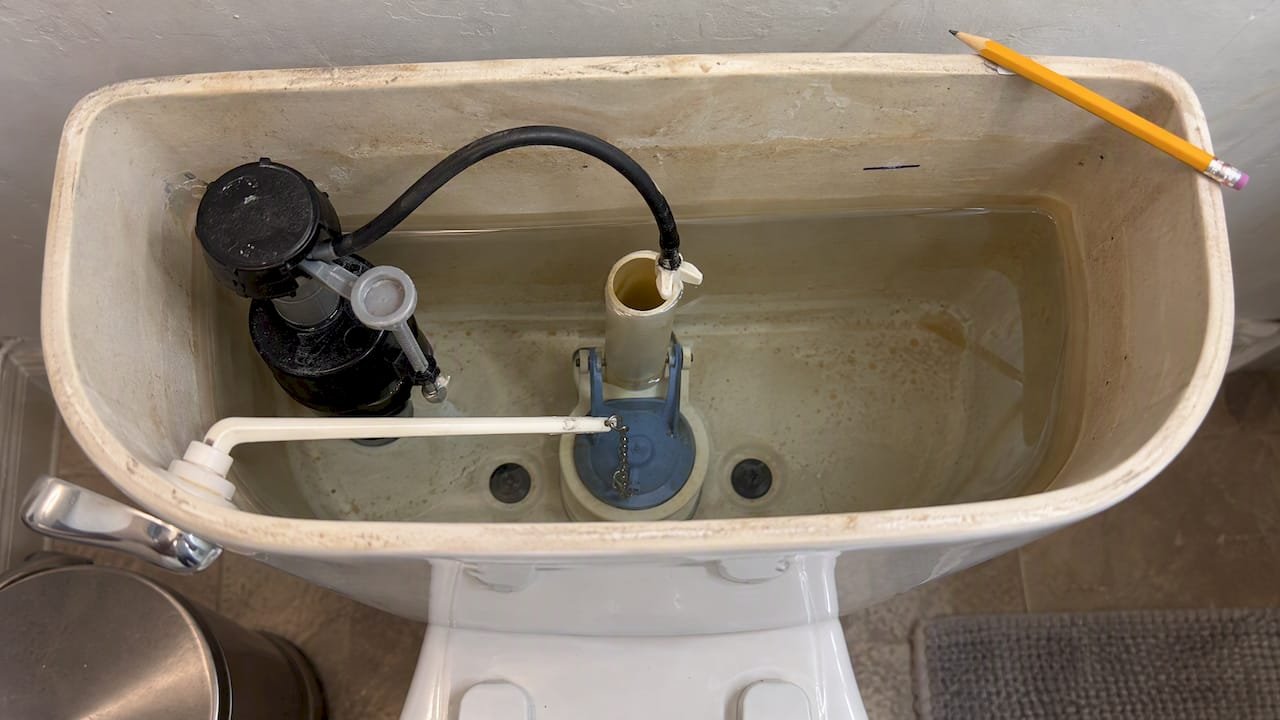
Diagnosing flapper, chain, and flush-valve seating problems
A flapper that drops and seals too soon cuts the flush short before enough water has moved through the bowl, which is one of the most common causes of a weak flush. Chain slack is often the culprit: too little slack holds the flapper partly open and wastes water, while too much slack lets it snap shut early.
- Lift the flush handle slowly and watch how far the flapper travels before it falls back.
- Adjust the chain so there’s about one to two links of slack, roughly half an inch, with the flapper resting flat.
- Check the flapper for warping, stiffness, or the wrong size, since 2 inch and 3 inch flush valves need matching flappers.
- For adjustable flappers, test different settings with a toilet paper test: drop a few sheets in the bowl and flush to confirm it clears in one pass.
- Replace a flapper that’s more than a few years old, visibly warped, or keeps causing problems even after adjustment, and bring the old part to the hardware store to match it exactly.
Korky’s troubleshooting guide covers chain slack, flapper sizing, and adjustable flapper settings as common, fixable reasons behind a weak flush.
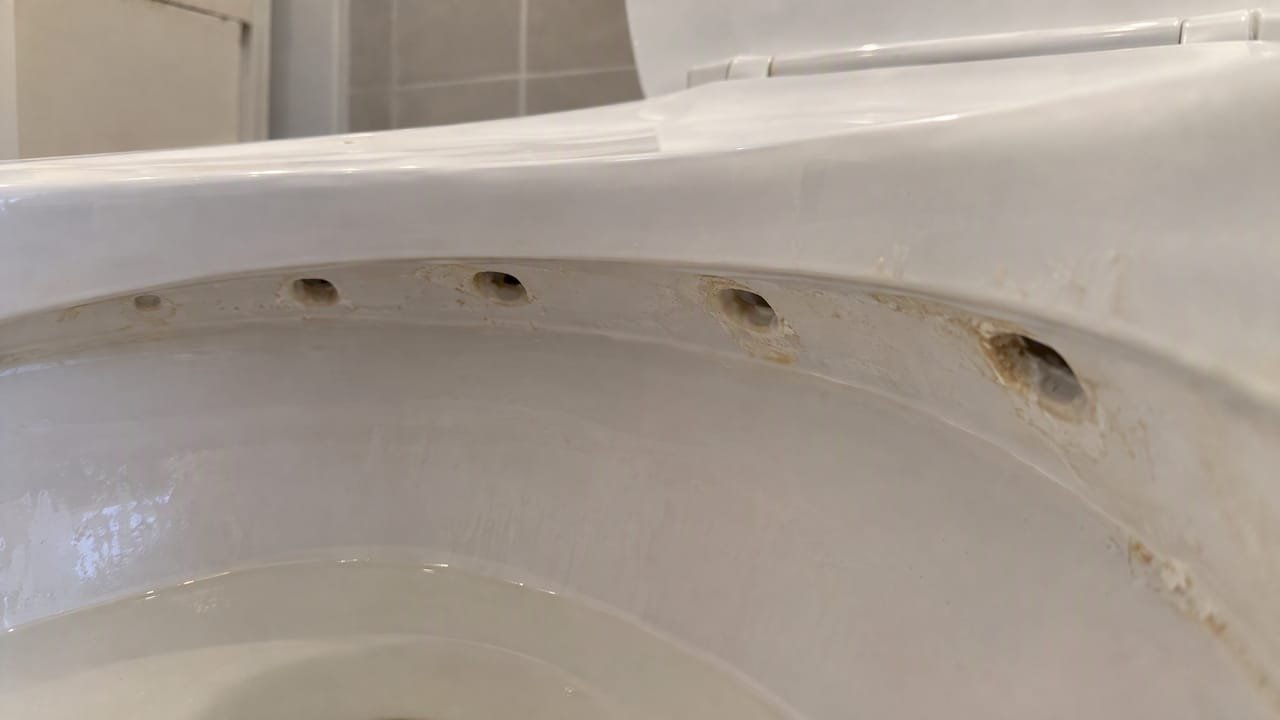
How rim jets and mineral buildup affect flush power
The rim jets, small feed holes under the bowl’s rim, release water in a pattern that rinses the bowl and helps build the siphon that pulls waste out. When mineral deposits clog those holes, water trickles out unevenly instead of flowing in a full circular rinse, and flush power drops even when everything else in the tank works fine.
- Pour a cup of white vinegar or a CLR-type cleaner into the overflow tube so it reaches the rim jets, then let it sit for an hour or overnight for heavy buildup.
- Use a thin wire, a straightened paperclip, or a pipe cleaner to gently clear each jet hole.
- Flush several times to rinse out loosened mineral debris.
- Watch the bowl during a flush: a full circular swirl pattern and a complete clear in one flush mean the jets are clear.
Wear gloves and eye protection when working with cleaning solutions, and avoid metal tools that could scratch or chip the porcelain.
Pro Tip: If you drop your cleaning wire into the bowl, don’t fish for it during a flush cycle, turn off the water first so you’re not working against a surge.
Detecting and clearing partial clogs in the trap
A partial clog shows up as a slow drain that needs repeated plunging to clear, which is different from a flapper or fill valve issue because the water level in the tank stays normal and the problem shows up after the flush starts, not before.
- Press the plunger down slowly to force air out and create a tight seal over the drain opening, then pump firmly 10 to 15 times before pulling up fast.
- If plunging doesn’t clear it, a toilet auger (different from a sink auger) can reach further into the trap to break up or hook a blockage.
- Never mix chemical drain products, and if you’ve already used one, tell the plumber before they start working.
- Call a plumber if you suspect a foreign object is lodged in the trap or if plunging and augering both fail to restore a full flush.
Home-improvement guidance from Lowe’s recommends proper plunging technique and checking the water shutoff valve, flapper, and tank level before escalating to a professional.
Why blocked vents or drainlines can weaken a flush
The vent stack, the pipe that runs from your drain system up through the roof, lets air into the plumbing so water can flow freely instead of fighting a vacuum. When a vent is blocked, the siphon that pulls waste through the trap weakens, and the flush can feel sluggish even though every tank component works correctly.
- Gurgling sounds from sinks or tubs when you flush point to a vent or drainline issue, not a toilet component problem.
- Multiple slow drains throughout the house, or a sewer smell near fixtures, are signs the issue sits further down the plumbing system.
- Running other fixtures and listening for gurgling is a safe way to narrow down the cause, but climbing onto the roof to check or clear a vent is not a do-it-yourself task.
- Vent and sewer-line problems typically need a plumber’s tools, roof access, and sometimes a camera inspection to locate the blockage accurately.
When to call a plumber and what to expect
A repeated weak flush after you’ve tried the fixes above, trouble affecting more than one fixture, a sewer smell, a visible leak at the base of the toilet, or a clog that won’t clear with a plunger or auger are all signs the problem is beyond a quick home fix.
- A plumber will typically inspect the tank components, the trap, the vent stack, and may run a sewer camera if a drainline blockage is suspected.
- Common repairs include replacing a flapper or fill valve, clearing a trap obstruction, or addressing a vent or drainline blockage.
- Costs vary widely by the repair needed, so ask for an itemized quote before work begins rather than a flat estimate.
- Bring notes and photos of what you’ve already tried; it speeds up diagnosis and avoids repeating steps you’ve already ruled out.
Our plumber toilet repair service page outlines what a visit typically covers if you’d rather skip straight to a professional diagnosis.
Preventive maintenance to keep your flush strong
A few minutes of regular upkeep prevents most weak-flush problems from coming back.
- Inspect the tank and run a test flush every 6 to 12 months, checking water level, flapper seal, and rim jets for early mineral buildup.
- Clean rim jets as soon as you notice mineral crust rather than waiting for flush power to drop noticeably.
- Replace aging flappers and fill valves proactively rather than after they fail, and always use parts matched to your toilet’s flush volume, especially on low-flow models.
- Keep a simple record of what you’ve replaced and when, so the next troubleshooting session starts with useful history instead of guesswork.
Avoid flushing items like cat litter marketed as flushable, since flushing inappropriate items is a common cause of clogs and repair bills that have nothing to do with the tank or fill valve.
Pro Tip: If mineral buildup on your rim jets keeps coming back within months instead of years, hard water is likely the root cause, and a whole-house water treatment system is worth looking into.
What our technicians see most on weak-flush calls
Across service calls, the same few culprits show up again and again: worn flappers, fill valves that drift out of adjustment, and rim jets crusted with mineral deposits. Most of these get resolved without touching the drainline at all.
Safety matters here. Shut off the water before working on tank components, never mix chemical drain treatments, and leave roof-level vent work to someone with the right equipment and experience.
— MDTECH
Book a visit if the weak flush doesn’t clear
When a weak flush doesn’t resolve with tank and bowl troubleshooting, we handle the diagnosis and the repair in one visit, whether that means replacing a flapper or fill valve, clearing a stubborn clog, or running a camera inspection on the drainline.
On arrival, we check the tank components, run a test flush to confirm what’s actually happening, inspect the drain further if needed, and provide an itemized quote before any work begins. If the issue turns out to be a cracked tank, a worn trip lever, or something in the drainline, we’ll walk you through the options on the spot.
Book a plumbing repair visit online or give us a call, and we’ll get your flush back to full strength.
FAQ
How do you make a toilet flush stronger?
Check the tank water level first, since it should sit about an inch below the overflow pipe, and adjust the fill valve if it’s low. Clean mineral buildup out of the rim jets and confirm the flapper seals properly with the right amount of chain slack, since manufacturer troubleshooting points to these as the most common fixable causes.
Why is toilet flushing slow but not clogged?
A slow flush with no visible clog often points to a low tank water level, a flapper closing too early, or mineral-clogged rim jets restricting the bowl’s rinse pattern. Venting problems further down the plumbing system can also weaken the siphon even when nothing is physically blocked.
What is the best product to fix a slow flushing toilet?
There’s no single product, since the fix depends on the cause: an adjustable or replacement flapper for a seating issue, a new fill valve for water level problems, or a vinegar or CLR soak for mineral-clogged rim jets, as outlined in Korky’s repair guidance. Matching any replacement part to your toilet’s flush volume matters more than the brand.
What can I do if my toilet flush isn’t strong enough?
Start with the basics: confirm the water supply valve is fully open, check tank water level, and inspect the flapper and chain. If those checks don’t solve it, clean the rim jets and try a proper plunge, and home-improvement guidance recommends calling a plumber if the flush stays weak after these steps or if more than one fixture is affected.
Sources
- Toilet Not Flushing | Weak Toilet Flush (Fluidmaster)
- How to fix a slow flushing toilet (Korky)
- Common toilet problems and how to fix them (Lowe’s)