
A gurgling sink usually means air is forcing its way through water in the trap because of a partial clog, blocked vent, or P-trap issue. Try isolating the problem first: run other fixtures, check for odors, and inspect the trap. If the gurgling keeps coming back, affects multiple drains, or smells like sewage, it’s time to call a plumber.
TL;DR:
- Gurgling is often caused by trapped air due to partial clogs or blocked vents, leading to bubbles escaping through the water in the trap.
- Blocked or improperly vented drain systems create negative pressure, causing siphoning of traps and sometimes foul odors.
- Diagnosing the source involves checking for patterns during use, inspecting traps and vents, and noting if multiple fixtures are affected.
- Simple DIY fixes include cleaning the trap, plunging, snaking, and ensuring traps are properly filled with water to block sewer gases.
- Persistent or widespread gurgling signals mainline or septic system issues requiring professional inspection and repair.
Table of Contents
- What causes a sink to gurgle
- How to diagnose where the gurgling is coming from
- DIY fixes you can try (step-by-step)
- Venting issues: vents, AAVs, and when venting causes gurgling
- When gurgling indicates a sewer or septic problem
- Prevention and routine maintenance to keep sinks quiet
- MDTECH perspective: common pitfalls and when we recommend professional service
- How we can help with a gurgling sink
- FAQ
- Sources
What causes a sink to gurgle
Gurgling almost always comes down to trapped air trying to escape through standing water. When something partially blocks a drain line, wastewater can’t flow smoothly, so air gets compressed behind the clog and bubbles back up through the P-trap, making that familiar glugging sound. InspectApedia’s drain noise diagnosis explains that this trapped air seeks the easiest exit, which is often straight through the water sitting in your trap.
Venting plays an equally large role. Every drain system relies on vent pipes to let air in and equalize pressure as water moves through the pipes. When a vent is blocked or wasn’t sized correctly, the drain creates negative pressure as it empties, and that vacuum can pull water right out of nearby traps, a problem called siphoning.
A dry or nearly dry trap stops doing its job, which is blocking sewer gas from entering your home. That’s why gurgling sometimes arrives with a faint sewage smell. If you notice gurgling at more than one fixture, especially when running the washing machine or dishwasher, InspectApedia notes that’s a signal pointing toward a mainline or septic restriction rather than a simple sink clog.
How to diagnose where the gurgling is coming from
Before touching any tools, spend a few minutes narrowing down the source. A little detective work saves you from fixing the wrong thing.
- Note when it happens. Does the sink gurgle only when it drains, only when a toilet flushes, or at random times throughout the day?
- Test other fixtures. Run the bathroom sink, then the kitchen sink, then flush a toilet while someone listens near the gurgling fixture.
- Check for patterns tied to heavy water use. Gurgling that shows up during a washing machine or dishwasher cycle often points to a larger drain or vent issue.
- Look under the sink. Check whether the trap is a proper P-trap or an older S-trap, and look for loose slip joints or a visible air admittance valve (AAV).
- Watch for slow drainage and odor at the same time. Slow draining plus gurgling plus a faint sewer smell usually means a partial clog combined with trap siphoning.
If only one sink gurgles and nothing else is affected, the problem is probably local to that fixture’s trap, vent connection, or drain line. If multiple fixtures across the house gurgle together, especially when you flush a toilet or run a washer, the issue is more likely shared venting or a mainline restriction, according to This Old House’s diagnostic guide. Write down what you observe before calling anyone. It gives a plumber a head start and can shorten the visit.
DIY fixes you can try (step-by-step)
Most isolated sink gurgling responds to a handful of straightforward fixes. Work through these in order, starting with the simplest.
- Clean the P-trap. Place a bucket underneath, loosen the slip nuts with pliers or by hand, and remove the trap. Look for hair, grease rings, or food debris, then rinse it out and reassemble.
- Plunge the drain. Fill the sink with a couple of inches of water, seal the overflow hole with a wet rag, and plunge firmly for 15 to 20 seconds.
- Snake the line. Feed a drain snake a few feet into the pipe past the trap, working gently until you hit resistance, then pull back any debris you catch.
- Try an enzyme drain cleaner. These break down organic buildup gradually and are gentler than caustic chemical cleaners, which can damage older or corroded pipes.
- Check the AAV if one is installed. A stuck or failed air admittance valve can cause chattering or gurgling noise, and This Old House notes that replacing a faulty AAV often resolves the problem.
- Refill dry traps. If a trap has siphoned dry, running water for a minute at each affected fixture restores the water seal and stops sewer odor temporarily while you plan a permanent fix.
Pro Tip: Avoid pouring caustic drain cleaner down a sink that already gurgles, since trapped gas and liquid can push the chemical back up toward your hands and face.
Skip the harsh chemicals on homes with older galvanized or cast iron pipes, since repeated caustic treatments accelerate corrosion. For a closer look at trap repairs and quick odor fixes, our guide on what to do when a sink smells like sewer walks through the same trap-and-vent issues from a slightly different angle.
Venting issues: vents, AAVs, and when venting causes gurgling
Your drain system needs a vent stack, or an AAV where code allows it, to let air in behind draining water. Without that air supply, the drain creates a vacuum strong enough to pull water out of nearby traps.
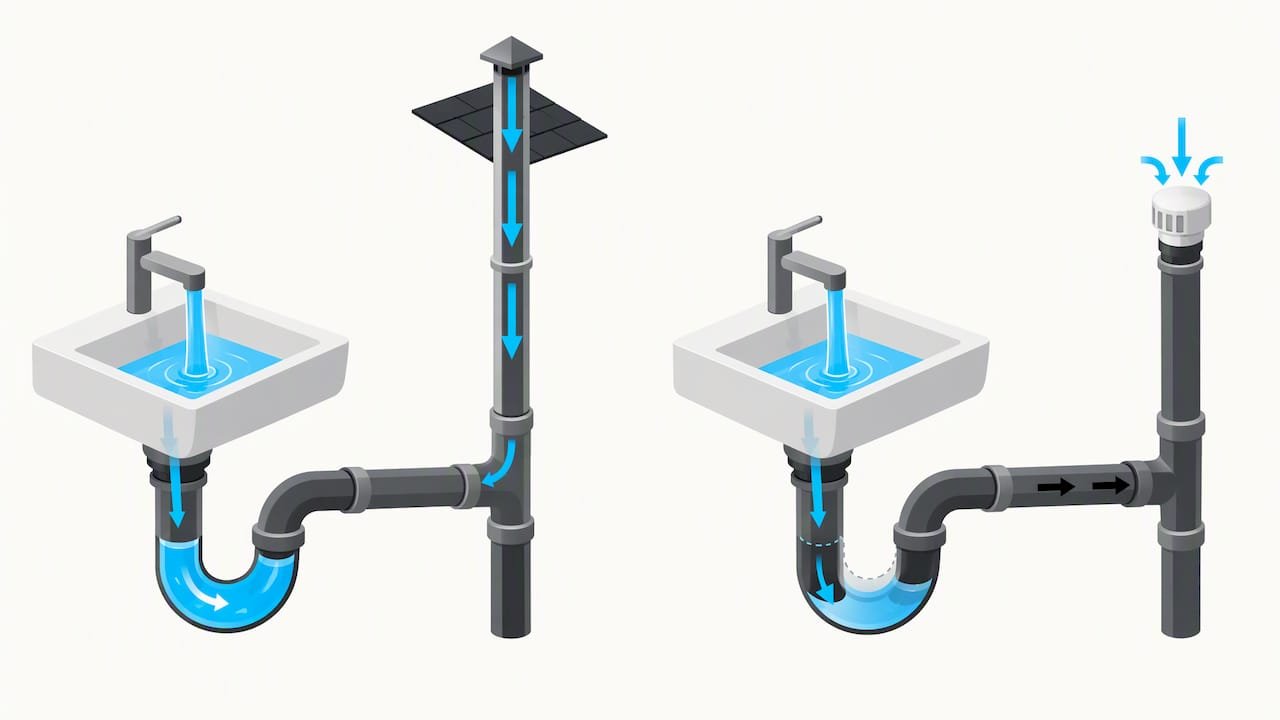
Blocked roof vents commonly show up as gurgling in a distant fixture whenever another one drains, sometimes paired with a faint sewer smell. InspectApedia’s vent noise diagnosis describes how inadequate venting creates this kind of negative pressure throughout connected fixtures.
Clearing a roof vent yourself means climbing onto a roof and working near an open pipe that carries sewer gas, so most homeowners are better off leaving that to a licensed plumber who has the right safety gear and code knowledge. AAVs are a legitimate alternative to roof venting when installed at the correct height and location, but a stuck valve will cause the same gurgling and chattering noises it’s supposed to prevent.
When gurgling indicates a sewer or septic problem
Gurgling at several fixtures at once, a persistent sewage odor, or water backing up into a tub or floor drain when you run the washing machine are all signs the problem has moved beyond a single trap or clog. These symptoms point toward a partially blocked main sewer line or a septic system under strain, as InspectApedia explains.
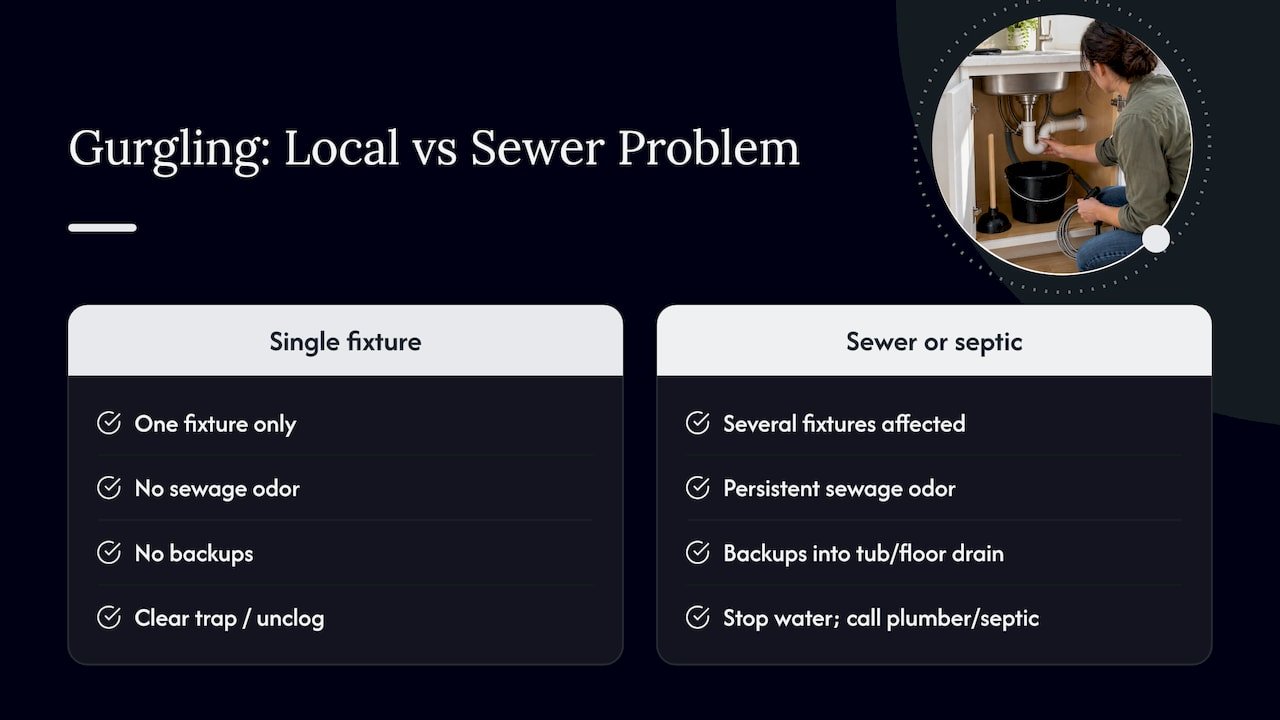
For homes on a septic system, a clogged filter or a saturated drainfield can produce similar symptoms, while municipal sewer connections tend to show gurgling tied to a blockage somewhere between the house and the street. Our partner resource on septic versus municipal sewer systems breaks down how each setup fails differently. If you see yard pooling, slow drains throughout the house, or sewage odor indoors, stop running water, avoid flushing toilets if possible, and call a licensed plumber or your septic service right away.
Prevention and routine maintenance to keep sinks quiet
A weekly habit of flushing hot water down the kitchen sink, using a hair catcher in bathroom drains, and keeping grease out of the kitchen drain prevents most of the partial clogs that lead to gurgling in the first place.
Every few months, pull and rinse your traps, glance at any visible AAVs, and run every fixture in the house back to back to listen for new noises. If gurgling returns despite clean traps, arrange a camera inspection or mainline snaking with a professional before the problem grows into a backup. Our plumbing repair guide for homeowners covers a few small upgrades, like trap guards and better vent caps, that cut down on recurring noise.
MDTECH perspective: common pitfalls and when we recommend professional service
Trap cleaning and plunging fix most single-fixture gurgling, but when the same noise returns within days, the real cause is usually upstream: a vent, a shared line, or a dip in the pipe collecting debris. Vent work and mainline clearing involve roof access, sewer gas exposure, and code requirements that go beyond a homeowner toolkit. A proper visit typically includes a camera inspection, access through a cleanout, and a clear quote before any work starts.
— MDTECH
How we can help with a gurgling sink
If your sink keeps gurgling, smells like sewage, or the noise has spread to other fixtures, professional technicians can handle plumbing repair and sink repair, often with straightforward online booking.
Before you book, have this ready:
- Which fixtures gurgle and whether it happens during other appliance cycles.
- Whether you notice any sewer odor indoors.
- Whether water has backed up anywhere in the house.
Book a visit through our plumbing and appliance repair services page and we’ll take it from there.
FAQ
How do I stop my sink from gurgling?
Start by cleaning the P-trap and plunging the drain to clear a partial clog, then run water at other fixtures to check if the problem is isolated. If gurgling continues after those steps, the vent system or a shared drain line likely needs a professional look.
Why is my sink gurgling when it drains?
Gurgling during drainage usually means trapped air is escaping through the water in your P-trap because a partial clog or a blocked vent is restricting normal airflow, according to InspectApedia. The trap tries to equalize pressure, and the air bubbling through the water creates the gurgling sound.
Does Dawn really unclog drains?
Dish soap like Dawn can help break up small grease deposits when combined with hot water, but it isn’t a reliable fix for the kind of partial clogs or vent problems that cause gurgling. For persistent gurgling, mechanical cleaning like plunging or snaking, or an enzyme-based cleaner, works more consistently.
Does a gurgling toilet mean a broken sewer line?
Not necessarily. A gurgling toilet often points to a blocked vent or a partial clog somewhere in the shared drain line, though InspectApedia notes that gurgling across multiple fixtures can indicate a more serious mainline or septic restriction that needs a professional inspection.
Sources
For a deeper look at the mechanics behind drain noise, InspectApedia’s drain noise diagnosis and vent noise diagnosis pages cover the physics in detail, while This Old House demonstrates trap and AAV fixes step by step. Our own guide on sink sewer smells and our sink repair and installation page cover related fixes.